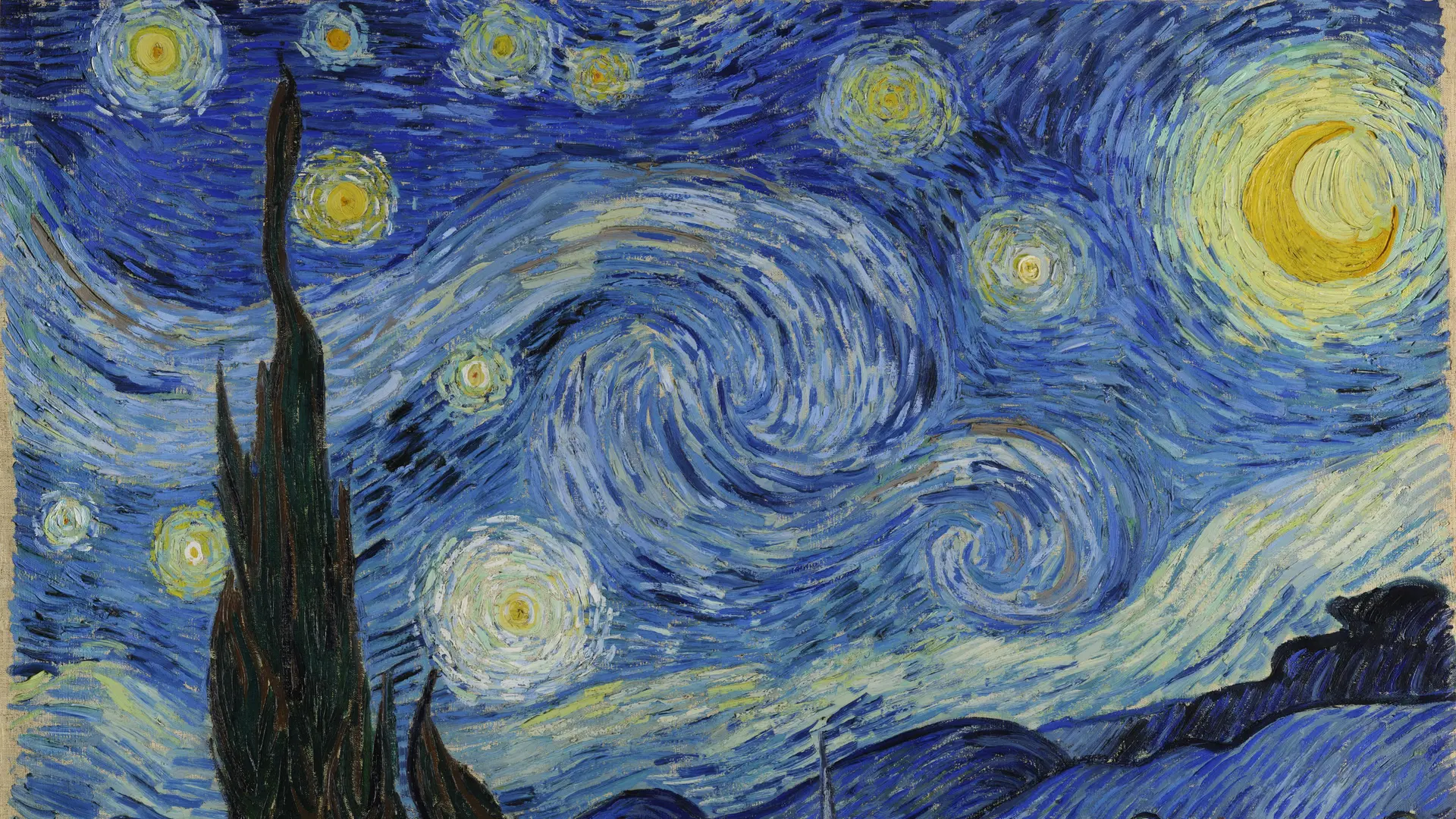
For over a century, Vincent van Gogh’s The Starry Night (1889) has stood as the quintessential masterpiece of Post-Impressionism. Its swirling, luminescent vortexes and oversized, pulsating stars have fueled endless speculation: Is this the rendering of a tortured, visionary mind, or a calculated observation of the night sky? A groundbreaking new study published in the journal Scientific Reports has reignited this debate, suggesting that Van Gogh may have been more of an amateur astronomer than previously realized—and that the painting may have been created nearly a month later than art historians have long maintained.
The Mystery of the Celestial Canvas
The core of the mystery lies in the tension between artistic license and scientific accuracy. Van Gogh famously downplayed his adherence to realism. In September 1889, he wrote to his brother, Theo, describing his night paintings as having “exaggerated arrangements.” Two months later, in a letter to the painter Émile Bernard, he admitted that he had allowed himself to paint the stars “a little too large.”
Despite these admissions, modern computational astronomy has allowed researchers to map the night sky over the Provence region in 1888 and 1889 with surgical precision. By aligning orbital data and star catalogues with the orientation of Van Gogh’s landscapes, scientists can now verify the "authenticity" of his celestial motifs.
A Chronology of the Night
To understand the significance of the new research, one must first look at the timeline of the artist’s life in France.
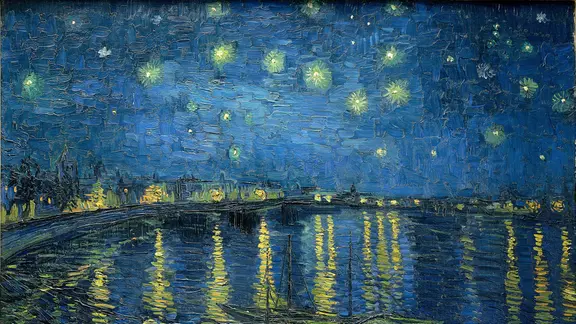
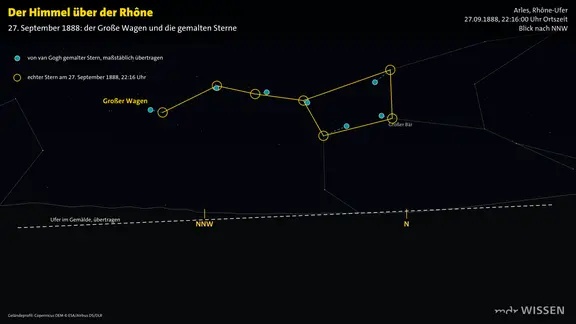
In September 1888, while in Arles, Van Gogh painted Starry Night Over the Rhône. He wrote to Theo explicitly about the work, noting that the "Great Bear" (the Big Dipper) shone with a green and pink luster against an aquamarine sky. Recent analysis by a South Korean research team led by Elijah Jeong-hyun Kim confirmed that the configuration of the seven stars in that painting matches the position of the Big Dipper as it would have appeared in late September 1888 at around 10:00 PM.
However, there is a catch: the painting shows a view looking southwest toward the Trinquetaille bridge. From that vantage point, the Big Dipper would have been behind the painter, situated in the northern sky. Van Gogh clearly synthesized the landscape before him with a celestial configuration he observed elsewhere, effectively "layering" the heavens over the earth.
The "Starry Night" (Saint-Rémy) Data
The debate intensifies when turning to the more famous The Starry Night, painted during his voluntary internment at the Saint-Paul-de-Mausole asylum in Saint-Rémy-de-Provence.
Upon his arrival in May 1889, Van Gogh was assigned a room with a window facing east. He wrote to Theo that he had observed the "morning star"—the planet Venus—appearing exceptionally large just before sunrise. For decades, Venus has been the only celestial body in the painting universally accepted as an accurate representation.
In the 1980s, art historian Albert Boime argued that the painting depicted the sky of June 19, 1889, featuring the constellation Aries. However, astronomer Charles Whitney countered that the sky was a composite. A major hurdle for the June 19 theory was the moon: in the painting, it is a thin crescent, whereas on June 19, 1889, the moon was significantly fuller.
The July 22, 1889 Hypothesis
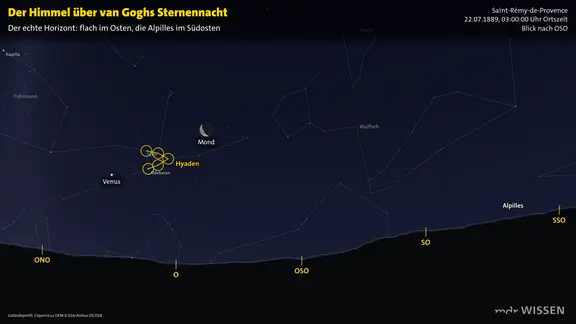
The new study by Kim et al. proposes a radical shift: the morning of July 22, 1889. The researchers utilized a narrow-field perspective, essentially applying the logic of a telephoto lens to the landscape Van Gogh would have been observing from his window.
They discovered that on July 22, 1889, the moon was indeed a thin crescent. Furthermore, the planet Venus and the Hyades star cluster—a group of stars forming a distinct ‘V’ shape in the constellation Taurus—were positioned in the sky in a way that matches the painting’s layout. Five of the eleven stars depicted in the painting align with the brightest stars of the Hyades, and the orientation of this ‘V’ relative to the horizon mirrors the reality of that specific morning.
The Ripple Effect: Rewriting the Biography
If this hypothesis is correct, it necessitates a significant revision of the Van Gogh biography. Currently, the Van Gogh Museum dates his first major mental health crisis in Saint-Rémy to July 16–17, 1889. Official records suggest that following this breakdown, he was incapacitated for weeks and forbidden from entering his studio.
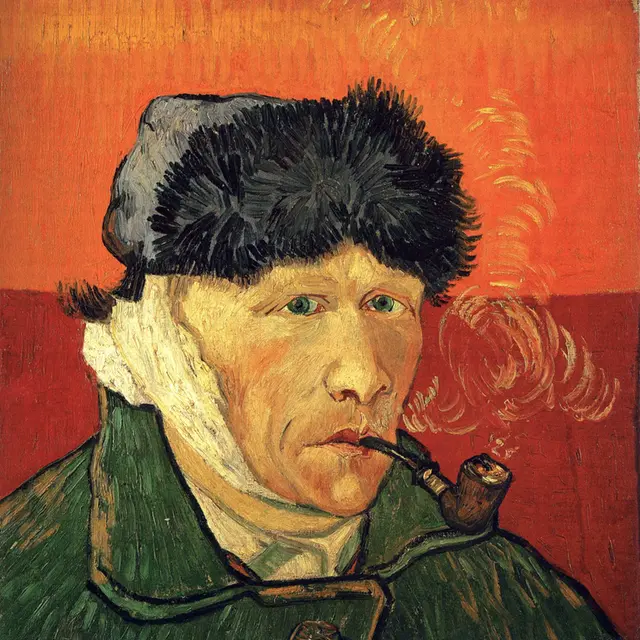
The research team challenges this timeline, suggesting that the "severe" phase of the attack may not have begun until the end of July, allowing him time to paint The Starry Night on July 22. They base this on an analysis of weather reports and correspondence from the period. However, this remains a point of contention.
Furthermore, a reed-pen drawing of The Starry Night exists, which contains an even more accurate depiction of the Hyades cluster. If the painting was completed on July 22, the drawing must have been completed thereafter. Yet, the current catalogue raisonné includes this drawing in a bundle of ten sent to Theo on July 2, 1889. If the drawing was sent on July 2, it would have been impossible for Van Gogh to have accurately depicted the Hyades as they appeared on July 22. The researchers argue that the archival placement of this drawing in the July 2 shipment is a mistake, citing that Theo did not mention receiving it in his subsequent reply.
Implications and Critical Reception
The implications of this study are twofold: they solidify the notion that Van Gogh was a highly observant artist who grounded his abstractions in reality, yet they also highlight the limitations of "scientific" art history.
- Artistic Intent: Van Gogh was likely not trying to create a star map, but rather a poetic synthesis. He took the "real" stars as a foundation and embellished them to fit the emotional resonance of the canvas.
- The "Commercial" Caution: The research team explicitly disclosed potential conflicts of interest, noting that their findings could be used for commercial purposes, such as museum exhibitions, books, and media productions. While the astronomical math is objectively verifiable, the interpretation—that Van Gogh must have painted the July 22 sky—remains speculative.
Conclusion: A Masterpiece Beyond Calculation
Whether The Starry Night represents the sky of June or July, the debate itself underscores the enduring power of Van Gogh’s work. By attempting to anchor his swirling skies to the physics of the universe, we aren’t diminishing the mystery of the painting; we are celebrating the bridge he built between the objective world and the subjective soul.
As the academic community continues to parse the dates and the star charts, one truth remains clear: Van Gogh’s stars continue to burn as brightly today as they did on that morning in 1889. Whether he was looking at the Hyades or simply painting the rhythm of his own internal storm, he succeeded in capturing a celestial permanence that transcends the temporary limitations of a calendar date. The search for the "truth" behind the canvas is, in itself, a testament to the fact that we are still looking up, still wondering, and still seeing the world through the eyes of a man who saw the infinite in a window-frame view.