By Jonas Arand & Sanny Stephan, SPORT IM OSTEN
Updated: October 22, 2026
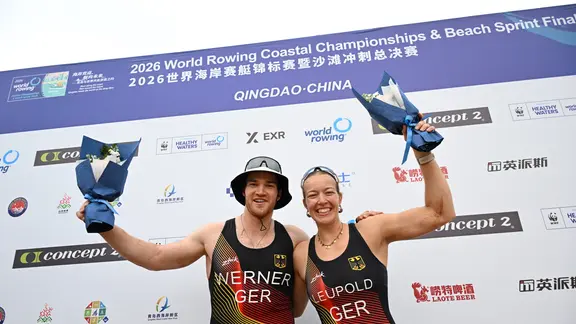
In a stunning display of resilience and tactical brilliance, German rowers Franz Werner and Sophie Leupold have etched their names into the history books. Representing the Pirnaer Ruderverein, the duo from Saxony secured the gold medal in the Mixed Double Sculls at the Beach Sprint World Championships in Qingdao, China. Their victory represents a monumental achievement, marking the first time a German crew has claimed a senior-level world title in the dynamic and burgeoning discipline of Beach Sprint Rowing.
The victory, however, was far from inevitable. It was a journey defined by a razor-thin margin between early elimination and global glory, serving as a testament to the unpredictable and unforgiving nature of coastal rowing.
Main Facts: The Triumph in Qingdao
The Beach Sprint World Championships in Qingdao proved to be a challenging crucible for the world’s elite rowers. For Franz Werner (from Wilschdorf) and Sophie Leupold (from Heidenau), the competition began under the most precarious circumstances imaginable.
In the preliminary time-trial phase—the stage that determines which crews advance to the knockout rounds—the German pair struggled significantly. Battling choppy, unpredictable waters that seemed to favor other competitors, Werner and Leupold finished in 16th place. This was the final qualifying spot; any lower, and their world championship aspirations would have ended before the main event had truly begun.
Despite this shaky start, the duo transformed their performance in the knockout stages. Navigating the waves with newfound precision and executing a series of high-intensity sprints, they systematically dismantled their opponents. In the final, facing the formidable Lithuanian pair of Martyna Kazlauskaite and Dominykas Jancionis, the Germans trailed early. However, through sheer technical execution and an aggressive final beach sprint, they surged past the leaders to secure the gold.
A Chronology of the Comeback
The Perilous Prelude
The conditions in Qingdao were described by many athletes as "borderline." For the German team, the high swell during the time trials posed a significant disadvantage. "It was quite precarious out there," the pair noted in an interview with SPORT IM OSTEN. "We were fighting against the elements as much as we were fighting against the clock." Finishing in the 16th and final qualifying position was not just a narrow escape; it was a wake-up call that forced the duo to recalibrate their approach to the challenging maritime conditions.
The Knockout Surge
Once the safety of the knockout rounds was secured, the pressure shifted. Freed from the anxiety of potential elimination, Werner and Leupold found their rhythm. The knockout format requires a unique blend of rowing endurance and explosive athletic ability—a combination that demands total focus. By the time they reached the quarter-finals, the synergy between the two had sharpened. They began to utilize the swells to their advantage, "surfing" the boats downwind to gain critical speed, a technique that separated the medal contenders from the rest of the pack.
The Final Sprint
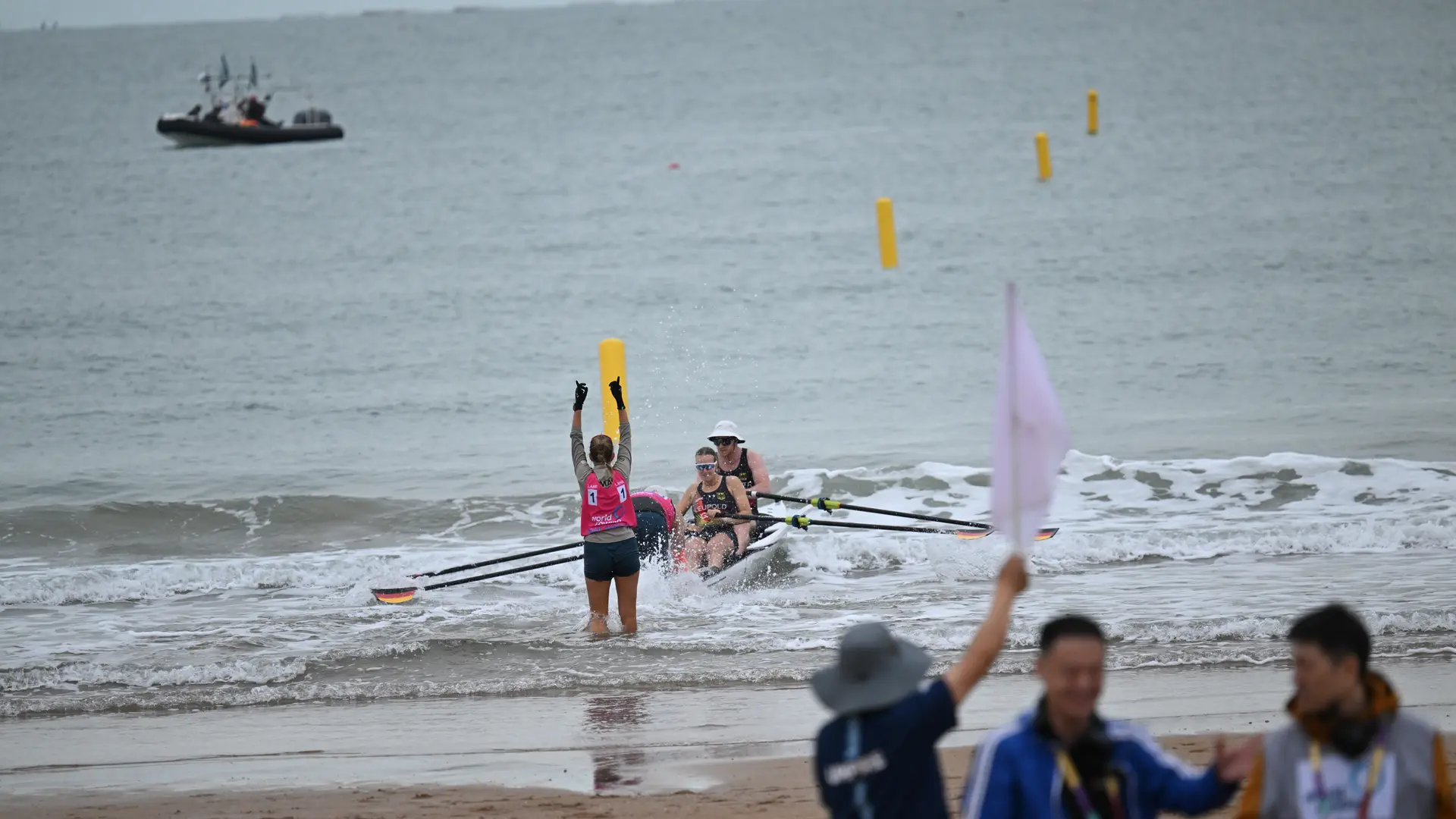
The Gold Medal race was the pinnacle of their tactical development. Falling behind the Lithuanian crew in the initial meters, the Germans did not panic. They maintained a consistent, powerful stroke rate, trusting their physical conditioning. On the return leg of the course, they expertly navigated the breaking waves, surging forward. The final segment of the race—a sprint across the sand to hit the finish buzzer—is where the race was ultimately decided. Werner and Leupold’s transition from the boat to the sand was seamless, hitting the buzzer with a decisive advantage that secured their place on the top of the podium.
Understanding Coastal Rowing: The New Frontier
Coastal Rowing, specifically the Beach Sprint format, is often described as the "extreme sport" of the rowing world. Unlike traditional flat-water rowing, which takes place in controlled, predictable environments, Coastal Rowing is contested on open seas, where wind, tides, and currents create a constantly changing field of play.
The Mechanics of the Sport
The Beach Sprint format is highly spectator-friendly and intense. A typical race covers approximately 600 meters and follows a strict protocol:
- The Beach Start: Athletes begin on the sand, sprinting to their boats.
- The Water Course: Competitors row a technical course that includes slalom turns around buoys, requiring high-level boat handling skills.
- The Beach Finish: Upon returning to the shore, the rowers must exit the boat, run across the sand, and press a buzzer to stop the clock.
This format eliminates the possibility of a "perfect" race, as the environment dictates the strategy. As Werner and Leupold emphasized, "The ability to adapt to the water is what makes this sport so addictive. It’s never the same race twice."
Official Responses and Reflections
The victory in China has sent ripples through the German rowing community. Officials from the German Rowing Federation (DRV) have praised the duo’s mental fortitude. "To go from the last qualification spot to the world title shows a level of maturity and focus that is rare," noted a federation spokesperson.
For Werner and Leupold, the win is a culmination of years of training, much of which was spent balancing professional lives with the demands of an emerging sport. In their post-race interviews, the pair was quick to credit the support of their home club, the Pirnaer Ruderverein. They emphasized that their success was not just a result of individual talent, but of a specialized training regimen designed to handle the turbulence of coastal waters—training that often took place in similarly challenging conditions to ensure they were prepared for the unexpected.
The Road to Los Angeles 2028: Implications and Challenges
While the world championship gold is a massive achievement, it serves as only the first step toward the ultimate goal: the 2028 Olympic Games in Los Angeles. Beach Sprint Rowing has been officially included in the Olympic program for 2028, a move expected to revolutionize the sport’s profile globally.
The "Paradox" of Qualification
Despite their current status as world champions, Werner and Leupold face a precarious path to the Olympics. The qualification criteria for Los Angeles are stringent:
- Strict Quotas: Each nation is limited to only one male and one female athlete per boat class.
- Annual Re-qualification: As Leupold pointed out, "Being world champions is fantastic, but it provides no guarantees for the future. We have to earn our spot every single year."
- Internal Competition: The depth of the German rowing squad means that even world-class athletes must continue to prove their superiority against domestic rivals.
The primary challenge for the coming year is securing the nation’s quota spots during the upcoming international regattas. Only after those spots are secured will the federation determine the specific athlete selection. There is a inherent irony in their situation: while they are currently the best mixed-double pair in the world, the structure of Olympic qualification could theoretically see them competing for separate spots or facing new challenges in the selection process.
Strategic Outlook
The next 24 months will be crucial. The duo plans to focus on:

- Technical Refinement: Further improving their boat-handling in heavy surf to minimize the time spent in transition phases.
- Physical Conditioning: Enhancing their anaerobic capacity to ensure that their final sprints across the beach remain elite, even after a taxing row.
- Logistical Preparation: Working with the federation to ensure they have the best possible equipment and support staff for the pre-Olympic circuit.
Conclusion
The story of Franz Werner and Sophie Leupold is more than just a sports victory; it is a narrative about the power of perseverance. By overcoming the "last-place" hurdle in the time trials, they demonstrated the psychological resilience required to excel in one of the most volatile sports on the planet.
As they look toward the horizon of 2028, they carry the hopes of a nation and the confidence of champions. Whether they remain partners or navigate the complex selection process separately, their performance in Qingdao has confirmed one thing: the German rowing program has a formidable presence in the world of Coastal Rowing, and the rest of the world has been put on notice.
As they prepare for the next season, the message from the duo remains one of grounded ambition: "We’ve tasted gold, but the dream of Los Angeles is a new chapter. We are ready to work for it, one wave, one sprint, and one stroke at a time."