Introduction: The Field of Death
In the autumn of 1813, the plains surrounding the Saxon trade hub of Leipzig became the stage for the most catastrophic military engagement in human history to that date. For four days—October 16 to 19—the forces of Napoleon Bonaparte clashed with a massive coalition of Austrian, Prussian, Russian, and Swedish troops. When the smoke finally cleared, the landscape was transformed into a macabre tapestry of devastation. Up to 100,000 soldiers lay dead or dying, their bodies littering the streets, gardens, and riverbanks of Leipzig. This was not merely a military defeat for the French Emperor; it was a collective trauma that burned itself into the European consciousness, ultimately driving the exhausted monarchs of the continent to seek a new, lasting order in the halls of Vienna.
Main Facts: The Magnitude of the Catastrophe
The Battle of the Nations (Völkerschlacht) was defined by its unprecedented scale. Over 500,000 soldiers were involved in the maneuvers. The sheer density of violence in such a concentrated area led to scenes of suffering that defied contemporary description. The logistical failure to provide for the wounded—regardless of nationality—turned the city and its surrounding villages into a massive, open-air charnel house.
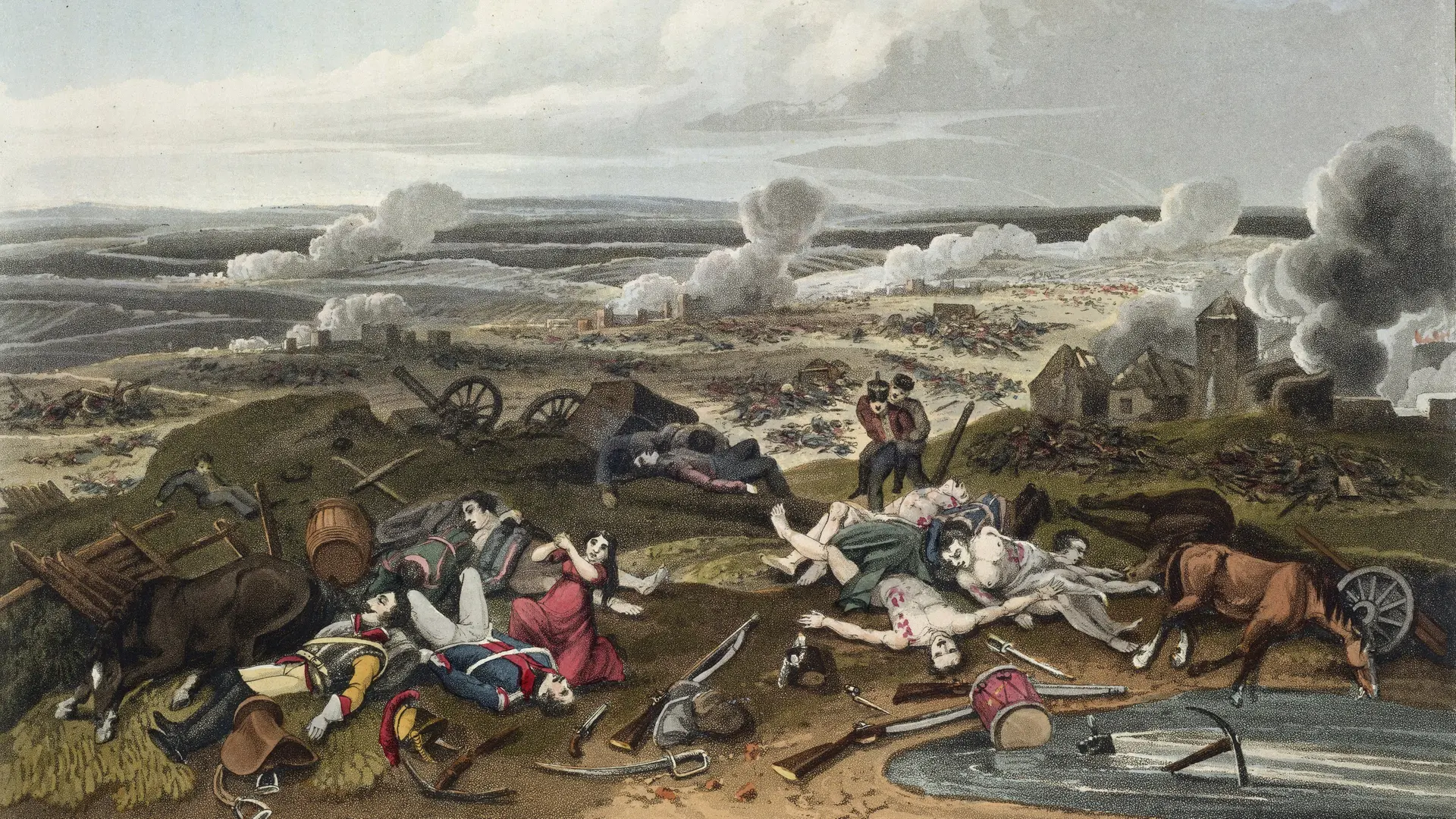
The aftermath was marked by:
- Mass Casualties: Conservative estimates place the number of dead and mortally wounded at 100,000.
- Environmental Devastation: Entire villages, such as Schönefeld, Liebertwolkwitz, and Wachau, were reduced to rubble.
- Medical Collapse: Field hospitals were overwhelmed, with surgeons forced to perform amputations using rusted, blunt instruments, often without anesthesia, leading to a mortality rate among the wounded that rivaled the carnage on the battlefield itself.
Chronology of the Aftermath
The transition from the heat of combat to the cold reality of the aftermath happened in stages:

October 19, 1813: The final day of the battle. As Napoleon’s forces attempted a desperate retreat, the bridge over the Elster River was blown up prematurely, trapping thousands of French soldiers. Many drowned in the muddy, corpse-clogged waters of the river.
Late October 1813: The "cleanup" phase. Because the scale of death was so vast, the local population and the surviving armies were forced to resort to mass graves. In many instances, bodies were simply covered with a layer of lime in trenches or along field furrows. Accounts from survivors, such as local citizen Ludwig Hüffel, describe streets that were literally impassable due to the density of the deceased.

November 1813: The onset of disease and famine. With rotting corpses still littering the fields and the local infrastructure destroyed, the survivors faced a secondary crisis of pestilence and starvation. Reports of cannibalism among the most severely wounded, who were abandoned by their own commands, began to emerge, cementing the battle’s status as a symbol of absolute human misery.
Supporting Data: Eyewitness Accounts and The "Grim Reality"
The psychological impact of the battle is best captured in the personal accounts of those who walked the aftermath. Ferdinand Grautoff, a resident of Leipzig, wrote of a walk he took days after the fighting ceased: "The black, boggy river was dammed up by the corpses of men and horses. Along both banks, thousands of arms rose above the water, some still clutching at the grass of the high bank."

The medical horror was underscored by Dr. Johann Christian Reil, who observed the lazarettos: "I witnessed an amputation performed with blunt knives. The brownish-red color of the severed muscles, which had already ceased to breathe, gave me little hope for the patient’s survival." These descriptions highlight a critical facet of the Napoleonic Wars: the transition from "glory-seeking" warfare to industrialized, total slaughter.
Official Responses and Tactical Shifts
The leadership of the era, including figures like Field Marshal Gebhard Leberecht von Blücher, were not immune to the trauma. Blücher, writing to his wife after the later Battle of Waterloo in 1815, famously declared, "I have had enough of this murder to the point of nausea."

This sentiment was widespread. The exhaustion of the ruling class was not just physical—it was existential. The decision to gather in Vienna in 1814 for a diplomatic congress was driven by a shared, desperate realization: the old system of resolving disputes through constant dynastic warfare was no longer sustainable in the face of such absolute destruction.
Implications: The Birth of the Congress System
The long-term implication of the Völkerschlacht was the Congress of Vienna (1814–1815). While historians often criticize the congress for its restoration of conservative monarchies and its "horse-trading" of territories, it represented a revolutionary shift in international relations.

1. Diplomacy Over Decimation
For the first time in European history, the Great Powers attempted to establish a "Concert of Europe." They sought to resolve border disputes and political tensions through negotiation rather than the immediate mobilization of standing armies.
2. The Legacy of the Trauma
Dr. Steffen Poser, former director of the Monument to the Battle of the Nations in Leipzig, argues that the "exhaustion to the point of no return" felt by the leaders of 1815 was directly tied to the memory of the Leipzig carnage. The Congress was, in many ways, an attempt to prevent another "Leipzig" from ever occurring.

3. A Lasting Peace?
While the peace established at Vienna did not prevent all conflict, it succeeded in preventing a general European conflagration for nearly a century (until the outbreak of World War I). The traumatic memory of 1813 served as a grim deterrent, a reminder of the price of total war.
Conclusion: A Monument to Memory
Today, the Völkerschlacht remains a focal point for understanding the human cost of power. The city of Leipzig, once a victim of the total destruction of 1813, stands as a testament to the resilience of civil society. The lessons of the battle—the catastrophic failure of the medical and humanitarian systems, the environmental impact of war, and the necessity of diplomatic dialogue—continue to resonate in our modern era.

The horror of the "field of death" was not merely a period piece of the 19th century; it was the crucible in which the modern concept of international diplomacy was forged. As we reflect on the events of October 1813, we are reminded that peace is not merely the absence of war, but a hard-won, fragile structure that must be actively maintained to ensure that we never again witness the "niedergehauen, zerrissen, niedergeschossen" (struck down, torn apart, shot down) reality of the Napoleonic fields. The story of Leipzig is, ultimately, a plea for the primacy of the diplomatic table over the muddy trenches of the battlefield.