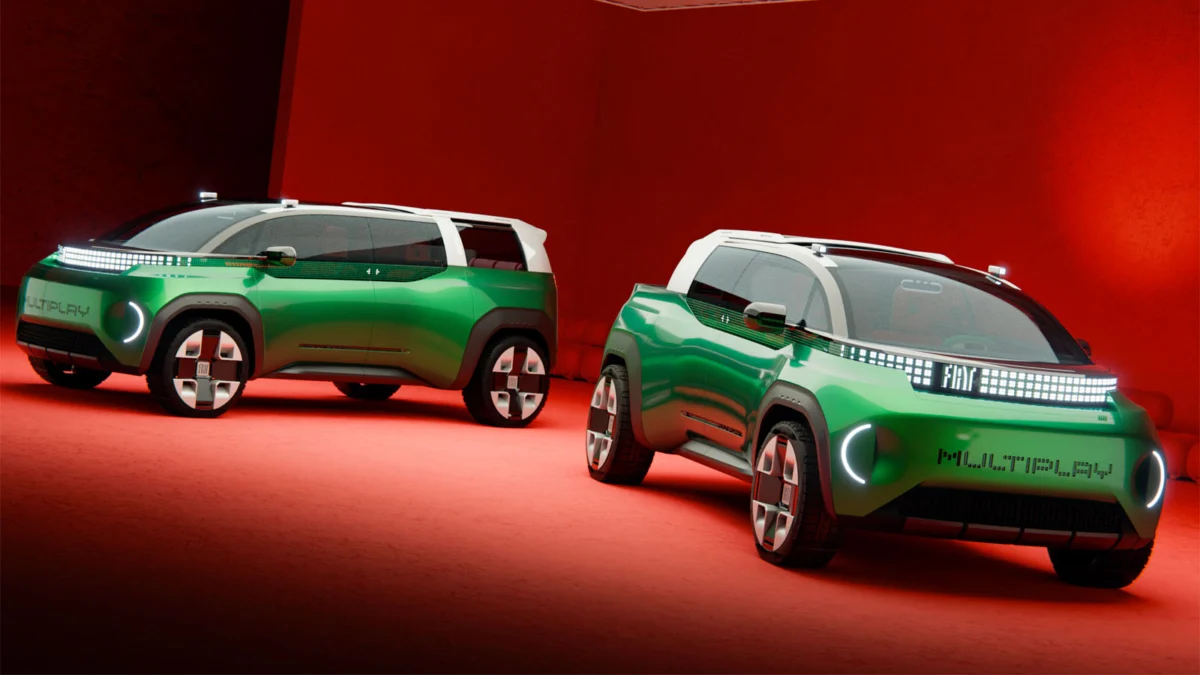
On the eve of the 2026 Paris Motor Show, during the high-stakes Stellantis "Night Before" event, Fiat took the wraps off a vehicle that challenges the rigid categories of modern automotive design. The "Multiplay" concept—a 4.45-meter-long study—is not merely a new car; it is a declaration of intent, a bold "laboratory of ideas" that attempts to reconcile the spatial utility of a traditional van, the aesthetic presence of a modern SUV, and the functional versatility of a pickup truck.
While Fiat has explicitly stated that the Multiplay is not a direct preview of a production model, it serves as a provocative mirror to an industry currently obsessed with homogenized crossover designs. By blending disparate vehicle architectures, Fiat is signaling a potential return to the era of "smart design," where utility was not sacrificed at the altar of prestige.
A Legacy Reimagined: The Multipla DNA
The name "Multiplay" is a deliberate, nostalgic nod to two of the most iconic vehicles in Fiat’s storied history: the 1956 600 Multipla and the polarizing, yet functionally brilliant, 1998 Multipla van.
The 1956 600 Multipla was a masterclass in packaging. Utilizing a rear-engine, cab-forward architecture, it managed to squeeze six people into a footprint of just 3.5 meters. It became the quintessential Italian city taxi—a vehicle that prioritized human capacity over vanity. Decades later, the 1998 Multipla arrived. While it frequently tops lists of the "ugliest cars ever built," it remains a cult classic among engineers and families. It dared to be wide—unapologetically so—to accommodate three people across two rows in a footprint under four meters.
In today’s market, where the "prestige tunnel" and massive, empty center consoles define the interior of most SUVs, the 1998 Multipla’s philosophy feels surprisingly modern. Fiat’s new concept is a direct descendant of this pragmatic spirit, suggesting that the industry’s shift toward bloated, aesthetic-driven crossovers may have finally reached a point of diminishing returns.
The "Metamorfosi" Architecture: A New Way to Build
At the core of the Multiplay concept is what Fiat calls the "Metamorfosi" architecture. The vehicle features a unique C-pillar design that facilitates a sliding rear module. This is the heart of the car’s transformative power.
The Two Faces of Multiplay
- The Family Van (6+1 Configuration): In its primary state, the vehicle functions as a closed, highly spacious family carrier. The sliding mechanism is locked forward, creating a cabin that prioritizes passenger comfort and interior volume.
- The Outdoor Utility (4-Seater Pickup): With a few simple manual adjustments, the rear module slides backward, effectively creating an open-air cargo bed. This transforms the Multiplay into a four-seat lifestyle vehicle, capable of hauling bicycles, sports equipment, or bulky outdoor gear that would never fit inside a standard SUV.
Beyond the sliding module, the concept integrates a rotating rear spoiler that functions as an external bike rack, a split-tailgate for easier loading, and a modular floor system with integrated anchor points. While the official press release focused on the broader vision, supplemental reports confirm that the third-row seating and rear roof segment are designed to move in tandem, ensuring the transformation is seamless and intuitive.

Interior Innovation: The Petsenger and the Sunseat
Fiat has long championed the idea of the car as a "third space," and the Multiplay takes this to its logical extreme. The "+1" in the 6+1 configuration refers to the "Petsenger Seat"—a highly flexible component designed to serve multiple masters. It acts as an anchor for child seats, a designated spot for a pet, a small table, or a storage console. To emphasize this lifestyle focus, the seat includes detachable padding that doubles as a leash, and the door pocket hides a collapsible water bowl.
The front of the cabin is equally inventive. The "Sunseat" concept allows the passenger seat to rotate 180 degrees when the vehicle is parked. By utilizing the dashboard as a backrest under the panoramic glass roof, the interior creates a lounge-like environment.
Materiality plays a significant role in this vision as well. The interior uses a watermelon-inspired color palette—vibrant greens, reds, and pinks—constructed from 3D-knitted monomaterials. This manufacturing process minimizes waste, and the surfaces in the "pet-friendly" zones are fully waterproof and constructed from single-source materials to facilitate easier recycling at the end of the vehicle’s life cycle.
Implications: The Death of the "Prestige Tunnel"
The timing of the Multiplay debut is significant. As the automotive industry transitions to electric platforms, the traditional "prestige tunnel"—the bulky housing for transmissions and exhaust systems—is becoming a vestige of the past. Yet, many manufacturers continue to design electric vehicles (EVs) with massive center consoles, ignoring the potential for a completely flat floor and expanded cabin space.
Fiat’s decision to show this concept alongside Renault’s E-Space—another study on the future of the van—suggests a quiet rebellion. The industry is beginning to recognize that "Operetta" (the performance of style) has perhaps gone too far, at the expense of "Practicabilità" (practicability).
The Multiplay raises a critical question for the Stellantis group: Is there a market for a car that is "ugly-smart" rather than "pretty-useless"? The reception at the Paris Motor Show will likely dictate whether the Metamorfosi architecture moves from the concept phase to a prototype.
Unanswered Questions and the Path Forward
Despite the enthusiasm surrounding the design, Fiat remains tight-lipped regarding the technical specifications. The company has not confirmed whether the Multiplay is an electric vehicle, a hybrid, or a combustion-engine vehicle. However, the exterior dimensions and the short, cab-forward front end strongly imply an all-electric platform. The absence of a large engine bay is the primary enabler of the "Metamorfosi" flexibility.

Furthermore, there is no word on performance metrics, such as battery capacity, range, or towing capacity. This ambiguity is intentional. By framing the Multiplay as a "laboratory of ideas," Fiat is essentially conducting a global focus group. They are gauging whether consumers are ready to prioritize modularity over the traditional SUV aesthetic.
Industry Context: Why Now?
The automotive landscape in 2026 is defined by a paradox: cars are larger than ever, yet their usable interior space is often constrained by aggressive exterior styling. Fiat’s attempt to bring back the "Multipla" spirit is an attempt to break this cycle.
If we look at the broader industry, the shift toward "lifestyle" vehicles is clear. Consumers are demanding vehicles that can pivot between the daily school run and the weekend camping trip. However, most manufacturers attempt to solve this with larger, heavier SUVs. Fiat’s approach—using a mechanical, modular chassis to physically change the vehicle’s form factor—is a far more elegant, and arguably more sustainable, solution.
Conclusion
The Fiat Multiplay is a reminder of what the brand does best: democratizing innovation through unconventional design. Whether it ever reaches the production line as a standalone model is secondary to the influence it will have on future design cycles. By challenging the status quo of the SUV, Fiat has positioned itself as a brand willing to take risks, looking backward to its most iconic failures to find the solutions for the mobility challenges of the future.
As the industry pivots toward electrification, the Multiplay offers a roadmap for how we can make our vehicles more versatile, more efficient, and, perhaps most importantly, more human. The ball is now in the court of the public and the engineers at Stellantis: will they continue to refine the status quo, or will they dare to build the next generation of "smart" vehicles? One thing is certain: the conversation about the "ugliness" of the original Multipla has been replaced by a conversation about its genius, and in that transition, Fiat may have found its next big idea.