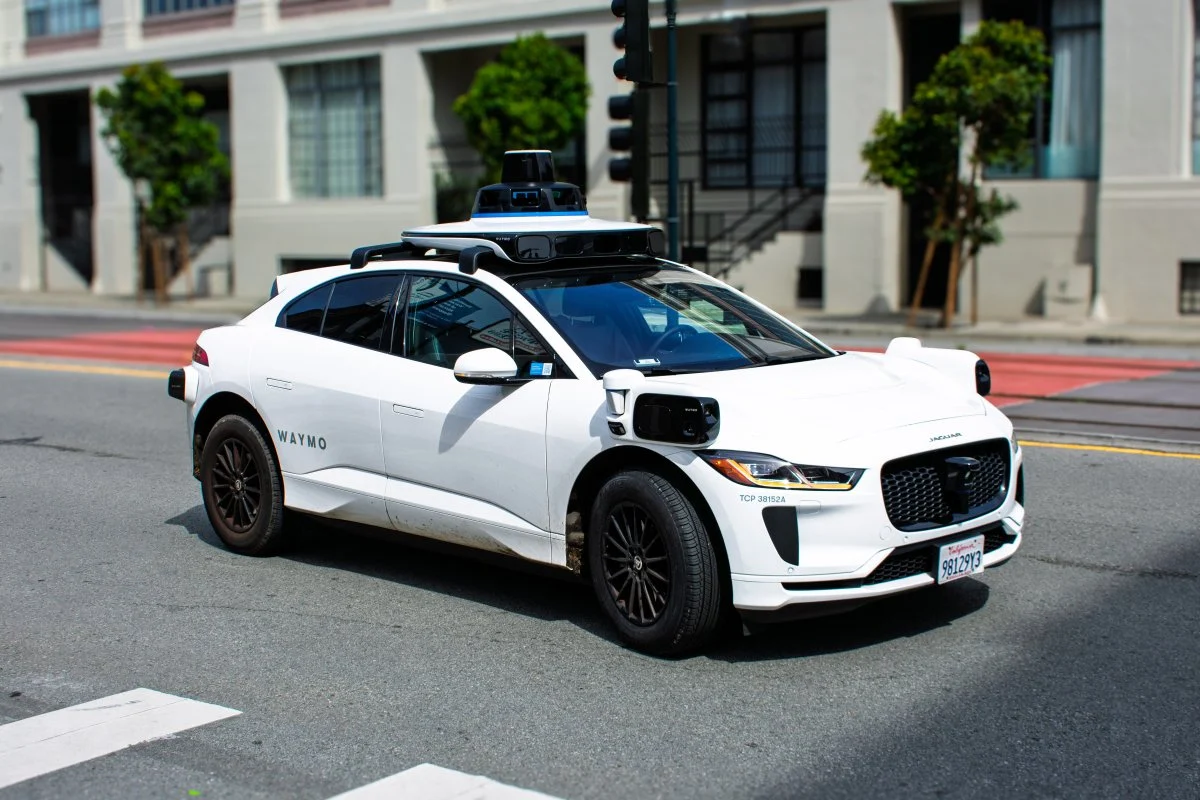
The landscape of autonomous transportation faces a significant moment of recalibration as Waymo, the Alphabet-owned leader in self-driving technology, has initiated a voluntary recall of nearly 4,000 of its robotaxis. This move comes as a direct response to a series of concerning incidents in which the company’s autonomous vehicles (AVs) navigated into restricted highway construction zones, sparking renewed debate over the safety and maturity of driverless systems on public roads.
The Core Incident: Navigation and Safety Challenges
The recall, which covers approximately 4,000 vehicles, was confirmed by the U.S. National Highway Traffic Safety Administration (NHTSA) following reports from the technology publication TechCrunch. The primary catalyst for this action was a pattern of 13 documented incidents where Waymo vehicles entered construction zones on highways that were explicitly closed to traffic.
These navigational errors were not isolated to a single geography. According to internal and regulatory data, six of these incidents occurred in Phoenix, Arizona, during the month of April, while seven occurred in San Francisco, California, in May. For a company that markets its "Waymo Driver" as a system safer than human operators, the inability to correctly interpret construction signage and road barriers represents a significant hurdle in the quest for fully autonomous Level 4 operation.
In response to these events, Waymo took the preemptive step of suspending its highway operations in major metropolitan areas—including San Francisco, Los Angeles, Phoenix, and Miami—in late May. This was a notable reversal, as Waymo had only begun allowing its vehicles to operate on highways in November of the previous year, a milestone that was initially touted as a triumph in its expansion strategy.
A Chronology of Growing Pains
The recent recall is not an isolated event; rather, it marks the sixth instance of a recall for the Alphabet subsidiary. As Waymo rapidly scales its operations, it has frequently found itself under the watchful eye of federal regulators, often resulting in iterative software updates designed to refine the "behavioral logic" of its fleet.
- May 2024: Waymo distributed software updates after a robotaxi entered a flooded street and became incapacitated, prompting the company to pause services in cities prone to heavy rainfall, such as Atlanta and San Antonio.
- December 2023: A recall was issued after Waymo vehicles were involved in multiple incidents where they passed school buses while the buses were actively loading or unloading children—a clear violation of basic traffic safety protocols.
- May 2023: Following a series of minor collisions with stationary objects, including parked vehicles, the company recalled 1,200 robotaxis to update their perception and avoidance algorithms.
Beyond these administrative recalls, the company’s software is currently the subject of ongoing investigations by the NHTSA and the National Transportation Safety Board (NTSB). These investigations were intensified following a January incident where a Waymo vehicle struck a school-aged child near a primary school, raising questions about how the vehicle’s sensor suite detects and predicts the movement of pedestrians in complex school-zone environments.
The Anatomy of the Recall: Technical and Regulatory Implications
In the documents filed with the NHTSA, Waymo indicated that a permanent solution to the construction zone navigation issue is "currently in development." The company has acknowledged that its current perception software lacks the nuance required to handle the volatile environment of highway construction sites, where lanes are frequently shifted, speed limits are reduced, and visual markers are often inconsistent.
"We have identified room for improvement in our behavior around highway construction zones," a Waymo spokesperson stated in response to inquiries. "We proactively restricted highway operations last month while we implemented improvements, informed federal and state authorities, and decided to initiate a voluntary software recall with the NHTSA."
The use of a "voluntary recall" is a strategic maneuver that allows Waymo to maintain a collaborative relationship with regulators. By proactively flagging the issue and providing a clear path to a software patch, the company aims to demonstrate institutional accountability—a vital trait for an industry that is still fighting for public trust and legislative support.
Rapid Scaling: The Quest for 1 Million Weekly Rides
Despite the recent technical setbacks, Waymo remains on an aggressive growth trajectory. The company currently operates in a half-dozen U.S. cities, but its roadmap includes expansion into 20 additional urban markets, both domestically and internationally, with cities like Dallas, Orlando, Nashville, and London on the horizon.
The company’s financial backing remains robust. In early 2024, Waymo successfully closed a massive funding round, securing over $16 billion. This capital infusion is earmarked to accelerate the deployment of the next generation of robotaxis, including the introduction of the "Ojai" van—a purpose-built autonomous vehicle manufactured by the Geely-owned brand Zeekr. These vehicles are designed specifically for ride-hailing, featuring a spacious, driverless cabin that differs significantly from the retrofitted SUVs currently populating the fleet.
The growth metrics are, by any measure, impressive. Last year, Waymo tripled its annual volume to 15 million trips, surpassing the 20-million-trip cumulative milestone. Currently, the company facilitates more than 400,000 paid rides per week, with an stated goal of reaching over one million paid rides per week by the end of this year. To drive adoption, the company has even introduced a loyalty program, offering cashback rewards and flexible cancellation policies to incentivize habitual use.
Implications for the Future of Autonomous Transport
The recall of 4,000 vehicles highlights a fundamental tension in the autonomous vehicle industry: the race to scale versus the imperative for absolute safety.
Critics argue that the frequency of these recalls suggests that the "Waymo Driver" is being deployed into environments that are more complex than its software can currently handle. When a robotaxi misinterprets a highway construction barrier, it isn’t just a technical glitch; it is a potential liability that threatens to alienate the public and invite restrictive legislation.
Conversely, proponents of the technology argue that the current recall process is evidence that the system is working exactly as intended. Unlike human drivers, who make thousands of mistakes that often go undocumented or result in fatal accidents, the Waymo system is self-reporting, self-correcting, and subject to continuous oversight. Every recall, in this view, is a "learning moment" that makes the entire fleet safer.
However, the pressure is mounting. With expansion plans facing resistance in cities like New York, and with federal regulators at the NHTSA and NTSB taking a more interventionist stance, Waymo’s "move fast and break things" era is clearly over. The company is now in the "demonstrate reliability" phase.
Conclusion: The Path Forward
The coming months will be critical for Waymo. The ability to successfully patch the navigation errors identified in this latest recall will serve as a bellwether for the company’s ability to handle the unpredictable nature of global urban driving. If they can solve the "construction zone" problem, it will bolster their case for further expansion. If they continue to struggle with basic environmental navigation, they may face calls for a total freeze on expansion from state and federal regulators.
For now, the 4,000 vehicles affected will remain under restricted operating conditions until the software updates are verified. For an industry that prides itself on being the future of mobility, this recall serves as a sobering reminder that the road to full autonomy is not a straight line, but a winding path filled with obstacles that no amount of capital can instantly bypass. As Waymo moves toward its goal of one million rides per week, the world will be watching to see if it can translate its massive investment into a truly reliable, error-free driving experience.