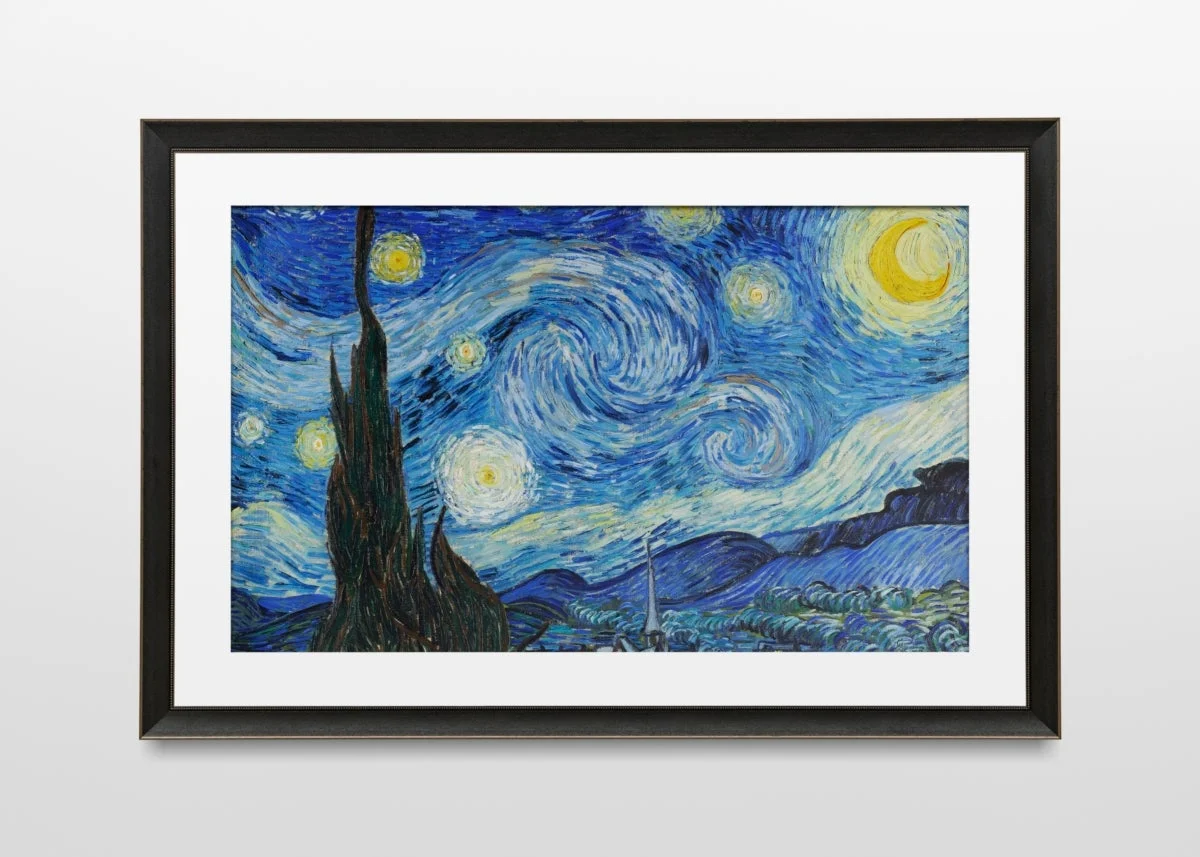
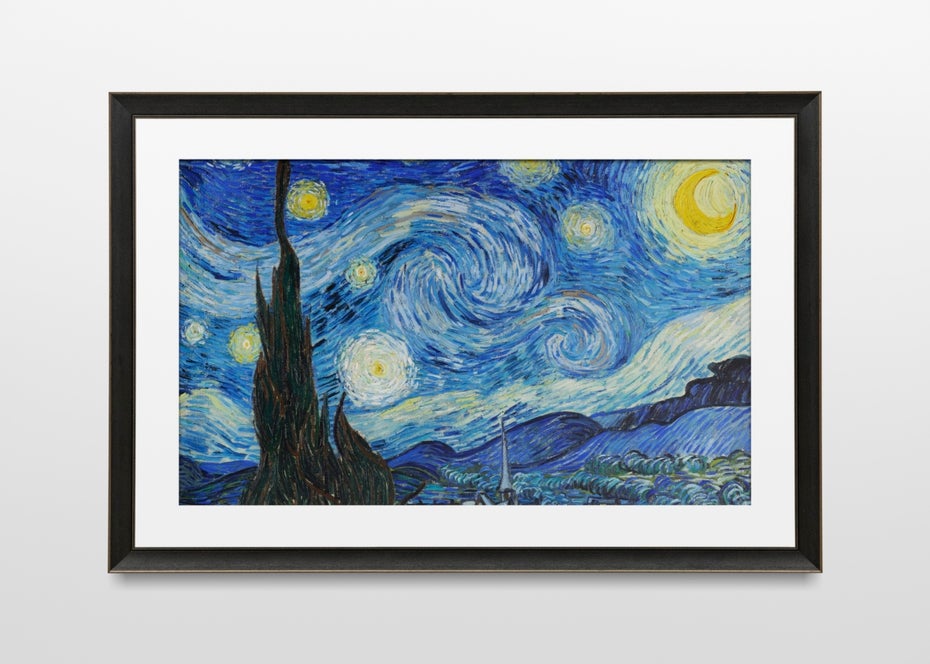
For over a century, Vincent van Gogh’s The Starry Night has stood as one of the most recognizable and analyzed works in Western art history. While art critics and historians have long debated whether the swirling, luminescent sky was a product of religious symbolism, psychological turmoil, or pure creative expression, the scientific community has occasionally attempted to ground the masterpiece in reality.
For decades, the prevailing narrative—based largely on a letter to his brother Theo—suggested the painting was created around June 18, 1889. However, a groundbreaking study recently published in Scientific Reports suggests that the heavens depicted by the Dutch master may hold a more precise, literal truth than previously believed. By applying modern astronomical data, a team of Korean researchers has challenged long-standing assumptions, proposing that Van Gogh was not merely painting from his imagination, but was documenting the specific celestial architecture of a summer night in Provence.
The Astronomical Discrepancies: Challenging the Status Quo
In the 1980s, researchers Albert Boime (1984) and Charles Whitney (1986) were among the first to systematically scour the night sky for the models behind Van Gogh’s stars. Their efforts, however, were plagued by contradictions. Their astronomical interpretations failed to produce a “smoking gun,” and because their findings could not be reconciled, the art world largely dismissed them in favor of the established theory: that the painting was a symbolic or religious construct, perhaps reflecting the artist’s internal mental state rather than the physical world outside his window in Saint-Rémy-de-Provence.
This status quo remained largely unchallenged for decades. That is, until astronomer Elijah Jeong-hyun Kim and his research team decided to revisit the canvas with the tools of modern astrophysics. When Kim encountered the previous scholarly consensus—which suggested that the stars in the painting represented the constellation Aries—he was skeptical. As an expert who has spent years building telescopes and tracking the precise movements of celestial bodies, Kim found the “Aries” theory astronomically improbable.
Decoding the Hyades: Stier Instead of Widder
The core of the new research lies in the identification of a specific star cluster. Previous scholars had pointed to Aries, but Kim’s team recognized something quite different: the Hyades, a prominent star cluster located within the constellation Taurus.
“Given that our team has built many telescopes and observed the night sky for years, we considered the constellation Aries an unlikely source of inspiration for the artist,” the researchers stated in a press release. To test their hypothesis, the team did not rely solely on digital models; they traveled to France in 2019 to conduct an on-site comparison between the painting and the actual sky over Saint-Rémy. Their work was further solidified by the release of Kim’s 2025 popular science book, which synthesized years of quantitative data and observational evidence.
A Chronological Shift: Why July 22, 1889, Matters
The traditional dating of The Starry Night—mid-June 1889—has been the anchor for all interpretations of the work. However, the new data suggests this date is physically impossible when compared to the lunar phase and the positions of the planets depicted.
According to the team’s calculations, the moon phase on June 18, 1889, does not align with the narrow crescent moon seen on the canvas. Conversely, on July 22, 1889, the celestial alignment matches the painting with remarkable precision. On that night, the Hyades star cluster rose in the east simultaneously with Venus, and the shape of the moon was a near-perfect match for the crescent rendered by Van Gogh.
This adjustment to the timeline creates a new hurdle: the historical record. Previously, scholars argued against a July date because it was widely believed that Van Gogh suffered a severe mental health crisis during that period, rendering him incapable of such an intricate artistic endeavor. To resolve this, the researchers performed a deep dive into primary source material, including Dutch and French letters, historical weather records, and mentions of cicadas.
The researchers noted that while cicadas are a staple of the Provençal summer, their activity levels peak only after the end of June. By triangulating the weather reports with these biological indicators, the team concluded that Van Gogh’s health crisis likely occurred later than the mid-June date previously suggested, leaving the window open for the creation of The Starry Night in late July.
Methodology: Following the Artist’s Gaze
The research team did not limit their scope to the stars alone. They employed a technique of “perspective reconstruction” that they had previously used to analyze another of Van Gogh’s works, Starry Night Over the Rhône (1888).
By using photographs of the locations in Arles and Saint-Rémy, the team retraced the artist’s potential field of view. They identified the exact topography and orientation from which Van Gogh likely stood while sketching the landscape. By aligning the physical location with the celestial data, they demonstrated that the composition of The Starry Night is not just a dreamscape, but a synthesis of a real-world vista combined with the specific astronomical events of that late July night.
Implications for Art History and Science
The publication of these findings in Scientific Reports serves as a bridge between the humanities and the hard sciences. While the study does not definitively “prove” the exact date the paint touched the canvas—or argue that Van Gogh was painting a photographically accurate sky—it does force a reassessment of his working methods.
“I hope that this work inspires a new, interdisciplinary look at the sequence of the Saint-Rémy paintings and at Van Gogh’s movements during that summer,” says Kim. By shifting the focus from purely psychological or symbolic interpretations to an evidence-based study of the artist’s environment, this research suggests that Van Gogh was perhaps more grounded in the physical reality of his surroundings than critics have historically given him credit for.
Official Responses and Future Directions
The art historical community has historically been wary of “scientific” interpretations of art, fearing that they strip away the emotional and spiritual weight of the work. However, the rigor of Kim’s study, which incorporates everything from historical correspondence to modern astrometry, provides a compelling narrative that is difficult to ignore.
While there is no “official” consensus from the Van Gogh Museum or other major institutions, the study has opened a door for a more nuanced understanding of the artist’s process. If Van Gogh was indeed tracking the movement of Venus and the rising of the Hyades, it suggests a man who, even in his most isolated moments, found a profound, rhythmic connection to the cosmos.
As we look toward the future, this research underscores the value of interdisciplinary collaboration. By combining the skills of the astrophysicist with the eye of the art historian, we move closer to understanding the man behind the myth. Whether The Starry Night was painted on June 18 or July 22 may seem like a pedantic detail to some, but to those who study the evolution of human genius, it is a vital step in mapping the true landscape of Van Gogh’s world.
The stars in The Starry Night have long captivated the public imagination. Now, they seem to be telling us that the truth was hidden in plain sight, waiting for the right technology and the right perspective to bring it into focus. As Kim and his team have shown, sometimes to truly see the art, you have to look at the sky.