In a move that caught industry analysts and Apple enthusiasts by surprise, Cupertino has bypassed the traditional grand keynote unveiling, opting instead for a quiet but impactful press release to announce the latest iteration of the iPad Mini. By pulling the curtain back just days before the highly anticipated “Pro and Tell” event scheduled for October 28, 2026, Apple has effectively reset the standard for compact tablets. The new device is not merely a spec-bump; it represents a fundamental reimagining of what a portable, high-performance tablet can be.
As the device arrives on the market, it is clear that Apple is positioning the new iPad Mini as a "pro-grade" tool in a pocketable form factor, potentially serving as a strategic distraction from recent negative headlines surrounding structural concerns with the iPhone Duo’s display. Whether or not that was the intent, the device itself commands attention.
Main Facts: Refinement Through Engineering
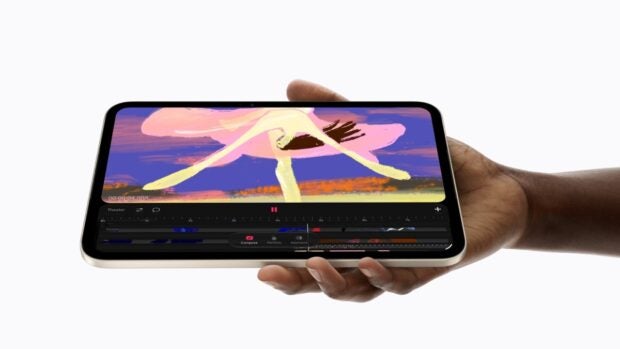
The most striking aspect of the 2026 iPad Mini is its physical evolution. Apple’s engineers have managed to achieve a thinner profile of just 5.4 millimeters—a notable reduction from the 6.3-millimeter predecessor. Despite this physical slimming, the screen real estate has expanded from 8.3 inches to 8.5 inches, achieved through a refined bezel design.
Perhaps the most significant hardware upgrade is the transition from Liquid Retina (LCD) to a sophisticated OLED display. This shift provides the deep blacks, high contrast ratios, and vibrant color accuracy that have become the hallmark of Apple’s premium hardware. Furthermore, for users who frequently work in high-glare environments, Apple has introduced an optional Nanotexturglas (nanotextured glass) finish, bringing a matte, glare-free experience to the smaller form factor for the first time.

Under the hood, the device is powered by the A20 Pro processor. This is the same silicon found in the flagship iPhone 18 Pro and iPhone 18 Pro Max, signaling that Apple no longer considers the “Mini” a secondary device. The performance metrics are staggering: Apple claims a 4.5x increase in AI performance and a 2.7x boost in graphical throughput compared to the previous model.
A Chronology of the iPad Mini Line
To understand the significance of this release, one must look at the trajectory of Apple’s smallest tablet.
- The Early Years (2012–2015): The iPad Mini launched as a response to the growing market for 7-inch tablets. It was widely lauded for its portability but often criticized for using legacy components compared to the flagship iPad.
- The Stagnant Period (2016–2018): For several years, the line received minimal updates, leading many to believe Apple might phase it out entirely.
- The Renaissance (2019–2021): The introduction of the 5th and 6th generations marked a return to form, incorporating Apple Pencil support and modern, industrial designs.
- The Pro-Grade Pivot (2026): With the introduction of the A20 Pro chip, OLED technology, and Wi-Fi 7 integration, the iPad Mini has officially transitioned from a “casual media consumption device” to a high-performance productivity tool for professionals on the go.
Supporting Data: Technical Specifications
The technical specifications of the 2026 iPad Mini place it firmly at the top of the tablet market. Below are the key technical pillars supporting this launch:
Connectivity and Processing
The device utilizes the new N1 chip dedicated to wireless communication. This enables native support for Wi-Fi 7 and Bluetooth 6.0, ensuring that the tablet is ready for the next generation of home and enterprise networking. The cellular-capable model features the C2 modem, shared with the iPhone 18 Pro series, providing industry-leading reception and data throughput.

Artificial Intelligence Integration
Apple Intelligence is the cornerstone of this device. The 512GB storage configuration comes with a specialized 16-core Neural Engine, specifically optimized for running large language models (LLMs) locally on the device. This ensures that privacy-sensitive AI tasks are processed on-device without needing to reach out to the cloud.
Audiovisual Enhancements
The inclusion of an "Acoustic Display" is a novel feature. By placing transducers behind the OLED panel, the screen itself vibrates to produce audio. This provides a wider soundstage and clearer vocal reproduction than traditional side-firing speakers, effectively turning the tablet into a miniature multimedia studio.
Official Responses and Strategic Positioning
While Apple has not held a live Q&A session regarding the release, their marketing documentation explicitly targets two demographics: mobile creative professionals and power users.
"We wanted to ensure that the iPad Mini was no longer a compromise," said a source close to the Apple design team. By supporting both the USB-C Apple Pencil and the high-end Apple Pencil Pro, Apple is clearly signaling that this tablet is intended for digital illustration, note-taking, and complex administrative tasks that require precision.
The decision to offer the "Extended Display" mode in iPadOS 27.2 is another strategic move. By allowing the iPad Mini to act as a seamless secondary monitor for Mac devices, Apple is integrating the tablet into the broader professional ecosystem, rather than letting it sit in a silo.
Implications: The Market Impact
The entry price of 749 Euros for the base model reflects a significant shift in market positioning. Apple is moving the iPad Mini out of the "budget" tier and into the "premium compact" category. This has several implications for the tech landscape:
1. The Death of the "Cheap Tablet" Narrative
By pricing the Mini at 749 Euros, Apple is essentially telling consumers that if they want a small tablet, they should be prepared to pay for flagship-level internals. This may create a vacuum in the sub-400 Euro market that Android manufacturers could potentially fill, though it is unlikely to affect Apple’s loyal user base.
2. The Rise of Local AI
The emphasis on the 16-core Neural Engine in the 512GB model is a clear signal that Apple intends to move as much processing power as possible to the edge. As AI becomes more deeply integrated into daily workflows, the iPad Mini’s ability to run models locally will likely become a major selling point for enterprise users who are concerned about data security.

3. Productivity Paradigm Shift
For years, the iPad Mini was viewed as a device for reading e-books or watching movies on a plane. With the combination of the A20 Pro chip and the ability to act as an extended display, Apple is trying to change the narrative. The device is now being sold as a portable workstation. Whether users will truly adopt a device with an 8.5-inch screen for serious work remains to be seen, but the hardware is certainly capable of handling the load.
4. The Sustainability of the Form Factor
By achieving a 5.4mm thickness, Apple has pushed the limits of current battery and cooling technology. The cooling efficiency of the A20 Pro in such a thin chassis will be a critical metric for early reviewers. If the device throttles under heavy load, the "pro" label may be contested. However, if the thermal management is as advanced as the chip architecture suggests, the iPad Mini could well become the most successful device of the 2026 fiscal year for Apple.
Conclusion: A Small Giant
The 2026 iPad Mini is a testament to Apple’s obsession with miniaturization. It is a device that refuses to be ignored, blending the raw processing power of an iPhone 18 Pro with the versatility of a portable display. While the price tag may be steep, the inclusion of OLED technology, Wi-Fi 7, and advanced AI capabilities makes it a future-proof investment.
As we look toward the upcoming “Pro and Tell” event, the iPad Mini serves as a high-water mark for what can be achieved when a company decides to stop treating a product category as an afterthought. It is, quite simply, the most powerful compact device ever produced by Apple, and it sets a formidable challenge for any competitor attempting to occupy the small-tablet space. For those who value portability above all else but refuse to sacrifice performance, the new iPad Mini is not just an upgrade—it is a mandatory acquisition.
Pre-orders for this powerhouse device begin on October 28, 2026, at 18:10, with retail availability following on November 6.