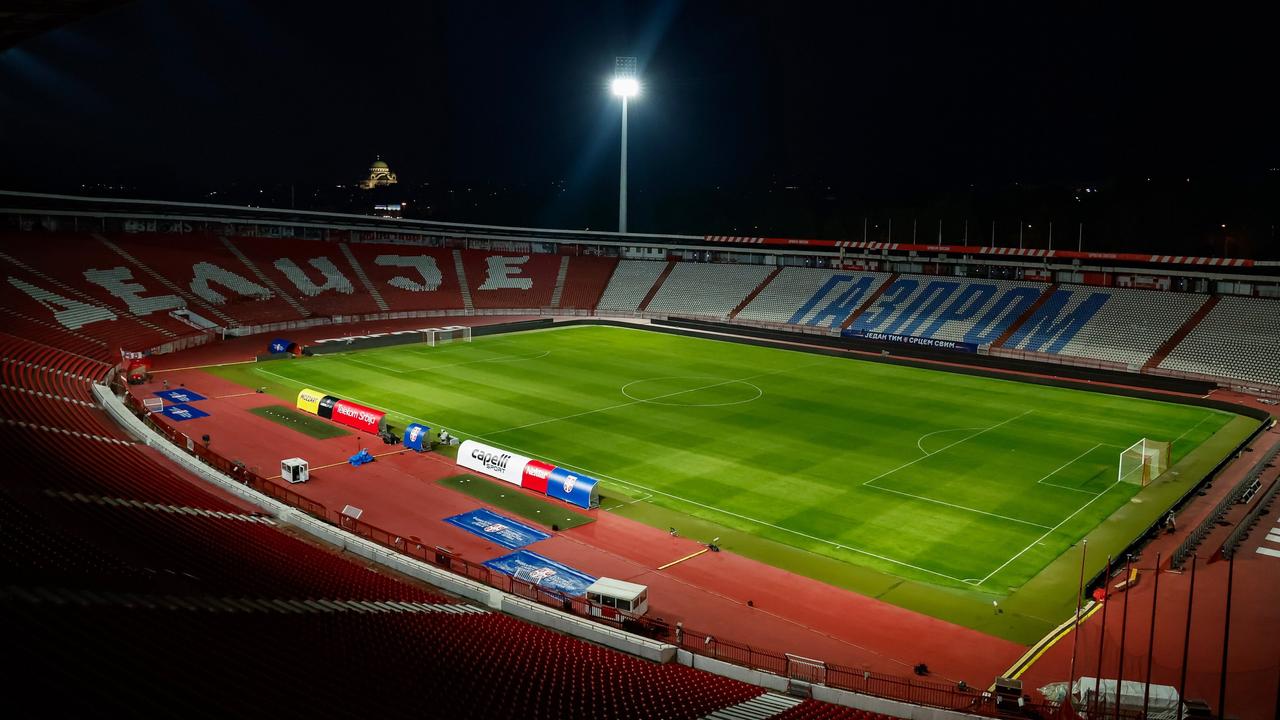
BELGRADE, Serbia — The upcoming UEFA Nations League encounter between Serbia and Germany, scheduled for November 13, 2026, will take place in an eerie, empty atmosphere. Following a series of grave disciplinary infractions, the Union of European Football Associations (UEFA) has mandated that the match at the iconic "Rajko Mitic" Stadium in Belgrade be held as a "ghost game," barring all spectators from entering the venue.
This decision, finalized in mid-October 2026, represents a significant blow to fans of both nations. For Germany, led by newly appointed Bundestrainer Jürgen Klopp, it marks an unusual start to his tenure on the road, as the team will be deprived of the passionate, if often volatile, atmosphere typically provided by the Serbian crowd.
The Genesis of the Sanction: A Pattern of Misconduct
The disciplinary action stems from a series of high-profile incidents during Serbia’s recent Nations League campaign. According to the official UEFA report, the Serbian Football Association (FSS) failed to control the conduct of its supporters during home matches against Greece and the Netherlands—both of which resulted in 1-2 defeats for the hosts.
Investigators cited widespread evidence of racist chants, xenophobic displays, and discriminatory behavior directed at opposing players and staff. The governing body’s ethics and disciplinary committee concluded that these actions breached the core statutes of European football, which prioritize inclusivity and anti-discrimination.
Beyond the stadium closure, the Serbian federation has been ordered to pay a fine of €50,000. While financial penalties are commonplace in football, the forced exclusion of the public is a severe escalation, signaling UEFA’s "zero-tolerance" policy regarding hate speech and racial abuse within the professional game.
Chronology of the Disciplinary Process
The path to this closed-door fixture began in the immediate aftermath of the October international window.
- Early October 2026: UEFA initiates disciplinary proceedings against the Serbian Football Association following match reports filed by the official delegates during the losses to Greece and the Netherlands.
- Mid-October 2026: The UEFA Control, Ethics, and Disciplinary Body convenes. Evidence, including video footage and audio recordings of crowd noise, is reviewed.
- October 22, 2026: UEFA officially confirms the verdict. The ruling mandates that the November 13 match against Germany must be played behind closed doors.
- Late October 2026: The German Football Association (DFB) notifies its traveling support and ticket applicants that no access to the stadium will be granted, effectively ending any hopes of a permitted away contingent.
The Serbian Attempt at Mitigation
In a final effort to salvage some form of atmosphere and minimize the financial fallout, the Serbian Football Association petitioned UEFA to soften the ruling. Their proposal included a request to allow primary school children to attend—a strategy often used by clubs to fill stadiums during partial bans—and to carve out a small allocation for German fans.
However, UEFA’s stance remained firm. While the request to allow children under 15 years of age is still being debated in some administrative corridors, the prospect of a full house or even a partial crowd for German supporters has been categorically ruled out. The DFB has since confirmed in a formal statement that "no tickets will be valid for the match," leaving thousands of traveling supporters with cancelled travel plans and disappointed expectations.
Official Responses and the DFB Stance
The DFB has expressed deep regret over the situation, acknowledging the frustration of the fans who had hoped to travel to Belgrade to support Jürgen Klopp’s side.
"We have been in constant communication with UEFA and the Serbian Football Association," a DFB spokesperson stated. "We share the disappointment of our supporters. We had hoped for a different outcome, particularly for our traveling fans who contribute so much to the atmosphere of these international fixtures. However, we respect the UEFA disciplinary process and understand the gravity of the circumstances that led to this decision."
For Jürgen Klopp, the news adds an unusual layer of complexity to his early international career. The former Liverpool and Dortmund manager, who secured his first victory as national coach with a 2-0 win over Serbia in Munich last month, will now have to prepare his squad for the sterile environment of an empty Rajko Mitic Stadium—a far cry from the raucous, cauldron-like atmosphere usually associated with the venue.
Implications for the Nations League and Beyond
The implications of this "ghost game" extend beyond the single match in Belgrade.
The Financial Impact
For the Serbian FA, the loss of gate receipts is substantial. Major Nations League fixtures are significant revenue generators. Beyond the €50,000 fine, the inability to sell tickets for a high-profile game against Germany represents a multi-million-euro loss, further punishing the federation for the failure to manage its fanbase.
The Sporting Atmosphere
Professional players often describe the difference between playing in front of a crowd and in an empty stadium as akin to the difference between a high-stakes match and a training session. For the German squad, the absence of fans might neutralize the "away-day" pressure, but it also removes the psychological challenge of performing in a hostile environment—a skill essential for success in upcoming World Cup qualification cycles.
The Broader Fight Against Racism
UEFA’s decision to impose such a heavy sanction is a clear message to national federations across Europe: the responsibility for fan conduct rests squarely on the shoulders of the host nation. The precedent set here suggests that future incidents of racism or discrimination will not be met with mere warnings or token fines, but with the removal of the one element that defines football: the fans.
Looking Ahead: The November 13th Matchup
When Germany takes the pitch in Belgrade, the silence of the stadium will serve as a stark reminder of the issues plaguing the sport. While the focus remains on the tactical battle between Klopp’s tactical setup and the Serbian side’s desperate need for points to stay relevant in their group, the backdrop will be an empty, echoing bowl of concrete.
The game will proceed as scheduled, broadcast to millions, but the absence of the 12th man—the fans—will serve as a somber footnote in the 2026/27 Nations League season. For the Serbian authorities, the challenge now is to implement rigorous security and educational programs to ensure that the gates of the Rajko Mitic can be reopened for future international competitions. Until then, the stadium stands as a quiet monument to the consequences of failing to uphold the standards of the sport.
As the international break approaches, both teams must now adjust their preparations. Germany, currently in a phase of tactical renewal under Klopp, will focus on maintaining their momentum despite the lack of crowd energy. For Serbia, the match represents an uphill battle, not only against one of the world’s elite teams but against the reputational damage caused by their own supporters. The ghost game is a reminder that in modern football, the responsibility of the game extends far beyond the final whistle—it begins with the conduct of those watching from the stands.