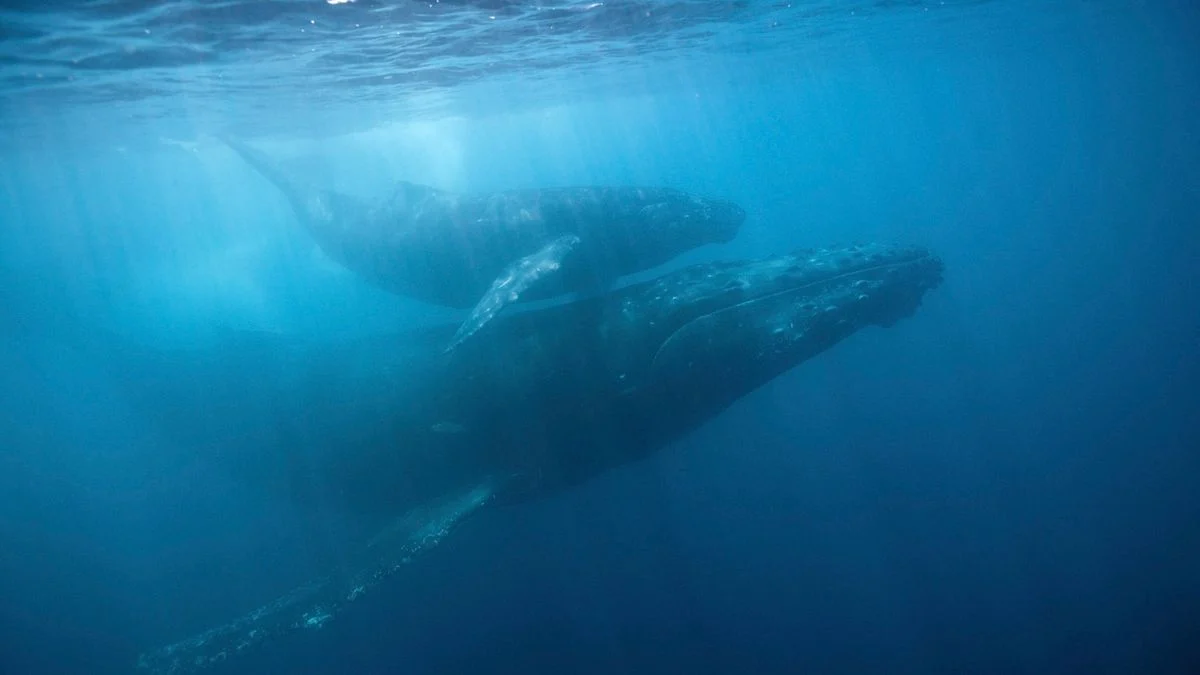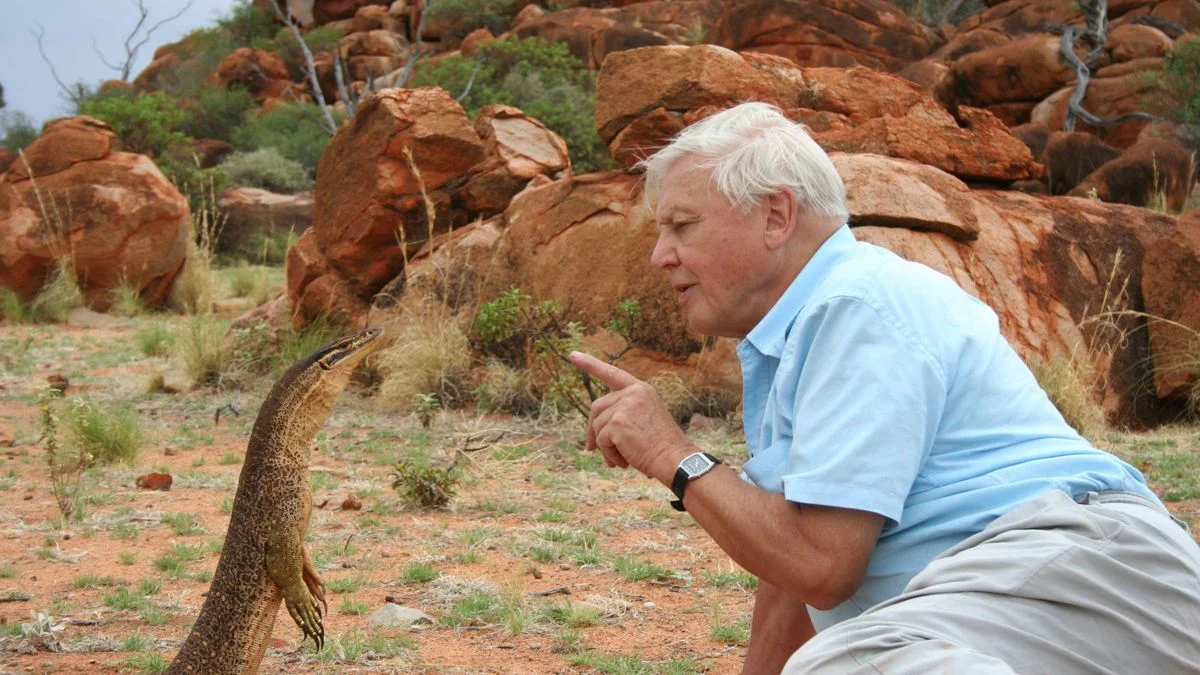
For over seven decades, he has been the gentle guide through the planet’s most remote landscapes. As Sir David Attenborough marks his 100th birthday, the world celebrates a man who transformed our understanding of the natural world—and, eventually, became its most formidable defender.
He is the man who brought the deep ocean to our living rooms, tracked the elusive snow leopard in the Himalayas, and gave a voice to the silent struggles of the Amazon rainforest. To audiences worldwide, Sir David Attenborough is more than a broadcaster; he is a global institution, a soothing presence, and a moral compass in an era of environmental crisis. As he turns 100 today, the legacy he leaves behind is not merely one of television excellence, but of a fundamental shift in how humanity perceives its place within the biosphere.
The Master Storyteller: A Legacy in Sound and Vision
Few figures in the history of media have achieved the near-universal acclaim of David Attenborough. His influence spans generations, bridging the gap between the black-and-white television era and the high-definition, immersive streaming age. Whether he is whispering in the tall grass to avoid startling a predator or marveling at the microscopic complexity of a fungus, his delivery remains the gold standard of nature documentary filmmaking.
The "Attenborough style" is defined by a paradox: it is both deeply intimate and intellectually expansive. His warm, rhythmic baritone—often described as the "voice of the planet"—possesses an uncanny ability to turn complex biological phenomena into gripping narratives. He avoids the clinical tone of the academic, preferring the wonder of an explorer. By positioning himself not as a lecturer, but as a fellow traveler in the wild, he invites the viewer into a shared experience of discovery.
Chronology of a Naturalist’s Life
To understand the scale of Attenborough’s contribution, one must look at the arc of his career, which began long before the term "climate change" entered the mainstream lexicon.
The Early Years (1926–1952)
Born in London, David Frederick Attenborough grew up on the campus of University College, Leicester, where his father was the principal. His early fascination with fossils and natural history provided the foundation for a career that would eventually span the globe. After studying natural sciences at Cambridge and a brief stint in the Royal Navy, he joined the BBC in 1952.
The Zoo Quest Era (1954–1964)
Attenborough first gained national prominence with Zoo Quest, a pioneering series that involved traveling to remote regions to capture animals for the London Zoo. It was during this time that he learned the practicalities of field production. While his early approach—collecting animals for captivity—is viewed through a critical lens by today’s standards, it was the formative crucible where he developed his unique on-camera charisma and his deep, hands-on knowledge of wildlife.
Leadership and Innovation (1965–1973)
During his tenure as controller of BBC Two, Attenborough was instrumental in commissioning iconic works, including Monty Python’s Flying Circus. However, his heart remained in the field. He famously resigned from his administrative role to return to the front lines of filmmaking, a decision that would lead to the most productive period of his life.
The Landmark Series (1979–2020)
Beginning with Life on Earth (1979), Attenborough set a new benchmark for documentary filmmaking. Over the following decades, he produced a staggering array of series, including The Blue Planet, Planet Earth, and Our Planet. These works did not just document nature; they defined the aesthetic of the genre.
From Observer to Advocate: A Shift in Perspective
For much of his early career, Attenborough maintained the traditional "objective" stance of the BBC reporter. He was a chronicler, not an activist. However, the closing years of the 20th century and the dawn of the 21st brought a profound evolution in his public role.
Witnessing firsthand the degradation of coral reefs, the bleaching of oceans, and the unprecedented loss of biodiversity, Attenborough made a conscious decision to break the silence. His message shifted from "look at the beauty of this world" to "look at what we are destroying, and here is how we can fix it."

This transition was not without its critics, but it was profoundly effective. By leveraging his immense personal credibility, he helped mainstream the conversation about sustainability. His 2020 documentary, A Life on Our Planet, served as his "witness statement," a powerful synthesis of his life’s work and a plea for rewilding the Earth.
Supporting Data: The Attenborough Effect
The "Attenborough Effect" is a well-documented phenomenon in environmental economics and public policy. Research suggests that his documentary series directly correlate with shifts in consumer behavior and political discourse.
- Plastic Awareness: Following the broadcast of Blue Planet II, public interest in plastic pollution in the UK surged by over 500% according to search engine data. This was followed by tangible policy shifts, including government bans on single-use plastics.
- The Climate Dialogue: According to a study by the University of Exeter, viewers who watched Attenborough’s climate-focused documentaries showed a significantly higher propensity to donate to conservation organizations and support carbon-neutral legislative agendas.
- Educational Impact: His work serves as the primary gateway for millions of young people into the fields of biology, ecology, and environmental science. His influence on the next generation of researchers is immeasurable.
Official Responses and Celebrations
As London prepares for a grand celebration at the Royal Albert Hall, world leaders and scientific institutions have joined the chorus of praise.
"Sir David has done more to bring the natural world to the human consciousness than any other individual in history," noted a spokesperson for the Royal Society. "He has bridged the gap between scientific complexity and public empathy."
The BBC’s special programming includes a retrospective of his most dangerous and daring shoots—moments where, as a younger man, he stood mere feet from silverback gorillas or dived into shark-infested waters. Yet, those close to him suggest that the grandiosity of the celebrations sits uncomfortably with the man himself.
"He would much rather be in his garden or working on a new script," says longtime producer Alastair Fothergill. "The fame was always a byproduct of the mission, never the goal. He hates the cult of personality."
Implications: A Future Without the Guide
As we celebrate his 100th birthday, the world faces a critical question: What happens to the environmental movement without its most recognizable face?
Attenborough has been the connective tissue between the scientific community and the general public. He has provided a sense of continuity in a rapidly changing world. The implications of his eventual retirement are significant. The environmental movement must now reckon with how to carry forward the torch of "optimistic urgency" that he championed.
His life’s work suggests that the answer lies not in a single successor, but in the collective commitment of those he inspired. He spent his life teaching us that we are not observers of the natural world, but integral parts of it.
As Sir David Attenborough reaches this historic milestone, he leaves behind a world that is more informed, more concerned, and more connected to its wild origins than it was when he first stepped in front of a camera in 1952. He has, quite literally, opened our eyes. The duty now falls to us to ensure that the wonders he spent a century documenting remain for the next generation to witness.
Happy 100th Birthday, Sir David. Your voice remains the heartbeat of the wild.