

By Peter Ahrens
It is Saturday, 3:05 PM. The iconic fanfare begins to swell—a precise, rhythmic arrangement of drums and brass, lasting exactly one minute and 44 seconds. For millions of Germans, this sound was not merely a radio intro; it was a societal ritual, a demarcation line that split the week into a "before" and an "after." And then, cutting through the melody with a calm, resonant authority, came the voice: "WDR 2, you are listening to Sport und Musik—goals, points, championships. At the microphone: Dietmar Schott."
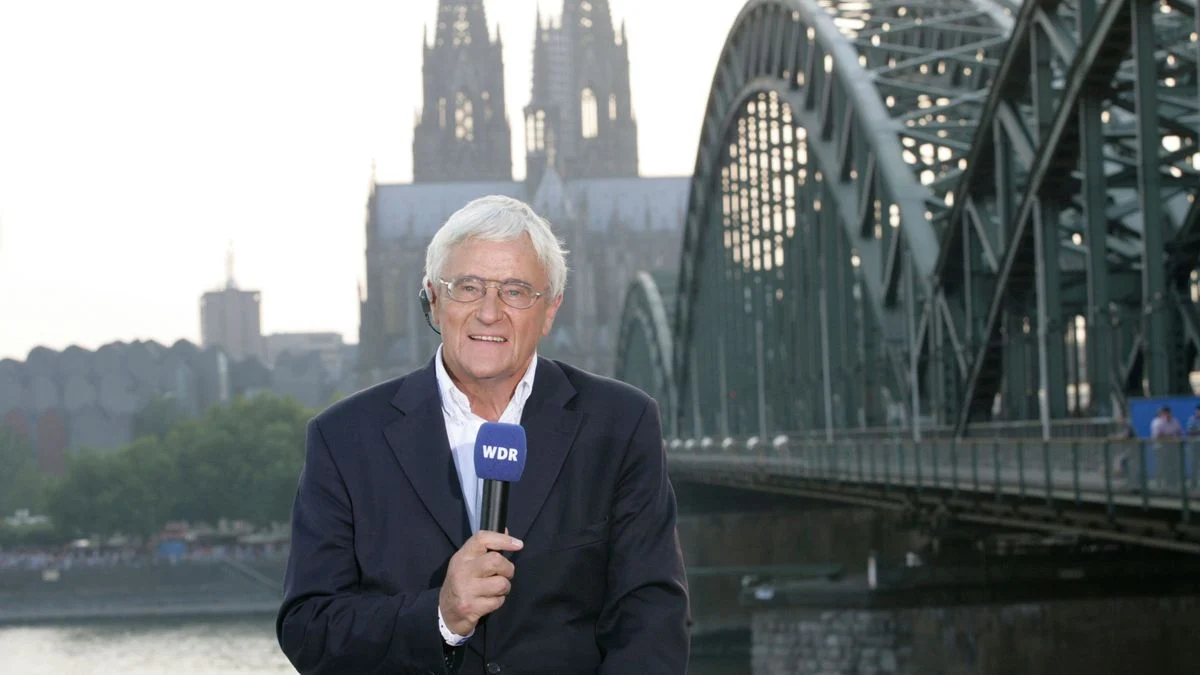
Dietmar Schott, the man who became synonymous with the Bundesliga’s golden era of radio broadcasting, has passed away at the age of 88 following a long illness. His death, announced by the Westdeutscher Rundfunk (WDR), marks the end of an era for German sports journalism, closing the book on a time when the radio was the primary window into the stadium for an entire nation.
A Legacy of "Unexcited" Excellence
To understand the impact of Dietmar Schott, one must understand the era of the classic "Bundesliga-Konferenz." In the decades between the 1970s and his retirement in 2004, Schott was more than a reporter; he was a companion. For those who grew up in the shadow of the industrial heartlands of North Rhine-Westphalia, his voice was a permanent fixture of the Saturday afternoon coffee table.
Schott possessed a rare, increasingly endangered quality in modern media: composure. While contemporary sports broadcasting often thrives on manufactured hype and hyperbole, Schott remained consistently at "room volume." His delivery was never frantic; he was a man who had seen too much and known too much to be rattled by a missed penalty or a last-minute goal. He offered the listener a steady hand, a calm presence that transformed the chaos of the football pitch into a coherent, gripping narrative.

Chronology of a Storied Career
Dietmar Schott’s career was inextricably linked to the evolution of the Westdeutscher Rundfunk. He began his tenure at a time when the Bundesliga was becoming the heartbeat of German weekend culture.
- The Early Years (1970s): Schott joined the rotation of presenters for the flagship Sport und Musik program, working alongside the legendary Kurt Brumme. He quickly established himself as the heir apparent to the broadcast throne.
- The Voice of the Bundesliga: Throughout the 1980s and 90s, he became the primary face—or rather, the primary voice—of the Saturday afternoon conference. His signature greeting, "The terrible football-free time is over," became a cult phrase that signaled the start of the season for countless fans.
- The Transition: Even as the media landscape shifted toward television and, eventually, digital streaming, Schott maintained the integrity of the radio format. He bridged the gap between the analog era and the early digital age until his retirement in 2004.
- Legacy: Beyond his work on the mic, he served as a mentor to a generation of sports journalists, emphasizing the importance of accuracy, neutrality, and the "less is more" approach to live reporting.
More Than Just a Football Reporter
It is one of the great ironies of German media history that a man so famously associated with the Bundesliga was, in his own estimation, not a "football reporter" by trade. While he was a staunch supporter of Hamburger SV, his professional heart beat for different disciplines.
In his extensive career, Schott reported from the sidelines of a football match only twice: once for a clash between Borussia Mönchengladbach and 1. FC Nürnberg, and once for a regional game between Viktoria Köln and Rot-Weiss Essen. His true passion lay in the rhythmic intensity of basketball and the high-stakes world of equestrian sports.
His love for the latter was profound. He shared a professional bond with his WDR colleague Adi Furler, with whom he explored the intricacies of horse racing. Schott was not just an observer; he was a participant. He owned and bred horses at his home in Lohmar, even taking to the sulky himself. He recorded 14 victories on the track and provided live coverage of the prestigious Prix d’Amérique in Paris more than 30 times. This multifaceted career highlights a time when German sports journalism allowed for specialization and deep expertise, rather than the "all-rounder" demands of today’s 24-hour news cycle.
Official Responses and Tributes
The announcement of his passing prompted an immediate outpouring of respect from colleagues and public officials. WDR Director-General Kathrin Vernau led the tributes, calling Schott a "radio legend."

"Dietmar Schott was a defining voice of the Westdeutscher Rundfunk," Vernau stated. "He brought the drama and the joy of sports into the living rooms of our listeners for decades. He was a master of his craft, known for his calm, objective, and deeply knowledgeable style. He will be remembered not just for the games he covered, but for the way he made listeners feel a part of the sporting community."
Former colleagues described him as a "gentleman of the microphone." In an industry that often prioritizes speed, Schott prioritized substance. He was known for his rigorous preparation and his ability to synthesize complex, simultaneous match reports into a coherent flow for the listener, a skill that remains the gold standard for radio producers today.
The Cultural Implication: The End of an Analog Era
The passing of Dietmar Schott serves as a poignant reminder of the cultural shift in how we consume sport. When Schott began his career, the "Bundesliga-Konferenz" was a communal experience. Families would huddle around the radio; fans in cars would pull over to hear the final scores. It was an era where the imagination of the listener played a vital role—the reporter’s voice provided the frame, but the listener painted the picture of the action on the pitch.
Today, in the age of instant visual gratification and multi-angle replays, that shared radio experience has evolved. While the Konferenz format persists, the intimacy that Schott cultivated—a sense of being a guest in the listener’s home—is harder to replicate in a fragmented media landscape.
Furthermore, his career highlights the changing geography of German football. Schott’s prime years coincided with an era where North Rhine-Westphalia was the undisputed epicenter of the sport. From Wattenscheid to Uerdingen, from Bielefeld to Düsseldorf, the map of the Bundesliga was dotted with clubs from the region. Many of these clubs have since faded from the top flight, mirroring the transition of the radio landscape itself.

Final Reflections
Dietmar Schott was a man of his time, yet his influence remains timeless. He taught generations of journalists that you do not need to shout to be heard, and that the most effective way to convey emotion is often to remain calm while the world around you is exploding with excitement.
He was the steady anchor in the storm of a Saturday afternoon, a voice that provided continuity in an ever-changing world. As we look back on his career, we are not just remembering a man; we are remembering the sound of our own past—the crackle of the radio, the tension of the final minute, and the reassuring, sonore voice that told us everything was exactly as it should be.
Dietmar Schott leaves behind a legacy of journalistic excellence that will continue to serve as a benchmark for those who understand that in radio, the most powerful tool isn’t the technology, but the human voice. He was, in every sense of the word, the soundtrack to the Bundesliga, and for that, he will be missed.












Leave a Reply