The 2026 FIFA World Cup, hosted across North America, reached its climactic conclusion on July 19, 2026, as Spain secured their second world title with a hard-fought 1-0 victory over Argentina. While the tournament was marketed as a festival of football, the final match in New York/New Jersey will be remembered for two conflicting narratives: the technical dominance of the Spanish "Golden Generation 2.0" and the ugly, uncontained aggression that marred the final moments of the tournament.
The Final: A Tactical Masterclass and a Violent Epilogue
The match itself was a gripping tactical stalemate that stretched into extra time. With both sides struggling to break the deadlock, Ferran Torres finally found the back of the net in extra time, effectively ending Argentina’s reign as world champions.
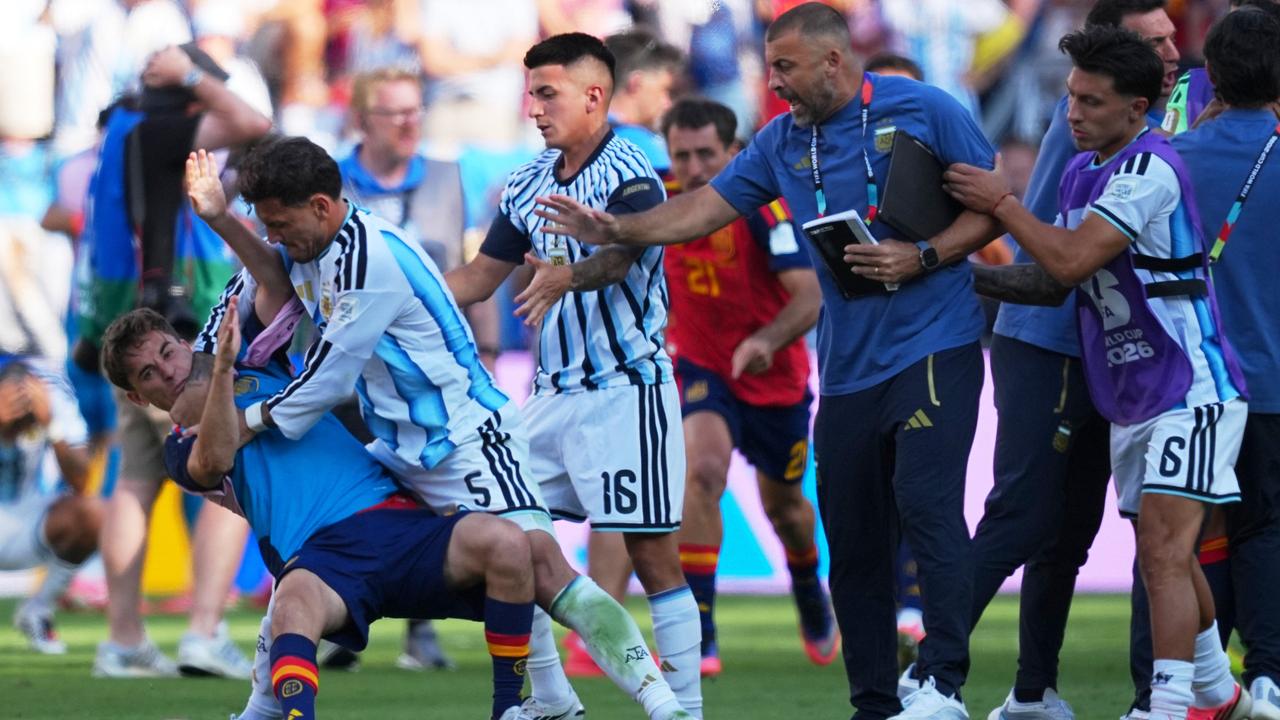
However, the sporting triumph of Spain was overshadowed by the behavior of Argentina’s Leandro Paredes. Immediately following the final whistle, the midfielder launched an unprovoked physical assault on Spain’s Eric Garcia, shoving him to the ground and striking his neck. As the situation escalated, Paredes grabbed Gavi by his jersey, striking him in the face and pulling him down in a display of unsportsmanlike conduct that shocked the 80,000 spectators in the stadium. Paredes, who was already on a yellow card, was issued a straight red card. FIFA’s disciplinary committee has confirmed that a full investigation into these "acts of violence" is underway, with severe sanctions expected to follow.
Chronology of the 2026 World Cup Finale
The days surrounding the final were a whirlwind of logistical challenges, high-profile celebrity appearances, and shifting political dynamics.
- July 17: Sepp Blatter criticized the FIFA leadership, specifically targeting the introduction of a 25-minute halftime show, calling it a "Super Bowl copy" that compromises the integrity of the game.
- July 18: Logistical nightmares began as fans reported waiting hours to enter the stadium due to technical failures in the ticket-scanning systems and a heavy security presence overseen by the U.S. Secret Service.
- July 19 (Morning): Spain canceled its final training session due to severe thunderstorms in New Jersey, while Lionel Messi issued an emotional farewell message on Instagram, hinting that his international career had reached its sunset.
- July 19 (Evening): The final kicked off. Donald Trump attended the match, drawing loud boos from the crowd whenever he was shown on the stadium’s giant screens.
- July 19 (Post-Match): The aftermath was defined by the violence of Leandro Paredes, contrasting sharply with the jubilant celebrations of the Spanish squad.
The Rise of Spain’s Second Golden Generation
Spain’s victory confirms their current status as the undisputed leaders of world football. This win marks their 17th major title in five years across both men’s and women’s programs. Since 2022, the men’s team has secured six titles, including the 2024 European Championship and the 2026 World Cup.
The emergence of Lamine Yamal has been the centerpiece of this success. At just 19 years and six days old, Yamal became the first player in history to win both the European Championship and the World Cup by the age of 19. He joins the pantheon of football legends, ranking alongside Pelé and Ronaldo as one of the youngest world champions ever. Rodri, the tournament’s best player, has solidified his legacy as a two-time player of the tournament, having also claimed the award during the 2024 European Championship.
Official Responses and Political Undertones
The tournament was heavily politicized, serving as a backdrop for high-level political posturing. FIFA President Gianni Infantino used the occasion to praise U.S. President Donald Trump, calling the event "the greatest human, social, and cultural event that humanity has ever seen." Infantino’s rhetoric, describing FIFA as the "official happiness provider of humanity," has drawn criticism from those who argue that the governing body is losing touch with the sport’s roots.
The presence of political leaders like Mexican President Claudia Sheinbaum and Canadian Prime Minister Mark Carney emphasized the trilateral nature of the tournament. However, the diplomatic optics were complicated by incidents like the entry denial of Spanish legend Joan Capdevila, who was blocked from entering the U.S. due to a past match played in Iran. Capdevila was forced to publicly appeal to Donald Trump on social media to resolve the bureaucratic impasse.
Economic Implications and the "Dynamic Pricing" Controversy
The 2026 World Cup set new financial benchmarks, but also ignited fury among fans regarding FIFA’s revenue strategies. The champion received a record $50 million, while the runner-up walked away with $33 million.
Controversy erupted over FIFA’s use of "Dynamic Pricing," a system that adjusted ticket costs based on real-time demand. On the morning of the final, tickets were listed at between $10,000 and nearly $30,000 each. This pricing model turned the stadium into an exclusive enclave for the ultra-wealthy, alienating the working-class fans who have historically formed the backbone of the sport. Fans were left to navigate an unregulated secondary market where tickets were being listed for millions of dollars, a reality that Blatter and other critics suggest marks a "dark turn" for the sport’s accessibility.
The Aftermath: Implications for Argentina and England
For Argentina, the loss represents the end of an era. Lionel Messi, who appeared in his third World Cup final, leaves behind a legacy that has fundamentally changed the sport in his country. The government has already declared a national holiday to honor the team upon their return to Buenos Aires, signaling that despite the loss, the national fervor remains intact.
Conversely, England’s campaign under Thomas Tuchel ended in turmoil. Despite a high-scoring 6-4 victory in the third-place match against France, Tuchel remains a polarizing figure. The England manager was subjected to boos and whistles from his own fans during the tournament, a reaction largely attributed to his perceived defensive tactics. While pundits like Martin Keown have defended his tenure, the public sentiment suggests that the FA may face immense pressure to re-evaluate his position in the coming months.
Looking Forward: The State of the Game
As the dust settles on the 2026 World Cup, the footballing world is left to reconcile the brilliance on the pitch with the institutional issues off it. Spain has clearly built a dynasty that rivals the greatest teams in history, with a pipeline of young talent that suggests they will remain at the top of the FIFA rankings for years to come.
However, the violence displayed by players like Paredes and the growing commercialization of the event point to deeper systemic challenges. When the governing body prioritizes dynamic ticket pricing and political sycophancy over match integrity and accessibility, the sport risks losing the very fans who make it the "world’s game."
The 2026 tournament will be remembered for the records broken by Yamal and the tactical masterclass of the Spanish side, but history will also judge the FIFA leadership for their role in turning the beautiful game into a spectacle that—while globally successful—is becoming increasingly disconnected from the reality of the people who love it. As the world turns its gaze to the next cycle, the questions surrounding player conduct, financial ethics, and the role of politics in sports will undoubtedly remain at the forefront of the global conversation.