The dust has finally settled on the 2026 FIFA World Cup, a tournament that will be remembered as much for its gargantuan scale as for the footballing narrative it wove across North America. With 104 matches played across the United States, Canada, and Mexico, the tournament was not merely a competition; it was an endurance test for players, a logistical marathon for organizers, and a relentless buffet for the global television audience.
As the final whistle blew and Spain lifted the trophy, the sport found itself at a crossroads. Was this the pinnacle of footballing expansion, or a dilution of quality disguised as a grand spectacle? The answer, as it turns out, depends entirely on when you tuned in.
Main Facts: A Tournament of Superlatives
The 2026 edition was defined by the FIFA ethos of "more is better." With the expansion to 48 teams, the tournament structure shifted, leading to a sprawling group stage where the margin for error was significantly wider than in previous iterations.
Spain emerged as the undisputed champions, validating their status as the world’s premier footballing nation. Their victory was a triumph of structure and technical precision over the grit and often cynical defensive tactics employed by runners-up Argentina. The final itself was a microcosm of the tournament: high-stakes, technically demanding, and ultimately decided by the side that prioritized the collective over individual brilliance.
Statistically, the tournament set records across the board. It saw the highest number of total goals in a single World Cup, the largest cumulative live attendance, and a staggering number of broadcast hours. Yet, beneath these glossy figures lie the nuanced truths of a tournament that balanced brilliance with boredom.
Chronology: From Group Stage Fatigue to Dramatic Climax
The journey began with a sense of apprehension. In the early group stages, the expanded format revealed its primary weakness: the lack of pressure. Because eight of the best third-placed teams advanced to the knockout stages, top-tier nations—like Spain—could afford to start slowly, drawing matches against perceived minnows like Cape Verde without fear of immediate elimination.
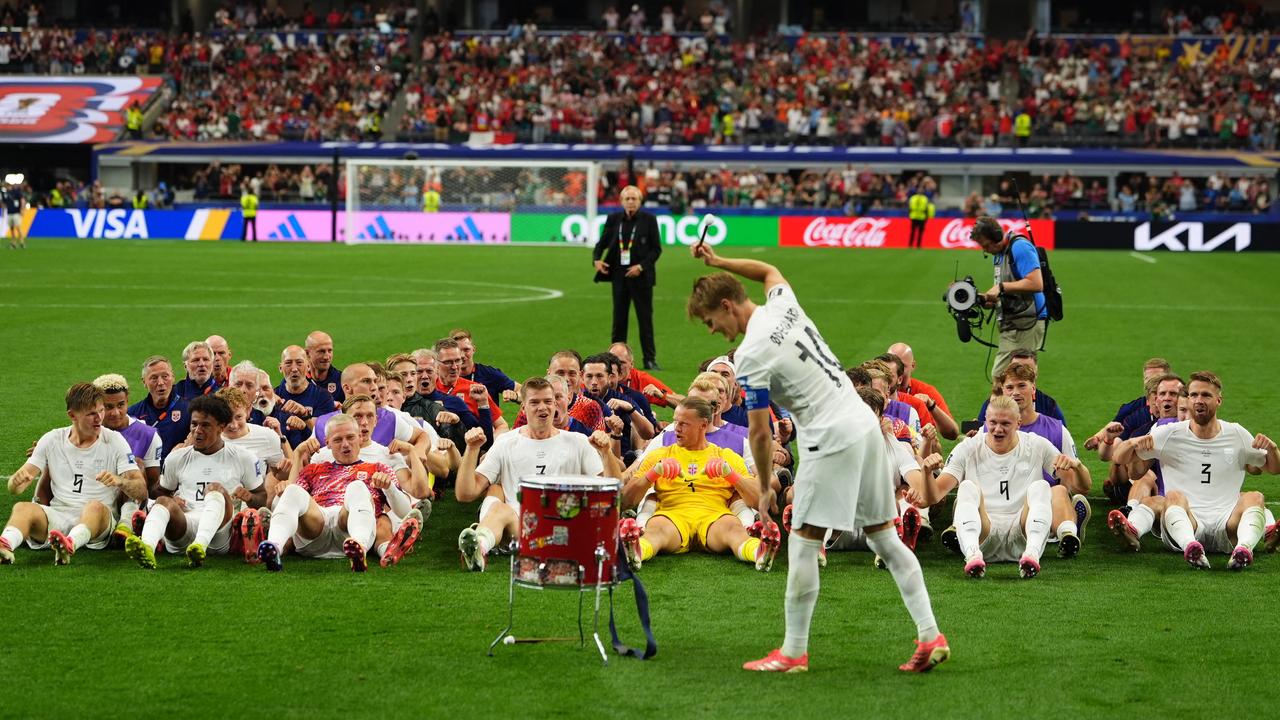
This safety net drained the intensity from the opening week. However, as the tournament progressed into the Round of 32, the "XXL" nature of the event began to pay dividends. The knockout stages produced an extraordinary amount of late-game drama. Five crucial goals were scored after the 86th minute, and the tension of three penalty shootouts and two matches decided in extra time added a layer of adrenaline that justified the tournament’s duration.
The tournament hit its zenith during the quarter-final and semi-final stages, where the cream of the crop rose to the top. The clash between Argentina and Cape Verde—a 3-2 thriller that went to extra time—remains the tournament’s crowning narrative arc, proving that the expansion could facilitate encounters that would otherwise never occur.
Supporting Data: The Anatomy of a Goal
The technical profile of the 2026 World Cup provides a fascinating insight into how modern football is evolving at the highest level.
- Goal Scoring Efficiency: The tournament averaged 2.9 goals per match, the highest mark since 1970. This offensive surge suggests that, despite fears of defensive "parking the bus," the quality of attacking play remained consistently high.
- The Power of the Bench: 19 percent of all goals scored were netted by substitutes. This high percentage underscores the importance of squad depth in a format that demands rotation due to the sheer volume of games.
- Long-Range Brilliance: 14 percent of goals were scored from outside the penalty area, a remarkably high figure that points to the increasing prevalence of long-range shooting as a tactical response to congested penalty boxes.
- The Missing Trends: Interestingly, traditional methods of scoring declined. Only 20 percent of goals originated from set-pieces, and a mere 8 percent came from counter-attacking transitions. For tacticians who view the "fast break" as the modern key to victory, these statistics serve as a sobering reality check.
Official Responses and the "Infantino Doctrine"
FIFA President Gianni Infantino has hailed the tournament as an unmitigated success, pointing to the record-breaking attendance and the global reach of the matches. For the governing body, the "XXL" format is not a bug; it is a feature.
Insiders suggest that the data from 2026 is already being used to justify a further expansion to 64 teams for future cycles. The argument from Zurich is simple: if the expansion to 48 teams provided enough drama to sustain a six-week festival, a 64-team tournament would theoretically heighten the stakes by returning to a stricter qualification format where only the top two teams from each group advance.
Critics, however, remain vocal. Leading football analysts argue that the expansion has diluted the prestige of the group stage, turning the first two weeks into a "qualification phase" rather than a true World Cup. The fear is that in the pursuit of "more," the scarcity—and therefore the value—of the World Cup trophy is being systematically eroded.
Implications: The Future of the Beautiful Game
The implications of the 2026 World Cup extend far beyond the pitch. First, the tournament confirmed that while "underdogs" like Cape Verde can capture the public imagination, the top four teams in the FIFA rankings still largely dominate the final stages. The dream of a complete upheaval of the global football order remains just that—a dream.
Second, the tournament highlighted the growing disconnect between "superstar culture" and "team identity." While household names like Lionel Messi, Kylian Mbappé, and Erling Haaland provided the highlights, the ultimate victory of Spain demonstrated that the most effective football remains a collective endeavor. Individual brilliance is the seasoning, but tactical discipline remains the meat of the meal.
Finally, the 2026 experiment suggests that the World Cup has moved from a "viewing event" to a "lifestyle experience." The sheer volume of games means that no single fan can watch everything. Viewers now curate their own experiences—watching the highlights of a late-night thriller upon waking or diving deep into the tactical nuances of a key knockout game during their lunch break.
Conclusion: A Feast for the Disciplined Fan
Ultimately, the 2026 World Cup was a triumph of accessibility. It offered a buffet of football where everyone could find something to satisfy their palate. For those who crave the tactical purity of defensive organization, it may have been a disappointment. But for those who view football as a grand, global theater of the unexpected, it was a triumph.
The lesson of this tournament is simple: in an era of "always more," the quality of the football is no longer just about the players on the grass; it is about the engagement of the viewer. The 2026 World Cup proved that there is enough football for everyone, provided you have the dedication to find the right matches at the right time. As we look toward the future, the question is no longer whether the tournament is too big—it is whether the fans are ready to navigate the sheer scale of the spectacle that FIFA has promised to keep growing.