Graz, the capital of the Austrian state of Styria, is often marketed as a city of indulgence—a place where the baroque architecture of the k.u.k. (Imperial and Royal) era meets a seemingly effortless, prosperous lifestyle. Visitors wander past well-preserved medieval alleys, savoring pumpkin seed oil in local taverns, and admiring the neoclassical grandeur of the opera house. However, beneath this polished veneer of "Genussstadt" (city of indulgence), a psychological restlessness is bubbling. This tension is currently being channeled by the steirischer herbst, one of Europe’s most prestigious and uncompromising arts festivals, which this year centers its focus on the "Red Flags" of our contemporary era.
Main Facts: A Festival of Warning Signs
The steirischer herbst 2026, currently underway, serves as a mirror to a society grappling with internal fractures. Under the direction of Ekaterina Degot, the festival has moved away from the overt, explosive provocations of previous years. Instead, it has opted for a more insidious, atmospheric approach—one that probes the psychological unease of a world where political polarization, historical trauma, and digital paranoia have become the new normal.
The festival’s central theme, "Red Flags," is a deliberate invocation of warning signs—the personal and societal alerts that often go unheeded until it is too late. By occupying spaces that reflect both the history and the socioeconomic divisions of Graz, the festival forces a confrontation with the "ghosts" that haunt the city’s quiet streets.

Chronology: From Imperial Grandeur to Modern Political Fractures
The history of Graz is a tapestry of shifting political currents. Since 2021, the city has been led by Elke Kahr of the Communist Party (KPÖ), a local political phenomenon that saw her re-elected just weeks ago. Her platform, which includes a focus on social equity and public transit, stands in stark contrast to the broader political climate of the surrounding state of Styria.
Since 2024, the state government, led by FPÖ Governor Mario Kunasek, has been criticized for cultivating a more nationalist, authoritarian rhetoric. This regional friction is not new. The shadow of the FPÖ’s historical entanglements—most famously illustrated by the 2018 wedding of then-Foreign Minister Karin Kneissl, where Vladimir Putin was a guest of honor—still hangs over the region.
The festival acknowledges this duality. It receives funding from both the communist-led city administration and the right-wing provincial government, a paradoxical arrangement that only adds to the "ghostly" atmosphere of the event. The festival’s main venue, a former schnitzel restaurant in the district of Gries—a neighborhood marked by its multicultural population and socioeconomic struggles—serves as a physical manifestation of this conflict.

Supporting Data and Artistic Interventions
The artistic program of steirischer herbst 2026 is curated to disorient and reflect. In the aforementioned Gries district, the festival has transformed a derelict, once-popular eatery into an "artistic house of horrors."
The Surrealism of Maya Deren
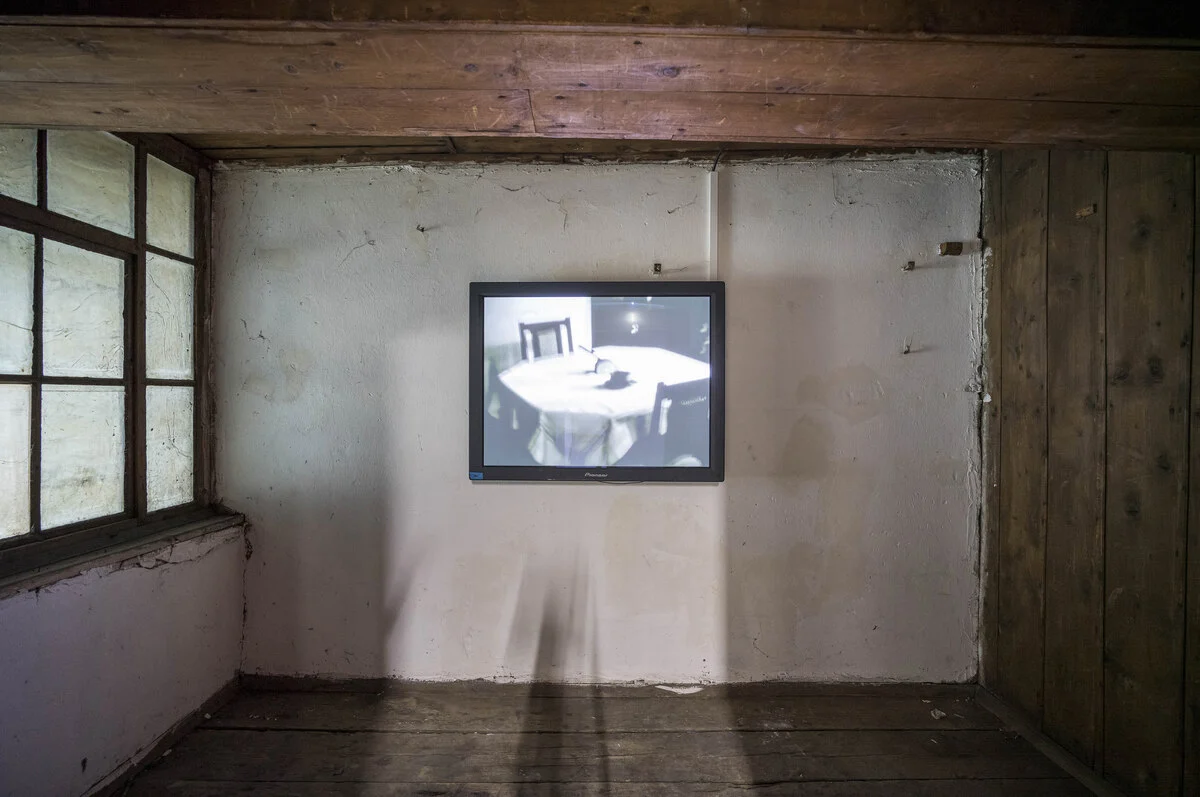
In a cramped attic room of the former restaurant, Maya Deren’s 1943 experimental classic Meshes of the Afternoon plays on a loop. The film, a staple of avant-garde cinema, captures the feeling of a reality losing its grip. Deren’s protagonist wanders through a sequence of surrealist domestic spaces, constantly losing her keys and confronting her own double. By placing this work in such a setting, the curators draw a parallel between the 1940s experience of displacement and the modern individual’s struggle to find certainty in a world where truth is increasingly fragmented.
Nikolay Karabinovych’s Detektivic Paranoia
The Ukrainian artist Nikolay Karabinovych takes the festival’s theme into the realm of political mania. He assumes the persona of a detective in a fictionalized, abandoned office, meticulously documenting what he perceives as the "mafioso" entanglements of power. His collection—a chaotic assemblage of Soviet-era artifacts, fashion photography, and cuckoo clocks—attempts to bridge the gap between historical figures like Walter Benjamin and the modern-day marriage of Serbian paramilitary leader Arkan and pop star Ceca. Karabinovych’s work serves as a chilling reminder of how easily personal obsession can morph into a broader, systemic critique of corruption.

Heather Phillipson’s "Quaking" Installation
In the first floor of the venue, British artist Heather Phillipson presents The Quaking and the Shaking of Our Previous Making. The installation features a "party" that has long since ended: light organs spin into the void, flowers wither in plastic bags, and a large, ceremonial loaf of bread sits in the center of the room. It is a mourning for the lost "underground"—the subcultures of squats, illegal raves, and radical community organizing that have been squeezed out by gentrification and surveillance.
Official Responses and Curatorial Intent
Ekaterina Degot, the festival’s Intendant, has consistently steered steirischer herbst toward themes that require a degree of intellectual labor from the audience. In previous years, the festival has dismantled the concept of "Heimat" (homeland) and brought the wreckage of the Ukrainian war directly into the galleries of the Neue Galerie.
This year, the strategy is one of "psychological unease." Degot argues that when individual anxieties—the "red flags" we see in our daily lives—fail to find a space for public discourse, they fester. By framing these anxieties as art, the festival provides a public outlet for the private, often paranoid, thoughts of the citizenry. The festival acts as an uncomfortably loud alarm clock, ringing in a city that would perhaps prefer to remain asleep in its baroque comfort.

Implications: The Role of Art in a Polarized Society
The success of steirischer herbst 2026 lies in its refusal to offer simple solutions. It does not preach; it questions. By focusing on the "Red Flags" of the 21st century, the festival explores:
- The erosion of the public sphere: As neighborhoods like Gries are gentrified, the spaces for genuine political and social interaction disappear, replaced by sanitized versions of community.
- The rise of authoritarian nostalgia: The constant invocation of "the past" by right-wing movements is countered by the artists’ focus on the darker, often neglected histories of the region.
- The normalization of crisis: Through the works of Karabinovych and others, the festival suggests that we have become desensitized to the "mafioso" structures of global power, accepting them as the natural order of things.
The festival’s impact is perhaps best summarized by the uneasy feeling it leaves with the visitor. Walking out of the darkened, art-filled rooms of the Gries schnitzel-house back into the bright, tourist-friendly streets of Graz creates a jarring dissonance. One is forced to wonder: Is the beauty of the city a mask, or is the darkness found in the art a projection?
Ultimately, steirischer herbst proves that art remains one of the few arenas where the unspoken can be articulated. It demands that the city look at its own reflection—not the one in the tourist brochures, but the one hiding in the attic, the one tracking the movements of the powerful, and the one mourning the loss of a collective, rebellious spirit. As the festival runs until November 15, it continues to serve as a vital, if profoundly uncomfortable, pulse-check for a society standing at a crossroads. The red flags are flying; the question remains whether the public will choose to see them.