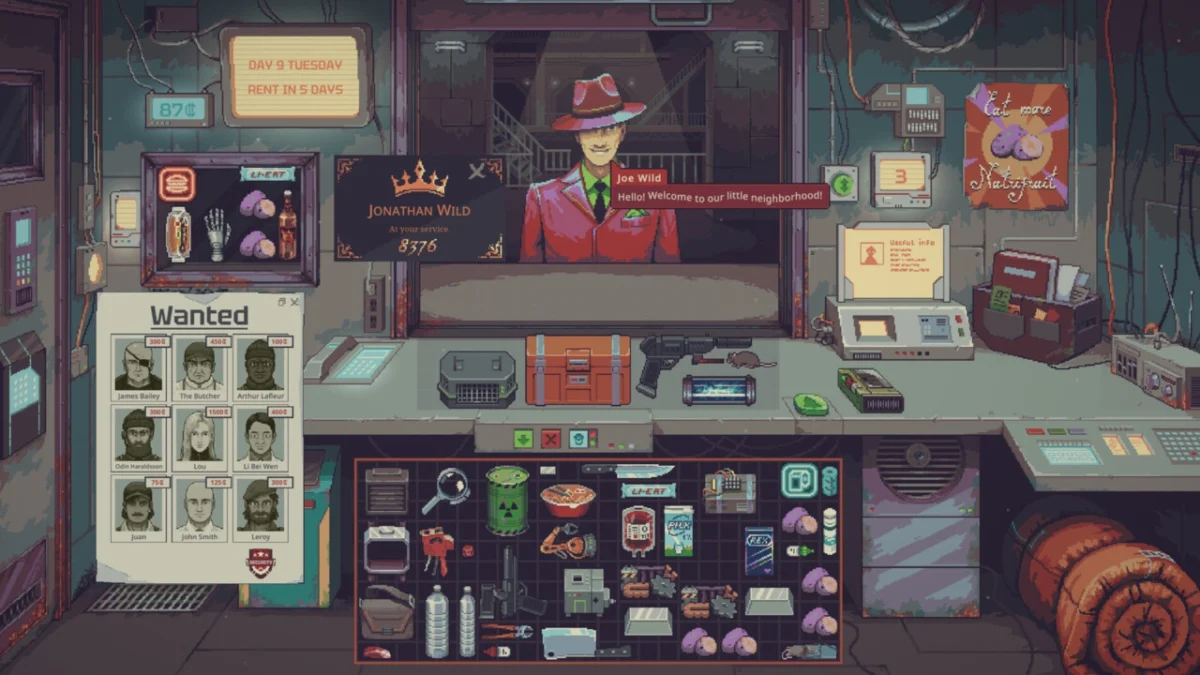
In the vast, sterile corridors of a decaying space station, where the gap between the impoverished masses and the elite grows with every orbital rotation, a new breed of entrepreneur is emerging. Probably Stolen, the upcoming simulation game from Questing Goose Studio, challenges players to step into the boots of a down-on-their-luck scavenger turned shopkeeper. Amidst a backdrop of systemic corruption, high-stakes crime, and crushing economic pressure, the game tasks players with a simple yet perilous goal: survive. With its full release scheduled for October 28, 2026, on Steam, the title has already garnered massive attention, boasting a 98% approval rating from nearly 2,000 players who have engaged with its expansive, free demo.
The High Cost of Survival: Core Gameplay Mechanics
At its heart, Probably Stolen is a masterclass in management simulation set within a grim, dystopian future. Players begin their journey burdened by a significant debt, forcing them to open a storefront in a lawless space station where survival often requires moral flexibility. The core loop involves more than just selling legitimate goods; it is a precarious dance between legal commerce and the illicit shadow economy.
The game mechanics encourage players to explore the "gray areas" of the law. One can operate a standard storefront, selling basic necessities, or pivot to the lucrative world of fencing stolen property and smuggling contraband. The simulation goes deep: players must inspect rare items for authenticity, purify water, and manage complex production chains. From mundane electronic parts to high-value weaponry and even illicit biological materials—including human organs—the inventory options are as grim as they are profitable.
However, every transaction carries an inherent risk. The station’s security forces are omnipresent and notoriously corrupt. If a player is caught peddling counterfeit goods as originals or inflating prices on inferior merchandise, they risk the seizure of their assets. Yet, even in this hostile environment, money talks. Players can navigate these confrontations by slipping bribes to the authorities, adding an extra layer of strategic decision-making to every interaction.
Chronology: From Concept to Viral Success
The trajectory of Probably Stolen from an indie project to a highly anticipated title is a testament to the power of community-driven development.
- Early Development: Questing Goose Studio focused on building a reactive world where social standing is a tangible currency. The developers spent years iterating on the NPC AI, ensuring that the diverse array of customers—ranging from revolutionary factions to corporate security—would respond dynamically to the player’s business choices.
- September 14, 2026: The official public demo was launched on Steam, serving as a stress test for both the game’s complex mechanics and the player community.
- October 19, 2026: Just over a month later, the developers released the "Aquafarmer Update." This content drop expanded the game’s scope, introducing fish farming as a secondary revenue stream. This update required players to manage intricate systems, including water filtration, power stability, and temperature control for species like Tilapia, eels, and sturgeon—the latter of which allows for the high-end production of caviar.
- October 28, 2026: The full launch date for the PC version via Steam, with publisher tinyBuild overseeing the global rollout.
Data and Demographics: Why Players Are Hooked
The success of the Probably Stolen demo is statistically significant. With approximately 1,950 reviews on Steam, the 98% "Overwhelmingly Positive" score places it in the top tier of indie management simulations for the year. This reception is driven by the game’s depth and its refusal to hold the player’s hand.
The demo provides three distinct starting scenarios, each offering a unique set of constraints and economic hurdles. The inclusion of a "Hardcore Mode" has further cemented the game’s reputation among enthusiasts who crave high-difficulty management challenges. The technical performance has also been a major selling point; the game is already fully optimized for the Steam Deck, making it a portable experience that fits the "pick-up-and-play" nature of a shopkeeper simulator.

Official Insights: The Vision Behind the Corruption
Questing Goose Studio has been vocal about their design philosophy. According to developer briefings, the goal was not to create a "hero" story, but to simulate the reality of life in a society where the system is rigged. The inclusion of the rogue AI subplot—which periodically hacks individuals with cybernetic implants—serves as a metaphor for the unpredictability of life on the station.
Players must be vigilant; an AI-compromised customer can cause significant damage to the shop or its reputation. Recognizing these individuals and deciding whether to intervene—potentially resorting to lethal force—adds a tactical, high-pressure element that separates Probably Stolen from standard "Tycoon" games. The developers have emphasized that every choice has a consequence; alienating a specific faction can lock off trade routes or, conversely, open up dangerous new channels for profit.
Economic and Social Implications
Beyond the gameplay, Probably Stolen functions as a commentary on hyper-capitalism and wealth disparity. The "rising rent" mechanic is a constant, ticking clock that forces players to abandon their scruples. In this space station, the landlord is the ultimate authority, and failure to pay results in immediate, disastrous consequences.
The Ethics of the Virtual Black Market
The moral spectrum offered by the game is one of its most discussed features. Players aren’t forced to be "bad," but the game’s economy makes "good" behavior a luxury few can afford. When a player manages to successfully sell a counterfeit device to an unsuspecting patron, they aren’t just gaining credits; they are surviving another day. This creates a psychological tension where the player begins to justify their own corruption, mirroring the real-world pressures faced by those operating in impoverished or high-risk environments.
The Impact of Emerging Technologies
The introduction of the Aquafarmer update highlights the game’s commitment to mechanical complexity. It isn’t enough to simply sell goods; one must understand the supply chain. By requiring players to manage electricity and water quality, the game forces them to engage with the infrastructure of the space station itself. This integration of micro-management into a broader societal simulation creates an immersive experience that keeps players returning to their shops, even after they have cleared their initial debts.
Conclusion: A New Standard for Indie Simulations
As the release date of October 28 approaches, the anticipation surrounding Probably Stolen continues to grow. It is rare to see an indie title capture such a specific, gritty aesthetic while simultaneously delivering deep, systemic gameplay. Whether it is the tension of hiding contraband during a police inspection, the tactical challenge of stopping a hacked patron, or the quiet, meditative work of maintaining a fish farm, the game offers a multi-faceted look at life in the dark corners of the galaxy.
By blending the mundane aspects of retail management with the high-stakes drama of a dystopian thriller, Questing Goose Studio has created something that feels both familiar and refreshingly new. If the full version can maintain the quality and engagement of the demo, Probably Stolen is poised to become a landmark title in the simulation genre—a game where, ironically, the most valuable commodity isn’t the stolen goods on the shelf, but the player’s own survival.