The German political landscape, often characterized by its stability and predictable coalition dynamics, is currently witnessing a profound internal struggle within one of its smaller, yet historically significant, parties: Die Linke (The Left Party). The recent ascent and subsequent "false start" of its newly anointed leader, Luigi Pantisano, has not only cast a long shadow over his nascent tenure but has also starkly illuminated the existential crisis gripping the entire party. What began as a hopeful fresh chapter for a party reeling from electoral setbacks and internal schisms has quickly devolved into a public relations nightmare and a renewed bout of introspection, raising fundamental questions about Die Linke’s viability and future relevance in German democracy.
Pantisano, a figure initially championed as a potential unifier and modernizer for the struggling party, found himself embroiled in controversy almost immediately after assuming leadership. His initial public pronouncements, intended to chart a new course, instead exposed deep ideological fissures within Die Linke, particularly concerning foreign policy and economic reform. This premature stumble has become more than just a personal setback for Pantisano; it serves as a potent symbol of the deeper structural and identity crises that have plagued The Left Party for years, threatening to relegate it to the footnotes of German political history.
Main Facts: A Leadership Under Scrutiny
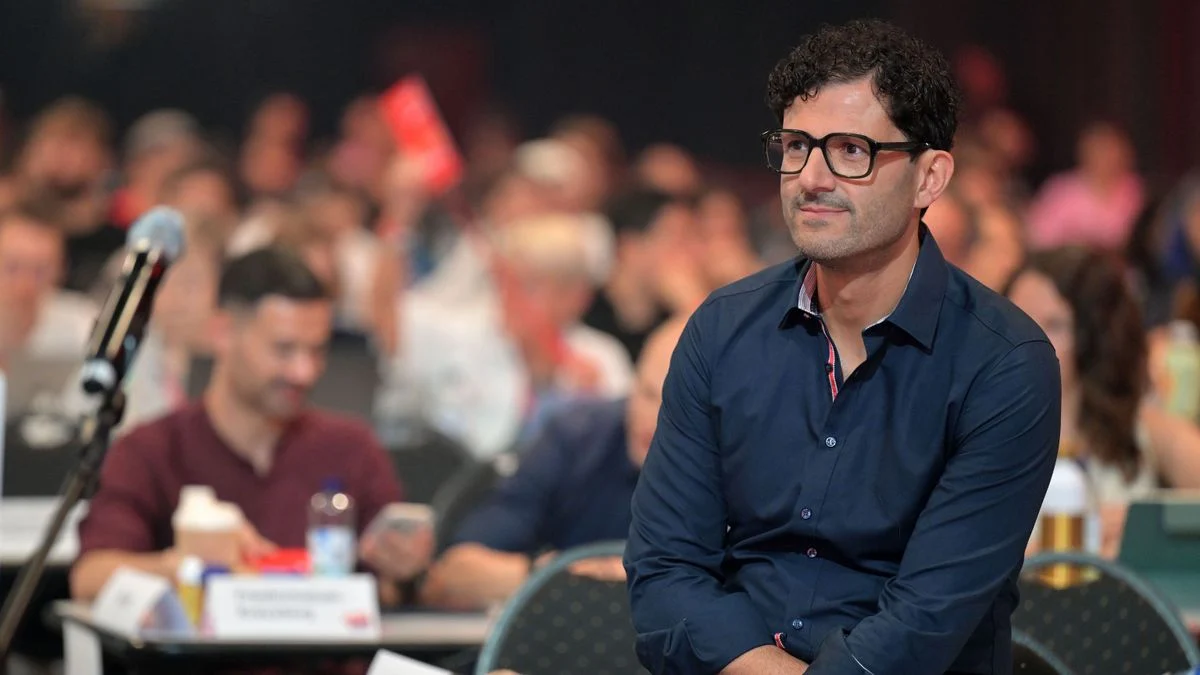
Luigi Pantisano, a 42-year-old former state parliamentarian known for his articulate debating style and progressive stances on social issues, was elected co-chair of Die Linke just three months ago, following a period of intense internal debate and the departure of several prominent figures. His election was heralded by many within the party as a necessary step towards rejuvenation, a move to inject fresh energy and a more coherent narrative into a party often perceived as divided and out of touch. The expectation was that Pantisano, with his background in grassroots activism and his ability to appeal to younger voters, could bridge the chasm between the party’s traditionalist base and its reform-oriented wing.
However, these hopes were quickly dashed. Within weeks of taking office, Pantisano initiated a series of public appearances and interviews designed to outline his vision for Die Linke. In one particularly ill-fated interview with a national broadsheet, he attempted to articulate a revised foreign policy stance for the party, suggesting a more nuanced approach to international alliances and a re-evaluation of the party’s traditional anti-NATO position, while simultaneously criticizing Germany’s increased military spending in response to geopolitical shifts. His remarks were interpreted by some as a pragmatic pivot towards greater realism, but by a significant portion of Die Linke’s pacifist and anti-imperialist base, they were seen as a betrayal of core party principles. Compounding this, a subsequent policy paper, reportedly spearheaded by Pantisano’s office, outlining a highly ambitious and unfunded "Green Socialist Transformation" program, further exacerbated concerns about the party’s economic credibility and internal coherence.
The immediate fallout was severe. Senior party members publicly distanced themselves from his statements, accusing him of exceeding his mandate and failing to consult adequately with the party’s executive committee. Social media exploded with criticism from party activists, and traditional media outlets seized upon the apparent disarray, painting Pantisano as a leader out of sync with his own party. The incident quickly morphed from a leadership challenge into a wider debate about Die Linke’s identity, direction, and leadership structure, underscoring the precarious position Pantisano now occupies and the fragility of the party he purports to lead.
Chronology of Missteps and Mounting Pressure
The narrative of Pantisano’s "false start" is not an isolated incident but a series of interconnected events that have progressively eroded confidence in his leadership and the party’s stability.
The Ascent and Initial Hopes
Luigi Pantisano’s journey to the co-chairmanship was initially met with cautious optimism. Born to Italian immigrant parents in Stuttgart, Pantisano embodied a more modern, diverse image for Die Linke. His career began in local politics, rising through the ranks of youth organizations before securing a seat in a state parliament. He gained a reputation as a diligent parliamentarian and a passionate advocate for social justice, environmental protection, and workers’ rights. His supporters lauded his ability to connect with diverse communities and his sharp intellect. After years of internal strife, culminating in the significant departure of Sahra Wagenknecht and her faction to form the Bündnis Sahra Wagenknecht (BSW), Die Linke desperately needed a unifying figure. Pantisano, perceived as less ideologically dogmatic than some predecessors and capable of appealing to a broader progressive electorate, seemed to fit the bill. His election alongside a more seasoned co-chair was meant to signal a fresh start, balancing youthful dynamism with experience.
The First Cracks Emerge: The Foreign Policy Faux Pas
The first significant crack in Pantisano’s leadership appeared during a high-profile interview on the party’s future vision, barely a month into his term. Asked about Die Linke’s stance on Germany’s role in NATO and the ongoing conflict in Ukraine, Pantisano deviated from the party’s long-standing, unequivocally pacifist line. While reaffirming the party’s commitment to peace, he hinted at the necessity for Die Linke to engage with evolving geopolitical realities, suggesting that an absolute rejection of all defensive alliances might be "unrealistic in the current global climate." He further posited that Germany’s role in international security could not be ignored, even if the party fundamentally opposed militarization.
While these statements were nuanced, they were a significant departure from the party’s established rhetoric. Die Linke has historically been a staunch critic of NATO, advocating for its dissolution and consistently opposing German military interventions abroad. Pantisano’s comments, perceived as an attempt to soften this stance without clear party consensus, immediately triggered a backlash from the party’s powerful pacifist and anti-imperialist factions. Prominent left-wing intellectuals and long-standing party members voiced their dismay, accusing Pantisano of diluting Die Linke’s core principles for perceived mainstream appeal.
Escalation of Criticism: The "Green Socialist Transformation" Leak
Before the dust could settle on the foreign policy debate, a draft policy paper, allegedly developed under Pantisano’s direct guidance, was leaked to the press. Titled "Blueprint for a Green Socialist Transformation," the document outlined an ambitious plan for radical economic restructuring, including widespread nationalization of key industries, a universal basic income, and a rapid phase-out of fossil fuels without clear mechanisms for funding or managing the economic transition. While the broad strokes aligned with Die Linke’s socialist principles, the sheer scope and lack of detailed financial planning were widely criticized as economically naive and politically unfeasible.
The leak intensified the internal debate, with the party’s more pragmatic wing expressing alarm at the perceived lack of realism. "This isn’t a blueprint for transformation; it’s a fantasy novel," one anonymous party official was quoted as saying, highlighting the frustration. The timing of the leak, so soon after the foreign policy controversy, suggested either a severe lack of strategic communication within Pantisano’s team or a deliberate act by internal opponents to undermine his authority.
A Party Adrift: Public Perception and Internal Erosion
The cumulative effect of these events has been devastating. Public perception of Die Linke, already struggling, took a further hit, reinforcing the image of a party deeply divided and incapable of coherent leadership. The initial hope surrounding Pantisano quickly evaporated, replaced by doubts about his ability to steer the party through its turbulent waters. These incidents did not create new problems but rather exposed and exacerbated existing deep-seated issues: the unresolved tension between radical ideological purity and pragmatic political action, the generational divide, and the fundamental question of Die Linke’s identity in 21st-century Germany. The party, still reeling from the loss of its Bundestag faction status, appeared more adrift than ever.
Supporting Data: Electoral Decline and Factionalism
The "false start" of Luigi Pantisano cannot be understood in isolation; it is deeply embedded in Die Linke’s broader narrative of decline. Once a significant force in German politics, particularly in the eastern states, the party has witnessed a steady erosion of its electoral base and political influence.
In the 2021 federal election, Die Linke barely scraped into the Bundestag, securing just 4.9% of the vote, falling below the 5% threshold required for parliamentary representation. It only maintained its presence due to three direct mandates, a provision allowing parties to enter parliament regardless of the 5% barrier if they win at least three direct constituencies. This was a stark contrast to its peak performance in 2009, when it garnered 11.9% of the national vote. Regional elections have painted a similarly grim picture, with the party struggling to clear the 5% hurdle in several state parliaments.
Membership numbers tell a similar story. From over 70,000 members a decade ago, Die Linke’s ranks have dwindled to around 40,000, with an aging demographic. This demographic shift makes it harder for the party to connect with younger voters, who are increasingly drawn to environmental parties or other progressive movements. Polling data consistently places Die Linke at around 3-4% nationally, far below the threshold needed for a stable parliamentary presence, even before Pantisano’s controversies.
The party’s internal dynamics have been notoriously fractious. The most significant recent rupture was the departure of Sahra Wagenknecht, a charismatic and controversial figure, who in January 2024 launched her own party, Bündnis Sahra Wagenknecht (BSW). Wagenknecht’s faction, which appealed to a segment of the electorate disaffected by Die Linke’s perceived focus on identity politics and its stance on the Ukraine war, took with it several prominent parliamentarians and significant voter support. This split not only diminished Die Linke’s parliamentary presence but also intensified the ideological vacuum within the remaining party, forcing it to redefine itself without its most prominent and often contrarian voice.
Political scientists have long pointed to Die Linke’s internal contradictions as a primary cause of its woes. Dr. Anna Schmidt, a political analyst at the Free University of Berlin, observes, "Die Linke has always struggled to reconcile its revolutionary socialist roots with the demands of pragmatic parliamentary politics. This inherent tension, between being a protest movement and a governing party, has made it difficult to develop a consistent, appealing message." She adds, "Pantisano’s attempts to modernize the party’s image, while perhaps well-intentioned, have merely exposed these raw nerves, proving how fragile the party’s internal consensus truly is." The data clearly shows a party in chronic decline, making any leadership misstep disproportionately impactful.
Official Responses and Internal Discord
The immediate aftermath of Pantisano’s foreign policy comments and the leaked policy paper was characterized by a flurry of official responses, mostly defensive or critical, and a palpable sense of internal discord.
Luigi Pantisano himself issued a statement through the party press office, attempting to clarify his remarks. He stated that his comments on NATO were "misinterpreted" and that Die Linke’s fundamental commitment to pacifism and disarmament remained unwavering. He emphasized the need for "strategic dialogue" within the party on how to apply these principles in a rapidly changing world, rather than a departure from them. Regarding the "Green Socialist Transformation" paper, he acknowledged it was a "discussion draft" and not yet official party policy, intended to stimulate internal debate. "My aim is to foster a dynamic exchange of ideas within Die Linke," Pantisano asserted, "not to impose a new direction unilaterally. We must be able to discuss challenging topics openly."
However, this damage control proved largely ineffective. His co-chair, who had maintained a lower profile since their joint election, issued a more cautious statement emphasizing the "collective leadership" principle of the party and the importance of "broad consensus" on all major policy shifts. This subtle rebuke underscored the perceived overreach by Pantisano.
The party’s left wing, particularly the "Antikapitalistische Linke" faction, was vociferous in its criticism. Sarah Müller, a prominent voice from this faction, stated publicly, "Comrade Pantisano’s remarks on NATO are a dangerous deviation from our core principles. We cannot compromise on peace and anti-imperialism for the sake of perceived electability. This is precisely why so many people have left the party." Similar sentiments were echoed by members of the "Marxistische Forum," who called for an emergency party conference to reaffirm Die Linke’s ideological foundations.
Conversely, some voices from the party’s reformist wing offered qualified support, albeit with reservations. Dr. Klaus Richter, a former state minister and a leading figure in the reformist camp, commented, "While the communication could have been handled better, the underlying intention to adapt Die Linke’s foreign policy to current realities is not entirely misguided. We must avoid dogmatism if we wish to remain a relevant political force." However, even these supporters acknowledged the significant internal challenges posed by Pantisano’s approach.
The most telling response, perhaps, was the deafening silence from some veteran party figures, a silence often interpreted as disapproval or a waiting game. The lack of a unified, robust defense of Pantisano from the party’s higher echelons highlighted the deep divisions and the fragile nature of his mandate. The internal discord was not just about policy; it was about the very process of leadership and decision-making within a party that has historically struggled with centralized authority.
Implications: An Existential Crisis for the German Left
Luigi Pantisano’s troubled start is more than just a personal or internal party problem; it has profound implications for the future of Die Linke and the broader political landscape of Germany. It represents a critical juncture, potentially heralding either a painful, necessary redefinition or a terminal decline for the organized parliamentary left outside the Social Democrats.
Firstly, for Die Linke itself, the incidents have intensified an already acute existential crisis. The party is struggling to define its identity in a post-Wagenknecht era, facing competition from the right (BSW) for disaffected voters and from the Greens and SPD for progressive ones. Pantisano’s attempts to modernize have alienated segments of the traditional base without demonstrably attracting new voters, leaving the party caught between two stools. If Die Linke cannot resolve its internal contradictions and present a unified, credible vision, its chances of regaining parliamentary relevance are slim. The upcoming European elections and several state elections will be crucial tests, and if current trends continue, the party faces the very real prospect of disappearing from national politics altogether.
Secondly, the struggles of Die Linke leave a significant void on the far-left of the German political spectrum. Historically, Die Linke has articulated critical perspectives on capitalism, militarism, and social inequality that other parties often shy away from. Its decline means these voices might become marginalized or fragmented. The rise of BSW, while also left-leaning in some economic aspects, differs significantly on social and foreign policy, particularly on immigration and the Ukraine war, making it an imperfect replacement for Die Linke’s traditional progressive base. This fragmentation of the left could lead to a less diverse political discourse and potentially leave a segment of the electorate feeling unrepresented.
Thirdly, Pantisano’s experience underscores the immense challenge of leadership in a party as ideologically diverse and historically burdened as Die Linke. Any leader attempting to steer the party towards modernization or a more pragmatic stance risks being branded a "traitor" to its foundational principles. The constant balancing act between ideological purity and electoral viability has proven to be an almost impossible task. This could deter future talented individuals from taking on leadership roles, further exacerbating the party’s talent drain.
Finally, the implications extend to the broader German political system. A weakened Die Linke means one less critical voice in debates on social justice, wealth distribution, and foreign policy. It also reduces the options for coalition formations, particularly for the SPD and Greens, who might find themselves with fewer potential partners on their left flank. This could inadvertently push the political center further to the right, or at least limit the range of acceptable policy debates.
As Luigi Pantisano navigates the treacherous waters of Die Linke’s leadership, his every move is being watched not just by party members, but by a political establishment grappling with the health of its democratic institutions. His initial "false start" is not merely a personal misstep but a vivid illustration of a party teetering on the brink, wrestling with its past, present, and an increasingly uncertain future. The question remains whether Pantisano, or indeed Die Linke itself, can find a path towards genuine renewal, or if this marks the beginning of the end for a distinct parliamentary left in Germany. The stakes, for the party and for German democracy, could not be higher.