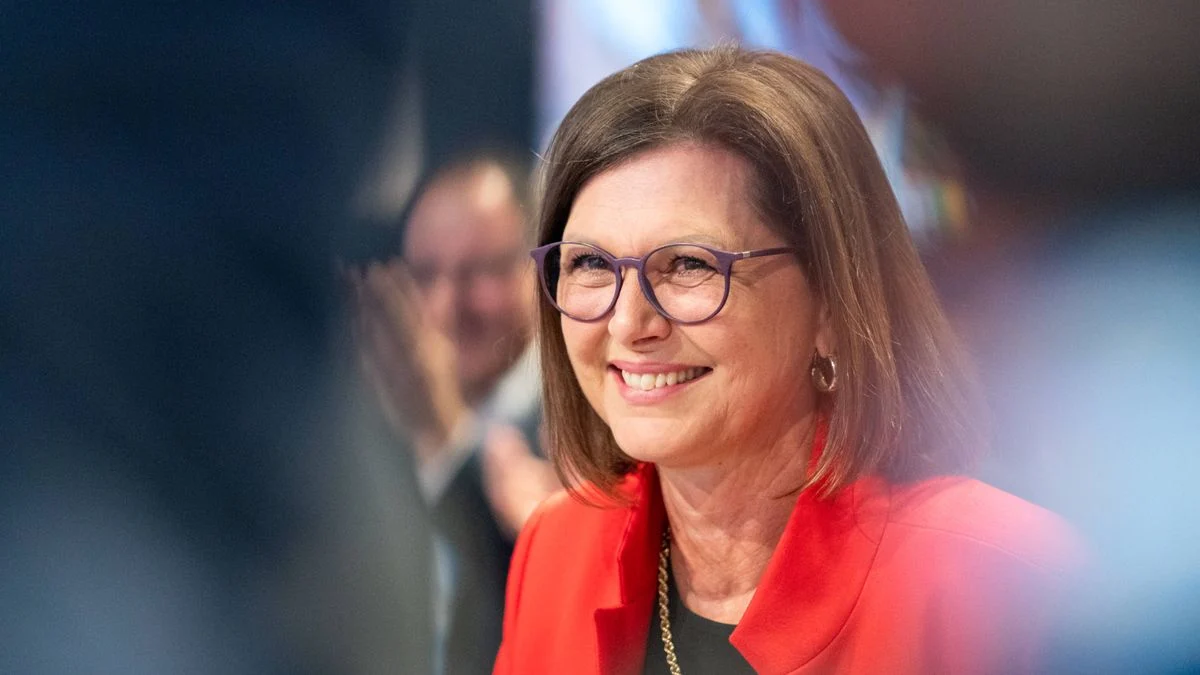
Berlin, Germany – As Germany approaches its next presidential election, the political landscape is abuzz with speculation and strategic positioning. A recent declaration by Saxony’s Minister-President, Michael Kretschmer (CDU), has ignited a significant debate, putting forth a prominent Bavarian politician, Ilse Aigner (CSU), as a potential candidate for the nation’s highest ceremonial office. This endorsement not only highlights Aigner’s distinguished career but also underscores a growing sentiment within Germany’s political establishment: the fervent desire to see a woman occupy the Bellevue Palace for the first time in the Federal Republic’s history.
Kretschmer’s remarks, characterizing Aigner as a "truly outstanding personality," have resonated across party lines, signaling a potential shift in the traditional approach to selecting Germany’s head of state. His vision for the next President is clear: a unifying figure, capable of bridging partisan divides and bringing the country together. "Whoever hears that will realize: That applies to Ilse Aigner," Kretschmer asserted, firmly linking Aigner’s profile to his ideal candidate. Crucially, he downplayed the notion of an inherent claim by the Christian Democratic Union (CDU) to the presidency, emphasizing that the paramount goal is to identify "the best personality for this country," regardless of party affiliation.
This bold pronouncement, made during an appearance on ARD, was further amplified by Kretschmer’s explicit articulation of a "great wish" for a woman to assume the presidency, even if there is "no compulsion." This desire taps into a profound historical context: since its founding in 1949, the Federal Republic of Germany has never had a female head of state, a stark contrast to other leading political positions, such as the chancellorship held by Angela Merkel for 16 years.
However, the path to a consensus candidate, particularly one from the CSU, is rarely straightforward within the Union. CDU General Secretary Franziska Hoppermann swiftly responded, acknowledging the validity of Kretschmer’s sentiment while subtly reminding observers of the CDU’s own pool of talent. "Of course, the CDU also has good female and male candidates within its own ranks. This must be discussed together to arrive at a common proposal. I assume that we will conclude this process soon," Hoppermann stated in an interview with the Münchner Abendzeitung. Her comments underscore the intricate internal dynamics between the CDU and its Bavarian sister party, the CSU, as they navigate the crucial process of candidate selection.
A Groundbreaking Proposal: Ilse Aigner for President?
Michael Kretschmer’s public endorsement of Ilse Aigner as a prospective candidate for the German presidency marks a significant moment in the preliminary stages of the selection process. His description of Aigner as a "truly outstanding personality" is not merely polite political rhetoric but a strategic framing designed to highlight her suitability for an office that demands gravitas, impartiality, and a profound understanding of national unity.
Kretschmer’s vision for the next President is deeply rooted in the current sociopolitical climate. He articulated a clear desire for a leader who possesses the rare ability to "unite the country" and operate "across party lines." In an era characterized by increasing polarization and complex global challenges, such a figure is perceived as indispensable for maintaining social cohesion and reinforcing democratic values. His immediate follow-up – "Whoever hears that will realize: That applies to Ilse Aigner" – serves as a direct and unambiguous nomination, positing Aigner as the embodiment of these desired qualities.
Perhaps even more striking than the specific endorsement is Kretschmer’s philosophical stance on the CDU’s traditional claim to the highest state office. By stating that the CDU’s entitlement is "not decisive," he effectively liberates the selection process from rigid party-political dogma. This move allows for a broader, more meritocratic search for "the best personality for this country," regardless of whether they hail from the CDU or its Bavarian counterpart, the CSU. This perspective aims to elevate the debate beyond narrow partisan interests, focusing instead on national benefit and the intrinsic qualities of the candidate.
Underpinning Kretschmer’s advocacy is a palpable desire for a fundamental shift in the gender landscape of German leadership. He articulated a "great wish" for a woman to become head of state, acknowledging the historical precedent that no woman has ever held this position in the Federal Republic. This aspiration is not presented as a compulsory quota but as a recognition of historical imbalance and an opportunity to send a powerful symbolic message, both domestically and internationally, about Germany’s commitment to equal representation at the highest echelons of power.
The immediate reaction from CDU General Secretary Franziska Hoppermann, while supportive of a collaborative approach, also served as a reminder of the CDU’s own internal strength. Her statement to the Münchner Abendzeitung affirmed that the CDU possesses its own "good female and male candidates," signaling that while Aigner’s qualities are recognized, the CDU will not automatically cede the nomination. Hoppermann’s emphasis on collective discussion to arrive at a "common proposal" highlights the critical importance of inter-party negotiations within the Union, a process she anticipates will conclude "soon." This delicate balancing act underscores the complex interplay of individual endorsements, party aspirations, and the overarching need for unity within the CDU/CSU alliance.
Setting the Stage: Germany’s Presidential Election Process
To fully grasp the significance of Kretschmer’s statements and the potential candidacy of Ilse Aigner, it is essential to understand the unique mechanism by which Germany selects its head of state. Unlike many presidential systems where the public directly elects the president, the German Federal President (Bundespräsident) is chosen by a special electoral body known as the Federal Convention (Bundesversammlung). This institution, designed to be politically broad-based and representative of the nation’s diverse political fabric, convenes specifically for this purpose.
The Federal Convention is composed of all 736 members of the Bundestag (the federal parliament) and an equal number of delegates elected by the 16 state parliaments (Landtage) according to the principle of proportional representation. These state delegates often include prominent regional politicians, cultural figures, or respected citizens, adding a layer of societal representation beyond direct parliamentary mandates. This unique composition ensures that the election reflects not just the current balance of power in the federal parliament, but also the broader political and societal currents within Germany’s federal states.
The role of the Federal President, though largely ceremonial, is far from inconsequential. The President acts as the moral conscience of the nation, a unifying figure above partisan politics, and a guardian of the constitution. They represent Germany internationally, sign laws, appoint and dismiss federal ministers, and have the power to dissolve the Bundestag in specific constitutional circumstances, though this power is rarely exercised. The President’s influence stems from their ability to shape public discourse, offer guidance during national crises, and embody the nation’s values. The current officeholder, Frank-Walter Steinmeier (SPD), is serving his second term, which concludes in early 2027. With his term drawing to a close, the search for a successor has naturally begun, prompting the early discussions exemplified by Kretschmer’s intervention.
The election is typically a moment of intense political negotiation and horse-trading, particularly when no single party or bloc commands an absolute majority in the Federal Convention. Candidates usually require broad support across multiple parties to secure the necessary absolute majority in the first two rounds of voting, or a simple majority in the third round. This necessitates extensive dialogue and consensus-building, making the President-elect a figure who, by definition, has garnered significant cross-party acceptance. The early nature of Kretschmer’s proposal suggests a proactive attempt to shape this consensus-building process, potentially even before official candidacies are formally declared.
Ilse Aigner: A Profile in Pragmatism and Experience
Ilse Aigner’s political career is characterized by a blend of pragmatism, extensive governmental experience, and a reputation for consensus-building, qualities that align perfectly with Michael Kretschmer’s vision for the next German President. Born in 1964 in Feldkirchen-Westerham, Bavaria, Aigner’s political journey began at the local level before escalating to national and then state prominence.
A member of the Christian Social Union (CSU) – the Bavarian sister party to the CDU – Aigner first entered the Bundestag, the German federal parliament, in 1998. During her time in Berlin, she established herself as a diligent and respected parliamentarian, focusing on internal affairs and digital policy. Her federal career culminated in her appointment as the Federal Minister for Food, Agriculture and Consumer Protection in 2008 under Chancellor Angela Merkel’s grand coalition government. In this role, she demonstrated a capacity for navigating complex policy areas, often balancing the interests of diverse stakeholders, from farmers to consumer advocacy groups. Her tenure was marked by a steady hand and a commitment to practical solutions, earning her a reputation for reliability and competence.
In 2013, Aigner transitioned from federal to state politics, returning to Bavaria to take on a series of significant ministerial portfolios in the Bavarian state government. She served as Deputy Minister-President of Bavaria, Minister for Economic Affairs, Media, Energy and Technology, and later as Minister for Building, Housing and Transport. These roles further solidified her image as a highly capable administrator and a politician with a deep understanding of economic development, infrastructure, and regional concerns. Her experience at both federal and state levels provides her with a unique perspective on the intricate workings of Germany’s federal system, a crucial asset for a President tasked with representing the nation’s diverse interests.
Since 2018, Aigner has held the prestigious position of President of the Bavarian Parliament (Landtag). In this role, she presides over parliamentary debates, ensures adherence to parliamentary rules, and acts as a neutral arbiter. This position is particularly relevant for a presidential candidate, as it demands impartiality, fairness, and the ability to foster respectful dialogue across political divides – precisely the qualities Kretschmer highlighted. Her tenure as Landtag President has been widely praised for its professionalism and her ability to maintain a dignified and productive parliamentary atmosphere.
Aigner’s political style is often described as pragmatic and unpretentious. She is known for her direct communication, her ability to connect with ordinary citizens, and her focus on substantive policy rather than ideological grandstanding. This approach has earned her considerable respect beyond traditional CSU voter bases, making her a potentially appealing candidate to a broader spectrum of the Federal Convention. Her consistent emphasis on stability, unity, and a grounded approach to governance positions her as a figure capable of embodying the non-partisan, unifying spirit expected of a German Federal President.
Her Bavarian roots also play a significant role. Bavaria, as Germany’s largest state by area and an economic powerhouse, often holds a distinct political identity within the federal structure. Aigner’s deep connection to Bavaria, combined with her national and international experience, allows her to represent both the specific regional character of Germany and its broader federal identity, reinforcing her potential as a truly national figure.
The Unspoken Desire: A Woman at the Helm
The aspiration for a female head of state in Germany is more than a mere political preference; it represents a deep-seated desire to rectify a historical anomaly and to send a powerful message about gender equality at the highest echelons of power. While Germany has had a highly successful female Chancellor in Angela Merkel, whose 16-year tenure profoundly shaped the nation and its global standing, the office of the Federal President has remained exclusively male.
This historical context makes Michael Kretschmer’s "great wish" for a female President particularly poignant. It is an acknowledgment that despite significant strides in gender equality in German politics – evidenced by Merkel’s chancellorship, numerous female ministers, and increasing female representation in parliament – the symbolic pinnacle of the head of state has yet to be reached by a woman. The Federal President, as the ultimate representative of the state, embodies the nation’s identity and values. For this role to have been consistently held by men, even as Germany prides itself on being a modern, progressive democracy, represents a lingering anachronism.
Electing a woman to the Bellevue Palace would carry immense symbolic weight. It would signal a complete breaking with traditional gender roles in leadership, demonstrating that even the most deeply entrenched historical precedents can be overcome. For younger generations, particularly girls and young women, it would provide an invaluable role model, showing that no office, however high, is beyond their reach. It would reinforce the idea that leadership qualities are not gender-specific and that diverse perspectives enrich governance.
Moreover, in an international context, a female German President would further solidify Germany’s image as a champion of gender equality. While many countries have had female presidents or monarchs, for Germany, a leading European power, to finally appoint a woman to this office would be a significant statement. It would complement the legacy of Angela Merkel, extending the narrative of female leadership from the executive branch to the symbolic head of state.
The push for a female president is also intertwined with broader discussions about diversity and representation in German society. Beyond gender, there is an ongoing conversation about ensuring that political leadership reflects the full spectrum of Germany’s population, including individuals from various ethnic backgrounds, socio-economic strata, and regions. The potential election of Ilse Aigner, a woman with deep Bavarian roots and a proven track record, would contribute to this broader goal of making German leadership more representative and inclusive. It is not just about having a woman, but about having a woman who embodies the qualities of unity, experience, and grounded pragmatism that the office demands. The "great wish" thus encapsulates a desire for both symbolic progress and substantive leadership.
Navigating the Coalition Dynamics: CDU, CSU, and the Quest for Consensus
The discussions surrounding Ilse Aigner’s potential candidacy are inextricably linked to the intricate and often delicate relationship between Germany’s two sister parties: the Christian Democratic Union (CDU) and the Christian Social Union (CSU). While they form a single parliamentary group in the Bundestag, the CSU operates exclusively in Bavaria, maintaining its distinct identity and often a more conservative stance than its larger federal counterpart. The selection of a presidential candidate is always a crucial test of their alliance.
Michael Kretschmer, as a prominent CDU Minister-President, making a public endorsement of a CSU figure like Ilse Aigner, represents a significant gesture of cross-party trust and strategic thinking. It signals a willingness to look beyond strict party lines within the Union for the "best personality." This approach could be interpreted as an attempt to foster unity and present a candidate who truly transcends traditional party loyalties, thereby increasing their chances of securing broad support in the Federal Convention. Kretschmer’s explicit downplaying of the CDU’s "claim" to the presidency further underscores this conciliatory stance, aiming to open the field for a consensual candidate rather than forcing a party-specific choice.
However, the immediate response from CDU General Secretary Franziska Hoppermann highlights the internal complexities. Her statement, affirming that the "CDU also has good female and male candidates within its own ranks," serves as a necessary reminder of the CDU’s own aspirations and talent pool. While not directly contradicting Kretschmer, Hoppermann’s remarks subtly reassert the CDU’s position as the larger, federal party, implying that any final decision must involve a thorough consideration of its own potential nominees. This is a classic example of the push and pull between the CDU and CSU, where a common front is paramount, but internal strengths must also be acknowledged.
The process of reaching a "common proposal," as emphasized by Hoppermann, will involve intense negotiations between the leaderships of both parties. Historically, such decisions are not made unilaterally but emerge from a brokered consensus that considers electability, public appeal, and the balance of power within the Union. Potential CDU candidates could include figures with strong constitutional expertise, respected former parliamentarians, or state-level leaders who have demonstrated unifying capabilities. The challenge lies in finding a candidate who can not only unite the CDU and CSU but also garner sufficient support from other parties in the Federal Convention, particularly if the Union does not command an outright majority.
Reactions from other political parties would also play a crucial role. The Social Democratic Party (SPD), the Greens, and the Free Democratic Party (FDP), which currently form the governing coalition, would likely assess any Union candidate based on their perceived impartiality, their commitment to democratic values, and their ability to represent the entire nation. While they might appreciate a non-partisan approach, they would also seek a candidate who aligns with their broader vision for Germany. Aigner’s pragmatic style and cross-party reputation might make her more palatable to these parties than a more overtly partisan figure. The prospect of a female president, regardless of party, could also generate goodwill and make consensus-building easier, as it fulfills a widely shared desire for historical progress. Ultimately, the quest for consensus will be a multi-layered negotiation, with the CDU and CSU’s internal dynamics forming the critical first hurdle.
The Road Ahead: Challenges and Opportunities
The emerging debate around Ilse Aigner’s potential candidacy and the broader desire for a female German President present both significant challenges and unique opportunities for the German political landscape. The road to the Bellevue Palace is rarely smooth, requiring extensive political maneuvering, delicate negotiations, and a profound understanding of the national mood.
One of the primary challenges lies in brokering a genuine consensus within the Union (CDU/CSU). While Michael Kretschmer’s endorsement of Aigner is a powerful statement, it does not automatically guarantee her unanimous support within the CDU. Franziska Hoppermann’s reminder of the CDU’s own "good candidates" signals that an internal selection process is still underway. The Union leadership will need to carefully weigh the advantages of presenting a unifying CSU candidate against the desire of some within the CDU to put forward one of their own. This internal dialogue will be crucial for maintaining unity ahead of the Federal Convention. Any perceived imposition or lack of broad consultation could lead to internal dissent, weakening the Union’s position.
Beyond the Union, the next President will need to secure a broad majority in the Federal Convention. This means engaging with other major parties – the SPD, Greens, and FDP – as well as smaller parties and independent delegates. The ability of a candidate to appeal across ideological lines, to articulate a vision for Germany that resonates with diverse political groups, and to demonstrate unquestionable impartiality will be paramount. Ilse Aigner’s track record as a consensus-builder and her pragmatic approach could be an advantage here, but the political calculations of other parties, especially those in government, will also play a significant role. They may prefer a candidate who is perceived as entirely non-partisan or who represents a different political tradition.
However, these challenges are balanced by significant opportunities. The prospect of electing the first female Federal President represents a pivotal moment for Germany. It offers an opportunity to make a powerful statement about gender equality, to inspire future generations, and to align Germany’s symbolic leadership with its progressive values. A successful election of a female President would not only fulfill a long-held "wish" but also solidify Germany’s image as a modern, forward-thinking nation on the global stage.
Furthermore, Kretschmer’s emphasis on finding "the best personality for this country" and a leader capable of "uniting the country" presents an opportunity to elevate the presidential election beyond narrow partisan interests. In an increasingly fragmented political environment, a figure who can genuinely bridge divides and speak to the entire nation, regardless of political affiliation, is invaluable. Such a President could play a critical role in fostering social cohesion, promoting democratic dialogue, and reaffirming the core values of the Federal Republic during times of national and international uncertainty.
The process of selecting the next Federal President is a test of Germany’s political maturity and its capacity for collaborative governance. The early discussions around Ilse Aigner, fueled by a desire for both an outstanding personality and a historic female leader, set the stage for a compelling and potentially transformative electoral cycle. The outcome will not only determine the next occupant of the Bellevue Palace but will also send a profound message about Germany’s evolving identity and its aspirations for the future.