By Financial Analysis Desk
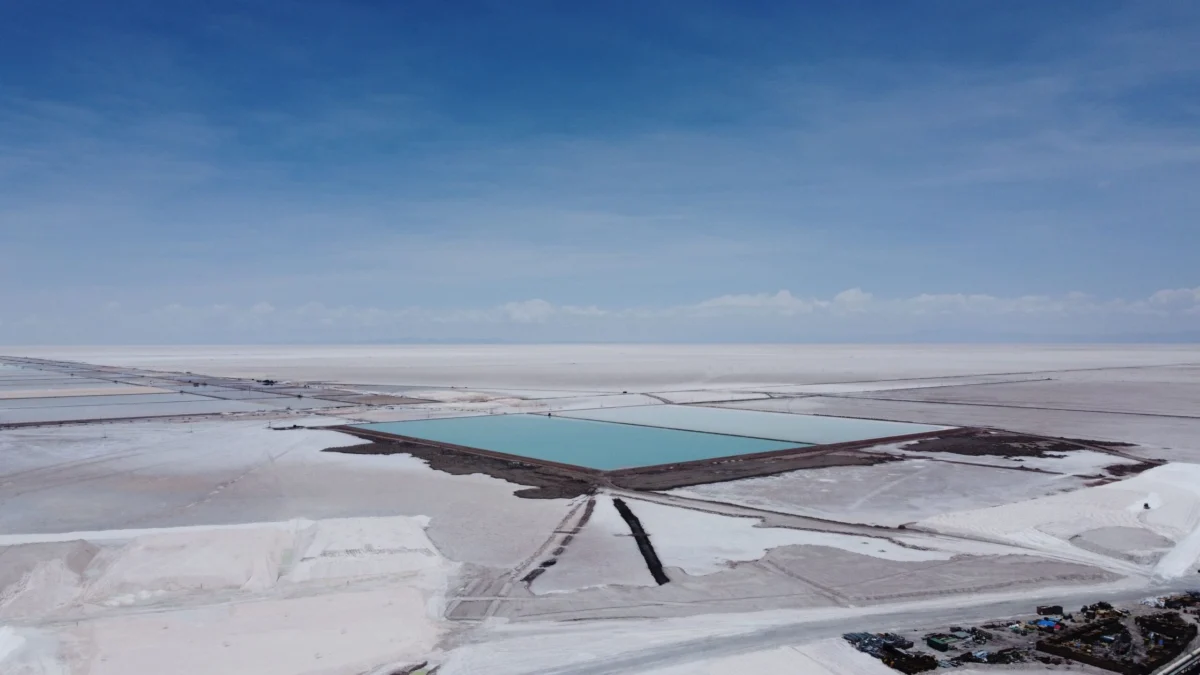
South America, long characterized by political volatility and boom-and-bust economic cycles, appears to be standing on the precipice of a transformative era. A rare confluence of global commodity hunger, a structural shift in international supply chains, and a significant political pivot toward market-friendly reforms has created what analysts are calling the most favorable conditions for growth in a generation. From the high-altitude lithium mines of the Andes to the vast soybean fields of the Brazilian Cerrado, a new, multi-year investment cycle is beginning to take shape.

The Macroeconomic Catalyst: A Convergence of Forces
Ernesto Revilla, Chief Economist for Latin America at Citigroup, characterizes the current environment as unparalleled. "For decades, the conditions for robust, sustainable economic growth in Latin America have not been this aligned," Revilla notes. This assessment is supported by several macroeconomic tailwinds: a weakening U.S. dollar, persistently high commodity prices, and a geopolitical push by Western powers to diversify supply chains away from China.
This situation invites comparisons to the "Golden Decade" of the 2000s, which saw a massive surge in commodity exports to China. During that period, China’s industrialization and urbanization drove unprecedented demand for copper, iron ore, and crude oil, while its growing middle class created a ravenous appetite for South American agricultural output. While the current cycle shares similarities, it is driven by a more complex, multi-faceted demand structure.

Today, the catalyst is not merely Chinese infrastructure development; it is the global energy transition. The shift toward renewable energy and the expansion of smart power grids require unprecedented volumes of "critical minerals"—most notably copper, lithium, and nickel—of which South America is a primary global supplier. Furthermore, as the United States and Europe seek to "de-risk" their reliance on Chinese supply chains, they are increasingly looking to Latin America as a stable, strategic partner.
Chronology of a Political Pivot
The shift in the investment climate is inextricably linked to a profound political transformation across the continent. Since the end of 2023, the political pendulum has swung decidedly toward fiscal conservatism and pro-market policies.

- Late 2023: Javier Milei’s electoral victory in Argentina marks a seminal moment, signaling a departure from decades of protectionism. Milei’s administration initiates sweeping deregulation and introduces aggressive tax incentives to attract foreign direct investment (FDI).
- Early 2024: A wave of new administrations in Chile, Peru, and Colombia begins to prioritize private sector engagement over state-led intervention.
- October 2025: Political shifts in Brazil suggest that the region’s largest economy is prepared to align with this pro-business trend, with markets responding with record-breaking capital inflows.
- Present Day: The implementation of infrastructure portfolios and tax reforms across the continent begins to shift from legislative proposals to concrete project pipelines.
The Engine of Reform: Country-by-Country Analysis
The current optimism is not monolithic; it is being driven by specific national agendas aimed at unlocking private capital.
Argentina: The Milei Experiment
President Javier Milei has moved rapidly to overhaul the Argentine investment framework. By offering long-term legal guarantees and tax concessions, his government has approved a pipeline of projects totaling nearly $50 billion. The primary focus lies in the Vaca Muerta shale gas fields and the development of lithium mining in the northwest. While the capital has been slow to arrive—a byproduct of historical investor skepticism—the regulatory architecture is now in place to accommodate a massive influx of FDI.

Chile: Streamlining the Growth Engine
Despite facing a challenging domestic political landscape, President José Antonio Kast successfully steered a comprehensive tax reform through the Chilean Congress. By committing to lower the corporate tax rate from 27% to 23% by 2029, Chile is positioning itself as the most stable jurisdiction for mining investment. JP Morgan analysts suggest that these fiscal adjustments are essential to transforming private investment into the primary engine of the Chilean economy.
Brazil: A Market-Driven Surge
The Brazilian stock market, the B3 in São Paulo, recently hit record highs, reflecting a massive vote of confidence from international investors. When net inflows reached nearly $2 billion in a single day—an all-time record—it signaled that global capital is aggressively repositioning itself for a potential era of fiscal discipline. Analysts at Vontobel suggest that while the markets have provided a "confidence advance," the long-term sustainability of this rally depends entirely on the government’s ability to implement structural budget reforms.

Colombia and Peru: Navigating Complexity
In Colombia, President Abelardo de la Espriella has moved to reverse the restrictive energy policies of his predecessor, signaling a return to oil and gas exploration. Similarly, in Peru, despite bureaucratic bottlenecks, the government is reorganizing its energy and mining ministries to accelerate an infrastructure portfolio worth $40 billion.
Supporting Data: The Investor Sentiment
The shift in sentiment is not purely speculative. Data from the German Chamber of Industry and Commerce (DIHK) underscores the optimism felt by foreign stakeholders. In a global survey conducted this year, 58% of German companies operating in Latin America expected better business outcomes in the coming year—a figure significantly higher than the global average of 43%.

The region’s appeal is multifaceted:
- Commodity Abundance: Of the 34 raw materials deemed "critical" by the European Union, 25 are already being extracted in South America.
- Geopolitical Neutrality: As tensions rise between the U.S. and China, South America is increasingly viewed as a "safe harbor" for supply chain diversification.
- Untapped Potential: High interest in the EU-Mercosur trade agreement highlights the potential for deeper integration between South American markets and the European single market.
Official Responses and Institutional Skepticism
While the mood is overwhelmingly optimistic, international financial institutions urge caution. The primary concern among analysts at JP Morgan is the "execution gap." As the bank notes, "A victory at the polls provides a mandate, but it does not necessarily provide the power to implement." The fragmentation of many South American congresses remains a significant hurdle for presidents attempting to pass complex economic reforms.

Furthermore, economists such as Isabella Gourevich from the Ifo Institute in Munich have warned against the "rhetoric trap." She notes that while government officials across the region are issuing ambitious declarations of intent, the actual translation of these promises into "boots-on-the-ground" projects remains sluggish.
Implications: The Need for "Nails with Heads"
The message from the private sector is clear: the time for intent is over; the time for action is now. Thomas Schmall, Volkswagen board member and chairman of the Latin America Committee of German Business, has been vocal about the need for "Nails with Heads"—a German idiom for getting down to serious business. He argues that the region’s window of opportunity is finite. If South America fails to modernize its logistics, simplify its tax codes, and provide iron-clad legal security for large-scale projects, the capital currently eyeing the region may look elsewhere.

For the European Union, the implications are equally stark. If Europe remains mired in slow-moving trade negotiations and fails to secure direct partnerships for critical minerals, it risks being sidelined in the race for the resources that will define the 21st-century economy. China and the United States are already moving aggressively; the competition for South American resources is no longer a future prospect—it is a present-day reality.
Conclusion
The potential for a new South American supercycle is real, supported by a fundamental change in both the global demand for raw materials and the domestic political appetite for reform. However, the path to prosperity is narrow. Success will require more than just a rightward political shift; it will require the institutional fortitude to sustain reforms through inevitable social and political pushback. As the continent enters this critical phase, the world is watching—not just to see what leaders promise, but to see what they actually deliver.