

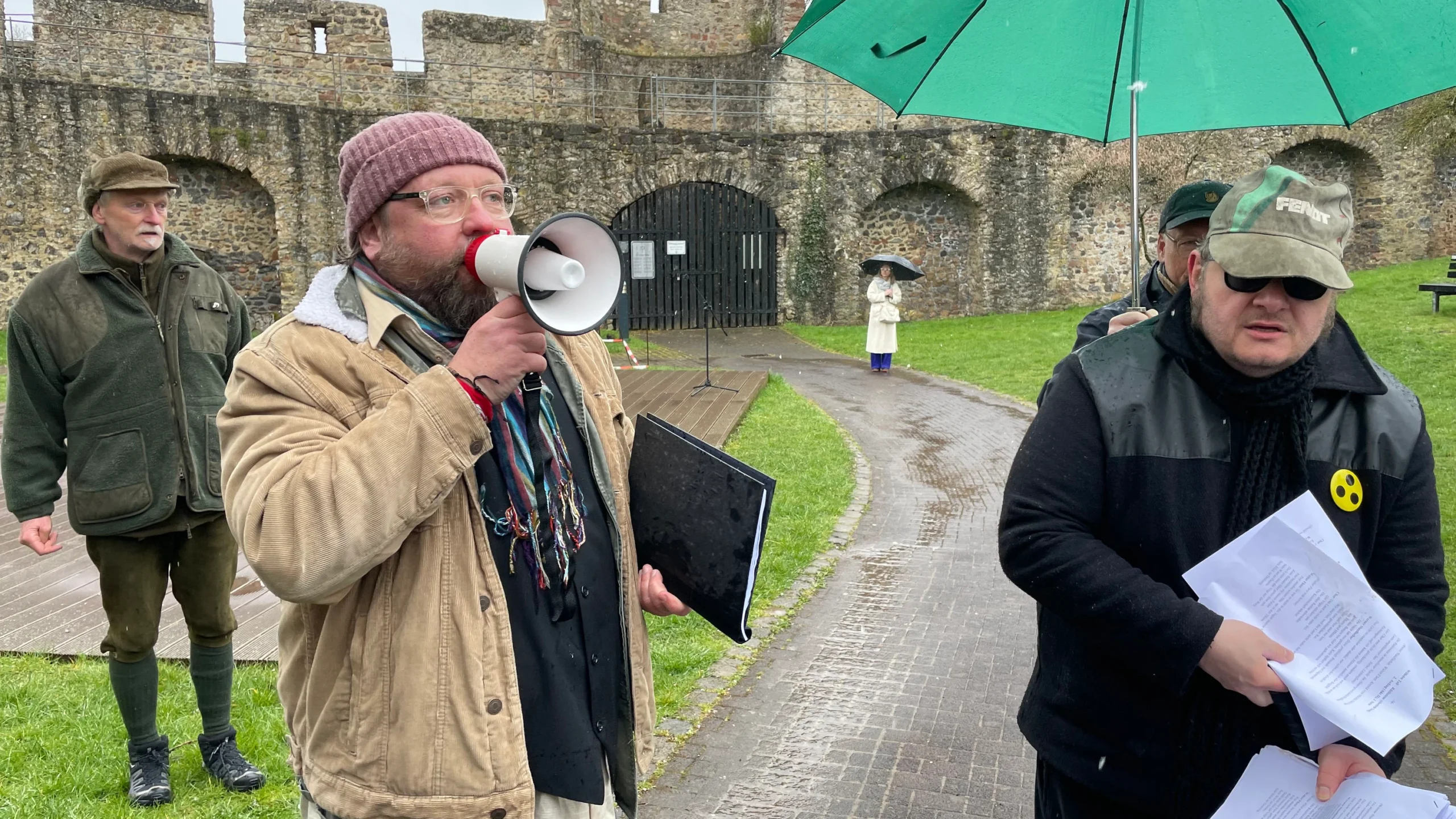
Deep in the heart of the Vulkaneifel, nestled among the volcanic craters and rolling hills of western Germany, lies the small town of Hillesheim. With a population of just 3,000, the town is ostensibly a peaceful, idyllic locale defined by 13th-century stone walls, Roman foundations, and quiet, historic churches. Yet, to the thousands of visitors who flock here annually, Hillesheim is known by a much more sinister moniker: the "Murder Capital of Germany."
In Hillesheim, death is not a tragedy; it is a business model. Since the arrival of the "Krimihotel" and the emergence of a thriving regional literary scene, the town has transformed into an immersive playground for enthusiasts of the macabre. Here, the boundary between reality and fiction is blurred, replaced by a meticulously curated world of suspense, detective lore, and "organized crime."
The Genesis of the Eifel Noir
The transformation of this quiet Eifel town began in 1984, when journalist Michael Preute moved to the nearby village of Berndorf. Writing under the pseudonym "Jacques Berndorf," he began crafting gritty, atmospheric murder mysteries set in the Eifel region. His stories—which often utilized the stark, desolate landscapes of the volcanic region—struck a nerve with the German public, effectively opening a Pandora’s Box.
Following in Berndorf’s footsteps, authors like Ralf Kramp began to populate the region with fictional killers, kidnappers, and detectives. The movement gained momentum when Kramp’s wife, Monika, envisioned a dedicated space for fans of the genre: the Krimihotel. Today, the hotel stands as the epicenter of this subculture, featuring 19 uniquely themed rooms that pay homage to legends of the genre, from Alfred Hitchcock and Sherlock Holmes to Derrick and Miss Marple.

A Chronology of Crime: From Fiction to Interactive Reality
The experience of visiting Hillesheim is not a passive one. For the guests who check into the hotel, the immersion begins the moment they step into the hallways. As Adnan Ahmad, a staff member at the hotel, quietly goes about his duties, he meticulously checks the "alarm boxes" installed on the back of room doors. One box carries a stern warning: "STOP. Do not press the red button."
When an unsuspecting visitor inevitably yields to the temptation, the room erupts. A telephone rings, the voice of the iconic Inspector Barnaby booms through the air, and police sirens wail in the distance. In another suite, a guest might find themselves surrounded by the sounds of James Bond’s iconic guitar riffs or the piercing screams of the shower scene from Hitchcock’s Psycho.
This, however, is merely the surface level of the Hillesheim experience. The town’s primary draw is its interactive "crime days"—specifically, the Blutspur (Blood Trail) events organized by Ralf Kramp and Wilhelm Schäfer. These events often involve elaborate, live-action murder mysteries performed against the backdrop of the historic town wall, where visitors are deputized as "special investigators" to solve staged crimes.
Supporting Data: A Thriving Industry
The economic and cultural impact of this "crime tourism" is significant. The region is now supported by:

- The Krimihotel: Offering 19 themed rooms, including "Arsenic and Old Lace" and "Murder with a View."
- The Crime Archive: A massive collection housing over 35,000 volumes of crime literature, serving as a hub for members of "Das Syndikat," the association of German-speaking crime authors.
- The Crime House (Kriminalhaus): A repository of genre memorabilia, including items like Hercule Poirot’s mustache, film slates from Hitchcock, and the calabash pipe of Sherlock Holmes.
- Literary Output: Over 50 authors currently set their works in the Eifel region, turning the local landscape into a giant, open-air crime novel.
The town’s tourism office has leaned fully into this identity, providing QR codes for "detective trails," organizing tours via the "Crime Bus," and even creating specialized games to engage younger visitors.
The Psychology of the "Crime Junkie"
Why does a peaceful town with its last actual murder dating back to January 1945—when French soldiers staged a prison break—crave such a dark reputation? Psychologists and sociologists point to the desire for control in an increasingly unpredictable world.
"The more threatening the world feels, the stronger the desire for safety and order," observes Albert Junk, a local guide. Crime fiction provides an ideal "biotope" for this. Viewers and readers can observe the manifestation of human depravity—greed, malice, and cruelty—from the safety of their sofas or hotel beds. By projecting these dark thoughts onto fictional characters, the audience finds a form of catharsis.
In Germany, where roughly 25% of all fiction sales are crime-related, the genre acts as a societal stabilizer. Even when the detective breaks the rules, their moral clarity and the eventual resolution of the mystery restore a sense of equilibrium to the viewer. In Hillesheim, this is taken to the extreme: the guest doesn’t just watch the mystery; they participate in it, effectively "solving" the chaos and restoring order to the town.

Official Responses and Perspectives
Local officials and business owners view the trend as a triumph of creative regional development. While Albert Junk occasionally laments that people seem more interested in the fictional murders than the town’s genuine Roman history or architectural heritage, he acknowledges the economic necessity of the "crime" brand.
The organizers, Kramp and Schäfer, treat their roles as "Chief Criminal Inspectors" with a mixture of professional theatricality and deep affection for the genre. They curate the events to be intellectually stimulating, forcing participants to engage in actual deductive reasoning. The "Special Investigators" (the tourists) are often divided into teams with names like "Soko Apfelkuchen" (Task Force Apple Cake) or "Agnostic Spies."
The level of commitment is startling. During a recent theater production of Wilhelm Tell staged in Hillesheim, a group of 40 "deputized" tourists was called upon to participate in the play as a choir. When a sudden "murder" occurred during the performance, the audience—rather than applauding the acting—immediately broke into their roles as investigators, cordoning off areas, interrogating the props manager, and establishing WhatsApp groups to compare notes on the "crime scene."
Implications: The Future of Crime Tourism
The success of Hillesheim serves as a blueprint for other regions looking to revitalize their tourism sectors. By leveraging niche interests and transforming them into immersive, interactive experiences, small towns can command international attention.

However, the "Hillesheim model" also raises questions about the commercialization of tragedy. While the murders are entirely fictional, the constant preoccupation with death, forensic evidence, and crime-scene aesthetics creates a surreal atmosphere. Visitors are as likely to be found examining a 17th-century cast-iron plate as they are to be found hunting for clues in an "escape room" or scouring a bookstore for the latest thriller.
As the "Murder Capital" continues to grow, it faces the challenge of balancing its genuine history with its manufactured persona. For now, the tourists are happy. They leave Hillesheim with a sense of accomplishment, having "solved" the case of the missing actor or the severed hand in aspic, and the town enjoys a level of prosperity that its quiet, pre-1984 history could never have supported.
In the end, Hillesheim proves that in a world where the lines between news and entertainment are increasingly blurred, there is a powerful human appetite for the scripted suspense of the "whodunit." Whether through the pages of a book, the screen of a television, or the streets of a sleepy Eifel village, the demand for justice—and the thrill of the hunt—remains an enduring, if slightly macabre, hallmark of modern society.
















Leave a Reply