


CANNES, France – The sun dipped below the horizon of the French Riviera, casting a golden glow over the Palais des Festivals as the 79th Cannes Film Festival officially opened its doors. While the event is historically known for its high-brow selection of arthouse cinema and experimental narratives, this year’s opening ceremony struck a poignant balance between the grit of independent filmmaking and the awe-inspiring legacy of global blockbusters.
At the center of this year’s festivities is the legendary New Zealand director Peter Jackson, who was honored with the Honorary Palme d’Or, signaling a shift in the festival’s recognition of directors who have bridged the gap between cinematic spectacle and profound storytelling.
The Grand Opening: A Symphony of Global Cinema
The 79th edition of the world’s most prestigious film festival began with a flourish of international prestige. The jury, a diverse assembly of global creative powerhouses, took their places on the stage. Chaired by the visionary South Korean director Park Chan-wook—renowned for his intricate, visceral storytelling in films like Oldboy and The Handmaiden—the jury represents a tapestry of global perspectives. Joining him are American actress Demi Moore, Swedish acting titan Stellan Skarsgård, and Academy Award-winning filmmaker Chloé Zhao.
As the house lights dimmed, the atmosphere was one of palpable reverence. The opening ceremony served not merely as a formal commencement but as a manifesto for the enduring power of the medium. Hollywood icon Jane Fonda, a perennial figure of grace and political activism, shared the stage with Singaporean acting legend Gong Li. Together, they symbolized a bridge between East and West, articulating a shared belief in cinema’s capacity to transcend borders and unify disparate cultures.
A Career Defined by Middle-earth: Peter Jackson’s Legacy
The highlight of the evening was undoubtedly the tribute to Peter Jackson. Known for his transformative work on The Lord of the Rings trilogy, Jackson appeared on stage with his characteristic humility, his trademark disheveled hair, and a tuxedo that seemed, by his own admission, slightly too large for his frame.
"I never believed I would hold a Palme," Jackson admitted to the roaring crowd. "My films are not exactly the kind of movies one expects to see celebrated in this particular venue. This is a breathtaking surprise and an incredible honor."
Jackson’s presence at Cannes is a full-circle moment. The director recounted his early days, noting that he had only visited the festival twice in his life, yet both instances were instrumental in shaping his trajectory. In the late 1980s, a young, aspiring filmmaker from New Zealand arrived at the Cannes film market with his early work, Bad Taste. He left not just with sales, but with a refined identity as a professional filmmaker.
Decades later, in 2001, when the industry was rife with skepticism regarding his ability to adapt J.R.R. Tolkien’s "impossible" fantasy novels, it was the Cannes Film Festival that provided the platform for the project’s salvation. Producer Bob Shaye famously threw a party on the Croisette, complete with orcs, hobbits, and elves, showcasing the first 20 minutes of The Fellowship of the Ring. "The perception of the film changed overnight," Jackson recalled. "Without that experience here in Cannes, the project might never have found the momentum it needed to change cinema history."
Elijah Wood’s Tribute to a Visionary
The emotional peak of the evening arrived when Elijah Wood, who portrayed Frodo Baggins, stepped onto the stage to present the award to his former director. Wood’s speech was a testament to Jackson’s unique brand of imagination.
"Peter didn’t just film a story; he opened a door to a world that existed only in the minds of readers," Wood said. "He showed the world things they had never seen before, and in doing so, he fundamentally altered the landscape of modern cinema."
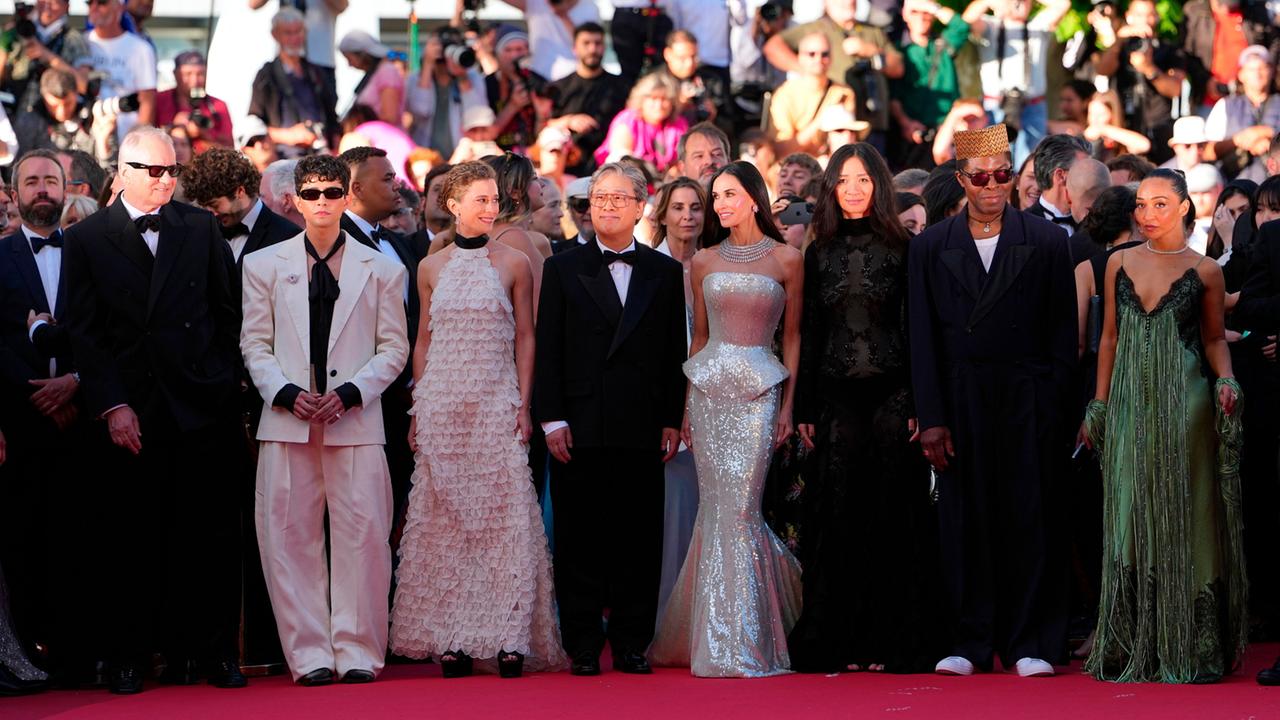
The honor recognized Jackson not just as a technical wizard of visual effects, but as an architect of emotional landscapes. His ability to maintain the humanity of his characters amidst the scale of epic fantasy remains his most enduring contribution to the craft.
The Philosophical Core: Cinema as a Catalyst for Change
Beyond the glitz of the red carpet and the accolades, the festival’s opening underscored a deeper, more urgent narrative. Jane Fonda, whose career has been as defined by her social activism as her performances, delivered a rousing address. She called upon the audience to recognize cinema as more than entertainment; it is an act of defiance and a bastion of freedom.
"We are here to celebrate the boldness, the liberty, and the unshakeable act of creation," Fonda declared, her voice resonating through the auditorium. "In a world increasingly fractured, the cinema remains one of the few places where we are forced to see the humanity in ‘the other’."
This sentiment sets the tone for the coming days. Despite the absence of massive studio blockbusters in this year’s primary competition, the festival’s thematic commitment to "the magic of the movies" suggests a program that will lean heavily into social commentary, human rights, and the exploration of the digital age’s impact on human connection.
Supporting Data: The Festival in Numbers
The 79th Cannes Film Festival arrives at a pivotal moment for the industry. While the box office in the post-pandemic era has fluctuated, the appetite for high-quality, auteur-driven content remains high.
- Jury Composition: The 2026 jury features members from four continents, emphasizing the festival’s commitment to global representation.
- Retrospective Influence: Jackson’s award marks a shift in the festival’s historical "Arthouse vs. Blockbuster" divide, acknowledging that technical innovation is an art form in itself.
- Economic Impact: The festival remains the single largest economic engine for the city of Cannes, bringing in an estimated €200 million in local revenue annually.
Implications for the Future of Film
The decision to honor a filmmaker like Peter Jackson, while simultaneously emphasizing the experimental and political roots of the festival, hints at a broader strategic shift. Cannes is positioning itself as a sanctuary for the "complete filmmaker"—someone who can navigate the complexities of massive production while maintaining a singular, artistic vision.
Furthermore, the emphasis on the "magic of cinema" serves as a direct counter-narrative to the rise of AI-generated content and the homogenization of entertainment. By highlighting the human struggle, the creative risk-taking, and the physical presence of actors and directors on the Croisette, the festival is reinforcing the idea that cinema is a human endeavor that requires the presence of an audience.
As the festival progresses, all eyes will be on the competition entries. With the bar set high by the opening ceremony’s emotional depth and the celebration of Jackson’s lifelong journey, the jury faces the difficult task of selecting a winner from a field that promises to be as diverse as the panel itself.
Conclusion: A Celebration of the Unseen
As the festivities continue, the message from the opening night remains clear: Cannes is not just a marketplace; it is a laboratory for the soul of the industry. Whether through the lens of a fantasy epic or a gritty, intimate drama, the festival serves as a reminder that as long as there is a story to tell and a screen to project it upon, the magic of the cinema will continue to endure.
The 79th Film Festival is underway, and if the opening night is any indication, it will be a year defined by the courage to create and the freedom to dream.












Leave a Reply