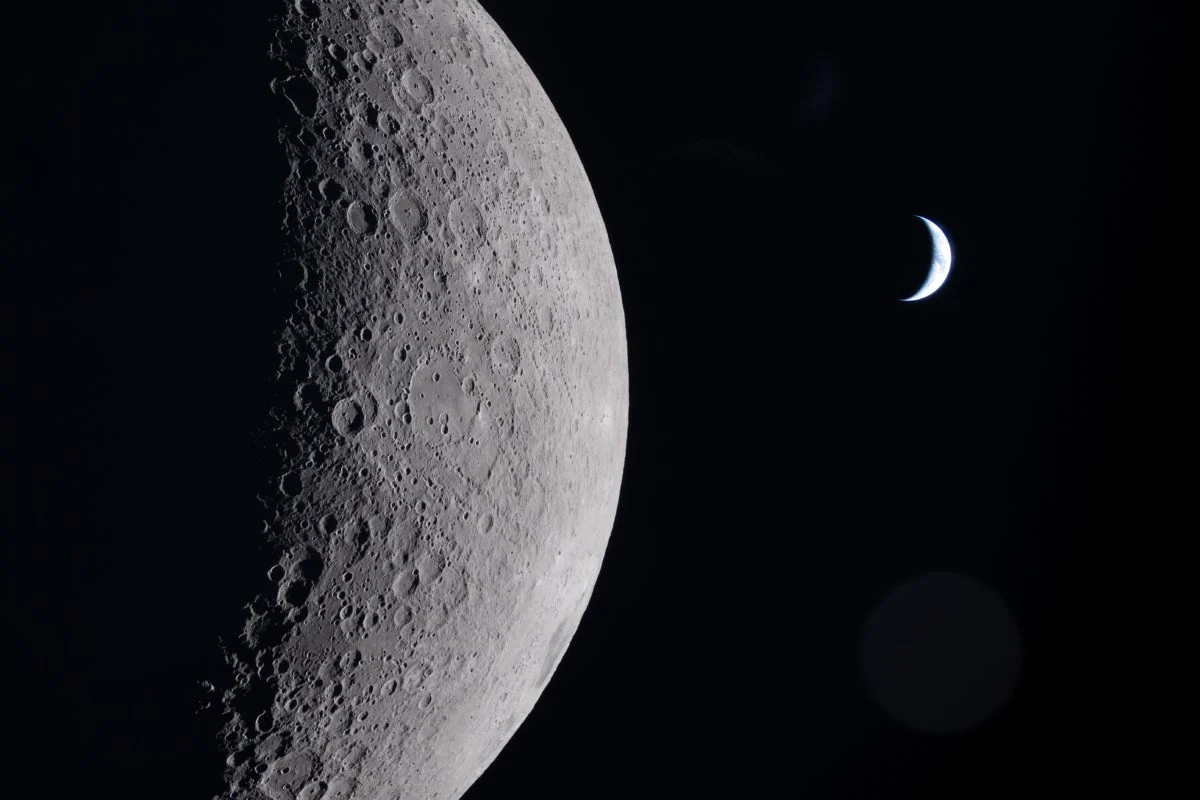
As global energy demands continue to surge, pushing the limits of terrestrial resource management, the scientific community is increasingly looking toward the stars. While once relegated to the realm of high-concept science fiction, the idea of harvesting solar energy from outer space has transitioned into a subject of serious, albeit ambitious, engineering discourse. At the center of this dialogue is the "Luna Ring"—a visionary proposal by the Japanese construction giant Shimizu Corporation that aims to turn our natural satellite into a perpetual, massive power plant for Earth.
The Core Concept: A Girdle of Sunlight
The project, which has garnered renewed attention recently, proposes the construction of an 11,000-kilometer-long belt of solar panels encircling the Moon’s equator. This structure, which would span up to 400 kilometers in width, would be designed to capture the unfiltered intensity of solar radiation, unaffected by the atmospheric filters or weather patterns that limit terrestrial solar farms.
The mechanism is deceptively simple in theory: the captured energy would be converted into microwaves or high-intensity laser beams. These beams would then be transmitted across the 384,400-kilometer void of space to specialized receiving stations located on Earth. Once received, this energy would be converted back into electricity and fed directly into the global power grid. By creating a continuous loop of power generation, the Luna Ring promises to provide a virtually limitless supply of clean energy, theoretically solving the world’s power crises in one stroke.
Chronology of a Dream
The Luna Ring is not a new concept, but rather one that has evolved in response to shifting global geopolitical and environmental climates.
- 2010 – Initial Inception: Shimizu Corporation first introduced the Luna Ring concept as part of their "Dream" series, a collection of futuristic engineering designs intended to inspire sustainable infrastructure solutions.
- 2011 – The Catalyst: Following the catastrophic Fukushima Daiichi nuclear disaster, Japan’s energy policy underwent a traumatic re-evaluation. The Luna Ring gained sudden, albeit brief, traction in public discourse as a theoretical alternative to nuclear dependency.
- 2014-2016 – Refinement: The project moved from a mere sketch to a formal white paper, detailing the logistics of extraterrestrial construction. It gained international recognition as a benchmark for "mega-engineering."
- 2020-Present – The Tech Integration Phase: Recent advancements in robotics, autonomous construction, and wireless power transmission have moved the conversation from "if this can be built" to "what technology is required to build it." The project is now frequently cited in discussions about space-based solar power (SBSP).
Leveraging Lunar Resources: The In-Situ Approach
A project of this scale cannot be fueled by terrestrial supply chains; the cost of launching billions of tons of materials from Earth would be economically impossible. Consequently, the Shimizu Corporation’s proposal relies on the philosophy of In-Situ Resource Utilization (ISRU).
According to their technical documents, the project would rely on a fleet of autonomous, remotely controlled robots. These machines would be tasked with a monumental industrial undertaking: mining the lunar surface for regolith (lunar soil) to produce concrete, glass, and specialized solar cell components on-site. The goal is a self-sustaining, robotic "mobile factory" that slowly traverses the lunar equator, laying down the solar belt behind it as it moves.
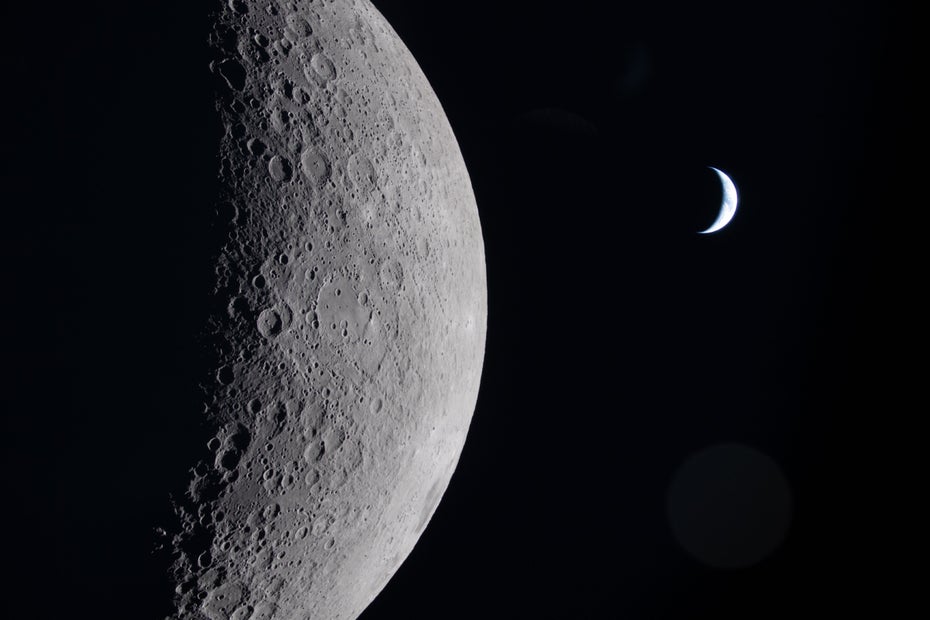
However, the technology required to build, power, and maintain these machines in the harsh, vacuum-sealed, and radiation-heavy environment of the Moon remains in its infancy. We currently lack the autonomous infrastructure required for large-scale mining operations, let alone the sophisticated manufacturing capabilities needed to assemble complex photovoltaic arrays in a low-gravity environment.
Economic and Technical Hurdles: The Reality Check
Despite its brilliance, the Luna Ring faces an uphill battle against the laws of economics and physics. Masanori Komori of the Japan Institute of Energy Economics has been among the most vocal critics, pointing out that the financial barrier to entry is astronomical—quite literally.
The Cost of Vision
To date, there are no reliable cost estimates for the project. When one factors in the development of heavy-lift rockets, the creation of autonomous lunar factories, and the maintenance of a trans-lunar power transmission network, the price tag would likely exceed the GDP of many developed nations. There is also the significant issue of "energy return on investment" (EROI). If the amount of energy required to build the ring is greater than the amount of energy it produces over its first fifty years, the project becomes a scientific vanity piece rather than a climate solution.
The Problem of Transmission
Beam-based power transmission (microwaves or lasers) is currently being tested by various research institutions on a small scale, but beaming energy across the lunar-terrestrial distance is a different beast entirely. Precision is paramount; a slight misalignment of the beam could result in missing the Earth-based rectennas, rendering the entire system useless. Furthermore, the safety implications of directing high-energy lasers through the atmosphere—or the potential for such systems to be weaponized—pose significant international security questions.
Official Responses and Global Perspective
The international community has remained largely cautious. While the Shimizu Corporation continues to promote the project as a "gift to future generations," official space agencies like NASA and the European Space Agency (ESA) have adopted a more pragmatic, incremental approach.
NASA’s current lunar strategy, centered on the Artemis program, focuses on establishing a sustainable human presence on the Moon as a stepping stone to Mars. In these plans, solar arrays are envisioned as critical infrastructure for lunar bases—powering life support, mining, and research—rather than as a power source for Earth.
Industry analysts suggest that the true value of the Luna Ring proposal lies not in its immediate implementation, but in the "technological spin-offs" it generates. Research into autonomous lunar construction, wireless energy transmission, and radiation-hardened electronics is directly applicable to the immediate needs of space exploration.
Implications for the Future of Energy
The Luna Ring serves as a "North Star" for engineers. It forces the world to confront the limitations of our current energy paradigm. As we look at the potential for space-based solar, we are seeing a shift toward "orbital" rather than "lunar" solutions. Many organizations are now exploring solar satellites in Earth’s orbit, which would be significantly cheaper to deploy and maintain than a belt around the Moon.
If humanity is to solve the global energy crisis, the solution will likely involve a multi-pronged approach:
- Terrestrial Optimization: Improving the efficiency of current renewables and grid storage.
- Fusion Energy: Mastering the "Sun on Earth" to provide a stable, high-density power source.
- Space-Based Solar: Utilizing the near-constant sunlight in orbit to provide a continuous, high-output power stream.
The Luna Ring reminds us that the only limitation to human achievement is our willingness to invest in the "impossible." While it is unlikely that we will see a belt of solar panels around the Moon in our lifetime, the project has successfully pushed the boundaries of what we consider achievable. It represents the transition of human society from a planet-bound civilization to one that actively engages with the solar system as an extension of its own resource pool.
In conclusion, while the Shimizu Corporation’s proposal currently remains a visionary study rather than an actionable construction plan, it serves a vital purpose. It challenges the skepticism of the status quo and provides a roadmap for the future of industrial engineering. Whether or not we ever build a ring around the Moon, the innovations required to dream it into existence will undoubtedly help us power a cleaner, more prosperous Earth.