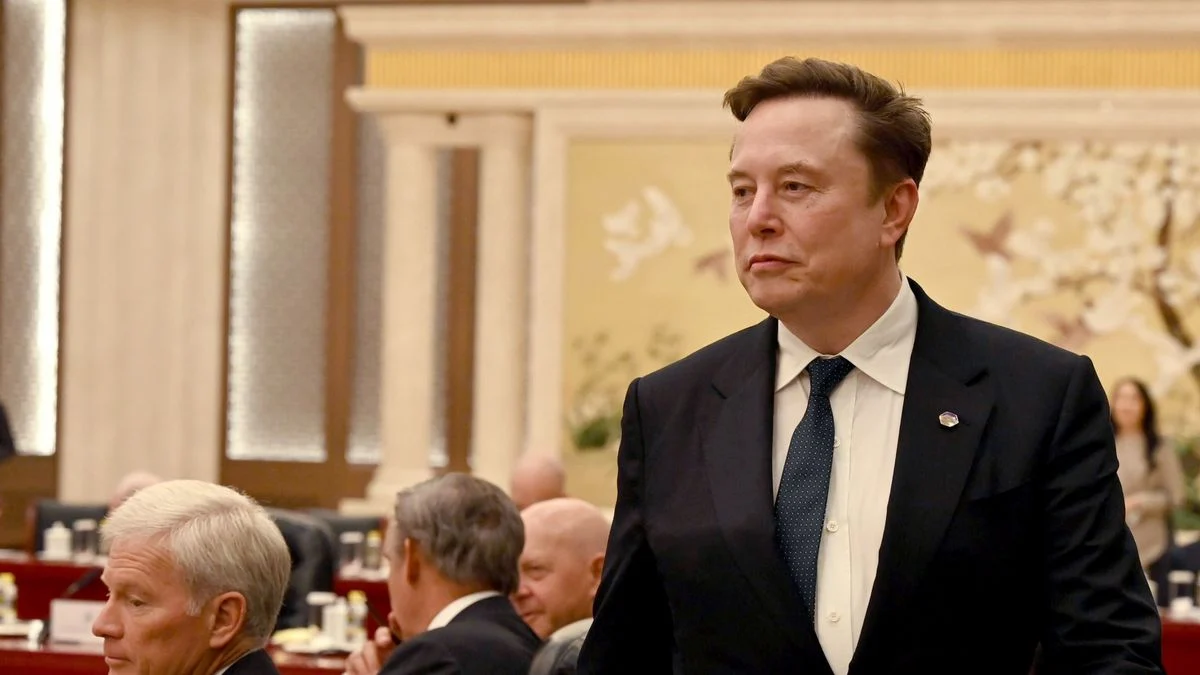
After a protracted and at times vitriolic standoff with Brussels, Elon Musk’s social media platform, X (formerly Twitter), appears to have reached a fragile peace with the European Commission. Following a record-breaking fine and months of regulatory pressure, the platform has committed to a series of corrective measures aimed at aligning its operations with the European Union’s landmark Digital Services Act (DSA). For the Commission, this represents a significant victory in its ongoing mission to tame the "Wild West" of digital communication.
The Core Conflict: Transparency vs. The Musk Paradigm
The dispute centers on the fundamental design of X under Musk’s stewardship. Since acquiring the platform in 2022, Musk has aggressively pivoted away from traditional content moderation and legacy verification systems. These changes, while lauded by his supporters as a victory for "free speech," triggered immediate alarms among European regulators, who viewed the platform’s new architecture as a breeding ground for disinformation, deceptive practices, and opaque advertising.
At the heart of the regulatory friction was the infamous "blue checkmark." Historically, the mark served as a badge of authenticity, confirming the identity of high-profile users, journalists, and public figures. Musk transformed this into a subscription-based product, allowing any user to purchase a verification badge. The EU argued that this systemic change effectively dismantled the guardrails against impersonation, as malicious actors could buy the appearance of credibility, leading to widespread confusion among the European public.
A Chronology of Confrontation
The path to the current resolution has been marked by escalating tensions, public posturing, and unprecedented financial penalties.
- 2023: The Early Warnings: Following the implementation of the DSA, the European Commission initiated a formal investigation into X. Brussels expressed concerns regarding the platform’s risk management, moderation of illegal content, and the efficacy of its advertising transparency.
- December 2024: The Record Fine: The Commission dealt a historic blow to the platform, imposing a €120 million fine—the first of its kind under the DSA. The penalty was levied not merely for the verification system, but for a broader failure to protect European users and provide researchers with the necessary data to audit the platform’s impact on society.
- The Reaction: Elon Musk’s response was characteristically blunt and dismissive. Taking to his own platform, he suggested the European Union should be "abolished," arguing that sovereignty should be returned to individual nation-states. His comments found resonance with political figures in the United States, including Secretary of State Marco Rubio, who framed the EU’s actions as an "attack on American tech platforms."
- The Pivot (Early 2025): Faced with the prospect of escalating fines and potential exclusion from the European market, X’s leadership team entered into intensive negotiations with the Commission. The resulting agreement marks a pivot from defiance to compliance, as the platform has pledged to restructure its verification systems and grant researchers greater access to its data architecture.
The Pillars of Compliance: What Changes?
The commitment made by X to the European Commission covers three critical areas of digital governance.

1. The Verification Rebrand
X has acknowledged that its paid verification system caused public confusion. The platform has now officially clarified that the blue checkmark is no longer a stamp of institutional verification but rather a "Premium Status" indicator for paying subscribers. By explicitly distinguishing between these two concepts in its user interface and terms of service, the platform intends to mitigate the risks of impersonation that initially drew the ire of EU regulators.
2. Access for the Scientific Community
One of the most persistent criticisms of X under Musk has been its restriction of API (Application Programming Interface) access. Previously, researchers could easily scrape data to study the spread of misinformation or the dynamics of political discourse on the platform. Musk’s decision to lock this data behind paywalls or block access entirely effectively blinded the academic community. Under the new agreement, X must provide a pathway for vetted researchers to access data, ensuring that the platform’s impact on democracy can be studied independently.
3. Advertising Transparency
The DSA requires platforms to maintain a publicly accessible repository of advertisements, detailing who paid for them, why they were shown to specific users, and the parameters of their targeting. X has committed to overhaul its ad-tracking documentation, providing a level of granular transparency that has been largely absent since the acquisition. This is intended to stop the "dark ads" that have previously been used to influence elections and incite social friction.
Regulatory Implications: The "Brussels Effect" in Action
The settlement with X is more than just a procedural victory for the European Commission; it is a demonstration of the "Brussels Effect"—the phenomenon where EU regulations effectively set the global standard for digital conduct. Because it is prohibitively expensive to operate different versions of a platform for different regions, companies are often forced to adopt EU-compliant standards worldwide.
The DSA, which became fully applicable in 2024, is the most ambitious attempt to date to hold big tech companies accountable for the content they host. It mandates that platforms be proactive in removing illegal content, protecting minors, and providing users with clear avenues for redress. The success of the Commission in forcing a recalcitrant billionaire like Musk to the negotiating table serves as a warning to other tech giants: the era of self-regulation is effectively over.

The Road Ahead: Six Months of Scrutiny
While the European Commission has accepted X’s proposed measures, the saga is far from over. The platform has been given a six-month window to implement these changes fully. During this period, X will remain under "heightened supervision."
Brussels has signaled that it will not take these promises at face value. The Commission is expected to utilize independent auditors to verify that the changes are not just cosmetic. If X fails to meet the implementation benchmarks, the platform could face further penalties, including periodic penalty payments that could reach a significant percentage of its global annual turnover.
Conclusion: A New Era of Digital Accountability
The resolution of the conflict between the EU and X marks a watershed moment for the digital age. It highlights the tension between the libertarian impulses of Silicon Valley and the collective interest of democratic societies. For users, the outcome promises a safer, more transparent digital environment. For the platform, it is a sobering lesson in the limits of corporate autonomy.
As the tech industry watches closely, the message from Brussels is clear: no platform, regardless of its size or the influence of its owner, is above the law. Whether this agreement leads to a genuine improvement in the digital discourse or simply results in a new layer of bureaucratic maneuvering remains to be seen. However, one thing is certain: the internet is no longer a lawless frontier. Under the gaze of the Digital Services Act, the digital giants are finally being forced to play by the rules of the societies they operate within.