In a move that has sent shockwaves through the global artificial intelligence community, the semiconductor giant Nvidia has officially finalized its acquisition of Hugging Face, the preeminent open-source AI platform. While the tech industry had been bracing for a massive consolidation deal since reports began circulating in August 2026, the specific financial details provided in the official SEC filing on September 2, 2026, took observers by surprise.
Nvidia confirmed a purchase price of exactly $12,930,300,000. While the figure sits squarely within the previously speculated $13 billion range, the precise, somewhat eccentric nature of the number immediately sparked a digital treasure hunt. As it turns out, the price tag was not merely a result of complex financial auditing; it was a deliberate, two-part "Easter egg" embedded by the leadership teams of both organizations to signal the cultural and technical alignment of the two companies.
The Chronology of the Deal: From Rumor to Reality
The journey toward this monumental acquisition was marked by weeks of intense speculation. By late August 2026, tech outlets in the United States began reporting that negotiations between Nvidia—the primary engine behind the global AI hardware boom—and Hugging Face—the central hub for open-source machine learning models—were nearing a conclusion.
Industry analysts had initially predicted a standard, rounded valuation. However, when the regulatory filings were published, the exact figure of $12.9303 billion became the focal point of discussion on platforms like X (formerly Twitter). Thomas Wolf, co-founder of Hugging Face, fueled the speculation by confirming that the figure was intentionally designed to hold dual significance: one element honoring the identity of Hugging Face and the other paying homage to the core brand identity of Nvidia.
Decoding the Financial Cipher
The "nerdy" nature of the deal has become a hallmark of the collaborative spirit between the two companies. The resolution of the numeric riddle required a deep dive into both computing history and color theory.
The Hugging Face Emoji (U+1F917)
The first portion of the code, represented by the leading digits "129303," refers directly to the Universal Character Set. In the Unicode standard, the hexadecimal value 0x1F917 corresponds to the "hugging face" emoji—a smiling face with open hands. This emoji has served as the official mascot and logo of the platform since its inception. By encoding the Unicode ID into the billions of dollars of the acquisition, the parties created a permanent, albeit subtle, tribute to the open-source community that built the platform.
The Nvidia Signature Green
While the emoji connection was solved relatively quickly by data scientists, the second half of the riddle proved more elusive. Early theories suggested that the "93" could represent the year of Nvidia’s founding, while the "12" and "03" were debated as references to share prices or original team sizes.
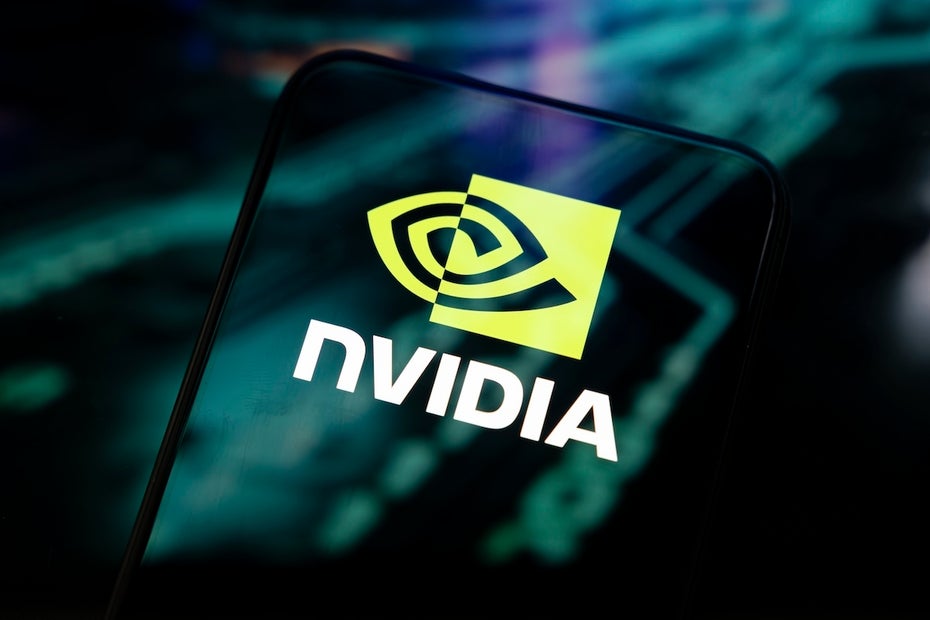
These theories were eventually dismissed in favor of a more visual explanation. When interpreted as a hex color code, #129303 reveals a distinct, vibrant, and dark "lime green." This shade is a direct match to the signature branding color that has defined Nvidia’s corporate identity since the company was established in the early 1990s. The choice of this specific number confirms that the deal was negotiated not just as a financial transaction, but as a symbolic marriage of hardware power and open-source accessibility.
Supporting Data and Market Context
To understand why this acquisition is so critical, one must look at the current state of the AI infrastructure market. Hugging Face has functioned as the "GitHub of AI," hosting hundreds of thousands of pre-trained models, datasets, and spaces for developers to collaborate.
Nvidia, meanwhile, has moved beyond being a mere chip manufacturer to becoming the foundational layer for AI compute. With this acquisition, Nvidia effectively secures the "software layer" of the AI stack. By integrating Hugging Face, Nvidia gains:

- Direct Pipeline: Access to the vast repository of models currently being developed by the global open-source community.
- Developer Ecosystem: A direct line to the millions of researchers and engineers who use Hugging Face tools daily.
- Strategic Synergy: The ability to optimize the latest generation of Blackwell and successor-series GPUs specifically for the models hosted on the platform.
Official Responses and Strategic Vision
The acquisition has been met with both excitement and trepidation. The primary concern among the developer community—that a corporate titan might "close off" an open platform—was addressed immediately by Nvidia CEO Jensen Huang.
In an official statement released alongside the SEC filing, Huang emphasized that "Hugging Face will remain an open platform for the entire AI ecosystem." The company’s blog reiterated that researchers, startups, and individual developers will continue to have full, unfettered access to upload and download models and datasets.
"The goal is not to silo the technology," said a spokesperson for the transition team. "The goal is to provide the infrastructure and resources necessary to scale the open-source movement to a level that was previously impossible."
The Implications for the Future of AI
The acquisition of Hugging Face by Nvidia marks a turning point in the history of artificial intelligence. It signals the end of the "wild west" phase of generative AI, where open-source and proprietary interests were often at odds. By bringing these two entities together, the industry is moving toward a more centralized, yet theoretically open, model of development.
Impact on Developers
For the average developer, the immediate impact will likely be felt in the form of improved performance. Integration between the Hugging Face hub and Nvidia’s cloud infrastructure (DGX Cloud) is expected to become seamless, allowing for "one-click" training and deployment of large language models (LLMs).
Impact on Competition
Competitors such as AMD, Intel, and major cloud providers (AWS, Google, Microsoft) now face an even more formidable rival. With Nvidia controlling both the hardware (the GPUs) and the primary software distribution platform (Hugging Face), the company has created a vertical integration that is unmatched in the tech sector.
Ethical and Open-Source Concerns
Despite the promises made by Jensen Huang, the open-source community remains vigilant. The term "open" has been subject to various interpretations in the tech industry. Critics argue that even if the code remains available, the underlying computing power required to train the next generation of models will remain firmly under Nvidia’s control. The community will be watching closely to see if "open" remains truly open or if the platform begins to prioritize Nvidia-optimized architectures over competing hardware.
Conclusion: A New Era of Compute
The $12.9303 billion price tag is a testament to the fact that in the world of high-stakes technology, branding and culture matter just as much as the bottom line. By embedding the emoji and the corporate green into the very fabric of the deal, Nvidia and Hugging Face have sent a message: they intend to lead the AI revolution by respecting the community that made the technology possible, while simultaneously cementing their dominance over the infrastructure that makes that technology work.
As the industry moves forward into the post-acquisition era, the true success of this deal will not be measured by the share price or the cleverness of the Easter eggs, but by whether the promise of an "open ecosystem" can survive the pressure of corporate interests in an increasingly competitive global landscape. For now, the tech world watches—and waits—to see how the "Hugging Face" of the future will evolve under the green banner of Nvidia.