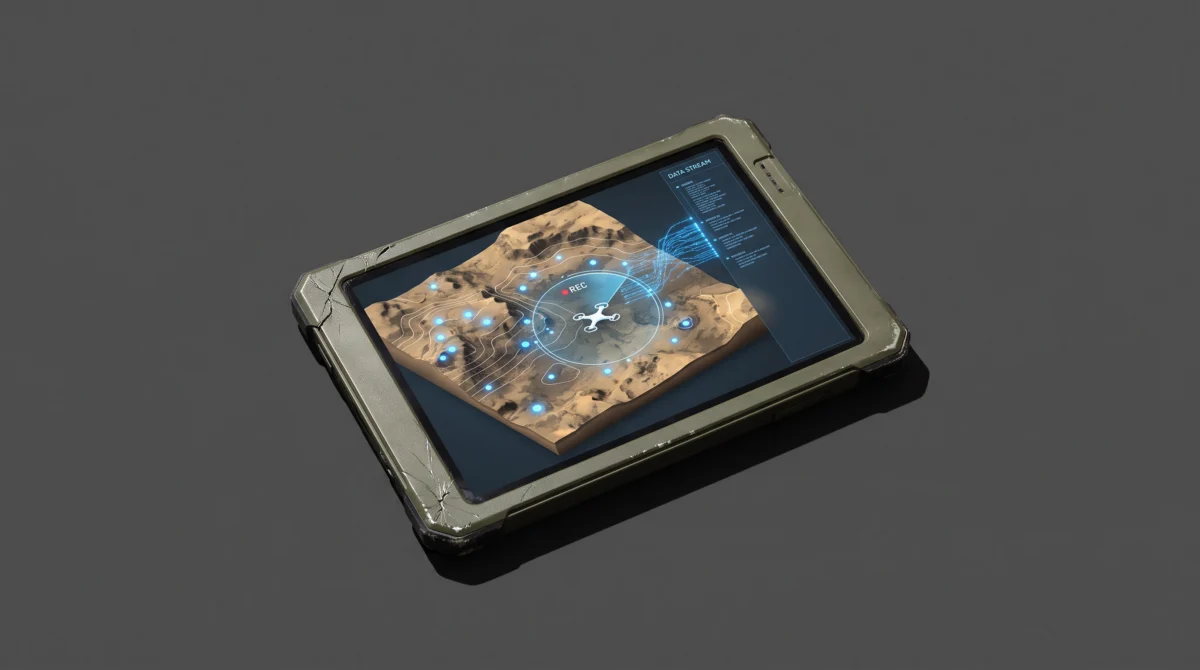

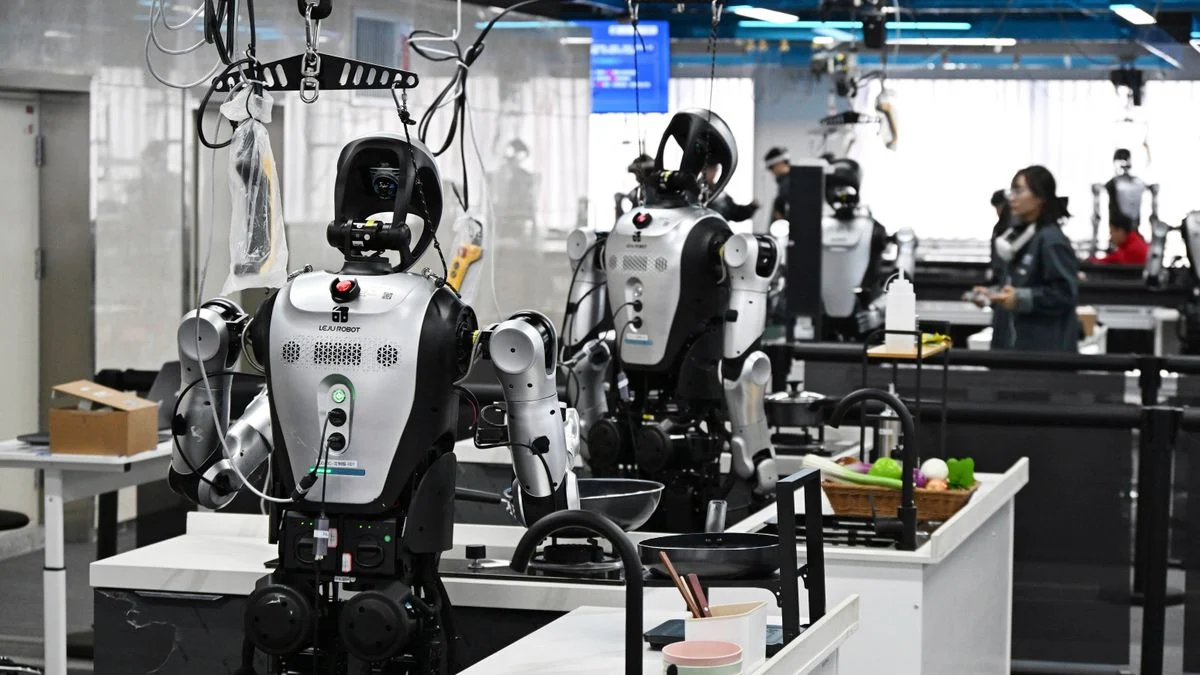
The escalating technological cold war between Washington and Beijing has reached a new and futuristic frontier. In a move that signals a hardening stance against Chinese manufacturing dominance, the U.S. Federal Communications Commission (FCC) has implemented stringent restrictions on the importation and sale of advanced, foreign-made humanoid robots and autonomous systems. This development marks a significant expansion of the "national security" battleground, moving beyond semiconductors and electric vehicles into the burgeoning field of robotics and AI-integrated hardware.
The Chinese government, through its Ministry of Commerce, has reacted with sharp condemnation, characterizing the FCC’s decision as an "arbitrary" misuse of national security as a pretext for economic protectionism. As the two superpowers continue to decouple their supply chains, the global robotics industry finds itself caught in a precarious geopolitical crossfire.
The FCC Crackdown: What Has Changed?
The FCC’s recent directive effectively bars new foreign-manufactured, high-end autonomous systems from receiving the regulatory certification required for entry into the United States market. While the agency maintains that its policy is "country-agnostic," the practical impact is clearly focused on Chinese-developed technology.
The restricted list covers a wide spectrum of advanced robotics:
- Humanoid Robots: Bipedal or multi-jointed robots designed to mimic human motion and interaction.
- Quadrupedal Systems: Often referred to as "robot dogs," these machines are increasingly used for surveillance, inspection, and logistics.
- Critical Infrastructure Components: The scope extends beyond robotics to include sophisticated power inverters essential for solar energy arrays, large-scale battery storage systems, and the power grids supporting massive data centers.
Under the new rules, any device falling into these categories that cannot meet strict security benchmarks—or that is perceived as an inherent security risk—will be denied the authorization necessary to operate within the U.S. telecommunications and power ecosystem. While devices already authorized and in use are not immediately affected, the door has been slammed shut on future imports from affected manufacturers.
Chronology: A Multi-Year Tech Decoupling
The current restrictions on robotics are not an isolated event; they are the latest chapter in a multi-year effort by the United States to isolate China from critical supply chains.

- 2019–2020: The U.S. began targeting Chinese telecommunications giants, most notably Huawei, citing espionage concerns. This set the precedent for using FCC certification as a tool for national security.
- 2022–2023: Washington introduced sweeping export controls on advanced AI chips (GPUs), aiming to stifle China’s ability to train large-scale language models and advance its military computing capabilities.
- Early 2024: The focus shifted toward the automotive sector, with the Biden administration investigating the risks posed by "connected vehicles" from China, fearing that the software and sensors within these cars could be used for data collection.
- Late 2024/Early 2025: The inclusion of humanoid robots and power inverters marks the latest expansion, signaling that the U.S. views any internet-connected, sensor-heavy hardware as a potential Trojan horse for digital surveillance.
Official Responses and Diplomatic Tensions
The reaction from Beijing was swift and uncompromising. A spokesperson for the Chinese Ministry of Commerce released a formal statement warning that the U.S. was "wilfully expanding the definition of national security."
"Washington must immediately reverse these measures," the statement read, adding that if the U.S. continues to obstruct "normal business operations" and fuel the fragmentation of global supply chains, China would be forced to take "determined countermeasures."
For China, the robotics industry is not merely a commercial sector—it is a cornerstone of its "Made in China 2025" and subsequent high-tech development strategies. The government has poured billions into state-subsidized research, aiming to lead the world in automation as its domestic labor force shrinks. By effectively blocking access to the U.S. market, Washington is striking at the heart of Beijing’s industrial ambitions.
Conversely, the U.S. position is rooted in the "security-by-design" philosophy. The FCC argues that modern robots are essentially "computers on legs." With high-definition cameras, LiDAR, and deep-learning AI, these machines are constantly mapping their environments. The fear in Washington is that these robots could be remotely accessed, hijacked, or used to exfiltrate sensitive data from American manufacturing plants, logistics hubs, or even private homes.
Implications for Global Technology
The implications of this move are profound and multifaceted, affecting global trade, technological innovation, and the future of human-machine interaction.
1. The Fragmentation of Innovation
The robotics industry relies on a globalized flow of talent and components. By creating a regulatory wall, the U.S. is essentially forcing the robotics market to bifurcate into two distinct ecosystems: a "Western-aligned" ecosystem and a "China-aligned" ecosystem. This will likely slow the pace of global innovation as manufacturers are forced to develop separate software stacks and hardware standards to comply with different geopolitical requirements.

2. Economic Protectionism or Security?
Critics of the FCC’s move argue that this is less about security and more about shielding American firms—such as Boston Dynamics, Tesla (with its Optimus project), and various startups—from the price-competitive onslaught of Chinese competitors. While the national security argument is the legal lever being pulled, the economic result is a significant boost to domestic manufacturers who can now operate in the U.S. market without fear of being undercut by state-subsidized, lower-cost Chinese alternatives.
3. The Future of AI Integration
The debate is now shifting toward the "brain" of these robots: Artificial Intelligence. There is growing pressure in Washington to treat Chinese-developed Large Language Models (LLMs) and foundation models with the same suspicion as physical hardware. Several high-ranking officials have suggested that if an AI model is developed in a country deemed a "foreign adversary," it should be subject to strict licensing, if not a total ban.
Technology executives, however, have warned against this. Industry leaders argue that a blanket ban on international AI models would isolate American developers from global research, stifle the collaborative nature of open-source AI, and potentially leave the U.S. behind if other nations successfully develop more efficient, localized models.
Conclusion: A New Era of "Techno-Nationalism"
The restriction on humanoid robots is a stark reminder that the era of globalization in the technology sector is undergoing a fundamental transformation. What was once a world of seamless trade and shared technological standards is increasingly becoming a patchwork of "trusted" and "untrusted" networks.
As China continues to iterate on its humanoid designs, and as the U.S. doubles down on its defensive posture, the global stage is set for a prolonged period of friction. Companies operating in this space must now navigate a labyrinth of export controls, regulatory hurdles, and diplomatic pressures. Whether this leads to a more secure technological infrastructure or a stagnant global innovation cycle remains to be seen, but one thing is clear: the robots of the future will be defined as much by their nationality as by their functionality.
The battle for supremacy in the next industrial revolution—one built on the back of intelligent, autonomous, and mobile machines—has only just begun. The question remains whether the world can sustain two parallel versions of this future, or if the friction of this geopolitical divide will ultimately lead to a deceleration of the progress that humanity expects from its robotic future.