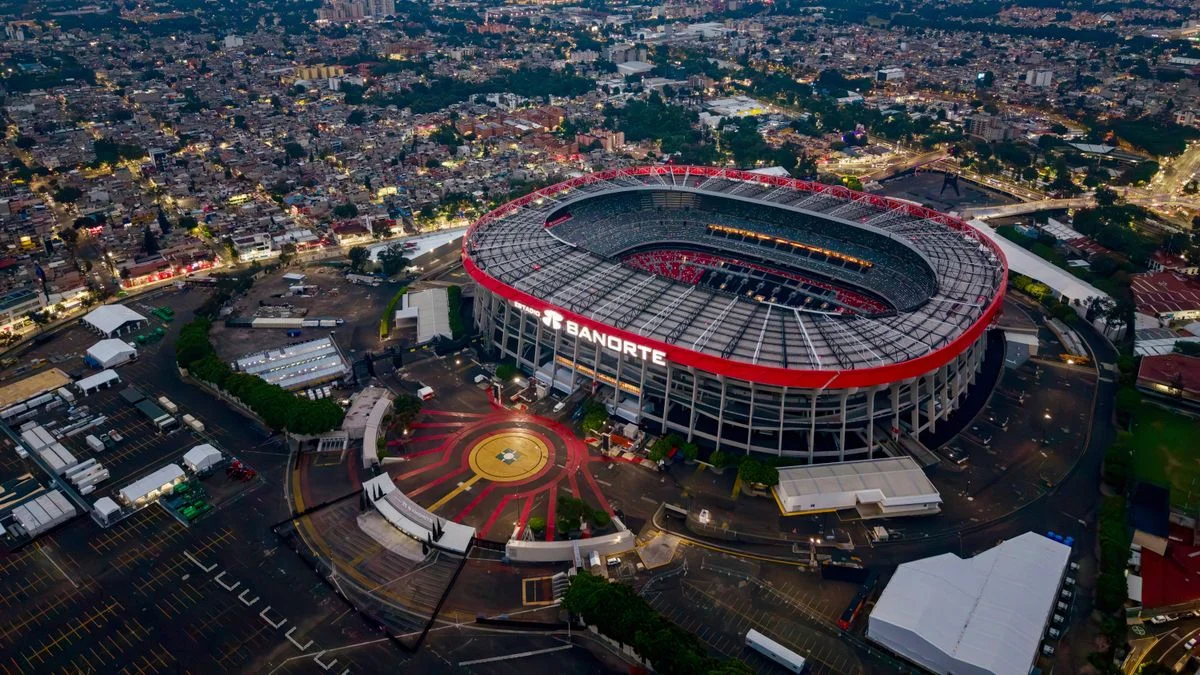
As the global football community sets its sights on the 2026 FIFA World Cup—a historic tournament co-hosted by Canada, Mexico, and the United States—nowhere is the anticipation more palpable than in the shadows of the Estadio Azteca. Located in the Tlalpan borough of Mexico City, this colossal structure is not merely a sports venue; it is a monument to national identity. As the stadium prepares to host the tournament’s opening match, the surrounding neighborhood is undergoing a complex metamorphosis, balancing the demands of international tourism with the preservation of its deep-rooted local character.
The Main Facts: An Architectural Titan in Transition
The Estadio Azteca, affectionately known as El Coloso de Santa Úrsula, holds a singular place in sporting history. Having hosted two World Cup finals (1970 and 1986), it is the only stadium to have witnessed both Pelé and Diego Maradona lift the trophy. For the 2026 iteration, the stadium is undergoing significant renovations to meet modern FIFA standards while retaining its intimidating, bowl-like architecture that holds over 80,000 spectators.
However, the "World Cup experience" for fans goes far beyond the turnstiles. The neighborhood surrounding the stadium is a dense, vibrant tapestry of street food vendors, local markets, and residential life that remains largely hidden from the average television viewer. The influx of global capital and tourism infrastructure is creating a friction point between the city’s modernization efforts and the preservation of its authentic, gritty, and deeply human character.
Chronology: From 1966 to the Future
The development of the area around the Azteca can be divided into three distinct eras:
- 1966–1970: The Birth of a Landmark. The construction of the stadium served as a catalyst for the urbanization of the southern periphery of Mexico City. What was once largely volcanic rock and rural land transformed into a bustling suburban hub, anchored by the stadium’s presence.
- 1986: The Maradona Moment. The second World Cup cemented the area as a global pilgrimage site. Infrastructure improved, but the surrounding neighborhood remained largely working-class, characterized by small-scale commercial enterprises.
- 2023–2026: The Modernization Drive. Since the announcement of the 2026 host cities, the area has seen an aggressive push for urban beautification, security upgrades, and hospitality investment. This period is marked by the tension between local residents, who fear displacement or skyrocketing costs, and developers aiming to turn the vicinity into a high-end tourist corridor.
Supporting Data: Economic and Urban Metrics
Data suggests that the impact of the 2026 World Cup will be unprecedented for this specific borough. Local economic forecasts estimate a 30% increase in short-term hospitality revenue within a three-kilometer radius of the stadium. However, these figures come with caveats:
- Infrastructure Investment: The municipal government has allocated over $150 million USD for transit improvements, specifically targeting the Tren Ligero (Light Rail) connectivity to the stadium.
- Housing Market Pressure: Real estate analysts have noted a 12% rise in rental prices in the Tlalpan district over the last 18 months, driven by speculative investment ahead of the tournament.
- Demographic Shift: While the stadium brings global attention, the demographic of the immediate area remains heavily reliant on small-scale commerce. Data from the National Institute of Statistics and Geography (INEGI) indicates that 65% of the local businesses are family-operated, which face the highest risk of being priced out by international chains.
Official Responses: Balancing Progress and Preservation
Government officials, led by the Mexico City Ministry of Tourism, argue that the tournament is a "generational opportunity." In a recent press briefing, the project manager for the Azteca renovation stated: "Our goal is not just to host a tournament, but to revitalize the urban fabric of the south. We are integrating security, better lighting, and pedestrian-friendly zones that will serve residents long after the final whistle."
Conversely, local grassroots organizations, such as the Vecinos del Estadio coalition, have expressed skepticism. They argue that the "beautification" projects are superficial and often ignore the structural needs of the local population, such as water scarcity and public health infrastructure. "They are painting the walls of our neighborhood for the cameras," says one community leader, "but they are not fixing the foundation."
Implications: The Social Cost of Global Events
The case of the Azteca neighborhood serves as a microcosm for the broader implications of mega-sporting events in the 21st century.
The Gentrification Dilemma
The primary concern for the area is the "Airbnb-ification" of local housing. As property owners realize the potential for high-yield, short-term rentals, the availability of long-term housing for residents decreases. This creates a cycle where the very culture that makes a neighborhood attractive to visitors is eroded by the economic forces that tourism unleashes.
The Security Apparatus
To satisfy FIFA’s stringent security requirements, the area around the stadium is likely to see an increased presence of both private security and law enforcement. For residents, this can feel like an occupation. The challenge for Mexico City is to implement these measures without infringing on the daily lives of those who live and work in the shadow of the Colossus.
Long-term Legacy
Will the 2026 World Cup be remembered as a catalyst for sustainable development or as a temporary disruption that left the community worse off? The answer lies in the "legacy projects" promised by the city. If the transit improvements and public space upgrades are designed with residents—not just tourists—in mind, the Azteca area could emerge as a model for urban regeneration. If not, it risks becoming another example of a "white elephant" project where the local community is sidelined for the sake of a month-long spectacle.
Conclusion: A Neighborhood in the Spotlight
As 2026 approaches, the neighborhood surrounding the Estadio Azteca stands at a crossroads. It is a place defined by its resilience, its deep love for the game, and its complicated relationship with the global stage. Fans arriving for the tournament will see a stadium restored to its former glory, but those who take the time to walk the streets of Tlalpan will find something far more interesting: a living, breathing community that is navigating the pressures of the modern world.
The challenge for the organizers and the local government is to ensure that the "World Cup experience" is not just a commercial endeavor, but a collaborative one. The true success of the 2026 tournament will not be measured by the number of tickets sold or the revenue generated by hospitality chains, but by the tangible, lasting improvements left behind for the people who call the area around the Azteca home long after the last fan has departed.
For the visitor, the area offers a unique chance to see the collision of history and progress. Whether you are grabbing a taco de suadero from a sidewalk stand or observing the massive infrastructure works from a distance, the pulse of the Azteca is the pulse of Mexico itself: vibrant, chaotic, and relentlessly forward-looking. As the world turns its gaze toward this historic site, it is incumbent upon us to look beyond the pitch and appreciate the human landscape that makes the beautiful game possible in the first place.