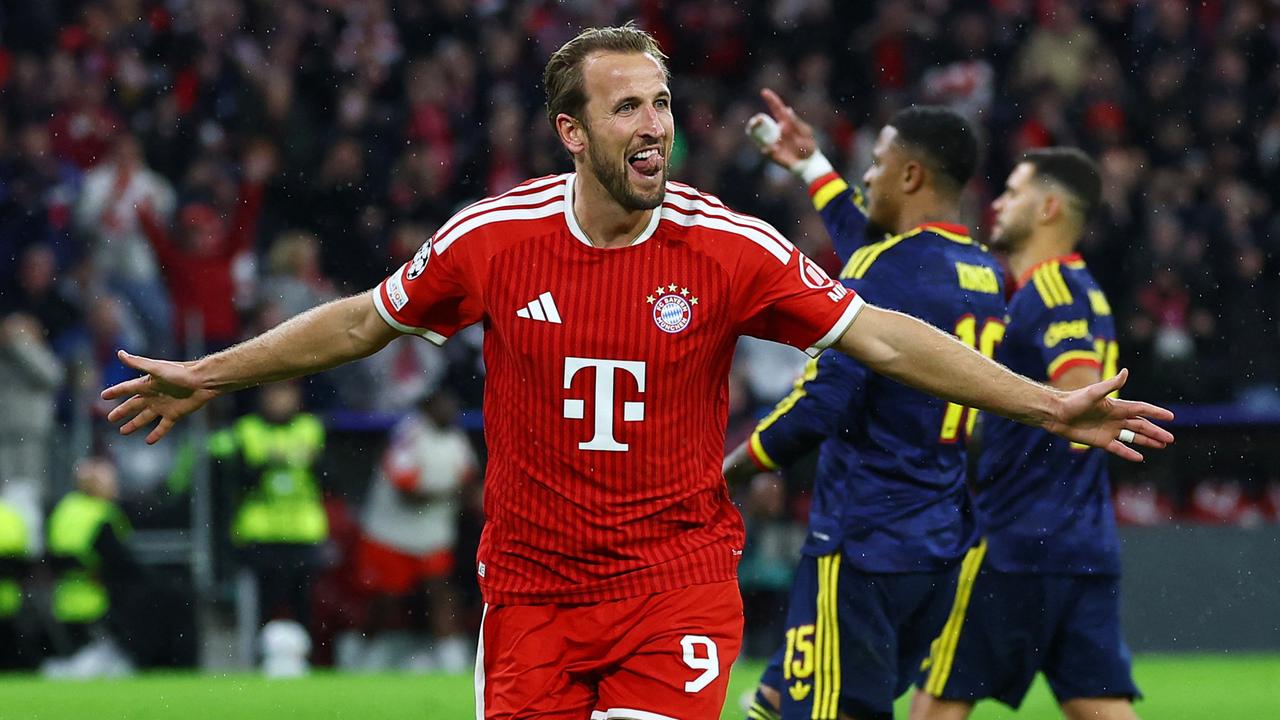
As the football world turns its eyes to London this Monday, the atmosphere is thick with anticipation. For the first time in history, the prestigious Ballon d’Or ceremony is being hosted in the English capital, and at the heart of the conversation is FC Bayern Munich’s talisman, Harry Kane. Amidst a field of generational talents and tactical innovators, the English captain stands as a beacon of individual brilliance in a year defined by shifting paradigms in European football.
The Main Facts: A Historic Night in London
On Monday at 21:00 CET, the curtain will rise on a ceremony that transcends mere trophy distribution. The Ballon d’Or, organized by France Football, remains the ultimate individual validation in a sport increasingly obsessed with collective metrics. For Harry Kane, this nomination is not just a statistical recognition; it is an acknowledgement of his role as a transformative figure at the Allianz Arena.
Having netted 61 goals for Bayern Munich and an additional 12 for the England national team during the qualifying and tournament windows, Kane’s output is staggering. Yet, the discourse surrounding this year’s award is uniquely complex. With the ceremony taking place on home soil, the narrative of a "prophet in his own land" adds a layer of emotional weight to the proceedings, positioning Kane as the sentimental favorite for many, though the technical criteria remain as rigorous as ever.
The Case for Kane: Statistical Dominance vs. The Trophy Gap
To understand the gravity of Kane’s candidacy, one must look beyond the raw numbers. While his 73 total goals in the calendar year are the primary driver of his nomination, it is his tactical evolution that has stunned observers. Under the tutelage of Bayern’s coaching staff, Kane has moved beyond the traditional "number nine" role, dropping into deeper pockets of space, dictating the tempo, and functioning as a playmaker as much as a finisher.
However, the "trophy argument" remains the elephant in the room. In the world of elite football, individual awards are rarely divorced from collective success. Kane’s season with Bayern ended in a heartbreaking Champions League semi-final exit against eventual champions Paris Saint-Germain. On the international stage, while England performed admirably, a third-place finish at the World Cup—following a narrow semi-final defeat to Argentina—leaves a void on his resume that his primary rivals do not possess.
Chronology of a Contested Season
The trajectory of the 2026 season was marked by a few pivotal moments that shaped the current voting landscape:
- September 2025: The voting period for the Ballon d’Or closed, locking in the impressions left by the summer’s international tournament.
- Spring 2026: The Champions League semi-final drama saw Paris Saint-Germain eliminate Bayern Munich, a result that effectively removed the "European Champion" narrative from Kane’s candidacy.
- Summer 2026: The World Cup served as the ultimate testing ground. While Spain’s Lamine Yamal and Rodri ascended to the pinnacle of the sport by securing the trophy, Kane’s England fell short, shifting the momentum toward the Spanish contingent.
- October 2026: The final build-up to the ceremony. Analysts have spent the last month dissecting the "individual vs. collective" dilemma, with Kane’s record-breaking Bundesliga form being weighed against the tournament pedigree of his rivals.
The Rivalry: Yamal, Rodri, and the "Absurd" Case of Kylian Mbappé
The competition for the golden orb is as fierce as it is diverse. Lamine Yamal, the wunderkind of FC Barcelona, has captured the imagination of the public and pundits alike. His role in Spain’s World Cup triumph, combined with his meteoric rise, makes him the bookmakers’ favorite.
Then there is Rodri. The midfield engine has been the most consistent player in world football for two years. However, injuries hampered his ability to maintain a full season’s momentum, which may lead voters to favor a more ever-present force like Kane.
Furthermore, the narrative of Kylian Mbappé continues to baffle. By all metrics—goals scored, individual accolades, and offensive influence—Mbappé has been equal to or better than his peers. Yet, he lacks a major title for both Real Madrid and France. The fact that he remains trophy-less in terms of the "Big Two" (World Cup/Champions League) is a point of contention for those who believe the award should reflect individual genius regardless of team failure.
The Messi Factor: A Career-Defining Encore?
At 39, Lionel Messi’s inclusion in the conversation is an anomaly that defies logic. His performance during the World Cup was, by all accounts, transcendent. Many see this as a potential "Lifetime Achievement" opportunity. Yet, his tenure in the Major League Soccer (MLS) acts as a double-edged sword. While his individual brilliance remains undeniable, the lack of exposure to the highest tier of European competition on a weekly basis makes his candidacy a polarizing subject for voters accustomed to the traditional European elite.
The Voting Mechanism: Behind the Curtain
The selection process is a meticulous exercise in democracy—or at least, the journalistic equivalent. A jury consisting of one representative journalist from each of the top 100 footballing nations (top 50 for the women’s category) casts their votes based on three criteria:
- Individual performance during the season.
- Collective success and titles won.
- Class and fair play.
Each juror selects ten players, ranking them to allocate points from 15 down to 1. This system, established by France Football, ensures a blend of tactical appreciation and objective statistical analysis. Since the votes were cast in September, the outcome has been sealed, leaving only the suspense of the reveal on Monday night.
The Women’s Game: Putellas and the Battle for Supremacy
The women’s award, the Ballon d’Or Féminin, is equally competitive. Alexia Putellas, having made the switch to the London City Lionesses, is the sentimental favorite to reclaim the throne she held in 2021 and 2022. However, the absence of three-time winner Aitana Bonmati due to injury has opened the door for players like Ewa Pajor and Bayern’s own Pernille Harder. The rise of these stars reflects the growing parity in the women’s game, where defensive solidity and tactical fluidity are becoming as important as pure goal-scoring prowess.
Implications: What a Win Would Mean for the Bundesliga
Should Harry Kane hoist the trophy, the implications for the Bundesliga would be profound. Not since Matthias Sammer in 1996 has a player representing a German club won the Ballon d’Or. It would signify a monumental shift in the perception of the league, proving that the Bundesliga can be a home for the world’s absolute best.
Furthermore, a win for Kane would be a massive boost for English football, marking the first time an Englishman has won the award since Michael Owen in 2001. It would validate Kane’s decision to leave Tottenham Hotspur, proving that his move to Munich was the catalyst required to elevate him from a world-class striker to the best player on the planet.
Official Responses and The "Special Night"
"It could be a special night," Kane remarked in a recent interview, acknowledging the weight of the event. "Winning the Ballon d’Or would be incredible. I had a fantastic season last year and I am extremely proud of it." His words reflect a grounded, professional outlook, yet the intensity of his focus is clear.
The footballing world is waiting. Whether the voters prioritize the tournament-winning pedigree of the Spanish contingent or the unparalleled individual consistency of Harry Kane, the London ceremony promises to be a historic chapter in the annals of the sport. As the sun sets on Monday, we will finally learn who stands atop the pedestal of global football.
Summary of Recent Winners
| Year | Ballon d’Or | Ballon d’Or Féminin |
|---|---|---|
| 2016 | Cristiano Ronaldo | – |
| 2017 | Cristiano Ronaldo | – |
| 2018 | Luka Modric | Ada Hegerberg |
| 2019 | Lionel Messi | Megan Rapinoe |
| 2020 | – | – |
| 2021 | Lionel Messi | Alexia Putellas |
| 2022 | Karim Benzema | Alexia Putellas |
| 2023 | Lionel Messi | Aitana Bonmati |
| 2024 | Rodri | Aitana Bonmati |
| 2025 | Ousmane Dembélé | Aitana Bonmati |