The Rhein-Neckar Löwen’s highly anticipated home return under the guidance of newly appointed head coach Michel Abt ended in disappointment on October 25, 2026. Despite flashes of tactical brilliance and an inspired performance from goalkeeper David Späth, the Mannheim-based side ultimately succumbed to the sheer velocity and clinical precision of the SC Magdeburg machine, falling 23-31 in a match that highlighted the growing gap between the league’s top-tier contenders and the chasing pack.
The Core Narrative: A Night of Two Realities
The atmosphere inside the arena was electric, with home fans pinning their hopes on a new era under Michel Abt. However, the reality of top-flight German handball was laid bare over 60 minutes. While the Löwen showcased resilience and a revamped defensive structure—featuring the pairing of Haukur Thrastarson and Kentin Mahé—they struggled to maintain the sustained intensity required to topple a side of Magdeburg’s caliber.
For the visitors, the victory was a testament to their squad depth and tactical maturity. Under coach Bennet Wiegert, Magdeburg demonstrated a terrifying ability to shift gears, turning a tight, competitive contest into a blowout during the final quarter of the match.
Chronological Breakdown: From Tactical Grit to Tactical Collapse
The Opening Gambit
The match began with high-octane physicality. In a bizarre administrative quirk, Michel Abt was listed on the official scoresheet as both head coach and assistant coach—a reflection of the current transitional state of the club’s technical staff. The Löwen were forced to make late adjustments following a brutal blow to Edwin Aspenbäck during the final training session, which left the player sidelined with a jaw injury.
The intensity was immediate. Within the first 40 seconds, Jannik Kohlbacher collided heavily with his opponent, setting a physical tone that the referees chose to overlook. However, the early aggression did not translate into scoring efficiency. The Löwen, perhaps hampered by nerves, opened with a series of technical errors and a "heavy" offensive flow that played right into Magdeburg’s hands. By the eighth minute, the visitors had established a 5-3 lead, forcing the home crowd into an anxious silence.
The Späth Phenomenon
If the Löwen stayed in the game during the first half, it was solely due to the heroics of David Späth. The goalkeeper delivered a masterclass in shot-stopping, at one point boasting a staggering 50% save rate. His brilliance ignited the offense; a sequence of lightning-fast transitions involving Thrastarson and Kohlbacher saw the Löwen roar back. In a display of tactical defiance, the hosts took a 7-6 lead midway through the first half, even while playing in a numerical disadvantage.
For a fleeting window, the Löwen’s defensive mobility seemed to stifle the Magdeburg attack, forcing Wiegert to reconsider his rotation.
The Turning Point
The tide began to turn back toward the visitors following a pivotal time penalty against Haukur Thrastarson. With the score at 11-12, the momentum shifted decisively. Magdeburg exploited the temporary vacancy in the Löwen’s defensive line with surgical precision. While the hosts scrambled to find answers, the visitors found easy goals, heading into the halftime break with a 16-12 cushion.
The Second-Half Mirage
The second half began with a promising 4-0 run by the home side. The connection between Thrastarson and Kohlbacher continued to bear fruit, and Späth remained a wall in goal, equalizing at 16-16. For a few minutes, it felt as though an upset was on the cards.
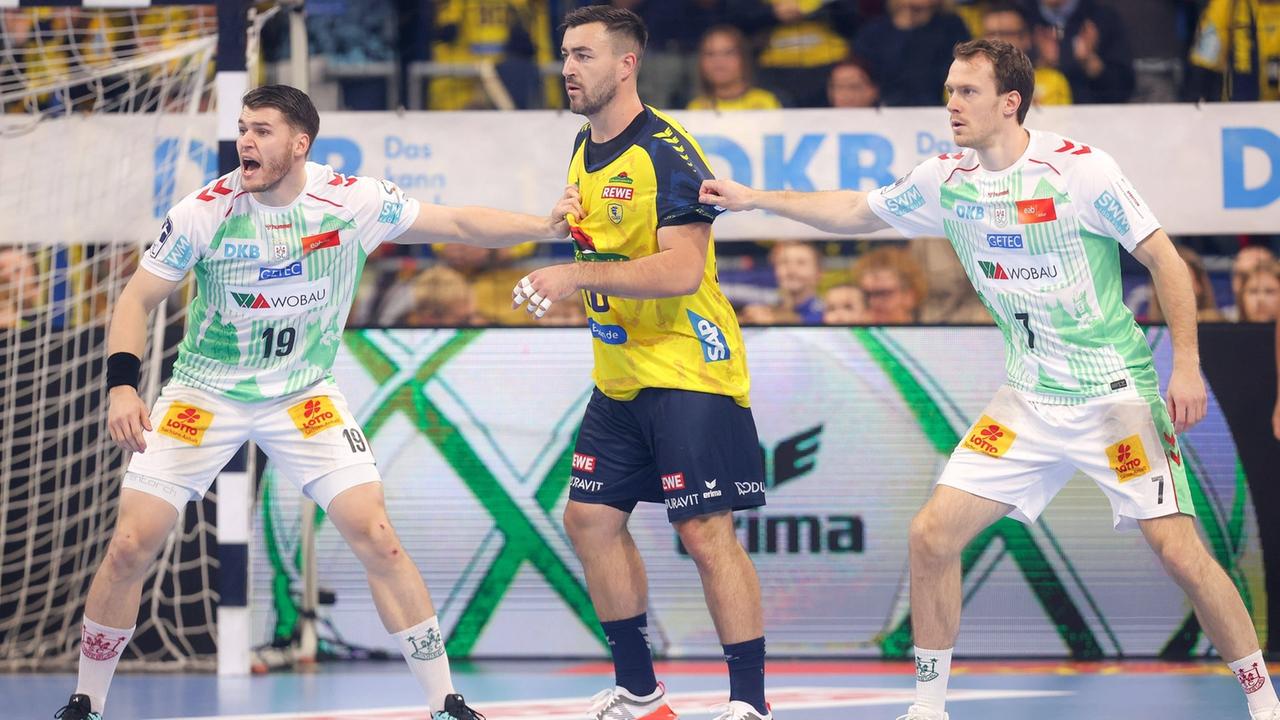
However, elite teams punish mistakes, and Magdeburg is the epitome of an elite team. As the Löwen’s precision waned, Magdeburg’s goalkeeper, Matej Mandić, began to mirror Späth’s heroics at the other end. By the 42nd minute, the deficit had stretched to 21-18, and the psychological weight of the contest shifted entirely.
Supporting Data and Tactical Analysis
Statistical Overview
The final scoreline of 23-31 does not necessarily reflect the parity of the first 45 minutes, but it serves as a brutal critique of the final 15.
- Goalkeeping Battle: David Späth kept the Löwen afloat with high-percentage saves, but ultimately lacked the defensive support in the final phase. Matej Mandić, conversely, hit his stride in the second half, racking up 12 crucial saves that effectively ended the Löwen’s comeback hopes.
- Efficiency: The Löwen’s shooting percentage plummeted in the final ten minutes. The transition game, which had been their lifeline early on, became their undoing as tired legs led to technical errors and intercepted passes.
- Squad Depth: Magdeburg’s ability to cycle through a completely new starting lineup—including a change in goal—showcased a "next-man-up" mentality that the current Löwen roster is still struggling to cultivate.
The "Abt" Factor
Michel Abt’s tactical adjustments, including moving Kohlbacher to the interior defensive block, showed promise. The defensive structure was more mobile than in previous fixtures, particularly during the transition from defense to attack. However, the lack of depth—partly exacerbated by the absence of Aspenbäck—meant that the core players were forced to play extended minutes, leading to the inevitable fatigue that defined the final scoreline.
Official Responses and Post-Match Sentiment
Following the final whistle, the mood in the post-match press conference was one of measured frustration. Coach Michel Abt acknowledged the progress made in the first 40 minutes but lamented the lack of consistency. "We played with heart and we showed that we can compete with the best for long stretches," Abt noted. "But against a team like Magdeburg, you cannot afford ten minutes of lapse. Their tempo is relentless, and we simply couldn’t keep pace when it mattered most."
On the Magdeburg side, there was a sense of satisfaction with the professional handling of a potentially tricky road game. Bennet Wiegert praised his team’s patience, noting that they "waited for the right moment to increase the pressure," trusting their superior physical conditioning to overwhelm the hosts in the closing stages.
Implications for the Season
For the Rhein-Neckar Löwen
The loss leaves the Löwen in a precarious position as they look to climb the Bundesliga table. While the performance against a top-tier opponent provides a blueprint for what is possible, the inability to sustain that level for a full 60 minutes remains a chronic issue. The upcoming matches will be critical for assessing whether the team can integrate their tactical adjustments into a consistent winning formula. The injury to Aspenbäck, while hopefully short-term, highlights the team’s fragility when key personnel are missing.
For the League Landscape
The result reinforces the status of SC Magdeburg as a primary contender for the Bundesliga title. Their ability to win comfortably, even when not at their absolute peak in the first half, speaks volumes about their championship pedigree. The gap between the top three teams and the rest of the league seems to be widening, and the Löwen must bridge the gap in fitness and technical execution if they intend to challenge for European spots later in the season.
Looking Ahead
The challenge for the Rhein-Neckar Löwen now is to prevent this demoralizing defeat from spiraling into a mid-season slump. The "Heimpremiere" was supposed to be a morale booster; instead, it serves as a wake-up call. The team returns to the training ground with a clear objective: finding the stamina to match their ambition. Whether Michel Abt can find the necessary rotations to maintain intensity remains the central question for the weeks to come.
As the Bundesliga season intensifies, the lessons from this 23-31 loss will likely be studied, dissected, and hopefully applied. For the fans, the message is clear: the potential is there, but the road to consistency is long and unforgiving.