

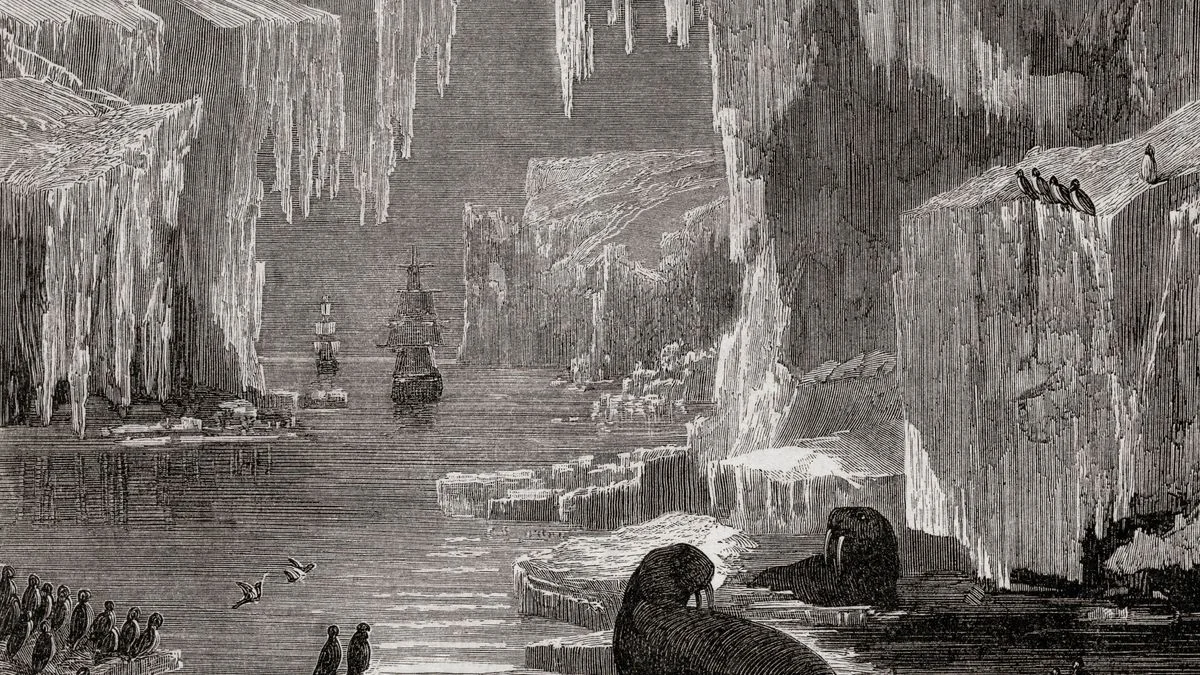
In a breakthrough that bridges 180 years of history, researchers have successfully identified four additional members of the doomed 1845 Franklin Expedition. Using advanced DNA analysis and genealogical detective work, scientists have finally attached names to the bones of men who perished in the frozen wastes of the Canadian Arctic, offering a human face to one of history’s most harrowing maritime tragedies.
The Frozen Grave: A Summary of the Tragedy
The Franklin Expedition remains the most infamous disaster in the history of British polar exploration. In May 1845, Sir John Franklin set sail from England with two state-of-the-art ships, the HMS Erebus and the HMS Terror, aiming to map the final, elusive segment of the Northwest Passage. With a crew of 129 men, the expedition was considered the pinnacle of Victorian naval capability.
However, the ships became hopelessly trapped in the pack ice of the Victoria Strait in 1846. What followed was a slow-motion catastrophe. Abandoned by their crews in 1848, the ships vanished, and every single man aboard perished during a desperate, doomed attempt to trek southward toward the safety of Hudson Bay. For nearly two centuries, the fate of these men was defined by fragments of oral history from Inuit witnesses, scattered bones, and terrifying evidence of cannibalism. Now, through the tireless efforts of the University of Waterloo and various research partners, the identity of four more souls has been recovered from the silence of the ice.
A Chronology of the Disappearance and Rediscovery
The timeline of the Franklin Expedition is a study in isolation and decay.
- 1845: The Erebus and Terror depart Greenhithe, England, with high expectations.
- 1846–1848: The ships remain beset by heavy ice. Sir John Franklin dies in June 1847. In April 1848, the 105 remaining survivors abandon the ships, attempting a march toward the Back River. None survive the journey.
- 1859: Search parties begin finding scattered remains and artifacts, including the "Victory Point" note, which provided the only official record of the abandonment.
- 2014 & 2016: The wrecks of the Erebus and Terror are finally located on the seafloor, providing a physical anchor for researchers to begin a new era of forensic study.
- 2021–2024: Geneticists identify John Gregory and Captain James Fitzjames.
- 2026: Researchers confirm the identities of four more crew members: David Young, John Bridgens, William Orren, and Harry Peglar.
Forensic Science Meets Genealogy
The recent breakthrough, published in two separate scientific journals, relied on a sophisticated marriage of ancient DNA (aDNA) analysis and contemporary genealogy. Scientists collected samples from teeth and bone fragments recovered from the various sites where the crew had perished. These samples were then cross-referenced against the DNA of 31 living descendants who had been traced through genealogical records.
The identification of these four men—David Young, John Bridgens, William Orren, and Harry Peglar—is not merely a collection of names; it is a profound reconstruction of the expedition’s final, desperate days.

David Young, only 17 years old, was a ship’s boy on the Erebus. His identification provides a tragic reminder of the youth present on the expedition. John Bridgens, an officer’s steward, was found on a lifeboat that had been dragged across the ice—a grim testament to the physical exhaustion the men faced as they attempted to haul heavy gear across the frozen terrain. William Orren’s remains were located near a separate lifeboat site, suggesting that the crew had fractured into smaller, struggling groups.
The Mystery of Harry Peglar
Perhaps the most significant of the four is the identification of Petty Officer Harry Peglar. His remains were discovered as far back as 1859, nearly 130 kilometers away from the other identified men.
Peglar’s case is particularly compelling because he was found with personal documents, including a seaman’s patent. For decades, historians debated his identity, as the clothing found with his remains did not match his naval rank, leading to skepticism about whether the bones actually belonged to the petty officer. The DNA confirmation settles the debate, confirming that Peglar had managed to travel a significant distance from the ships—possibly alone—before he succumbed to the elements. This sheds light on the fragmented nature of the retreat, proving that the men did not perish in a single location but were scattered across the unforgiving tundra.
The Human Cost: Implications of the Findings
The confirmation of these identities carries significant ethical and historical weight. The Franklin Expedition has long been characterized by reports of cannibalism, which were initially dismissed by the Victorian public as "savage" rumors. The identification of Captain James Fitzjames in 2021, whose bones showed clear evidence of butchery, silenced those doubts, confirming that the men were driven to unimaginable extremes to survive.
By identifying these four additional men, the researchers have further humanized the victims. They are no longer just statistics or "remains"; they are individuals with families, roles, and stories. This work also underscores the importance of the partnership between modern science and the oral histories passed down by the Inuit, who had reported seeing white men wandering the ice long before the wrecks were found.
Official Responses and Future Research
The research team from the University of Waterloo has emphasized that this project is a continuous endeavor. "The identification of these sailors allows us to map the final movements of the expedition with unprecedented accuracy," stated a representative of the research group.

The Canadian government, which manages the wreck sites as a National Historic Site, has praised the findings, noting that the ongoing scientific study provides "a respectful and accurate accounting of the men who gave their lives in the pursuit of knowledge."
The identification process is ongoing. With dozens of remains still requiring formal identification, the project continues to seek out living descendants. Each name added to the list of the identified is a small victory against the erasing power of time and the Arctic climate.
Conclusion: A Legacy of Persistence
The Franklin Expedition continues to haunt the collective imagination, not just because of the horror of its end, but because of the sheer scale of the ambition that led to it. As scientists identify more of the 129 men, the narrative of the expedition shifts from one of a "lost" mystery to one of a documented historical tragedy.
The recovery of these names serves as a bridge between the 19th-century sailors who faced the ultimate trial and the 21st-century researchers who are determined to give them their dignity back. While the ice may have claimed their bodies, it has failed to claim their stories. As more families receive the news that their long-lost ancestors have been found, the story of the Erebus and the Terror becomes a poignant testament to human endurance, the limits of survival, and the enduring power of scientific truth.







Leave a Reply