In an era defined by rapid urbanization and shifting economic landscapes, the question of what makes a city truly "livable" has become a central concern for sociologists and urban planners alike. A comprehensive new report, the latest edition of the "Glücksatlas" (Happiness Atlas)—a collaborative effort between the University of Freiburg and the Southern German Class Lottery (SKL)—provides a nuanced, data-driven answer. The results of this extensive study reveal a surprising reality: it is not the glitzy financial hubs or the sprawling metropolises that foster the highest sense of contentment, but rather the mid-sized, balanced urban centers.
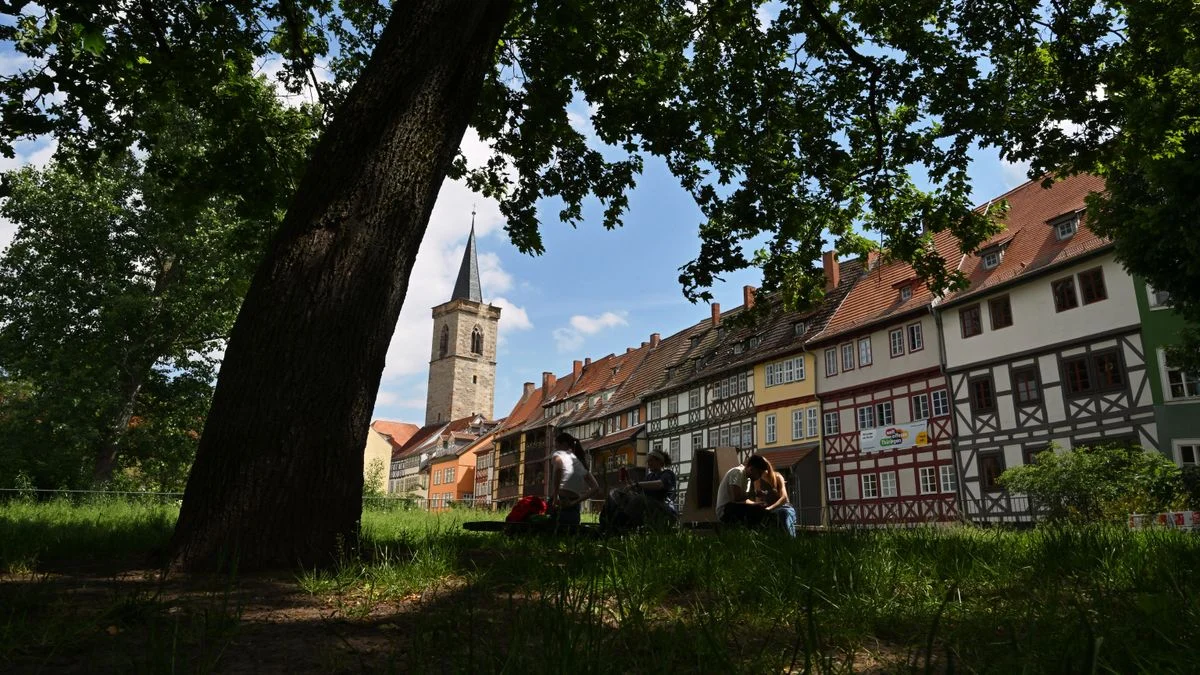
Topping the list of 40 major German cities is Erfurt, the capital of Thuringia. This victory for the eastern German city marks a significant shift in the national narrative regarding regional well-being, effectively challenging long-standing assumptions about the divide between the former East and West.
The Rankings: A Shift in the Urban Landscape
The "Glücksatlas" evaluates 40 German cities with populations exceeding 200,000. By combining subjective self-reports with 30 objective indicators—ranging from economic prosperity and environmental quality to safety, health, and family infrastructure—the study creates a "Happiness Index" that offers a holistic view of urban life.
Erfurt has secured the top position with a score of 7.74. Following closely are Augsburg in Bavaria and Düsseldorf in North Rhine-Westphalia, both of which demonstrate that high satisfaction can be maintained through a mix of economic stability and community accessibility. At the other end of the spectrum, Rostock, despite its picturesque coastal location, finds itself at the bottom of the list with a score of 5.8, a position it has occupied for some time.
Chronology and Methodology: The Anatomy of a Survey
The breadth of this study is unprecedented. Between January 2023 and April 2026, the Allensbach Institute for Public Opinion Research conducted in-depth, face-to-face interviews with 23,286 individuals aged 16 to 84. The fundamental question posed to participants was simple yet profound: "If you take everything into account, how satisfied are you with your life at the moment?"

The research process unfolded in two distinct phases:
- Subjective Assessment: Participants were asked to define their own metrics for a "worthwhile life," allowing for a qualitative understanding of what citizens value in their daily environments.
- Objective Indexing: Researchers cross-referenced these subjective feelings with 30 hard-data metrics across eight categories, including housing costs, crime rates, local labor markets, education, and health care accessibility.
This methodology was specifically designed to capture the "gap" between economic success and psychological well-being, revealing why some cities with high average incomes paradoxically report lower life satisfaction.
Supporting Data: The Factors Driving Contentment
The report identifies several key drivers that elevate a city like Erfurt above its peers. According to the study authors, Erfurt represents the "ideal model" of a calm, well-managed eastern German city. "The rents are affordable, the environmental quality is high, and the economic situation is slightly above the city average," the report notes.
Conversely, the data highlights a persistent struggle in other regions. In many major cities, increasing population density correlates with a decline in life satisfaction. This trend, while broken by exceptions like Hamburg or Düsseldorf, remains a dominant pattern across the study.
Key data points influencing the rankings include:

- Housing Costs: The correlation between sky-high rents in cities like Munich and Frankfurt and lower subjective happiness scores is striking. In Munich, often cited as Germany’s most expensive city, the high cost of living, combined with a high percentage of single-person households, contributes to a sense of social isolation.
- Social Fabric: The study highlights that cities with high proportions of single-person households—such as Berlin—often experience lower scores in mental health and community cohesion.
- Infrastructure and Equality: A significant discovery was the impact of wealth inequality. In cities like Frankfurt and Wiesbaden, the disparity between the wealthy and the lower-income population creates an environment where lower-income citizens find it difficult to participate in the everyday life of the city, leading to a sense of social exclusion.
Official Perspectives and Expert Analysis
The findings of the "Glücksatlas" have sparked a dialogue among urban researchers. The authors emphasize that the "Happiness Index" is not merely about GDP per capita. In fact, some southern German cities, which are objectively wealthy with low crime and exemplary health infrastructure, report only moderate to low life satisfaction.
"Despite the high standard of living, the inhabitants of southern German cities report only moderate satisfaction," the researchers noted. They attribute this to a combination of intense social competition, high cost of living, and a decline in communal belonging.
Regarding Rostock, the researchers offered a somber, albeit objective, assessment. The city is one of the "oldest" major cities in Germany, with over half of its residents living alone. With low birth rates and limited home ownership, the city lacks the dynamic social fabric that often drives satisfaction in other urban centers. This demographic profile contributes to a feeling that the authors described as "oppressively quiet."
Implications for Future Urban Policy
The implications of this study are profound for local governments and policy planners. The "Glücksatlas" serves as a warning that economic success alone is an insufficient metric for urban governance.
1. The Need for Social Cohesion
Cities that focus solely on attracting high-earners and businesses often neglect the social infrastructure necessary for general happiness. The success of Erfurt suggests that urban planning should prioritize affordable housing and environmental quality over raw economic output.

2. Addressing the "Big City" Penalty
The study suggests that as cities grow, they must fight harder to maintain the quality of life. Improving public infrastructure and ensuring that green spaces remain accessible are essential strategies to prevent the "burnout" that seems to plague the residents of larger metropolises.
3. Bridging the Regional Divide
While Erfurt’s lead is a point of pride for eastern Germany, the overall trend of lower happiness in eastern urban areas remains a challenge. Policymakers are encouraged to look at the factors that allowed Erfurt to flourish—stability, affordability, and community—and apply these lessons to other cities like Dresden and Berlin.
Conclusion: A Call for Balanced Growth
The 2026 "Glücksatlas" serves as a reminder that the quality of life is a multifaceted experience. While money and security are necessary foundations, the emotional health of a city depends on the ability of its residents to form bonds, access their environment, and feel a sense of belonging. As Germany continues to navigate the complexities of modern urban life, the example of Erfurt provides a roadmap for a more balanced, human-centric approach to city living. For the residents of Rostock, Munich, or Berlin, the takeaway is clear: the most satisfied cities are those that prioritize the individual’s daily experience over the macroeconomic indicators that define the national stage.