

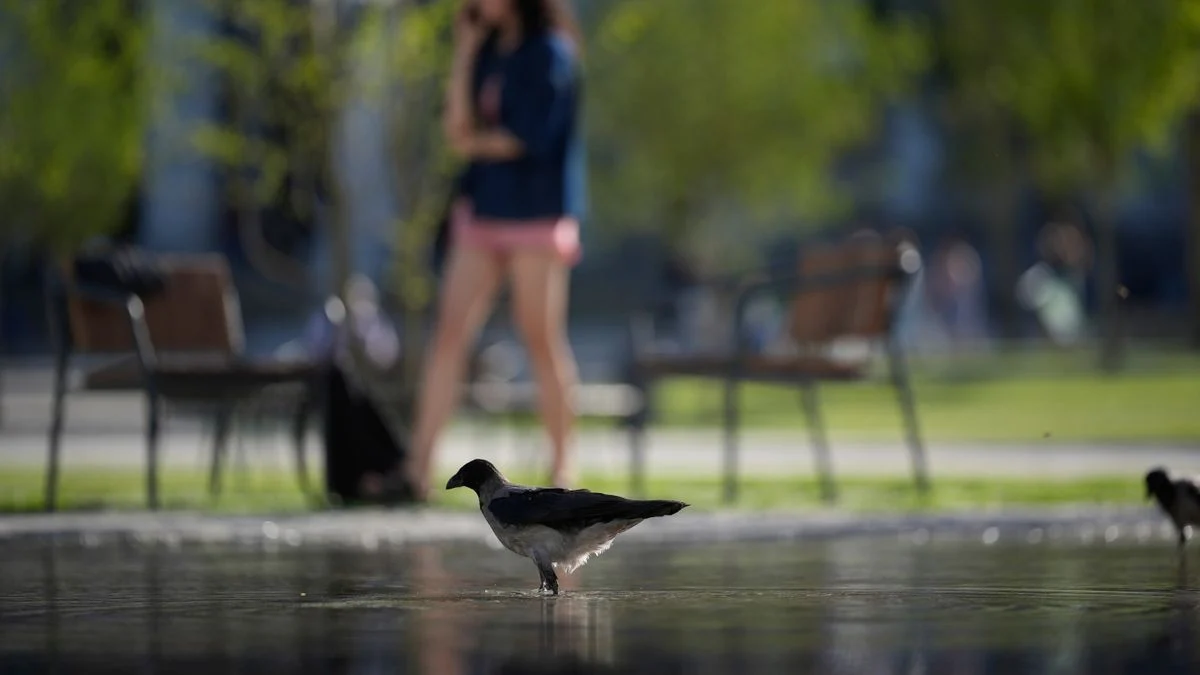
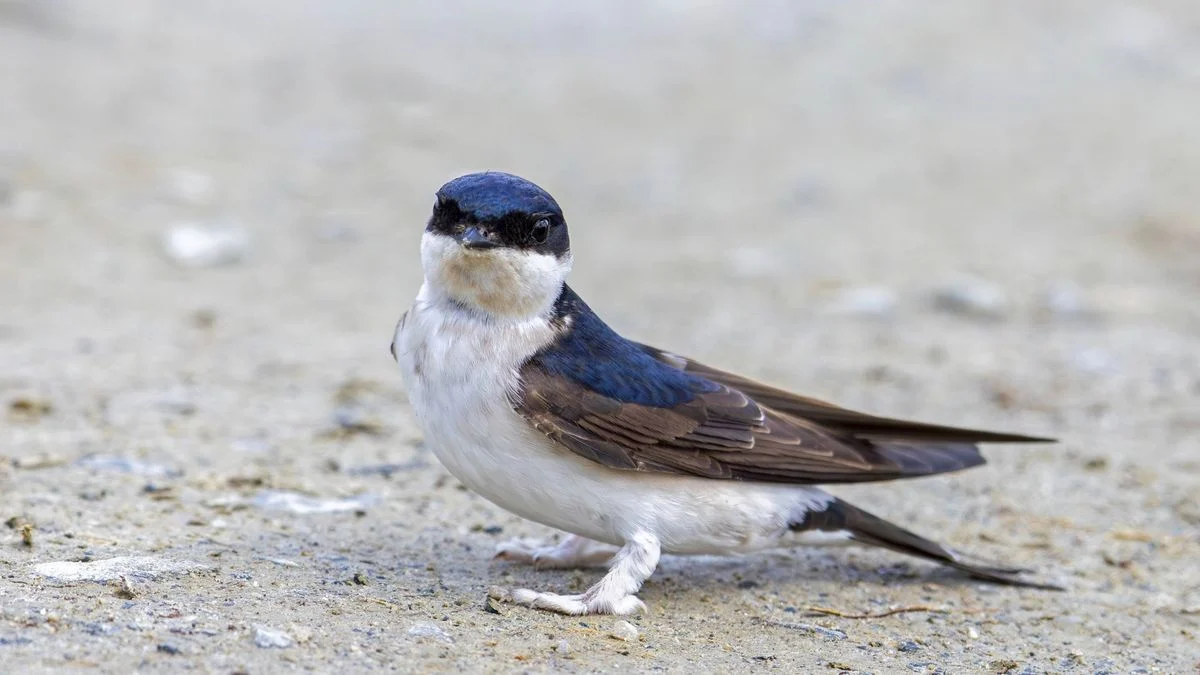
In the concrete jungles of modern Europe, the relationship between human pedestrians and the winged inhabitants of our parks and plazas is far more nuanced than previously assumed. A groundbreaking study conducted by researchers at the Czech University of Life Sciences in Prague has unveiled a startling behavioral pattern: urban birds appear to be significantly more wary of women than they are of men.
Published in the esteemed scientific journal People and Nature, the study suggests that our feathered neighbors are not merely reacting to the presence of a "human" in their environment, but are actively distinguishing between genders based on subtle cues. This discovery challenges our fundamental understanding of animal cognition and the complex, invisible interactions occurring daily in our urban ecosystems.
The Core Findings: A Measured Disparity
The international research team, led by Federico Morelli and Yanina Benedetti, set out to quantify the "flight initiation distance" (FID)—a standard metric in behavioral ecology that measures the exact distance a predator can approach an animal before the creature chooses to flee.
The results were statistically significant: on average, men were able to approach birds approximately one meter closer than women before the animals took flight. This pattern remained consistent across 37 different bird species, including common urban dwellers such as pigeons, magpies, blackbirds, and crows. Perhaps most surprising was the geographic consistency of the findings; the study spanned seven cities across five countries—the Czech Republic, Germany, France, Poland, and Spain—yet the behavioral bias remained largely uniform regardless of the local culture or specific urban environment.
Chronology of the Investigation: A Rigorous Methodology
To reach these conclusions, the team established a highly controlled experimental framework to minimize variables. Between April and July 2023, the researchers deployed four pairs of observers. Each pair consisted of one man and one woman, carefully matched for physical stature and attire to ensure that size and clothing choices would not influence the birds’ reactions.
The methodology was precise:
- The Approach: Observers moved toward individual birds at a constant, moderate walking speed.
- The Interaction: To maintain standardization, observers were instructed to keep consistent eye contact with the subject bird during the approach.
- The Data Collection: Over the course of the spring and summer months, the team recorded 2,701 individual reactions. By alternating the gender of the lead observer in each pair, they ensured that the data reflected an unbiased assessment of the birds’ flight triggers.
To maintain the highest scientific integrity, the researchers accounted for potential confounding variables. Notably, female team members did not collect data during their menstrual cycles to rule out the possibility that fluctuating pheromones or shifts in body odor might act as a repellent to the birds—a factor that highlights the granular level of detail required in modern ecological studies.
Supporting Data: Why the Distance Matters
In behavioral ecology, the flight initiation distance is not just a quirky data point; it is a vital indicator of an animal’s perceived risk level. When a bird chooses to fly away, it is conducting a cost-benefit analysis: the energy expended in flight must be weighed against the potential danger posed by the human intruder.
The study’s data suggests that birds perceive women as a higher potential threat than men. While the specific reasons for this perception remain the subject of ongoing debate, the sheer volume of data—spanning nearly 3,000 observations—provides a robust foundation for the conclusion that this is a systematic, rather than anecdotal, phenomenon. The uniformity of results across diverse species, from the cautious crow to the ubiquitous pigeon, implies that the mechanism behind this behavior is likely rooted in broad biological or evolutionary triggers.
Official Perspectives and Scientific Interpretations
While the study provides a clear observation of the phenomenon, the researchers are cautious about definitive causal claims. The team behind the People and Nature publication has highlighted several potential drivers for this gender-based distinction:
Physical Morphology and Locomotion
One of the leading hypotheses involves the subtle differences in human physiology. Differences in gait (how an individual walks), center of gravity, and overall body shape may be processed by birds as distinct visual signatures. To a bird, which possesses highly developed visual acuity, these differences may be as stark as the difference between a predator and a neutral bystander.
The Role of Olfactory Cues
As previously noted, the researchers took significant steps to isolate the impact of scent. Beyond the menstrual cycle controls, the team noted that variations in human body chemistry could theoretically influence wildlife behavior. Birds, particularly those with sensitive olfactory systems, may pick up on chemical signatures that indicate "human presence" in ways that vary by gender.
Risky Business: The Evolutionary Perspective
The study also touches upon the concept of "risk tolerance." Male birds are often observed to be more daring in their search for food and territory protection. The researchers speculate that this intrinsic boldness might correlate with how they perceive other entities in their environment, potentially making them less sensitive to the specific cues that trigger a flight response in more cautious females.
Implications: Rethinking Human-Wildlife Coexistence
The findings of Morelli and Benedetti have profound implications for urban planning, wildlife conservation, and our general interaction with nature. If birds are, by default, more cautious of half the human population, this necessitates a rethink of how we conduct ecological surveys and how we manage human-wildlife conflicts.
Ecological Surveying
Ornithologists and citizen scientists may need to standardize the gender of their observers to ensure consistency in population counts and behavioral studies. If a researcher’s gender can skew results by a meter, it could significantly impact the accuracy of data gathered in delicate urban habitats.
Urban Planning and Birding
As "birding" continues to grow in popularity—moving from a niche hobby for the elderly to a hip, mainstream activity for younger urbanites—understanding our impact on avian stress levels becomes paramount. Creating "safe spaces" for birds requires not only physical barriers but also an understanding of the psychological impact of human presence.
The study suggests that our very presence, even when we believe we are being "non-threatening," is constantly being evaluated by the urban wildlife surrounding us. We are, in effect, part of their landscape, and our subtle differences play a role in their survival.
Future Research: Beyond the Current Horizon
The authors of the study are the first to admit that this research is merely the tip of the iceberg. With only four pairs of observers involved in the current data set, the potential for expanded studies is immense. Future research could look at:
- Age and Size Factors: Do birds differentiate between children and adults with the same gender-based bias?
- Attire and Accessories: Do hats, bright colors, or backpacks alter the flight initiation distance, and does this interact with gendered behavior?
- Regional Variations: While the current study showed consistency across Europe, would the same results hold in the dense urban environments of East Asia or the sprawling suburbs of North America?
As we continue to urbanize the planet, our relationship with the birds that share our cities will only become more complex. The research from Prague provides a fascinating, if unexpected, lens through which to view this dynamic. It reminds us that while we may feel like observers of the natural world, we are simultaneously being observed, analyzed, and categorized by the creatures who have mastered the art of living among us.
Whether this gender-specific flight response is a relic of evolutionary survival or a learned adaptation to urban life remains a mystery. However, one thing is clear: the next time you step into a park, remember that you are not just walking through a landscape—you are walking through a theater of perception, where every movement and every characteristic you possess is being weighed by the watchful eyes of the urban avian population.


















Leave a Reply