As the nights draw in and temperatures begin their seasonal decline, millions of people across Europe prepare for the ritual that has become a perennial source of frustration: the clock change. In the early hours of Sunday, October 25, 2026, clocks will be turned back from 3:00 a.m. to 2:00 a.m., marking the transition from Daylight Saving Time (DST) back to Standard Time, commonly referred to as "Winter Time."
While the extra hour of sleep is often welcomed, the societal cost is immediate. The transition signals the onset of earlier sunsets, forcing the daily routines of millions of workers and students into darkness. This biannual exercise in shifting time has long been the subject of intense political and medical debate. Does it serve a purpose, or is it an obsolete relic of the 20th century? As momentum grows to abolish the practice, a critical question emerges: If we were to pick a single, permanent time zone, which would be better for our health and well-being—Summer or Winter time?
The Great Divide: Public Desire vs. Medical Consensus
In public opinion polls, the preference is clear. A significant majority of the German population, supported by similar sentiment across much of the European Union, favors the adoption of a permanent Summer Time. The logic is intuitive: people crave long, light-filled evenings for social activities, leisure, and outdoor sports after the workday ends.
However, the medical and scientific community views this desire through a different lens—one focused on human biology and the circadian rhythm. Sleep researchers and chronobiologists, including experts like Steffen Schädlich, have long argued against the biannual clock shift, deeming it both disruptive and largely ineffective in the modern era. When medical experts are asked which permanent time zone would benefit the public health, the answer is often a resounding vote for Standard Time (Winter Time).
The Biological Clock: Why Morning Light Matters
The human body operates on an internal clock, a complex system governed by light and darkness. Our circadian rhythm is anchored by the rising sun. Exposure to morning light acts as the primary "zeitgeber" (time-giver), signaling to our bodies that the day has begun, triggering the suppression of melatonin and the release of cortisol, which makes us alert.
A team of researchers at the University of British Columbia, led by psychiatrist Raymond Lam, recently conducted a comprehensive review of existing studies on the impact of time zones on public health. Their findings suggest that permanent Winter Time (Standard Time) provides superior benefits for our physiological and psychological health.

"Morning light is essential for our internal clocks, our sleep hygiene, and our mental well-being," says Dr. Lam. The team’s research highlights that shifting the clock forward permanently—as would happen with a year-round Summer Time—would force a mismatch between our internal biological clocks and the social clock. In the winter months, this would mean the sun would rise significantly later in the morning. For many, this would necessitate waking up and beginning the commute in total darkness, depriving the brain of the essential morning light signals required to synchronize our biological systems.
The Consequences of Misalignment
The potential health implications of a "permanent Summer Time" are not trivial. When our social schedule is misaligned with the natural sunrise, the result is "social jetlag." This is not merely an inconvenience; it is a clinical concern.
Studies indicate that individuals who live in the westernmost edges of a time zone—where the sun rises later than in the eastern parts—show a higher prevalence of sleep disorders, metabolic issues, and lower overall health outcomes. If an entire nation were shifted to permanent Summer Time, the population would effectively be pushed further "west" in their relationship with the sun.
The research reviewed by Dr. Lam’s team suggests that a permanent Summer Time could lead to:
- Increased Sleep Deprivation: Without morning light to anchor the wake-up time, individuals often struggle with morning grogginess and reduced sleep quality.
- Productivity Declines: As the population struggles with chronic sleep misalignment, cognitive performance and workplace output tend to decrease.
- Educational Impact: For children and adolescents, whose biological clocks are already shifting toward a later phase, a permanent delay in sunrise could significantly impact school performance and mental health.
Historical Precedents: Lessons from the Past
The debate is not purely theoretical; it has been tested in the real world. In 1974, in response to the global oil crisis, the United States implemented a trial of permanent Daylight Saving Time. The intent was to save energy, but the experiment was cut short. Public outcry, particularly from parents concerned about children walking to school in the pitch-black hours of the morning, led to a swift reversal of the policy.
Similarly, Russia adopted a permanent "Summer Time" in 2011, hoping that the change would bring long-term societal benefits. The experiment proved disastrous for public morale and health. Complaints about darkness at the start of the working day were rampant, and in 2014, the Russian government returned to permanent standard time, acknowledging that the population’s well-being was fundamentally tied to the natural light cycle.
The Economic and Practical Trade-off
The advocates for permanent Summer Time are not without their arguments. The appeal of "extra light" in the evening is deeply rooted in the lifestyle habits of industrialized societies. Economists, such as Professor Patrick Baylis from the Vancouver School of Economics, acknowledge the societal value of evening light.
"People appreciate the psychological boost of having daylight after school or work," Baylis notes. "However, these immediate, visible benefits must be carefully weighed against the long-term, systemic costs to the public health, including productivity losses and the cumulative effects of sleep debt."
The trade-off represents a classic tension between "lifestyle preference" and "physiological necessity." While a summer evening allows for an extra hour of patio dining or exercise, the medical community warns that we pay for that hour with lower energy, poorer health, and increased mental strain throughout the darker months of the year.

Why the EU Stays Stuck
Since 2018, when the European Commission first proposed the abolition of the biannual clock change, the continent has been locked in a state of political paralysis. While the European Parliament overwhelmingly voted to support the end of the time-switching practice, the implementation has stalled.
The primary obstacle is not the agreement to stop changing the clocks, but the disagreement over which time to adopt. Member states are divided by geography and economy. Countries in the north, which experience vastly different light conditions than those in the Mediterranean, have conflicting interests. Furthermore, there is the risk of a "patchwork" of time zones across the continent, which could disrupt trade, transport, and communication.
Because the European Union requires a coordinated approach to avoid economic friction, the proposal has remained in bureaucratic limbo. For now, the biannual ritual remains, with each spring and autumn serving as a reminder of a policy that most agree is broken, but which no one can agree on how to fix.
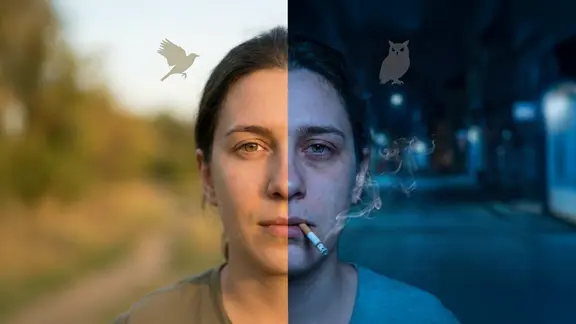
Implications for the Future
As we move toward a future where health and productivity are increasingly prioritized, the "time change" debate serves as a microcosm of how modern society struggles to balance convenience with biology.
If we are to move toward a permanent time system, the evidence suggests that the decision should not be driven by a desire for longer summer evenings, but by an understanding of what our bodies require to function optimally. A move to permanent Winter Time (Standard Time) might be less popular in the short term, but it is the choice most supported by the science of chronobiology.
Until a consensus is reached, we are left to turn our clocks back, grapple with the early darkness, and wait for the politicians to decide whether the "evening light" of summer is worth the physiological cost we pay in the winter. For now, the sun will continue to rise and set according to the laws of physics, while our clocks continue to tick according to the shifting whims of human policy.