By Ulf Sommer
May 13, 2026
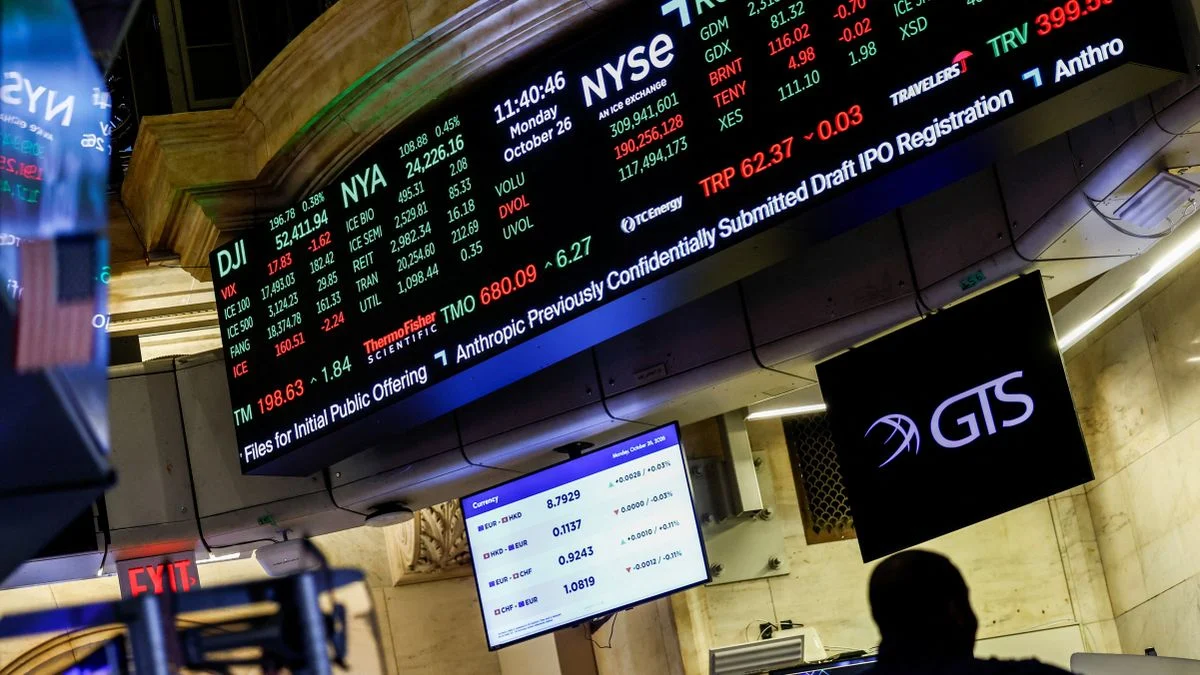
At first glance, the performance of the DAX—Germany’s blue-chip stock index—since the beginning of the year suggests a narrative of stagnation. Despite significant volatility and the shifting tides of the global geopolitical landscape, the index currently hovers around the 24,200-point mark, a level nearly identical to its opening position in January 2026. However, for seasoned investors and market analysts, a deeper dive into the underlying metrics reveals a far more nuanced picture. While the headline index price has moved sideways, the fundamental valuation of the companies within the DAX has undergone a subtle but significant transformation.

As corporate earnings forecasts continue to climb, the index is effectively "growing into" its valuation. This shift in the risk-reward profile raises a crucial question for market participants: Does the current environment offer a strategic entry point, or does the German market remain fundamentally expensive?
Main Facts: The Illusion of Stagnation
The core of the current market debate centers on the decoupling of price performance from earnings growth. Since January 2025, analysts tracking the 40 companies that comprise the DAX have consistently revised their earnings expectations upward. According to calculations by Commerzbank strategist Andreas Hürkamp, these projections have risen by approximately nine percent over the last 16 months.
This trend is particularly notable because it represents an all-time high in expected earnings for the coming four-quarter period. When stock prices remain flat while the denominator—the earnings—rises, the Price-to-Earnings (P/E) ratio naturally contracts. This phenomenon, often described as "valuation compression," has made the DAX statistically cheaper today than it was at the start of the year, even though the index sits at the same nominal level.
A Chronology of the 2026 Reporting Season
The current state of the DAX is a direct reflection of a robust, albeit uneven, corporate reporting season. The first quarter of 2026 provided a litmus test for the resilience of German industry.

- The Early Performers: Blue-chip giants such as Allianz, Bayer, RWE, and Siemens Energy kicked off the year with stronger-than-expected results. Allianz, in particular, set records, posting its highest first-quarter earnings in the company’s history. These positive surprises provided a necessary floor for the index, preventing a slide in the face of broader macroeconomic uncertainty.
- The Banking Sector: The Deutsche Bank performance was a highlight of the season. Despite the overhead of rising risk costs—a persistent thorn in the side of the financial sector—the bank managed a solid start, proving that operational efficiency gains are currently offsetting credit-related headwinds.
- The Automotive Conundrum: Conversely, the automotive sector—traditionally the backbone of the DAX—delivered disappointing figures. Companies like Volkswagen and Mercedes-Benz faced significant pressure due to softening demand in key markets. However, the market reaction was telling: investors had priced in such dismal outcomes that these stocks did not crash upon the release of the negative reports. In many cases, the "bad news" was already fully baked into the share price, illustrating the market’s current cautious sentiment.
- Aviation Challenges: Airbus also struggled during this period, with supply chain bottlenecks and delivery delays impacting its bottom line, serving as a reminder that industrial production remains vulnerable to global logistical friction.
Supporting Data: Understanding the Valuation Shift
To understand why the DAX is shifting its profile, one must look at the Price-to-Earnings ratio (KGV in German). In January 2026, the DAX was trading at a KGV of approximately 16.0. By April and early May, that figure had compressed to 15.0.
A six percent reduction in the valuation multiple in just a few months is a significant move for a mature index. It suggests that while the market is not necessarily "cheap" in a historical context, it is undeniably more attractively priced than it was at the beginning of the year.

However, context is vital. Over the last 20 years, the average KGV for the DAX has been roughly 12.5. By this historical standard, the index remains roughly 20 percent overvalued. For the DAX to reach a "fair value" according to this long-term average, the index would need to correct downward to approximately 20,250 points—a substantial gap from its current trading levels.
Implications: The Macro-Geopolitical Weight
The stability of the DAX is not occurring in a vacuum. It is being tested by severe external pressures, most notably the escalating tensions in the Middle East and the resulting volatility in commodity prices.

Market strategists point out that the primary threat to the current "growth-into-valuation" thesis is a potential collapse in earnings expectations. If the conflict in the Middle East leads to a prolonged supply chain crisis or a secondary spike in energy costs, the earnings growth that has kept the DAX afloat could evaporate. Investors are currently looking primarily at these forward-looking earnings projections, which remain bullish. However, the mood is fragile; should geopolitical risks translate into tangible hits to corporate margins, the index’s current valuation could quickly appear precarious rather than attractive.
Furthermore, the "bond vigilantes" are beginning to weigh in. As European government bond yields fluctuate, the opportunity cost of holding equities increases. When risk-free assets offer more competitive yields, the equity risk premium—the extra return investors demand for holding stocks—must also increase. If the DAX does not offer a sufficient yield or growth upside, capital may rotate out of the equity market and into the fixed-income space.

Strategic Outlook: Is it a Buy?
The data presents a complex picture for the individual investor. The DAX is undeniably more attractive today than it was four months ago, purely from a mathematical standpoint. The earnings power of the 40 constituent companies has improved, and the market has effectively de-risked itself by curbing the expansion of valuation multiples.
Yet, a clear "buy" signal is elusive. While the index is "cheaper," it is not "cheap." Investors who rely on historical averages for valuation must reconcile the fact that the DAX is still trading at a 20 percent premium relative to its two-decade mean.

For those considering an entry, the strategy should likely shift from a broad index approach to a more selective, stock-specific methodology. The discrepancy between companies like Allianz, which is hitting record earnings, and the automotive sector, which is struggling to maintain margins, highlights that the "DAX" as a monolith is becoming less relevant.
The primary risks remain external:

- Energy Prices: A sudden increase in the cost of raw materials due to geopolitical instability would likely crush current earnings forecasts.
- Margin Compression: Companies currently enjoying high profitability may face difficulty passing on costs to consumers as inflation persists.
- Interest Rate Environment: The European Central Bank’s policy path remains a critical variable. Higher-for-longer rates will continue to put a ceiling on the valuation multiples that investors are willing to pay for corporate earnings.
In conclusion, the DAX is in a transition phase. It is proving its resilience by absorbing negative sector-specific news and maintaining its level through fundamental earnings growth. However, until the index moves closer to its long-term valuation averages or demonstrates a more profound decoupling from geopolitical risks, it remains a market that demands caution. Investors who are looking to capitalize on this "cheaper" DAX should look for companies with pricing power and low sensitivity to energy-driven inflation, rather than betting on a broad-based rally for the entire index.
As we move toward the second half of 2026, the question will no longer be whether the DAX is "cheaper," but whether the earnings growth currently projected by analysts is sustainable in an increasingly fractured global economy. For now, the market remains a tug-of-war between strong corporate fundamentals and an increasingly heavy macro-geopolitical ceiling.