
In an era where software-defined vehicles are touted as the future of mobility, the reality for owners of older vehicles is often far less sophisticated—and occasionally, quite frustrating. A recent incident involving a software developer in Estonia, Rasmus Moorats, highlights the bizarre intersection of legacy automotive hardware, digital rights management (DRM), and the inevitable decay of software support. When his 2014 Renault Latitude refused to display the correct time following the seasonal transition to wintertime, Moorats embarked on a reverse-engineering journey that ended not in a dealer’s service bay, but in a custom-coded hack.
This case serves as a quintessential example of the "right to repair" debate, specifically regarding how manufacturers lock essential vehicle functionality behind proprietary software walls that eventually become obsolete.
The Core Conflict: A Time-Sensitive Dilemma
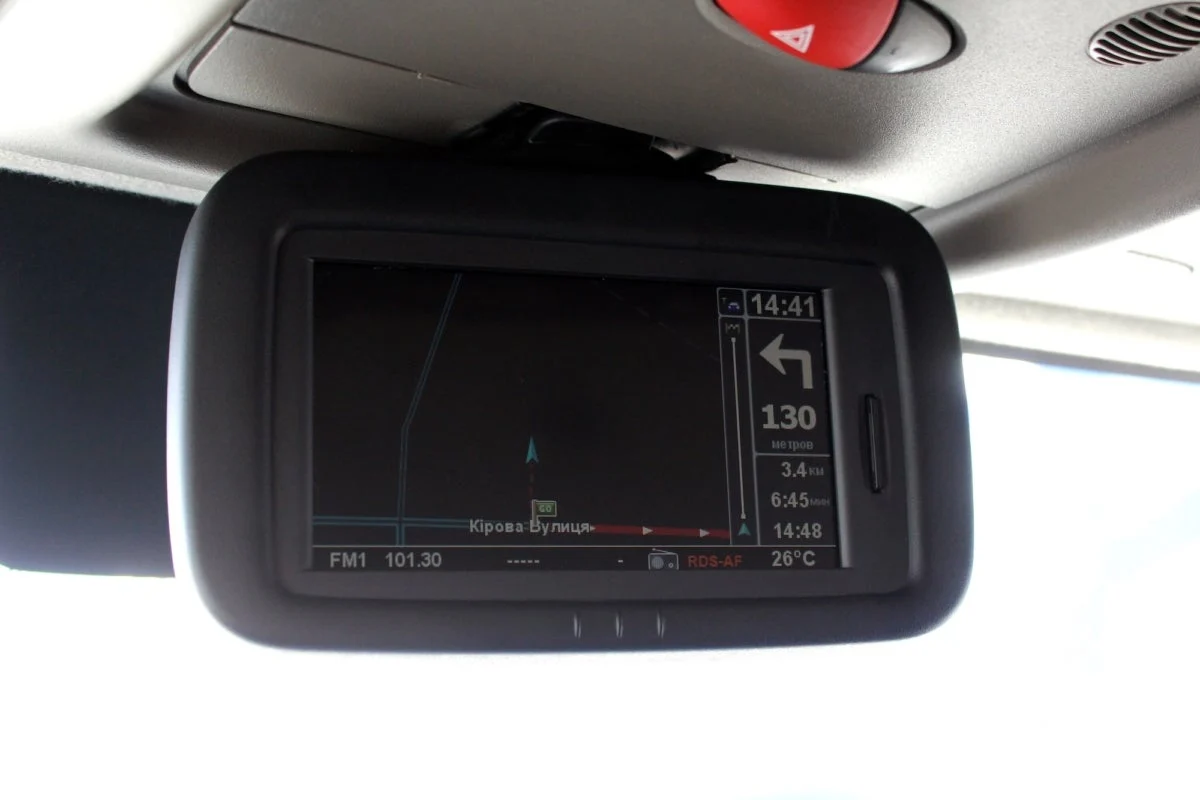
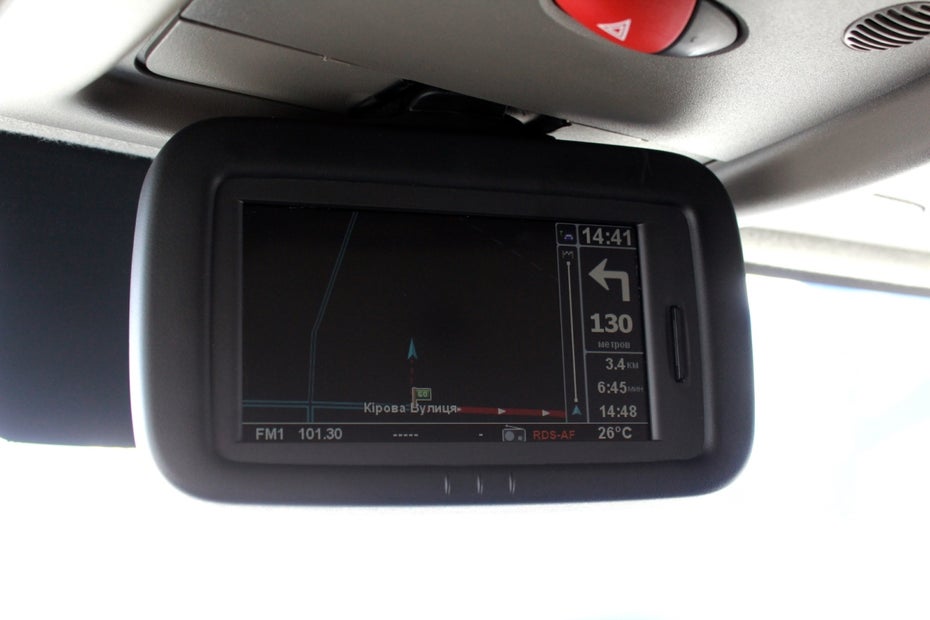
The saga began when Rasmus Moorats acquired a used 2014 Renault Latitude. The previous owner had warned him that the vehicle’s integrated navigation system—a TomTom Carminat Live unit—required a specific SD card containing proprietary map data to function correctly. Without this card, the infotainment system was not just missing maps; it was effectively "brain-dead" regarding basic system configurations, including the system clock.
Moorats, a developer by trade, was skeptical. He assumed that a clock setting should be a fundamental, accessible feature of any car’s interface, regardless of navigation capabilities. However, when the clock struck the transition to wintertime on the night of October 24–25, 2026, the car’s lack of a standalone time-adjustment menu became a glaring issue. Despite extensive searching through the system’s limited interface, the option to manually adjust the time was nowhere to be found. The system was tethered to the navigation data; if the system could not verify the map files via the SD card, the "Settings" menu remained incomplete, effectively holding the dashboard clock hostage.
Chronology of a Reverse Engineering Project
To understand the scope of the issue, one must look at the architecture of the TomTom Carminat Live system. Developed around 2011, the unit operates on a heavily customized version of Linux (Kernel 2.6.28.10).
1. The Discovery Phase
Upon analyzing the hardware, Moorats discovered that the unit’s reliance on the SD card was not merely for convenience but was a deliberate implementation of DRM (Digital Rights Management). The system refused to initialize the full menu architecture unless it could authenticate the encrypted data on the official Renault-TomTom SD card. The manufacturer’s intent was clear: protect the intellectual property of the map data. However, the collateral damage was the disabling of system-level settings for users who chose not to purchase updated, branded map cards—which would have cost approximately 60 euros.
2. The Failed Exploitation
Moorats initially attempted to gain administrative access to the system via standard software vulnerabilities associated with such an aging Linux kernel. He hoped to find an "open door" in the firmware that would allow him to bypass the DRM check and access the system settings directly. To his surprise, the system proved surprisingly resilient against basic penetration techniques, owing to its highly specialized, stripped-down nature.
3. The "Kernel Crash" Workaround
After failing to achieve a clean exploit, Moorats pivoted to a more aggressive methodology often employed in kernel-level hacking: inducing a deliberate system crash. By carefully timing the insertion of a modified SD card containing a custom script, he was able to trigger an error state in the system’s boot process. This forced the unit to execute his unauthorized script instead of the standard navigation startup sequence. Through this "crash-and-inject" method, he successfully gained control over the system’s environment, allowing him to manually override the time setting and finally align his car’s clock with the real world.
The Digital Rights Management (DRM) Factor
The use of DRM in automotive components has long been a point of contention among consumer advocates. In this instance, the DRM serves as a gatekeeper for basic functionality. By bundling essential vehicle settings—such as time, date, and perhaps other minor user preferences—into the same file structure as proprietary navigation data, the manufacturer effectively forces the consumer to maintain a continuous, paid relationship with the vendor.
If a user refuses to buy a new map card every few years, they are not only deprived of updated roads but also of the ability to manage their vehicle’s basic digital interface. This creates a state of "planned obsolescence" where the hardware remains perfectly functional, but the software layer renders it inconvenient to operate.

Implications for Modern Automotive Security
While Moorats’ hack was localized to his own vehicle and posed no threat to the car’s driving dynamics, steering, or braking, it highlights significant vulnerabilities in older automotive software stacks.
The "Legacy Software" Trap
Most vehicles from the early 2010s were built with the assumption that they would remain "offline" for their entire lifespan. The developers did not anticipate the need for over-the-air (OTA) updates, nor did they prioritize long-term security patching. As these vehicles age, they become digital islands with unpatched vulnerabilities. While a clock-hacking incident is harmless, the methodology used—gaining execution rights via a peripheral device (the SD card)—is a well-documented vector for more malicious attacks.
Security Experts Weigh In
Cybersecurity researchers have noted that the Renault Latitude incident is a microcosm of a larger issue: the lack of a standardized "sunset policy" for automotive software. As noted by industry analysts, when a manufacturer stops supporting a platform, that software does not simply vanish; it remains in the vehicle, becoming increasingly brittle and vulnerable. If a malicious actor were to use similar methods to gain access to a vehicle’s CAN bus (Controller Area Network), the consequences could move from inconvenient to catastrophic.
The Future of Consumer Rights and Vehicle Software
The Estonian developer’s successful hack acts as a rallying cry for the Right to Repair movement. It underscores a fundamental question: Who owns the software inside your car?
If the vehicle owner is prohibited from accessing basic settings because they haven’t paid for a third-party subscription or a proprietary hardware key (the SD card), the owner’s control over their property is severely limited. Regulatory bodies in both the European Union and the United States are currently debating legislation that would force manufacturers to decouple critical system functionality from proprietary service bundles.
Moving Toward Standardization
The automotive industry is currently in a state of flux. While newer cars are becoming increasingly digital, the Renault Latitude case serves as a warning of what happens when digital systems are abandoned by their creators. For the future, several shifts are becoming necessary:
- Modular Software Architecture: Essential vehicle settings must be independent of proprietary media or navigation data.
- End-of-Life Support: Manufacturers should provide a mechanism for owners to maintain software parity even after a vehicle has reached its intended service life.
- Open Protocols: For legacy systems, manufacturers could release the necessary software keys or documentation to allow the community to maintain the systems, preventing the need for "guerrilla" hacking.
Conclusion: A Lesson in Digital Autonomy
Rasmus Moorats’ experience is a testament to the ingenuity of the modern tinkerer, but it is also a critique of the current automotive landscape. While he succeeded in fixing his clock, the fact that he had to perform a kernel-level exploit to do so is, by any standard, an indictment of the manufacturer’s design philosophy.
As we move toward a future where vehicles are increasingly software-defined, the lessons from this 2014 Renault are vital. Consumers must demand hardware that remains functional and configurable long after the marketing buzz around the vehicle has faded. Until then, we will likely see more developers like Moorats—armed with soldering irons, Linux kernels, and a sense of frustration—stepping in to fix what the manufacturers have left behind.
The "Clockwork Hack" is not just about a few minutes of time; it is a signal that in the digital age, the right to repair is the only thing standing between a useful tool and a piece of expensive, software-locked junk.