By Our Investigative Desk
The legendary Giant Mountains (Krkonoše/Karkonosze) have long been defined by the unpredictable, elemental wrath of Rübezahl, the mountain spirit who for centuries ruled the borderlands of Bohemia, Silesia, and Poland. He was a creature of chaos: a shapeshifter who could turn travelers into stone, conjure storms on a whim, or delight in the mischievous torment of unsuspecting wayfarers. However, recent developments suggest that the era of folklore is coming to a definitive, gray-toned end. The spirit of the mountains has been brought to heel not by a hero’s sword or a wizard’s spell, but by the relentless, grinding gears of an interministerial task force.
The Dawn of the Administrative Era
The transition began at sunrise in the heart of the Riesengebirge. The mountain range, typically shrouded in mystical, grumbling mists, was breached by a group of seven men clad in beige functional jackets, sporting gray wool socks, and carrying worn leather briefcases. They did not climb the mountain to seek wisdom or adventure; they climbed it to conduct a site assessment.
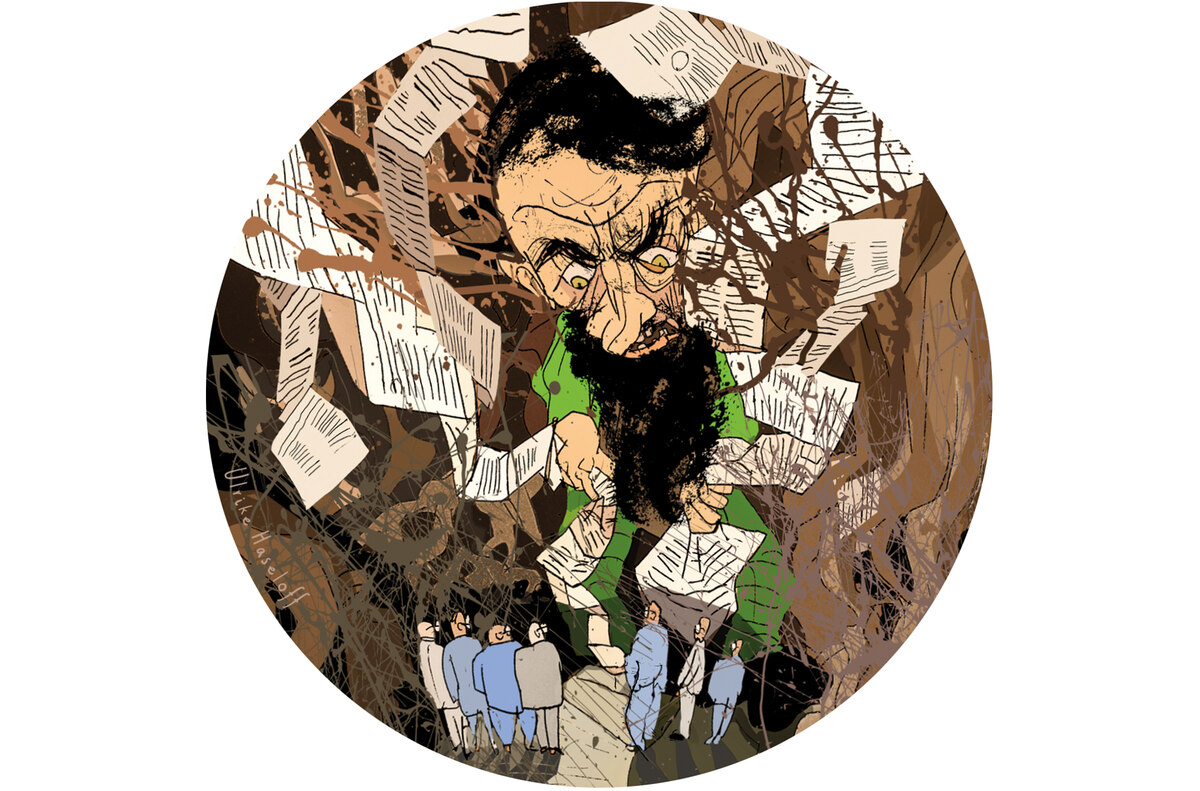
For a millennium, Rübezahl had occupied himself with the standard repertoire of a mountain deity: terrorizing market women, manipulating local weather patterns, and occasionally kidnapping the object of his unrequited love, the Silesian Princess Emma. But as the sun crested the peaks, the spirit found his usual repertoire of lightning and earth-shaking grumbles met with a new, terrifying weapon: the clipboard.
Chronology of a Regulatory Clash
The encounter between the supernatural and the state followed a strictly procedural timeline:
- 08:00 AM: The interministerial task force arrived at the summit, chanting a rhythmic, bureaucratic anthem: "Zaskatalogizujeme všechno, co není do třech na stromě" (We shall catalog everything that isn’t up a tree by three).
- 08:15 AM: Rübezahl materialized in his full, terrifying glory. His eyes glowed like forge fires; his beard bristled with the electricity of a coming storm. He roared, causing four fir trees to topple and a herd of mountain goats to scatter.
- 08:17 AM: The leader of the group, a man distinguished by his rigid posture and thick, black horn-rimmed glasses, ignored the threat. He formally introduced the mission: "We are the interministerial working group for the registration, assessment, and, where applicable, authorization of nature-related phenomena in the cross-border mid-mountain region between the Czech Republic and Poland."
- 08:20 AM: The spirit attempted to assert his sovereignty. He swelled to the size of Prague Castle, his voice sounding like rolling thunder. The response was a polite request for his identification and proof of territorial jurisdiction.
- 08:30 AM: When Rübezahl failed to produce a permit for his "supernatural appearances," he was presented with a standard-issue form. The process of administrative erosion had begun.
Supporting Data: The Complexity of Identity
The crux of the impasse—and the primary reason for the bureaucrat’s success—lay in the identity crisis inherent in folklore. When forced to declare his nationality on the provided form, Rübezahl collapsed under the weight of his own myth. He is 33.3% Czech, 33.3% Polish, and 33.3% German legendary villain.

This multi-national heritage, which once allowed him to act as a bridge (or a barrier) between cultures, became a liability in the face of modern administrative law. The task force noted that the "object" showed significant resistance to "procedural categorization," a phrase that effectively neutralized his supernatural threats. When the spirit attempted to retaliate by transforming two of the bureaucrats into a tree and a boulder, the lead inspector simply checked a box on his form, noting that the act lacked the "necessary permit for land-use modification."
Official Responses and Procedural Stasis
The silence from the mountain authorities following the incident has been deafening. Environmental ministries on both sides of the border have issued vague statements suggesting that "all natural phenomena must adhere to current environmental regulations."
The legal implications are profound. If a mountain spirit can be subjected to the Water Management Act, what does this mean for other mythological entities? The interministerial task force argued that the uncontrolled flooding of valleys—a signature move of Rübezahl’s—falls under the jurisdiction of regional water boards. Without a permit, the spirit is effectively prohibited from changing the landscape, regardless of his divine or infernal status.

Implications: The Death of the Myth?
The outcome of this encounter is a cautionary tale for all things wild and untamed. Rübezahl, once the master of the storm, has been neutralized. He has not been destroyed in the conventional sense, but he has been rendered entirely ineffective.
Reports indicate that the spirit has been seen sitting in the hallway outside Room 319 of the regional administrative office for the past three centuries. He is still waiting to be called in for his hearing. However, there is little hope for his release back into the wild. Sources close to the office note that the spirit failed to pull a queue-number ticket upon arrival, and according to the internal regulations of the authority, a case cannot be processed without the proper sequence of documentation.
The "Tschechische Woche der Wahrheit" (Czech Week of Truth) has highlighted a disturbing reality: in the modern world, the most dangerous entity is not a fire-breathing spirit, but a man with a fountain pen and a pile of pending applications. The mountains remain, the trees still grow, and the wind still blows—but the spirit is gone, trapped in a loop of administrative purgatory.

As the world continues to prioritize efficiency and categorization, the spaces for true, unbridled mystery are shrinking. If a god cannot find a way through the bureaucracy, what chance does the average citizen have? The lesson here is clear: in the 21st century, the power of a decree far exceeds the power of a thunderbolt. The bureaucracy has succeeded where history failed; it has made the impossible, the truly terrifying, and the legendary completely, utterly mundane.
Summary of Key Administrative Hurdles
| Hurdle | Nature of the Obstacle | Result |
|---|---|---|
| Jurisdiction | Territorial dispute between CZ/PL | Indefinite delay |
| Identification | Lack of valid national ID | Forced form completion |
| Environmental | Water management regulations | Prohibition of flooding |
| Land-Use | Unauthorized transformation of matter | Violation of zoning laws |
The case of the mountain spirit remains the benchmark for administrative overreach. Future studies into the "Rübezahl Protocol" are expected to influence how regional governments manage mythical creatures, protected species, and those who simply refuse to follow the rules of the office. For now, the mountain remains quiet, the bureaucrats remain busy, and the queue at Room 319 remains as long as it has ever been.