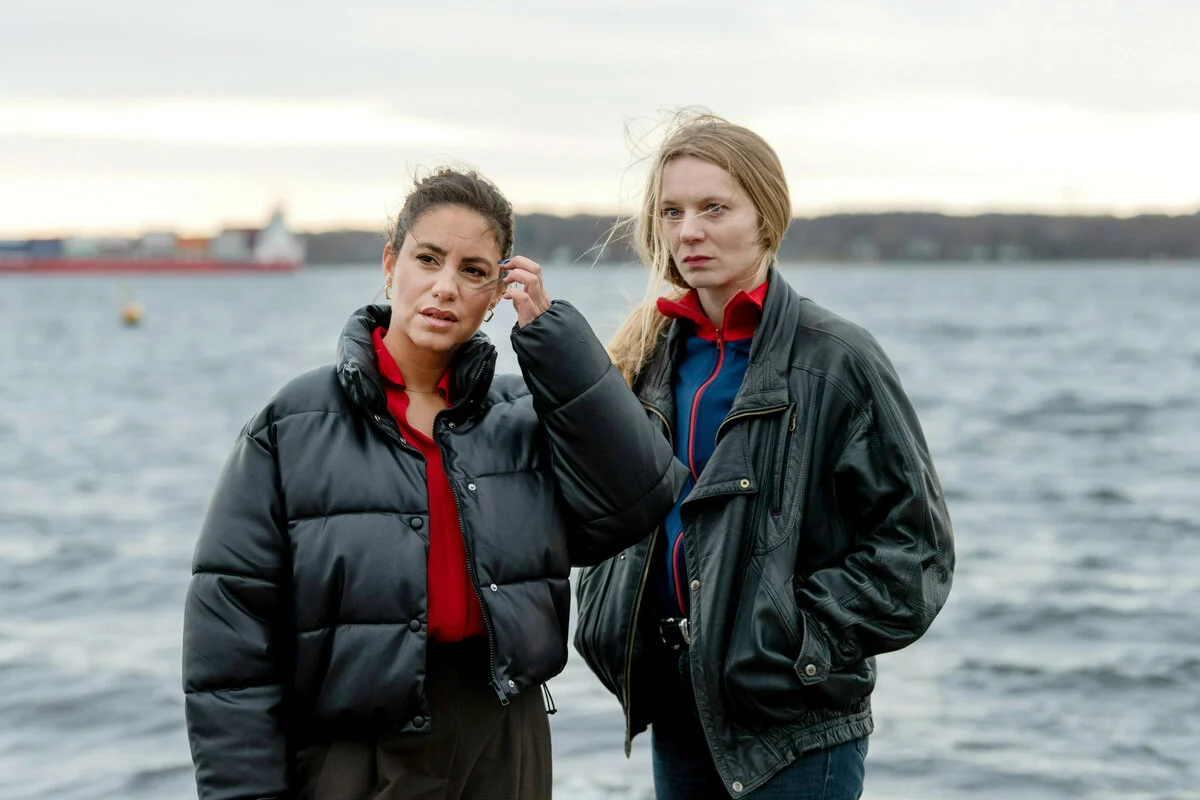
The long-running German crime institution Tatort has long been a mirror for the nation’s social anxieties and institutional failings. However, the latest installment from the Kiel production, titled "Unter Freunden" (Among Friends), breaks from the traditional "investigator friction" formula to explore a far more nuanced and unsettling territory: the moral erosion caused by institutional corruption and the psychological toll of balancing personal loyalty against professional integrity.
As the first half of a two-part special airing on ARD, "Unter Freunden" introduces a new dynamic between investigators Mila Sahin (played by Almila Bagriacik) and her newly arrived colleague, Anna Nowak (Lilith Stangenberg). Rather than the typical "grumpy veteran meets idealistic rookie" trope, the series presents a pair with a pre-existing, deeply rooted bond—a connection that is immediately tested by a high-stakes case involving a tech giant and potential rot within the Kiel police force.
Main Facts: The Anatomy of a New Partnership
In the landscape of modern crime dramas, the "buddy-cop" formula is often static. Kiel’s new chapter disrupts this by focusing on the "Bestie-energy" (best friend energy) between Sahin and Nowak. The narrative begins with a discovery: a young woman, employed by a prominent local tech firm, is found dead in the Kiel Fjord.
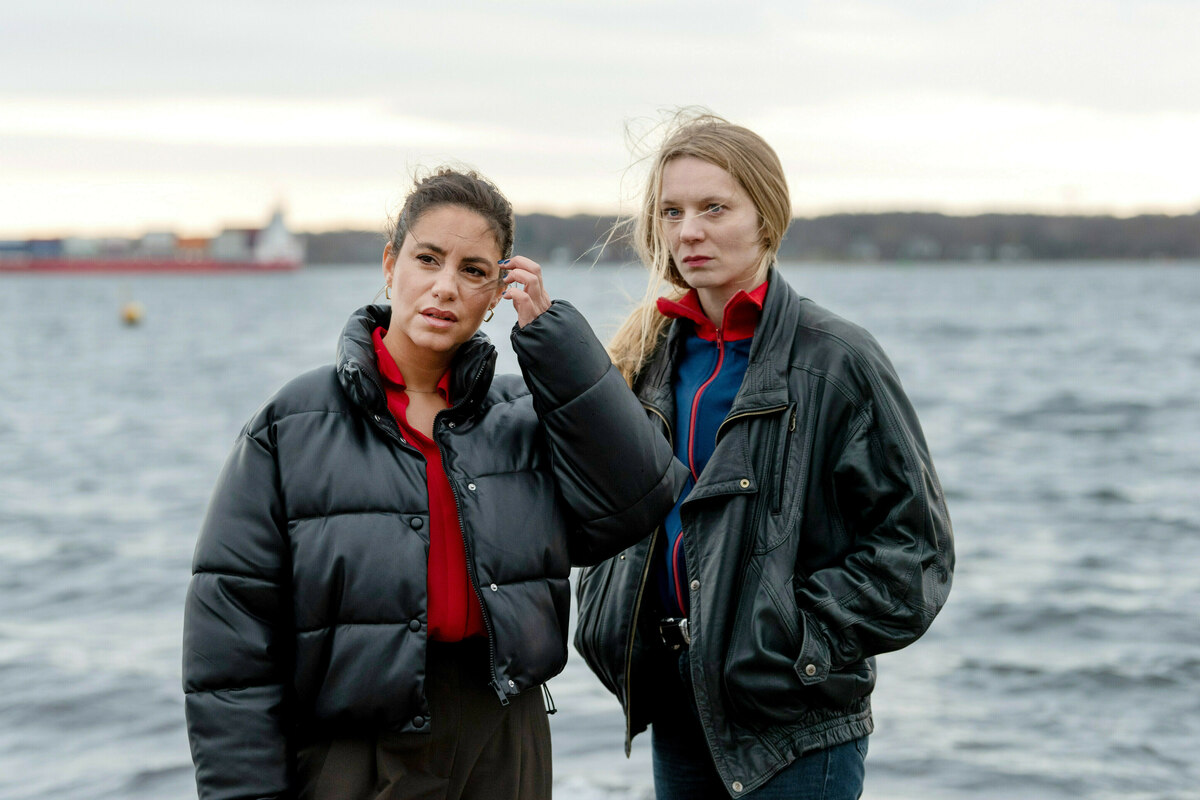
While the victim’s boyfriend—himself a man with a history of domestic violence—becomes the immediate prime suspect, the investigation quickly pivots. The victim had allegedly uncovered evidence of corporate malfeasance and feared for her life. This forces the investigators into a perilous dilemma: should they pursue the obvious, emotionally charged lead of a violent partner, or risk the political and professional fallout of investigating a powerful, influential tech corporation?
The stakes are raised significantly by the internal politics of the police department. Mila Sahin is actively campaigning for a promotion to lead the department, a move that requires a favorable assessment from the department’s psychologist, Krieger (Karoline Schuch). This adds a layer of cold, calculated psychological warfare to the investigation, as the women find themselves navigating a minefield where their career ambitions are at odds with their moral compass.
Chronology of a Shifting Investigation
The narrative structure of "Unter Freunden" is deliberate, utilizing the rare format of a two-part television event to slow the pacing down. This allows the audience to witness the gradual erosion of trust between the two leads.

- Act I: The Discovery. The discovery of the body in the Fjord serves as the catalyst. The initial police work appears routine until the victim’s background as a tech whistleblower surfaces.
- Act II: The Psychological Assessment. Sahin’s career advancement is placed under the microscope. The scenes between Sahin and psychologist Krieger are among the most tense, as both women engage in a verbal chess match, attempting to expose each other’s vulnerabilities.
- Act III: The Ethical Breach. The realization that corruption exists within their own precinct turns the investigation inward. Nowak begins to accuse Sahin of trading her ideals for a seat at the table of power.
- Act IV: The Cliffhanger. As the first episode concludes, the investigation remains unresolved, with the protagonists divided by their differing approaches to the systemic corruption they have uncovered. The resolution is delayed, forcing the audience to sit with the ambiguity of the situation for a full week.
Supporting Data and Thematic Depth
The film delves into three primary thematic pillars: Idealism vs. Loyalty, Individual vs. Collective Strength, and the psychology of justice.
Technically, the film employs a "shaky-cam" aesthetic and various stylistic flourishes designed to maintain tension. While some critics might argue these stylistic choices are unnecessary—as the script itself provides more than enough friction—the intention is clear: to keep the viewer in a state of constant unease. The film does not rely on high-octane action sequences; instead, it relies on the quiet, devastating realization that those who hold the power to enforce the law are the ones most prone to subverting it.
The inclusion of the two-part format is a strategic narrative choice. By "drosseling the narrative tempo" (dampening the speed), the creators have provided space for character development that is often sacrificed in single-episode procedural formats. This is not a "whodunit" in the traditional sense; it is a "why-did-they-do-it" and "what-will-they-sacrifice" exploration.

Official Responses and Industry Context
The reception of this new Kiel iteration has been marked by a recognition of the shift in tone. While previous Tatort episodes have dealt with corruption, the specific focus on the internal psychological manipulation of the detectives sets this apart.
The casting of Almila Bagriacik and Lilith Stangenberg has been noted for its chemistry. The dynamic between their characters is intentionally ambiguous; they are not merely partners, they are confidantes, which makes the moments of betrayal sting far more sharply. Industry observers suggest that this shift is part of a broader trend within German public broadcasting (ARD/NDR) to move toward more serialized, character-driven dramas that prioritize long-form storytelling over the "case-of-the-week" model.
Implications: The Moral Cost of Authority
The fundamental question posed by "Unter Freunden" is: what does it mean to be a "good" officer in a system that incentivizes careerism over justice? Sahin’s struggle to reconcile her ambition with her discovery of corruption is a critique of institutional structures that prioritize optics over truth.

The film acts as a cautionary tale about the "labyrinth of intrigues" that exists in local government and corporate sectors. By framing the conflict through the lens of a friendship, the creators have ensured that the stakes remain deeply personal. If Sahin betrays her morals to secure her position, she does not just lose her case; she loses her identity and her connection to her partner.
As viewers wait for the second part of the story, the implications are clear: the resolution will likely not be a simple arrest. It will be a reckoning. The "Kiel-Tatort" has moved away from the comfort of established crime-solving and into the uncomfortable reality of moral compromise.
Conclusion
"Unter Freunden" is a masterclass in building tension through silence and internal conflict. By choosing to prioritize the psychological evolution of its protagonists over the spectacle of a police procedural, the production has created something far more resonant.

The decision to split the narrative into two parts serves the story well, allowing the audience to witness the slow-motion collapse of trust between the two leads. It is a bold, albeit challenging, approach to the Tatort format—one that demands patience from the viewer but rewards them with a profound look at the fragility of integrity in the face of systemic corruption. As the investigation moves toward its conclusion, the central question remains: in a system built on fragile loyalties, can true justice ever be served without destroying those who fight for it?
The audience is left in a state of deliberate suspension, mirroring the precarious position of Sahin and Nowak. Whether they emerge from this ordeal as allies or antagonists remains to be seen, but the journey to that revelation has already established this as a standout moment for the Kiel series. The reliance on atmospheric tension over explosive action serves as a reminder that the most compelling crime dramas are those that recognize that the greatest mysteries are often not found in the evidence locker, but in the human heart.