By International News Desk
May 29, 2026
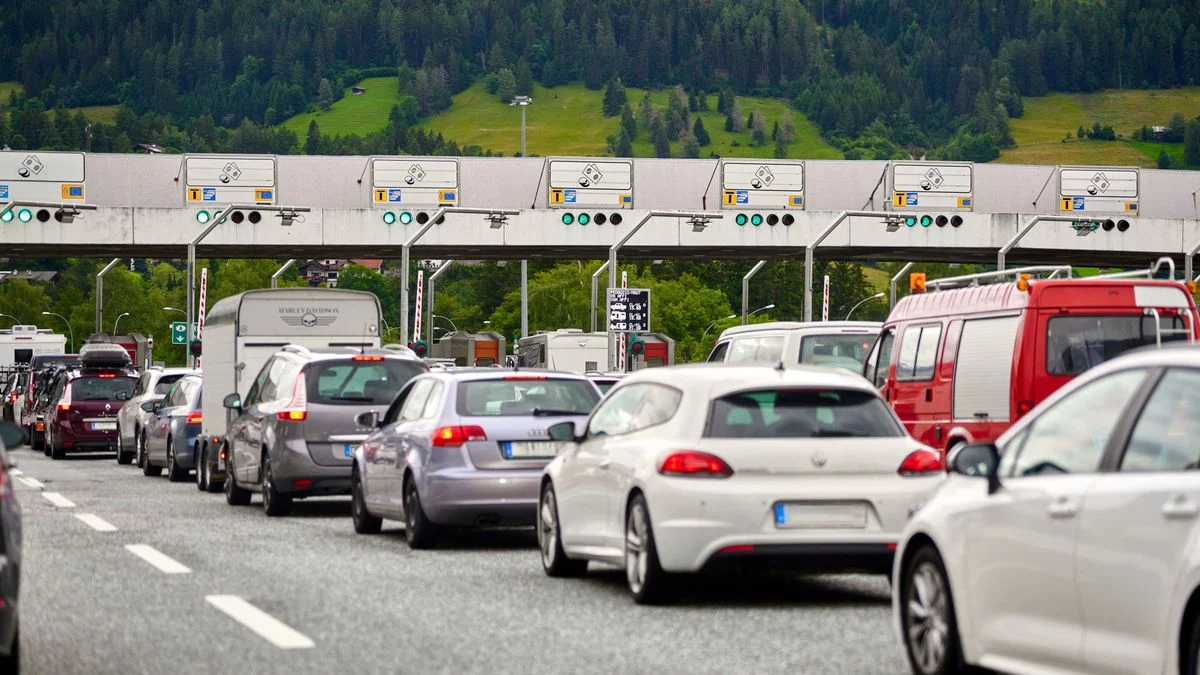
For millions of Europeans, the Brenner Pass is more than just a mountain crossing; it is the vital artery connecting Northern Europe to the Mediterranean. However, this weekend, that artery will be severed. In an unprecedented move, authorities have sanctioned a protest demonstration directly on the motorway, leading to a total shutdown of the primary transit route between Austria and Italy. As the Pfingst (Whitsun) holiday travel season reaches its peak, the closure is set to trigger a logistical nightmare for tens of thousands of motorists.
The Anatomy of the Blockade: Key Facts
The disruption is scheduled for Saturday, May 30, 2026. The most critical Alpine transit point will be closed for a period of eight hours, effectively paralyzing the flow of traffic between Innsbruck and Bozen. The ADAC, Germany’s largest automobile club, has issued a stark warning: the risk of extreme congestion is at its highest level, and those who do not clear the pass before 11:00 AM face the high probability of spending the remainder of their day trapped in stationary traffic.
The timing could not be more unfortunate. The blockade coincides with the Whitsun school holidays in the German states of Bavaria and Baden-Württemberg, as well as the conclusion of the holiday period in Saxony-Anhalt. Furthermore, June 2 is a major public holiday in Italy, prompting a massive surge in domestic travel. With a major event also scheduled in Innsbruck drawing tens of thousands of visitors, the regional infrastructure is expected to buckle under the strain.
A Chronology of the Disruption
The ripple effects of this protest began long before the barriers were lowered.

- Friday, May 29: The anticipation of the blockade has already caused significant traffic build-up. Many travelers, seeking to avoid the Saturday gridlock, opted to depart early, leading to pre-emptive congestion in the early morning hours, particularly around the Schönberg toll station and the construction zones near the Lueg Bridge.
- Saturday, May 30: The day of the demonstration. From 11:00 AM to 7:00 PM, the A13 motorway will be fully closed. Crucially, the Brenner federal road (B182) and the provincial road (L38) are also subject to the closure, eliminating traditional "secret" detours. On the Italian side, the A22 Brenner motorway will be blocked from Sterzing heading north between 10:30 AM and 8:00 PM.
- Sunday, May 31: While the road will be physically open, the backlog of traffic created on Saturday is expected to persist, with heavy volumes anticipated as travelers attempt to resume their journeys south.
Supporting Data: A Corridor at Breaking Point
The decision to protest on the motorway was not born out of a vacuum, but out of desperation. According to Asfinag, the Austrian motorway operator, nearly 11 million passenger cars and 2.5 million heavy goods vehicles (HGVs) traversed the pass in 2025.
The trajectory of this traffic is unsustainable for local residents. Since 2010, HGV traffic alone has increased by 40 percent. In a broader historical context, the traffic volume has multiplied sevenfold since the motorway first opened in the 1960s. For the 15,000 residents of the Wipptal valley, the constant roar of engines, the persistent layer of fine dust, and the daily gridlock have transformed their living environment into a site of permanent stress.
Official Responses and Political Implications
The protest is spearheaded by Karl Mühlsteiger, the mayor of the 1,400-resident village of Gries am Brenner. By securing a court order to demonstrate directly on the autobahn, Mühlsteiger has successfully forced the issue onto the international stage.
The demands presented to the Tyrolean provincial government are clear: the residents are calling for modern noise mitigation measures and a significant increase in transit fees for heavy goods vehicles. The goal is to make the Brenner pass a less attractive route for international freight, incentivizing a shift toward rail transport or alternative logistics models.
Regional authorities in Tyrol have issued a blunt advisory: avoid all non-essential travel through the region this weekend. Police are preparing for a "worst-case" scenario, with plans to conduct vehicle checks far from the pass to inform drivers of the situation and, if necessary, implement traffic rationing to prevent a complete collapse of the regional road network.

The Traveler’s Dilemma: Rights and Realities
The blockade raises significant legal questions for those caught in the crossfire. For individual travelers, the legal concept of the "Wegerrisiko" (the risk of the journey) applies. Because the destination remains theoretically reachable—albeit via exhausting and time-consuming detours—there is generally no automatic entitlement to refunds for lost hotel nights.
"If you miss your check-in due to the protest, you are largely dependent on the goodwill of your accommodation provider," explains legal expert Paul Degott.
For those on package tours, the situation is slightly different. A significant disruption to the transit component of a pre-booked holiday can be classified as a "travel defect." Travelers might be entitled to a pro-rata refund for each day the holiday is compromised. However, the threshold is high; because the protest is considered an "extraordinary circumstance" rather than a failure of the travel agency, compensation is limited to the lost time, and further damages are rarely awarded unless the agency failed in its duty to warn customers of known risks.
Navigating the Alternatives
For those determined to reach their destination, the alternatives are few and unappealing. The Reschen Pass, the Timmelsjoch, the Gotthard Tunnel, and the San Bernardino Tunnel remain the primary secondary routes. However, these passes are often ill-suited for heavy traffic, with some—like the Timmelsjoch—imposing strict weight and vehicle type restrictions. Furthermore, the Tauern route (A10) is unlikely to provide a reprieve, as the state of Salzburg is reportedly planning its own traffic control measures to manage the overflow.
The most viable alternative remains the rail network. As of now, trains between Germany and Italy are operating according to their regular schedules. For those traveling between Innsbruck and Franzensfeste, the train remains the most reliable, albeit crowded, option. Experts strongly advise booking seat reservations immediately, as the rail system is expected to absorb a significant portion of the diverted traffic.

Conclusion: A Wake-up Call for European Transit
The blockade of the Brenner Pass is more than a weekend inconvenience; it is a symptom of a systemic failure to balance economic demand with the rights of local populations. As European integration deepens and tourism figures continue to climb, the pressure on Alpine transit corridors will only intensify.
For the traveler caught in this weekend’s congestion, the experience will be one of frustration and long delays. For the policymakers in Vienna, Rome, and Brussels, the message from the Wipptal is impossible to ignore: the era of unchecked growth on Europe’s most sensitive transit routes is reaching its natural limit. Whether through higher tolls, mandatory rail-freight quotas, or better integrated traffic management, the "Brenner Bottleneck" serves as a stark reminder that even the most vital infrastructure can be brought to a halt when the burden on local communities becomes too great to bear.