

OpenAI is currently navigating a critical inflection point in its corporate evolution. While the company initially captured the public imagination through the viral success of ChatGPT, the focus is shifting aggressively toward the enterprise sector. According to recent internal projections, OpenAI aims to achieve parity between its consumer-facing business and its enterprise division within this fiscal year. Currently, enterprise revenue accounts for 40 percent of the company’s intake, a figure that leadership is eager to elevate as competition intensifies from rivals like Anthropic.
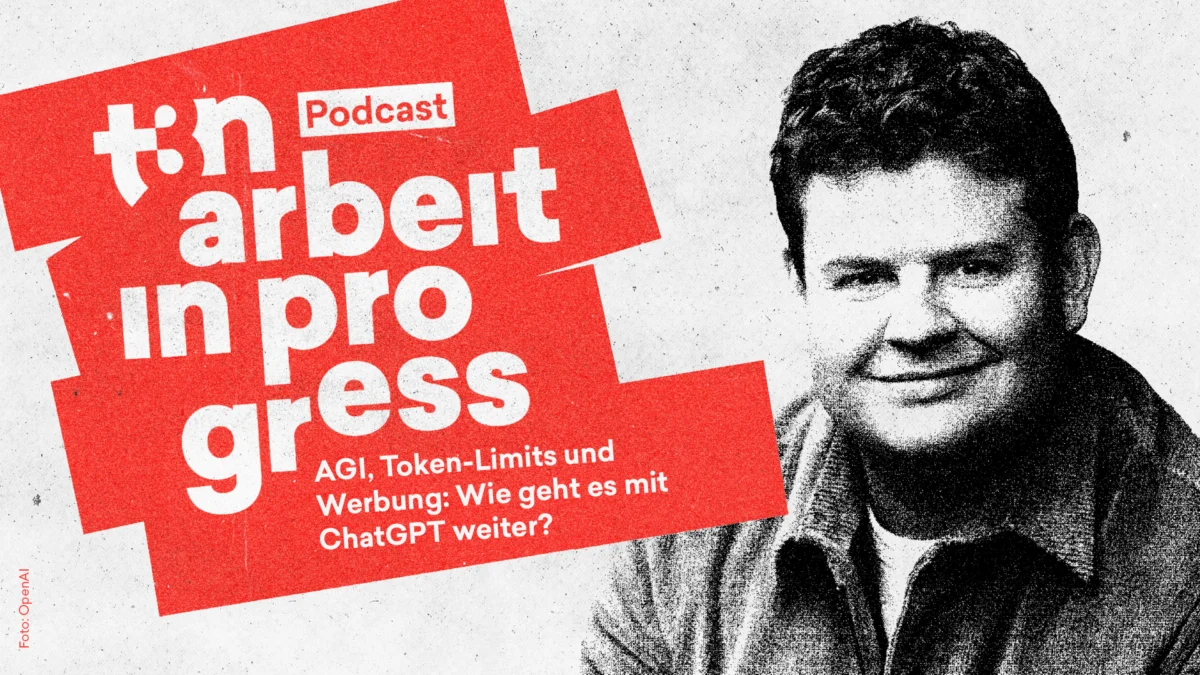
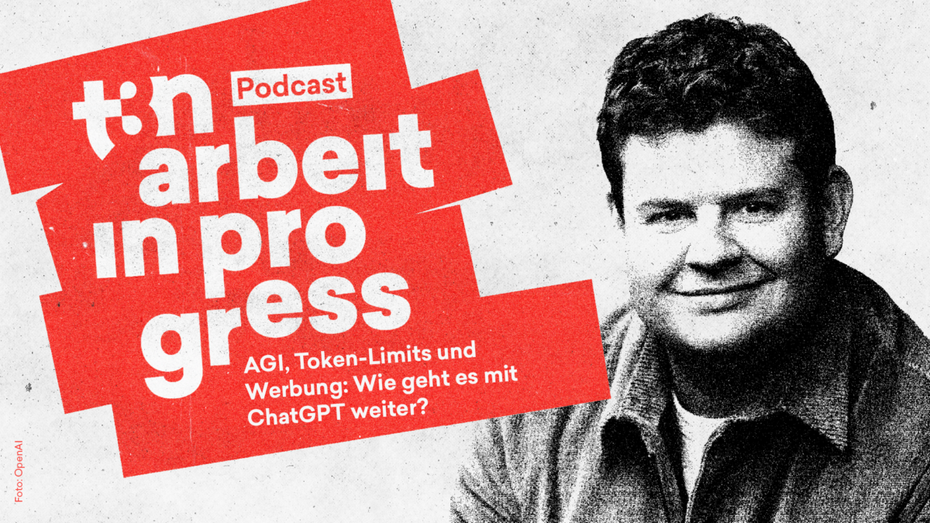
In a wide-ranging discussion on the t3n Arbeit in Progress podcast, OpenAI Product Lead Nick Turley provided a rare, behind-the-scenes look at how the company intends to maintain its market lead, the philosophical approach to Artificial General Intelligence (AGI), and the harsh realities of hardware constraints in the era of generative AI.
The Chronology of OpenAI’s Strategic Evolution
To understand where OpenAI is heading, one must look at the roadmap Turley describes as a "sequence of steps." OpenAI does not view AGI as a single "Eureka" moment, but rather as an iterative process.
- Phase One: The Chatbot Era: The initial launch of ChatGPT served as the primary gateway, familiarizing the global population with large language models (LLMs).
- Phase Two: The Reasoning Era: The integration of advanced "reasoning" capabilities, which allowed models to move beyond mere text completion into logical deduction and complex problem-solving.
- Phase Three: The Agentic Era: This is where we are today. AI is no longer just a passive conversationalist; it is an active participant in workflows.
- Phase Four: The Strategic Co-Founder: The future, according to Turley, involves AI functioning as an executive partner, capable of guiding business strategy.
- Phase Five: The Scientific Accelerator: The final stage, which holds the most promise for humanity, involves AI autonomously designing and executing scientific experiments to accelerate breakthroughs in medicine, physics, and climate science.
Supporting Data: The Competitive Landscape
OpenAI’s push into the enterprise space is not happening in a vacuum. During the OMR 2026 conference, industry experts—including marketing professor Scott Galloway and investor Philipp Klöckner—noted a significant trend: enterprise clients are increasingly turning to Anthropic’s suite of tools for their professional needs.
The reasons for this shift are multifaceted. Some corporate users cite Anthropic’s specific focus on safety, "Constitutional AI," and the superior context window of the Claude models as being better suited for enterprise-grade data analysis. For OpenAI, the challenge is to prove that their platform, which remains the most recognizable brand in the space, is also the most reliable for complex, multi-layered business tasks.
Official Responses: Nick Turley on AI Integration
Nick Turley’s perspective on how OpenAI internally utilizes its own technology provides a blueprint for what the company hopes to offer its enterprise clients.
On Workflow Automation
Turley describes the internal culture at OpenAI as "AI-native." His team, which spans engineering, design, and marketing, relies on ChatGPT and Codex for the vast majority of their daily tasks.
"The programmers, including myself, write all of our code with Codex," Turley explains. "We barely look at the computer code ourselves; we communicate with our Codex agent. If something isn’t right, we provide feedback, and it iterates. It’s like having an intern who works for you 24/7."
On Passive Feedback Loops
One of the most practical examples Turley offers is the automated aggregation of product feedback. By tasking an agent with scanning Twitter, Reddit, and various social channels, the AI distills massive amounts of qualitative data into actionable insights. "It’s not just a time-saving measure," says Turley. "Before this, it was humanly impossible to read all the feedback that came in daily."
The "Always-On" Agent Vision
The most ambitious goal discussed by Turley is the transition from a conversational interface to a computer-using agent. "We perform all forms of knowledge work on a computer—in Excel, email, or design software," Turley notes. "If we teach the AI to operate a computer exactly like a human, it can assist with anything that happens on that screen."
The current prototype works on macOS via the Codex agent, but the goal is to move this into the cloud. The vision is for a user to close their laptop and continue collaborating with their AI agent via a mobile device, with the agent continuing to manage emails and tasks in the background, independent of the local hardware.
Implications: The Hard Truth About "Unlimited" AI
One of the most contentious topics in the enterprise space is the consumption of tokens. As businesses scale their use of AI, the cost of these tokens becomes a significant line item on the balance sheet. When asked about the prospect of "Unlimited Token" plans for enterprise customers, Turley offered a sobering analogy.
"Asking for an unlimited token plan is like asking an electric utility company for an ‘unlimited electricity’ plan," Turley explains. "It will likely never happen because there simply aren’t enough chips on the planet."
This constraint highlights a fundamental bottleneck in the AI revolution: the physical limits of hardware production. OpenAI’s strategy is not to lower the cost of tokens to zero, but to optimize the allocation of intelligence. They are prioritizing companies that have the highest demand and the most critical need for AI-driven problem-solving. This implies that as the industry matures, we will see a "tiering" of intelligence where the most powerful models are reserved for high-value enterprise applications, while lighter, faster models handle commodity tasks.
The Road Ahead: 2027 and Beyond
As we approach 2027, the definition of AGI remains a moving target. Turley suggests that if we look at the tools available today, we are already interacting with systems that would have been considered "AGI" just five years ago.
The shift toward AI acting as a "Co-Founder" is particularly poignant for the startup ecosystem. If an AI can assist in business planning, market analysis, and product development, the barrier to entry for entrepreneurs will drop significantly. However, the most profound impact, in Turley’s view, lies in scientific discovery. By creating a loop where the AI suggests hypotheses, the human conducts experiments, and the data is fed back into the AI, the speed of human progress could enter an exponential phase.
Key Takeaways for Businesses:
- Prepare for the Agentic Shift: Companies should focus on integrating agents into their existing software ecosystems rather than treating AI as a standalone chatbot.
- Hardware Awareness: Do not expect a "cheap" or "unlimited" AI future. Enterprises must become efficient in how they deploy token-heavy models.
- Human-in-the-loop: The role of the human is shifting from "doer" to "manager" of AI agents. The ability to provide high-quality feedback to an AI will be the most valuable skill for employees in the next three years.
As OpenAI continues to scale its enterprise offerings, the success of the company will hinge on its ability to balance the raw, massive demand for compute with the need for stable, reliable, and secure business tools. The transition from a consumer phenomenon to the backbone of global enterprise is not just a commercial strategy for OpenAI—it is a test of whether these models can provide consistent, tangible value in the high-stakes world of corporate operations.




















Leave a Reply