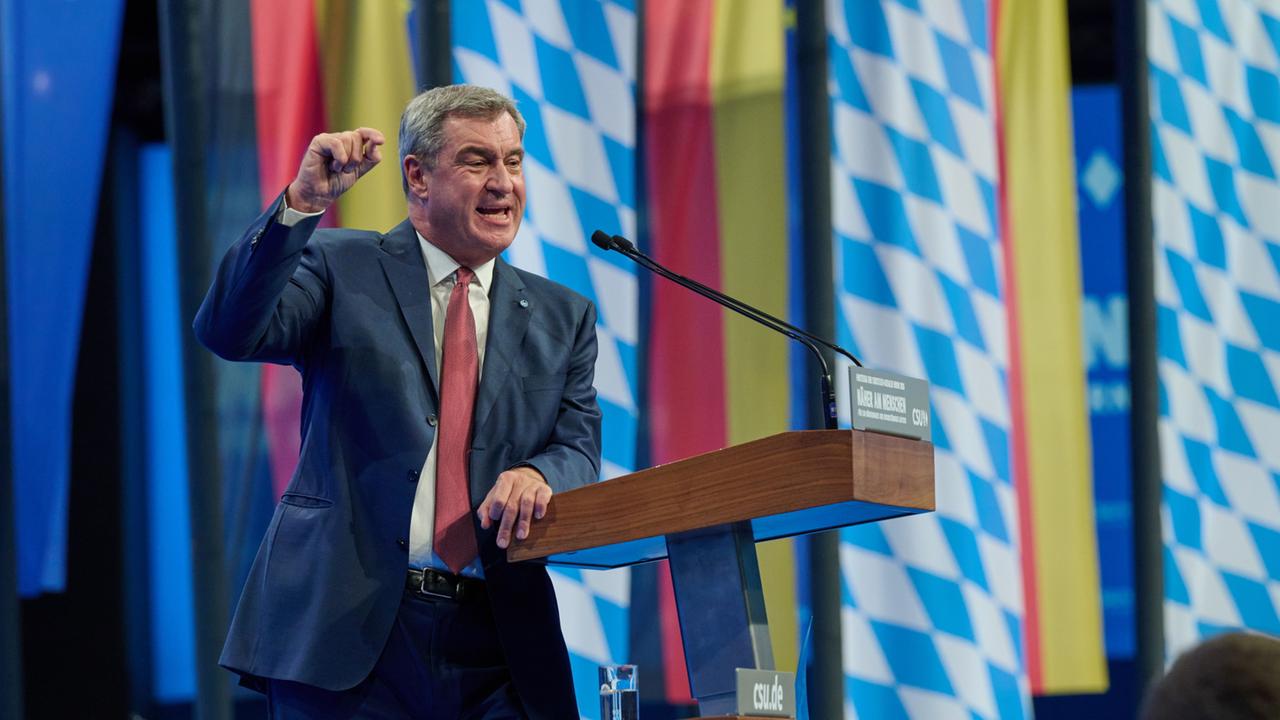
Munich, Bavaria – October 23, 2026 – In a highly anticipated and unusually stark opening address at the Christian Social Union (CSU) party congress in Munich, party leader and Bavarian Minister-President Markus Söder delivered a powerful, at times almost apocalyptic, assessment of Germany’s political landscape. With a backdrop of visuals depicting a burning Paris and triumphant scenes of the Left in Berlin, Söder declared, "If we are honest, we are in the middle of a hurricane," pinpointing the dual threats posed by both the radical left and the resurgent far-right. While his uncompromising critiques of political extremism dominated the initial discourse, it was his surprising, heartfelt endorsement of Ilse Aigner for Federal President that drew the most fervent applause, injecting a rare moment of unity and aspiration into an otherwise somber prognosis.
The two-day party gathering, held under immense pressure as the Union grapples with declining national poll numbers and internal strategic debates, began with Söder setting a serious tone. His speech, a calculated blend of alarm, defiance, and a plea for cohesion, aimed to galvanize his party base while simultaneously charting a course through what he perceives as increasingly turbulent political waters.
Söder’s Overture: Navigating the "Hurricane"
Main Facts:
Markus Söder wasted no time in establishing the gravity of the current political moment. From the outset, the visual presentation preceding his speech—images of civil unrest in Paris juxtaposed with scenes of left-wing celebrations in the German capital—served as a powerful, if somewhat theatrical, prelude to his core message. His declaration of being "in the middle of a hurricane" was not merely rhetorical; it underscored a deep-seated concern within the Union regarding the erosion of mainstream political stability and the rise of fringe ideologies. This "hurricane," as Söder elaborated, represents the relentless pressure from both extreme ends of the political spectrum, threatening to destabilize Germany’s democratic foundations.
The choice of imagery, particularly the reference to Paris, is significant. It subtly invoked anxieties about social unrest, security, and the perceived breakdown of public order, issues often exploited by populist narratives. Similarly, depicting the Left celebrating in Berlin aimed to highlight the perceived threat of radical governance close to the federal power center. Söder’s strategy was clear: to position the CSU, and by extension the broader Union, as the steadfast anchor in a sea of political volatility, the only credible force capable of resisting these twin ideological storms.
Chronology of a Resolute Address
Söder’s speech unfolded strategically, moving from broad strokes of political urgency to specific critiques, before culminating in an appeal for unity and a forward-looking proposal.
He began by painting a grim picture of the national mood, emphasizing the widespread disillusionment with traditional politics and the growing appeal of radical alternatives. This contextualization set the stage for his subsequent, detailed attacks. First, he turned his attention to the Left, specifically targeting their political aspirations and ideological tenets. He then pivoted to the AfD, acknowledging their growing electoral strength but unequivocally labeling them as the Union’s primary adversary.
Interspersed with these condemnations were policy proposals, most notably his controversial call to withhold federal financial equalization funds from states perceived to be governed by extremists. As he approached the latter part of his address, Söder shifted his focus inward, urging the CSU and the Union to introspection, unity, and a renewed commitment to effective governance. The speech reached its emotional crescendo with the unexpected nomination of Ilse Aigner for the country’s highest ceremonial office, a move that momentarily overshadowed the preceding warnings and ignited a wave of enthusiastic support from the delegates. The timing of this endorsement, ahead of CDU leader Friedrich Merz’s planned appearance at the congress, also signaled a proactive, perhaps even assertive, stance from the Bavarian sister party.
Supporting Data: The Dual Threat from Left and Right
Söder meticulously articulated his concerns, backing them with both ideological assertions and electoral realities.
Critique of the Left: "Honecker 2.0"
His most incendiary remarks were reserved for the Left Party, particularly in the context of their ambitions to govern in Berlin. "That is a wicked, a radical Left, deeply antisemitic, rooted in RAF aid associations, demanding expropriations. Honecker 2.0," Söder declared. This was a deliberate and multi-pronged attack designed to evoke historical fears and discredit the party on several fronts:
- Antisemitism: This accusation, if substantiated, carries immense weight in German political discourse, linking the party to historical grievances and contemporary debates surrounding Israel and antisemitism within left-wing circles. Söder’s use of this charge is particularly potent, designed to alienate potential centrist voters.
- RAF-Hilfevereinen (RAF aid associations): This refers to historical connections or sympathies some individuals within the Left Party or its predecessors (like the PDS) were alleged to have had with remnants or supporters of the Red Army Faction (RAF), a far-left terrorist group active in West Germany during the 1970s and 80s. The implication is a perceived lack of clear dissociation from violent extremism, despite the party’s official stance.
- Enteignungen (Expropriations): This refers to calls, particularly from the radical wing of the Left Party and activists, for the expropriation of large housing companies to combat rising rents and housing shortages in major cities like Berlin. For a conservative party like the CSU, this proposal is anathema, representing a fundamental challenge to property rights and free-market principles, harking back to socialist economic policies.
- Honecker 2.0: This powerful metaphor directly links the contemporary Left Party to Erich Honecker, the long-time hardline communist leader of East Germany (GDR). By invoking "Honecker 2.0," Söder aimed to brand the Left Party as ideologically anachronistic, authoritarian, and fundamentally antithetical to liberal democracy and market economy, drawing on the collective memory of division and oppression. This comparison is particularly resonant in the former West German states, where the legacy of the GDR is often viewed with deep suspicion.
Söder’s verbal assault on the Left was not merely an ideological exercise; it was a strategic move to define the political battlefield. By painting the Left as radical and dangerous, he sought to reinforce the CSU’s image as the guardian of stability and tradition, rallying conservative voters who might otherwise be tempted by the AfD.
Confronting the AfD: The "Main Enemy"
Söder then turned his attention to the far-right Alternative for Germany (AfD), a party whose growing influence has become a defining challenge for the established political order. He minced no words, stating, "For the AfD, we are the main enemy. They want to replace us, they want to fundamentally shake and destroy us." This declaration underscored the existential threat the CSU perceives from the AfD, which directly competes for disaffected conservative voters.
The urgency of Söder’s warning is amplified by the latest polling data from Bavaria, the CSU’s heartland. Surveys indicate that the AfD currently garners around 21 percent of voter support in the state. This figure is not merely a statistic; it represents a significant erosion of the CSU’s traditional dominance and a direct challenge to its electoral hegemony. For a party accustomed to absolute majorities or strong coalitions, a quarter of the electorate opting for the far-right is a profound alarm bell. The AfD’s rise is not confined to Bavaria; it mirrors a broader trend across Germany, particularly in the eastern states, where the party often leads in polls, as highlighted by Söder’s reference to Saxony-Anhalt.
The Controversial Call for Withholding Financial Equalization
In response to the perceived threat of extremist parties gaining power, Söder reiterated a highly contentious proposal: to potentially withhold federal financial equalization funds (Länderfinanzausgleich) from states where extremist parties hold significant sway or are part of the government. "No money for extremists," he emphatically stated.
The Länderfinanzausgleich is a crucial mechanism in German federalism, designed to reduce disparities in financial strength between the 16 federal states. Wealthier states contribute to a common pot, which is then distributed to poorer states, ensuring a relatively uniform standard of living and public services across the country. It is a cornerstone of Germany’s federal structure and national solidarity.
Söder’s proposal, while politically impactful, has been met with significant skepticism from constitutional lawyers and political scientists. Critics argue that:
- Legal Challenges: The mechanism for withholding these funds for political reasons is not explicitly provided for in the Basic Law (Grundgesetz). Such a move could be challenged as unconstitutional, infringing upon the financial autonomy and sovereignty of the federal states. The purpose of the equalization scheme is primarily financial, not punitive based on political composition.
- Defining Extremism: Who determines what constitutes an "extremist" government or a party with "significant sway"? Such a definition could become highly politicized and open to abuse, potentially targeting legitimate, albeit ideologically divergent, political actors.
- Precedent and Federalism: Establishing such a precedent could fundamentally alter the balance of power between the federal government and the states, potentially undermining the cooperative federalism that has characterized post-war Germany. It could lead to a cycle of political blackmail and further destabilize inter-state relations.
- Practicality: Even if legally feasible, the practical implementation of such a policy would be immensely complex and likely result in protracted legal battles, creating more political instability rather than solving it.
Despite these constitutional reservations, Söder’s repeated advocacy for this measure serves a dual purpose: it demonstrates a tough stance against extremism, appealing to a security-conscious base, and it puts pressure on other parties to consider more drastic measures to combat the rise of the far-right.
Official Responses: A Strategic Retreat from Prohibition
Addressing the question of how to counter the AfD, Söder explicitly rejected calls for a ban on the party, a measure that has been debated periodically, particularly given the party’s increasingly radical rhetoric and documented ties of some members to extremist groups.
"An AfD ban would be the wrong path," Söder argued. "That would strengthen the AfD’s martyr status." This perspective, shared by many mainstream politicians and political scientists, suggests that a ban, while seemingly decisive, could backfire. It might allow the AfD to portray itself as a victim of the "establishment," galvanizing its supporters and potentially driving its activities underground, making it harder to monitor and counter.
Instead, Söder advocated for a strategy rooted in democratic engagement and effective governance. He urged political leaders to "listen to the people" (aufs Maul schauen) and to "do the work" (Arbeit machen), implicitly criticizing the current federal government for perceived shortcomings. His rhetorical question, "If a government of the democratic center fails again within two years, what should one even say to an AfD?" was a direct challenge to the ruling coalition, implying that their perceived failures are fueling the rise of extremist alternatives.
His call to action was clear: "Pull yourselves together, do the work, and achieve success!" This message was not just for the federal government but also for his own party and the Union as a whole. It emphasized the need for tangible results and competent leadership as the most effective antidote to populist discontent. This approach signals a shift from purely legal or prohibitive measures to a focus on political performance and regaining voter trust through concrete achievements.
Implications: Unity, Self-Reflection, and a Presidential Gambit
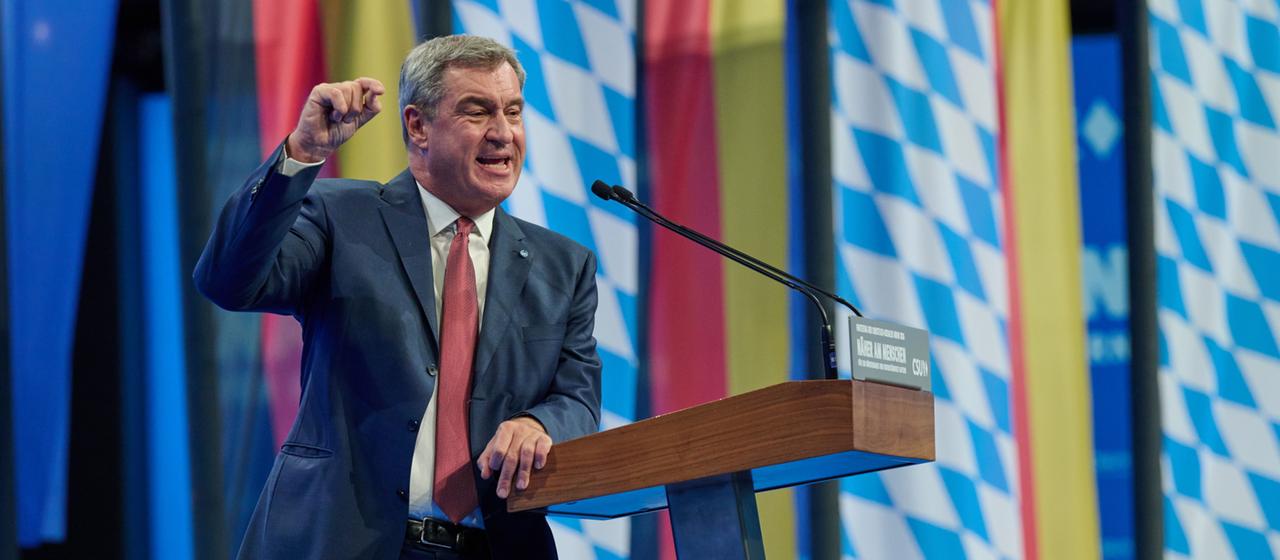
Söder’s speech was not solely outward-looking; it contained a significant message for his own party and the broader Union. He appealed to the delegates for cohesion, acknowledging his own imperfections and accepting criticism regarding his leadership style. This moment of self-reflection was a strategic move to foster internal unity, especially after periods of tension between the CSU and its CDU sister party, and within the CSU itself.
"The times are harder than some believe," he warned, stressing that "it’s not just about the personal aspects of each of us. What stands above us: the country, the party, the idea of our society, is far, far more important than the individual career." This statement was a powerful call for collective responsibility, urging members to prioritize the greater good of the party and the nation over personal ambitions. It reflects a growing awareness within the Union that internal squabbles and public displays of disunity only serve to weaken their standing and play into the hands of their political adversaries.
The Presidential Endorsement: Ilse Aigner
The most unexpected and warmly received moment of the speech came when Söder floated the name of Ilse Aigner as a potential successor to Federal President Frank-Walter Steinmeier. Steinmeier’s second term is nearing its end, and the discussion about his successor has already begun in political circles.
"The decision will be made elsewhere," Söder conceded, referring to the broader political consensus-building process, particularly within the CDU-CSU Union. "But I would wholeheartedly wish that Ilse Aigner would become Federal President. Good luck with that!" The hall erupted in thunderous applause, a clear indication of the delegates’ strong support for one of their own.
Who is Ilse Aigner? Aigner is a highly respected and experienced politician within the CSU. Currently serving as the President of the Bavarian State Parliament (Landtag), she has held various significant portfolios at both federal and state levels, including Federal Minister of Food, Agriculture and Consumer Protection, and Bavarian State Minister for Economic Affairs, Media, Energy and Technology. Her long political career, reputation for pragmatism, and ability to connect with diverse audiences make her a formidable candidate. Her nomination by Söder is not just a personal endorsement; it’s a strategic move to:
- Elevate a Bavarian Figure: To underscore the CSU’s importance in national politics and potentially secure a high-profile federal office for a Bavarian.
- Present a Strong Female Candidate: In a political landscape often criticized for its male dominance, Aigner’s nomination would present a strong, experienced female leader for the largely ceremonial but highly symbolic office.
- Influence the Union’s Choice: By publicly endorsing Aigner, Söder is attempting to shape the debate within the broader Union, putting pressure on the CDU to consider her seriously.
CDU-CSU Tensions and Merz’s Visit: Söder’s remark about the decision being made "elsewhere" subtly hinted at the delicate power dynamics between the CSU and its larger sister party, the CDU. Reports have suggested that the CDU, particularly under Chairman Friedrich Merz, is wary of being "pressured" by Bavaria into accepting a candidate prematurely. The fact that CDU leader Friedrich Merz is slated to address the CSU party congress on Saturday adds another layer of intrigue. While Merz is unlikely to name a candidate himself during his visit, Söder’s move ensures that Aigner’s name will be prominently on the agenda when the two leaders meet, and indeed, within the broader Union discussions. The presidential election, while not direct, requires significant cross-party consensus, making early endorsements a strategic play to build momentum.
Broader Political Landscape and Future Outlook
Söder’s address at the CSU party congress was more than just a party leader’s speech; it was a comprehensive political statement reflecting the profound challenges facing Germany’s democratic center. His dire warnings about the "hurricane" from both the radical left and right resonate with a significant portion of the electorate concerned about polarization and instability.
The implications of his speech are multifaceted:
- Union’s Strategic Direction: Söder’s emphasis on combating extremism through robust policy and competent governance, rather than just prohibition, signals a likely strategic direction for the Union. It suggests a focus on regaining trust by addressing core issues like economic stability, security, and social cohesion, which are often exploited by extremist narratives.
- Federal Election Preparations: Although the next federal election is still some time away, Söder’s speech laid the groundwork for the Union’s campaign narrative. It positioned the CSU/CDU as the bulwark against radicalism, the party of stability and pragmatic solutions.
- Internal Cohesion: The call for unity and self-reflection within the Union is critical. Persistent internal disagreements and leadership struggles have hampered the Union’s ability to present a united front. Söder’s plea for prioritizing the collective good over individual ambition is an attempt to mend these fissures.
- Presidential Succession: The endorsement of Ilse Aigner has dramatically altered the early dynamics of the presidential succession debate. It puts a strong candidate forward and tests the relationship between the CDU and CSU, forcing a discussion on shared leadership and influence. The eventual choice of a candidate will be a significant indicator of the Union’s internal health and strategic alignment.
In conclusion, Markus Söder’s speech was a powerful opening salvo in what promises to be a challenging period for German politics. By candidly acknowledging the severity of the situation, launching a dual attack on the radical fringes, and offering a bold vision for leadership, Söder sought to position the CSU as a decisive force capable of navigating the "hurricane" and safeguarding Germany’s future. The applause for Ilse Aigner, a moment of genuine enthusiasm amidst the warnings, offered a glimpse of the hope and aspiration the party still holds for its role in shaping the nation’s destiny.