

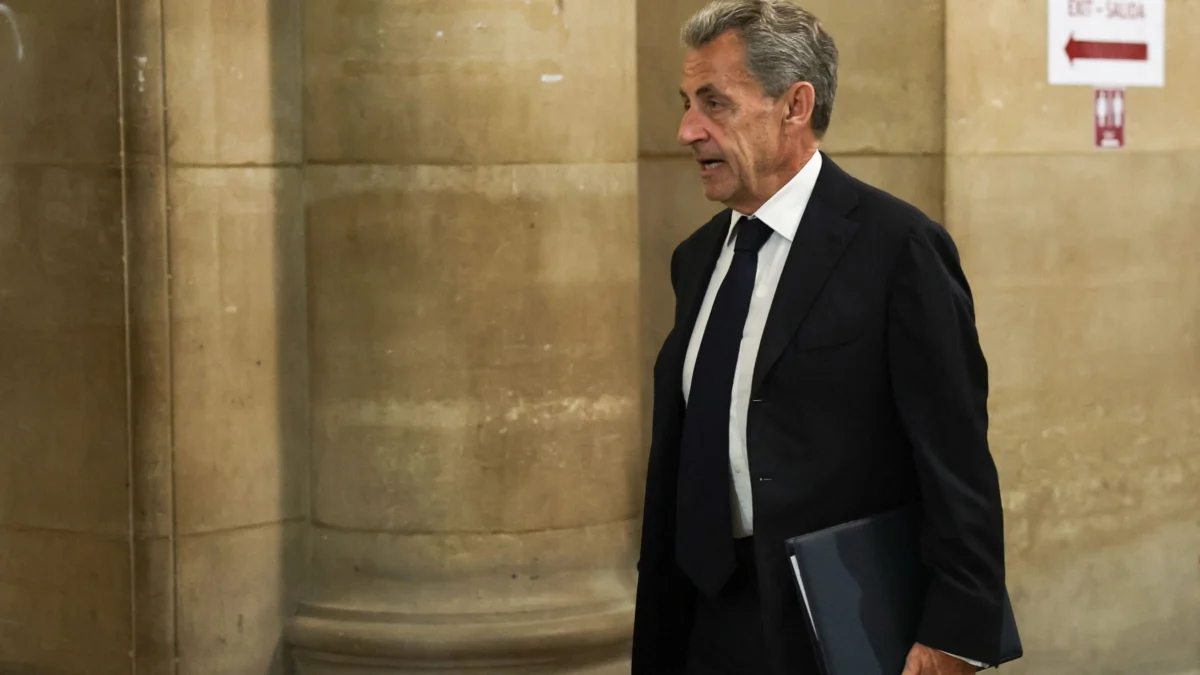
Paris, France – May 13, 2026 – In a high-stakes appeal trial that continues to captivate France and cast a long shadow over its political landscape, prosecutors have reiterated their demand for a seven-year prison sentence and a €300,000 fine for former French President Nicolas Sarkozy. The 71-year-old statesman stands accused in the explosive "Libya affair," a case revolving around allegations of illicit campaign financing during his successful 2007 presidential bid. Sarkozy, a dominant figure in French conservative politics for decades, once again vehemently pleaded his innocence before the appellate court in Paris, firmly rejecting claims that his campaign received clandestine funding from the regime of late Libyan dictator Muammar Gaddafi.
The ongoing legal saga represents one of the most significant challenges to the legacy of a former head of state in modern French history. The prosecution’s renewed demand underscores the gravity of the accusations, which include forming a criminal association, active and passive bribery, illegal campaign financing, and benefiting from the embezzlement of public funds. This appeal follows a landmark first-instance ruling where Sarkozy was found guilty of membership in a criminal association and sentenced to five years in prison, a portion of which he briefly served. The original court, while not finding direct proof of money flowing from Libya, concluded that Sarkozy and his close associates had actively sought to obtain such funds. The outcome of this appeal will undoubtedly have profound implications not only for Sarkozy’s personal future but also for the integrity of French political institutions and the accountability of its highest office-holders.
Main Facts of the Appeal Trial
The current appeal proceedings in Paris have seen the prosecution maintain the stringent penalties sought in the initial trial. The public prosecutor’s office has requested a seven-year custodial sentence for Nicolas Sarkozy, along with a substantial fine of €300,000. These demands reflect the prosecution’s unwavering conviction regarding the former President’s culpability in the alleged financial irregularities surrounding his 2007 presidential campaign.

The charges laid against Sarkozy are multi-faceted and severe. They encompass:
- Formation of a Criminal Association: This charge implies a structured group of individuals conspiring to commit illegal acts, specifically related to the illicit acquisition of campaign funds.
- Active and Passive Bribery: Allegations suggest that Sarkozy, either directly or through intermediaries, offered or accepted bribes in connection with the alleged Libyan funding.
- Illegal Campaign Financing: This refers to violations of strict French laws governing political campaign funding, which mandate transparency and limit contributions. The core of the accusation here is the receipt of undeclared funds from a foreign government.
- Profiting from the Embezzlement of Public Funds: This charge suggests that the alleged Libyan funds, if transferred, would have constituted public money embezzled by Gaddafi’s regime, from which Sarkozy’s campaign indirectly benefited.
Throughout the appeal process, Sarkozy has maintained a resolute stance of innocence. Addressing the court, he vehemently denied that "a single cent from Libya flowed into his campaign." He further asserted that he was never under the influence of Muammar Gaddafi, portraying their relationship as a complex diplomatic engagement rather than a corrupt financial arrangement. His defense team has consistently argued that the accusations are based on unreliable testimonies, particularly those from former Gaddafi regime officials who may have had ulterior motives, and a lack of concrete, irrefutable evidence directly linking the alleged funds to Sarkozy’s campaign accounts. The former president, appearing visibly determined, has painted himself as the victim of a politically motivated vendetta, a narrative he has employed across his various legal battles.
A Complex Chronology: The Libya Affair Unfolds
The "Libya affair" has a long and convoluted history, originating from sensational allegations that first surfaced publicly in the aftermath of the 2011 NATO-led intervention in Libya, which Sarkozy championed.
- 2011: Initial Allegations Emerge: The initial claims of Libyan funding for Sarkozy’s 2007 campaign were made by Muammar Gaddafi’s son, Saif al-Islam Gaddafi, and subsequently by various former Libyan officials and intermediaries. These allegations, initially dismissed as desperate attempts to discredit Sarkozy, gained traction over time as more purported details emerged.
- 2012: Media Revelations: French investigative journalism, notably by Mediapart, published documents purportedly showing transfers of millions of euros from the Libyan regime to Sarkozy’s campaign. While the authenticity of some documents was later questioned, they fueled public and judicial interest.
- 2013: Preliminary Investigation Begins: French judicial authorities launched a preliminary investigation into the allegations, scrutinizing financial flows and interviewing key figures.
- 2014-2018: Escalation of Investigation and Indictments: The investigation intensified, with numerous individuals close to Sarkozy, including former ministers and campaign aides, being questioned. In March 2018, Nicolas Sarkozy himself was formally indicted on charges including illegal campaign financing, passive corruption, and concealment of Libyan public funds. This was a significant moment, marking the first time a former French president faced such grave charges related to his election.
- 2021: First Instance Trial and Conviction: After years of investigation, the first trial in the Libya affair commenced. Prosecutors presented a case built largely on circumstantial evidence, witness testimonies, and a web of financial transactions that, while not directly proving the transfer of millions, pointed towards an intent to secure illicit funds. In the initial verdict, the court found Sarkozy guilty of "membership in a criminal association." While direct evidence of money flowing into his campaign was deemed insufficient, the court concluded that Sarkozy and his circle had actively sought to obtain illicit financing from the Gaddafi regime. He was sentenced to five years in prison, with two years suspended, meaning he would serve three years effectively. For a brief period, this led to Sarkozy being placed under house arrest with an electronic tag, marking an unprecedented moment for a former French head of state.
- 2023-2024: Appeal Process Initiated: Sarkozy immediately appealed the first-instance conviction, arguing that the judgment was flawed and based on insufficient evidence. The appeal process began, allowing for a re-examination of the evidence and legal arguments.
- May 2026: Appeal Trial Prosecution Demands: The current appeal trial in Paris culminated in the prosecution’s renewed demand for seven years imprisonment and a €300,000 fine, signalling their consistent belief in the severity of the alleged crimes.
This intricate timeline highlights the enduring nature of the judicial pursuit and the profound impact these allegations have had on Sarkozy’s post-presidency life and public image.
Supporting Data and Key Evidence
The prosecution’s case in the Libya affair, both in the first instance and on appeal, has relied on a combination of witness testimonies, financial documents, and digital records, attempting to build a compelling narrative despite the inherent difficulties in tracing illicit foreign funding.
A central pillar of the prosecution’s argument has been the testimonies of several individuals, including former members of Gaddafi’s inner circle, arms dealers, and intermediaries. Notably, Ziad Takieddine, a Franco-Lebanese businessman, initially claimed to have delivered suitcases filled with cash from Libya to Sarkozy’s office. While Takieddine later retracted his claims, then subsequently reiterated them, his fluctuating statements have added a layer of complexity and controversy to the case, often cited by the defense to discredit the prosecution’s witnesses. Other key figures, such as former Libyan intelligence chief Abdallah Senussi, have also made statements implicating the Sarkozy campaign.
Financial investigations have unearthed a convoluted trail of transactions and cash movements, although direct links to Sarkozy’s official campaign accounts have remained elusive. Prosecutors have focused on identifying intermediaries and unusual cash withdrawals or transfers that could potentially indicate an illicit financing network. The challenge for the judiciary has been to connect these disparate pieces of evidence to establish a clear and undeniable link to Sarkozy himself, beyond the intent to seek funds that the first court found.
The initial court’s decision hinged on the finding that while direct evidence of money flowing into Sarkozy’s campaign was absent, there was sufficient evidence to prove that Sarkozy and his associates made efforts to obtain such funds. This distinction is crucial: it acknowledged the difficulty of proving the ultimate destination of illicit funds but affirmed the existence of a concerted effort to engage in illegal financing practices. This aspect forms a significant part of the current appeal, as Sarkozy’s defense seeks to dismantle the argument that such an "attempt" constitutes a criminal association.
Furthermore, investigators have analyzed phone records and other communications to establish connections between Sarkozy’s entourage and alleged Libyan intermediaries. These records, while often circumstantial, have been used to suggest a pattern of communication consistent with efforts to facilitate illegal transactions. The prosecution argues that taken together, the body of evidence, even if not a direct smoking gun, paints a clear picture of a deliberate scheme to circumvent French campaign finance laws with foreign money.

Official Responses and Political Ramifications
Nicolas Sarkozy’s response to the charges and the ongoing trial has been consistent and defiant. He has vehemently denied all accusations, portraying himself as a victim of a politically motivated smear campaign and judicial overreach. His legal team, led by prominent French lawyers, has vigorously challenged the admissibility of evidence, the credibility of key witnesses, and the legal interpretations put forth by the prosecution. They argue that the allegations are based on hearsay, unreliable sources, and insufficient proof, asserting that no tangible evidence exists to support the transfer of funds from Libya to his campaign.
The political ramifications of the Libya affair have been immense and far-reaching. Sarkozy’s post-presidency ambitions have been severely hampered by this and other legal challenges. Once a potential kingmaker and influential voice within the conservative Les Républicains party, the continuous legal battles have eroded his public standing and made any political comeback virtually impossible. His conviction in the first instance, and particularly the brief period of imprisonment, sent shockwaves through the French political establishment, as it was a stark reminder that even former heads of state are not immune to the judicial process.
The trials have also sparked broader debates about the financing of political campaigns in France, the transparency of political life, and the accountability of leaders. While Sarkozy’s supporters often decry the proceedings as a "witch hunt," his detractors view them as essential for upholding the rule of law and demonstrating that no one is above it. The case has undoubtedly contributed to a climate of public cynicism towards political elites, particularly given a series of corruption scandals involving various high-profile figures in recent French history. For Sarkozy, who once enjoyed significant international standing, the trials have irrevocably altered his historical legacy, transforming him from a figure of reform and dynamism into one embroiled in persistent allegations of corruption.

Broader Implications for French Politics and Justice
The Sarkozy Libya affair is more than just a trial of an individual; it is a test case with profound implications for French politics and the integrity of its judicial system.
Firstly, the prosecution and conviction of a former head of state, even if on appeal, sets a powerful precedent regarding accountability. France, like many democracies, grapples with the question of how to hold its highest elected officials responsible for actions committed while in power or during their ascent to it. This case reinforces the principle that the office of the presidency does not confer immunity from criminal prosecution for acts unrelated to the exercise of official duties. It signals a shift towards greater judicial scrutiny of political power, potentially emboldening prosecutors in future cases involving high-ranking officials.
Secondly, the trial highlights the intricate challenges of prosecuting complex financial crimes, especially those involving international actors and alleged clandestine networks. The difficulty in obtaining direct, undeniable evidence in cases of foreign illicit funding often means that prosecutors must rely on a mosaic of circumstantial evidence, witness testimonies (which can be unreliable), and financial analysis. The judicial system’s ability to navigate these complexities, as seen in the first court’s distinction between "receiving" and "attempting to obtain" funds, is crucial for maintaining public confidence in its capacity to deliver justice.

Thirdly, the ongoing legal battles involving Nicolas Sarkozy, who faces other charges in separate cases (such as the "wiretapping affair" and the "Bygmalion affair" related to his 2012 campaign), underscore a broader trend of increased judicial activism in France against political corruption. This is part of a larger European movement towards greater transparency and accountability in public life, often driven by public demand for cleaner politics. The judiciary’s independence and its willingness to pursue investigations against powerful figures are seen by many as vital safeguards against abuse of power.
Finally, the public perception of these trials significantly impacts trust in democratic institutions. While some may view the relentless pursuit of Sarkozy as a politically motivated attack, others see it as a necessary cleansing of the political system. The manner in which the appeal court handles the remaining ambiguities and delivers its final verdict will be closely watched, not just in France but across Europe, as it will inevitably contribute to the ongoing debate about the balance between justice, political stability, and the respect for a former leader’s legacy. The case serves as a stark reminder that the fight against corruption, particularly at the highest levels of government, is a continuous and often arduous process.
In conclusion, the appeal trial of Nicolas Sarkozy in the Libya funding affair stands as a pivotal moment in French legal and political history. The prosecution’s demand for a significant prison sentence and fine reflects the gravity of the allegations, while Sarkozy’s steadfast denial underscores the contentious nature of the evidence. As the nation awaits the final verdict, the outcome will not only determine the fate of a former president but will also send a powerful message about the enduring principles of accountability and justice in a modern democracy.
















Leave a Reply