PARIS, France – October 24, 2026 – French President Emmanuel Macron has unequivocally condemned a deadly shooting attack in two suburban communities near Paris, which claimed one life and injured five others, as a "racially motivated act of terror." Speaking from Trappes, one of the affected municipalities, the President emphasized that the victims were targeted solely due to their religion and skin color, issuing a fervent plea for national unity in the face of such divisive violence. The perpetrator, who opened fire from a vehicle yesterday, has been apprehended by police, and the French public prosecutor’s office has launched an investigation into murder in connection with a terrorist act.
The incident has sent shockwaves through France, reigniting urgent conversations about racial and religious tensions, the prevalence of hate crimes, and the evolving nature of domestic terrorism. Macron’s swift and strong classification of the attack underscores the gravity of the situation and the government’s commitment to addressing all forms of extremism.
Main Facts
A quiet Friday afternoon was shattered yesterday in the Parisian suburbs when a lone assailant, operating from a car, indiscriminately fired upon residents in two distinct communities. The senseless act of violence resulted in the tragic death of one individual and left five others wounded, some critically. While the identities of the victims have not yet been fully released, President Emmanuel Macron’s subsequent declaration confirmed the harrowing motive: a targeted assault based on the victims’ religious affiliation and racial background.
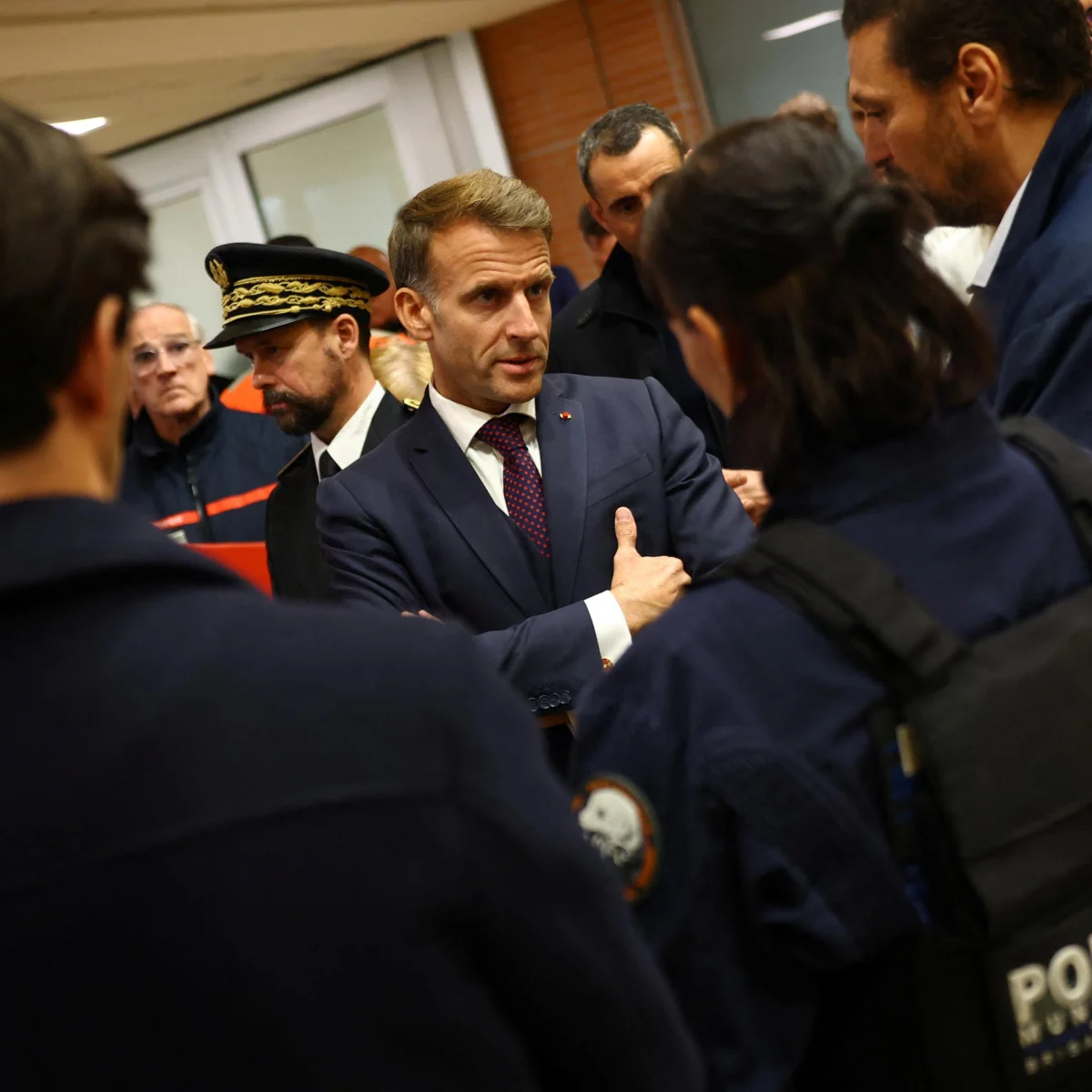
The attack immediately prompted a massive security response, leading to the swift apprehension of the perpetrator by law enforcement. Hours later, President Macron arrived in Trappes, a diverse commune in the Yvelines department, west of Paris, which was one of the sites of the horrific events. Surrounded by police officers and emergency personnel, a somber President addressed the nation, labeling the shooting a "racially motivated act of terror" and imploring the populace not to allow the tragedy to fracture the nation’s social fabric.
The French public prosecutor’s office has taken charge of the investigation, classifying the case as "murder in connection with a terrorist act," a designation that triggers enhanced investigative powers and resources, typically handled by the National Anti-Terrorism Prosecutor’s Office (PNAT). This legal framing signals the seriousness with which French authorities are treating the incident, recognizing its potential ideological underpinnings beyond a mere criminal act. The Mayor of Trappes, in a separate statement, indicated his belief that the attack was driven by an "Islamophobic background," aligning with President Macron’s assessment of the victims’ targeting.
Chronology of Events
The unfolding of the tragedy began unexpectedly and violently, leaving a trail of shock and fear across the suburban landscape.
The Attack Unfolds
On Thursday afternoon, a period typically characterized by bustling activity as residents return home or conduct errands, tranquility was abruptly shattered. At approximately 3:45 PM local time, reports began flooding emergency services about a series of shootings from a moving vehicle. The assailant, driving what witnesses described as a dark-colored sedan, allegedly opened fire at pedestrians and individuals gathered outside local businesses in the initial community. The rapid nature of the attacks, coupled with the assailant’s mobility, created immediate chaos and confusion.
Within minutes, similar reports emerged from a second, adjacent community, later confirmed to be Trappes. The perpetrator continued their deadly rampage, firing indiscriminately at groups of people. Eyewitness accounts spoke of panic, people scattering for cover, and the chilling sound of gunshots echoing through the streets. The precise sequence of events across the two locations is still under investigation, but it appears to have been a swift, calculated, and highly mobile assault designed to maximize casualties and instill fear. The exact number of shots fired and the specific types of firearms used are central to the ongoing forensic analysis.
Emergency Response and Apprehension
The response from emergency services was immediate and robust. Within moments of the first calls, local police forces, gendarmes, and specialized anti-crime brigades were deployed to the affected areas. Medical first responders, including paramedics and fire brigade units, rushed to aid the wounded, establishing triage points and transporting victims to nearby hospitals. The swiftness of the response was critical in containing the immediate aftermath and providing crucial medical attention.
The perpetrator’s arrest occurred remarkably quickly, a testament to the effectiveness of French law enforcement’s preparedness for such incidents. Details surrounding the apprehension remain under wraps as part of the ongoing investigation, but initial reports suggest a combination of witness descriptions, CCTV footage, and rapid police deployment led to the individual being cornered and taken into custody without further incident. This swift arrest prevented any further harm and allowed investigators to immediately begin processing the crime scenes.
Presidential Visit and Initial Statements
By late Thursday evening, as the initial shock began to subside, President Emmanuel Macron made an unannounced visit to Trappes. His presence on the ground, a common practice for French presidents in times of national crisis, served as a powerful symbol of solidarity and resolve. Accompanied by the Minister of Interior and local officials, Macron met with police officers, emergency workers, and some local community leaders.
It was during this visit, amid the palpable tension and grief, that President Macron delivered his unequivocal statement. He condemned the attack as a "racially motivated act of terror," leaving no ambiguity about the state’s understanding of the assailant’s intent. He highlighted the insidious nature of an attack where individuals are targeted "solely because of their religion and the color of their skin," framing it as an assault on the fundamental values of the French Republic. His address concluded with a poignant appeal for national unity, urging citizens not to succumb to the divisions that such acts aim to sow.
Ongoing Investigations
Following the preliminary assessment and President Macron’s declaration, the investigation was officially handed over to the National Anti-Terrorism Prosecutor’s Office (PNAT). This specialized body, established to handle complex terrorism cases, immediately deployed its resources. Their mandate includes meticulously analyzing evidence from the crime scenes, interviewing witnesses, and delving into the background of the apprehended suspect.
The focus of the PNAT investigation will be multi-faceted: to establish the full identity and motive of the perpetrator, to determine if there were any accomplices or external links, and to reconstruct the precise timeline of the attack. They will also seek to confirm the "racially motivated" and "Islamophobic" aspects of the attack, gathering evidence to support these classifications in court. The investigation is expected to be extensive, potentially involving digital forensics, intelligence gathering, and international cooperation if any foreign links are identified.
Supporting Data and Context
The attack in the Parisian suburbs cannot be viewed in isolation; it emerges from a complex socio-political landscape marked by persistent debates over identity, integration, and the rise of various forms of extremism.
Trappes: A Community Under Scrutiny
Trappes, one of the communities affected, is a vibrant and diverse commune in the western suburbs of Paris. Like many banlieues (suburbs) surrounding major French cities, it is characterized by a significant immigrant population, particularly from North Africa and sub-Saharan Africa, leading to a rich multicultural tapestry. A substantial portion of its residents identify as Muslim. This demographic profile has, at times, placed Trappes at the center of national discussions concerning integration, secularism (laïcité), and the challenges faced by marginalized communities.
While many residents live harmoniously, Trappes has occasionally been highlighted in political discourse, often unfairly, as an example of communities facing social and economic difficulties, or as a site of perceived radicalization by certain political factions. This context is crucial, as the Mayor of Trappes’ immediate reference to an "Islamophobic background" suggests a recognition of how such narratives can unfortunately make diverse communities like theirs a target for hate-fueled violence. The attack, therefore, not only traumatizes the community but also reinforces pre-existing anxieties and the burden of representation often placed upon its residents.
Rising Tensions and Hate Crimes in France
France has grappled with an escalating trend of hate crimes and societal polarization in recent years. While the focus has often been on Islamist extremism, there has been a growing and alarming rise in racially and religiously motivated attacks, particularly against Muslim and Jewish communities, as well as people of color. Statistics from government bodies and independent human rights organizations (e.g., the Consultative Commission on Human Rights, CNCDH) consistently report an increase in anti-religious and anti-racist incidents, ranging from verbal abuse and vandalism to physical assaults.
Political discourse, especially in the run-up to elections, often touches upon issues of national identity, immigration, and secularism, sometimes inadvertently or explicitly contributing to a climate where certain communities feel scrutinized or marginalized. This creates fertile ground for extremist ideologies, whether Islamist, far-right, or other forms of identity-based hatred, to take root among individuals. The President’s explicit labeling of this attack as "racially motivated" signifies a clear recognition that domestic extremism, fueled by bigotry, poses as significant a threat as any other form of terrorism.
The Spectrum of Terror: From Ideology to Individual Acts
The term "terror act" has traditionally been associated with large-scale, organized attacks by groups like Al-Qaeda or ISIS. However, the nature of terrorism has evolved significantly. Modern threats increasingly include "lone wolf" attackers who may not be formally affiliated with a specific organization but are radicalized online or through personal grievances, adopting broader extremist ideologies. Racially motivated violence, often driven by white supremacist, anti-immigrant, or ethno-nationalist beliefs, has emerged as a particularly concerning category of such individual or small-group terror.
In France, while Islamist terror has dominated headlines, authorities have also been increasingly vigilant about the threat posed by far-right extremism. This attack highlights the porous boundaries between hate crime and terrorism, especially when the intent is to intimidate a population segment and destabilize society through violence. By classifying it as a "terror act," the French state signals its commitment to applying the full force of its counter-terrorism apparatus to combat this specific manifestation of ideological violence, regardless of its origin.
Legal Framework for Terrorism in France
Under French law, the classification of an act as "terrorist" has profound implications. Article 421-1 of the Penal Code defines terrorism as acts intentionally committed in connection with an individual or collective enterprise aimed at seriously disturbing public order through intimidation or terror. This broad definition allows for various forms of violence, including racially and religiously motivated acts, to fall under the umbrella of terrorism if they meet the criteria of disturbing public order through terror.
When an act is designated as terrorist, the investigation falls under the purview of the National Anti-Terrorism Prosecutor’s Office (PNAT), granting investigators extended powers for surveillance, detention, and evidence collection. Perpetrators face significantly harsher penalties compared to ordinary criminal offenses. For instance, murder committed in connection with a terrorist enterprise carries a potential life sentence with stricter minimum periods of incarceration. This legal framework reflects France’s robust and often controversial approach to combating all forms of terrorism, prioritizing national security and deterrence.
Official Responses and Reactions
The immediate aftermath of the attack saw a rapid and coordinated response from French officialdom, reflecting the gravity of the incident and the national imperative to address it decisively.
President Macron’s Firm Stance
President Macron’s declaration that the shooting was a "racially motivated act of terror" was not merely a statement but a significant political and legal pronouncement. It immediately elevated the incident beyond a common crime, placing it squarely within the realm of national security concerns. His words in Trappes were carefully chosen, designed to send a clear message: France will not tolerate violence driven by racism or religious hatred. By explicitly mentioning "religion and skin color," Macron directly confronted the discriminatory nature of the attack, distinguishing it from other forms of violence.
This firm stance aligns with Macron’s broader political strategy of asserting strong state authority and defending the Republic’s values against all forms of extremism. His appeal for unity, delivered in the immediate wake of the attack, is a recurring theme in his rhetoric following national tragedies, aiming to prevent societal fragmentation and reinforce social cohesion. The presidential visit itself served as a powerful gesture of solidarity with the affected communities and a demonstration of governmental resolve to protect all citizens.
Mayor of Trappes’ Perspective
The Mayor of Trappes’ statement, expressing his belief in an "Islamophobic background," provided a crucial local perspective that resonated deeply within the affected community. Local leaders often possess an intimate understanding of their constituents’ anxieties and the specific dynamics at play within their municipalities. The mayor’s quick identification of Islamophobia as a potential motive suggests an awareness of underlying tensions or previous incidents that might have targeted the Muslim community in Trappes.
This local assessment, while not a legal classification, provides important context and can help to frame the broader national response. It highlights how local leaders can be vital in interpreting events for their communities, offering reassurance, and advocating for specific needs or concerns that might arise from such an attack. The alignment between the mayor’s initial assessment and President Macron’s broader classification underscores a shared understanding of the hate-driven nature of the violence.
Judicial Response: National Anti-Terrorism Prosecutor’s Office
The swift transfer of the investigation to the National Anti-Terrorism Prosecutor’s Office (PNAT) is a standard but critical step in France’s counter-terrorism strategy. Established in 2019, PNAT centralizes expertise and resources to combat complex terror threats, ensuring a unified and specialized approach. Their involvement signifies that the authorities perceive the attack as having an ideological or political motive aimed at destabilizing society, rather than being a purely criminal act driven by personal grievances or financial gain.
The PNAT’s mandate includes not only prosecuting the perpetrator but also investigating potential links to broader extremist networks, foreign or domestic. This rigorous approach is designed to dismantle any organized structures behind such attacks and to deter future acts of terror. The decision to involve PNAT demonstrates the state’s determination to treat racially and religiously motivated violence with the same gravity as other forms of terrorism, applying the most stringent legal tools available.
International Condemnation and Solidarity
The attack quickly drew international condemnation, with leaders from across Europe and beyond expressing their condolences and solidarity with France. European Union officials, including the President of the European Commission and the President of the European Council, issued statements condemning the "cowardly act of terror" and reiterating their commitment to supporting France in its fight against all forms of extremism.
Messages of support also came from allied nations, emphasizing shared values and the global challenge of combating hate-fueled violence. Such international reactions serve to isolate perpetrators of terror, strengthen diplomatic ties, and underscore the universal rejection of violence targeting individuals based on their identity. They also highlight the growing international concern over the rise of racially and ethnically motivated violent extremism (REMVE) across many countries.
Civil Society and Community Leaders
In the wake of the attack, civil society organizations, anti-racism groups, and religious leaders across France swiftly mobilized to offer support and call for calm. Muslim community leaders issued statements condemning the violence, emphasizing that such acts do not represent their faith and urging for national unity. Anti-racism organizations highlighted the urgent need to address systemic racism and Islamophobia, advocating for stronger measures to combat hate speech and discrimination.
These voices play a crucial role in preventing further escalation of tensions and fostering resilience within affected communities. They organized vigils, interfaith gatherings, and public forums to promote dialogue and solidarity, serving as vital bridges between diverse segments of society and reinforcing the message that hatred will not triumph over shared values of peace and coexistence.
Implications and Future Outlook
The "racially motivated act of terror" in the Parisian suburbs will undoubtedly have far-reaching implications for French society, politics, and security policy. It forces a national reckoning with the complex interplay of identity, extremism, and the persistent challenge of fostering true social cohesion.
Impact on French Society and Politics
The attack is likely to intensify the already heated debates around immigration, integration, and national identity in France. Political figures, particularly from the far-right, may seek to exploit the tragedy to push for stricter immigration policies or to further stigmatize certain communities. Conversely, progressive voices will likely emphasize the need for greater social justice, inclusion, and a more robust fight against all forms of racism and discrimination.
President Macron’s decisive labeling of the attack as "racially motivated terror" sets a strong precedent, signaling the government’s intent to confront this specific threat head-on. However, the challenge will be to maintain this nuanced approach without inadvertently fueling further divisions or alienating communities that already feel targeted. The incident could become a significant point of contention in upcoming political campaigns, influencing public discourse and potentially shaping policy decisions on security, social integration, and anti-discrimination efforts.
Security Measures and Vigilance
In the immediate aftermath, France can expect a heightened security posture, particularly in and around diverse communities and places of worship. Increased police patrols, enhanced surveillance, and intelligence gathering efforts will likely be implemented to prevent copycat attacks and to identify any other individuals who may harbor similar extremist ideologies. The PNAT’s involvement means that the investigation will extend beyond the immediate perpetrator, seeking to uncover any networks or influences that may have contributed to the radicalization.
The focus will also shift towards understanding and countering racially and ethnically motivated violent extremism (REMVE) more comprehensively. This includes monitoring online forums, social media platforms, and other avenues where such ideologies are propagated and individuals are radicalized. Security agencies will need to adapt their strategies to address the evolving threat landscape, recognizing that the source of terror can be diverse and multifaceted.
The Challenge of Combating Racially Motivated Extremism
While France has extensive experience combating Islamist terrorism, the specific challenge of racially motivated extremism requires distinct approaches. This form of extremism often taps into historical grievances, xenophobia, and anti-immigrant sentiment, which can be deeply ingrained in societal prejudices. Effectively combating it requires not only law enforcement action but also broader societal efforts in education, public awareness campaigns, and promoting intercultural dialogue.
The attack underscores the urgent need for a holistic strategy that addresses both the visible manifestations of violence and the underlying ideological currents that fuel them. This includes challenging hate speech, fostering inclusive narratives, and supporting communities that are often targets of such prejudice. It also necessitates a clear distinction between legitimate political debate and the incitement of hatred or violence.
Long-Term Societal Scars
Beyond the immediate casualties, the attack will leave deep psychological scars on the victims’ families, the residents of Trappes, and the broader nation. Such acts of targeted violence erode trust, instill fear, and can exacerbate existing social divisions. The trauma of being attacked for one’s identity is particularly insidious, impacting a sense of belonging and safety within one’s own country.
The healing process will be long and arduous, requiring sustained efforts to support the affected communities, provide mental health services, and reinforce mechanisms for social cohesion. Memorials, public condemnations, and educational initiatives will be crucial in ensuring that the victims are remembered and that the lessons learned from this tragedy contribute to a more just and inclusive society.
Call for Unity and Resilience
Ultimately, President Macron’s call for unity resonates as a crucial message in the face of such divisive acts. The perpetrator’s goal was likely to sow discord and fear, to pit communities against each other. The resilience of French society, its commitment to its republican values of liberty, equality, and fraternity, will be tested.
The response to this attack, both from the government and civil society, will be instrumental in determining whether it further fractures the nation or strengthens its resolve to confront hatred in all its forms. By standing together, rejecting prejudice, and upholding the principles of mutual respect and coexistence, France can demonstrate its enduring strength in the face of terror.