


Kyiv, Ukraine – May 15, 2026 – The Ukrainian capital of Kyiv is reeling from one of the most devastating Russian missile and drone attacks in recent memory, with the death toll climbing to at least 24 people, including three minors. Rescue workers concluded a grueling 28-hour search operation in the rubble of a residential building, pulling more bodies from the debris, pushing the number of injured to 48. This surge in casualties follows a relentless assault by Moscow, which saw hundreds of drones, rockets, and cruise missiles rain down on Ukrainian cities. In response, Ukraine launched a massive drone counter-offensive targeting military and industrial sites deep within Russian territory, causing casualties and significant damage. Amidst the escalating violence, a glimmer of humanitarian progress emerged as both nations carried out a prisoner exchange, the first step in a larger anticipated swap.
A City Under Siege: The Devastation in Kyiv
The past week has witnessed a severe intensification of Russian aggression against Ukraine, culminating in a particularly brutal attack on Kyiv that left a trail of destruction and despair.
Escalation and Human Cost
The latest casualty figures, released by the national emergency services this morning, paint a grim picture of the human cost of the conflict. The previous count of 16 fatalities had already sent shockwaves through the nation, but the final tally of 24 deaths, confirmed after arduous rescue efforts, underscored the sheer force and indiscriminate nature of the Russian assault. Among the deceased were three children, a heartbreaking detail that further amplified the tragedy. Another 48 individuals sustained injuries, many severe, requiring immediate medical attention in overwhelmed hospitals.
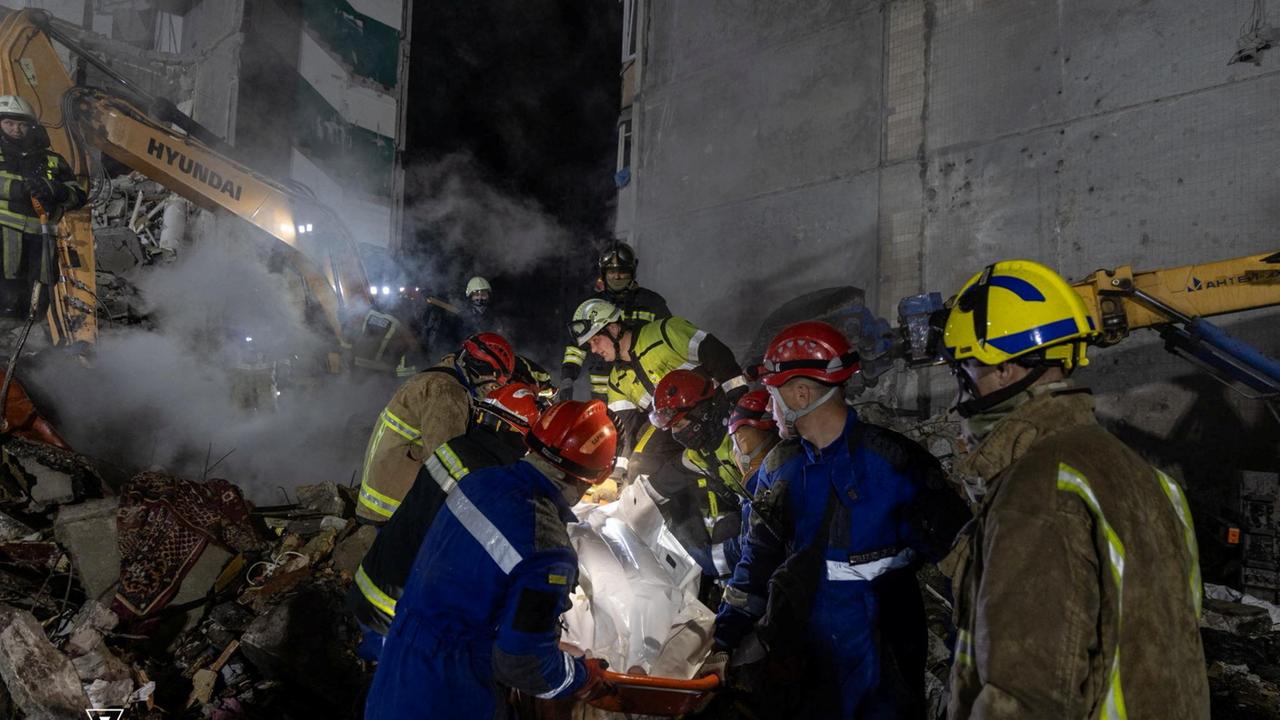
For over 28 hours, emergency crews worked tirelessly amidst the twisted metal and shattered concrete of what was once a multi-story residential building. The scene was one of chaos and desperation, as responders navigated unstable structures, battling against time to find survivors trapped beneath the debris. The psychological toll on these brave men and women, accustomed to the horrors of war but still shaken by the sight of civilian suffering, is immense. Eyewitnesses described a cacophony of sirens, the acrid smell of smoke, and the desperate cries of families searching for loved ones, all against the backdrop of a city scarred by repeated attacks. The image of a once-vibrant apartment complex reduced to a skeletal shell stands as a stark testament to the ferocity of the bombardment.
Unprecedented Scale of Attack
The scale of the Russian offensive on Thursday evening was described by Ukrainian authorities as "extraordinarily fierce," even for a conflict now in its fourth year. The capital, a city of millions, bore the brunt of a barrage involving hundreds of drones, advanced rockets, and long-range cruise missiles. This latest assault followed closely on the heels of another massive attack just two days prior, on Wednesday, when Russia deployed over 800 drones in one of the largest and longest-lasting aerial bombardments since the full-scale invasion began in February 2022.
The coordinated nature of these attacks, utilizing a mix of unmanned aerial vehicles (UAVs) like the Iranian-designed Shahed drones to overwhelm air defenses, followed by precision-guided missiles such as the Kh-101 cruise missile, points to a deliberate strategy by Moscow to inflict maximum damage and terror. While Kyiv’s sophisticated air defense systems, bolstered by Western aid, intercepted a significant number of incoming projectiles, the sheer volume of the assault meant that some inevitably broke through, striking civilian infrastructure and residential areas.
Beyond Kyiv, the latest wave of attacks also caused widespread damage across the country. Ukrainian authorities reported dozens of residential buildings damaged nationwide. The surrounding Kyiv region, along with the heavily contested eastern city of Kharkiv and the southern port city of Odesa, were also severely impacted, experiencing significant destruction to homes, schools, and essential utilities. The repeated targeting of civilian areas continues to draw international condemnation, highlighting Russia’s disregard for international humanitarian law and its apparent strategy of eroding Ukrainian morale through sustained terror.
Official Condemnation and Calls for Action
The devastating attacks prompted swift and strong reactions from Ukrainian and international leaders, who condemned Russia’s actions and renewed calls for increased support for Kyiv.
Kyiv’s Response: Mourning and Resolve
In the immediate aftermath of the attacks, Kyiv’s Mayor, Vitali Klitschko, a former world boxing champion, declared today, Friday, as a day of mourning for the victims. Flags were lowered to half-mast across the city, and public events were canceled as residents grappled with the profound loss. Klitschko’s declaration was not merely a ceremonial gesture; it was a powerful statement of solidarity with the grieving families and a rallying cry for resilience. In his address, he acknowledged the immense pain but also reiterated the city’s unwavering resolve to withstand Russian aggression, emphasizing that such brutal acts only strengthen Ukraine’s determination to defend its sovereignty and freedom.
Zelenskyy Demands Harsher Sanctions
Ukrainian President Volodymyr Zelenskyy, in a passionate address, called on the international community to impose "more painful sanctions" on Russia. He highlighted a critical piece of evidence: a Kh-101 cruise missile that struck a building in Kyiv was manufactured as recently as the second quarter of this year. This discovery, Zelenskyy argued, unequivocally proves that Russia continues to procure vital components for its advanced weaponry, circumventing existing global sanctions.
"This is not just about a missile; it’s about the failure of global sanctions enforcement," Zelenskyy stated, urging allies to thoroughly investigate and plug loopholes in supply chains that allow Moscow to sustain its war machine. He emphasized that as long as Russia can access these components, it will continue to produce weapons that kill Ukrainian civilians, making the need for tighter, more effective sanctions enforcement paramount. The President’s remarks put renewed pressure on Western nations to enhance their oversight and crack down on third-party facilitators aiding Russia’s military-industrial complex.
Diplomatic Pressures and Geopolitical Dynamics
The timing of Russia’s heavy attacks also drew sharp diplomatic reactions, particularly from Ukraine’s Foreign Minister Andriy Sybiha. He explicitly linked the intensity of the bombardments to the ongoing visit of US President Donald Trump to China. Sybiha suggested that Moscow might be attempting to exploit perceived divisions or test the resolve of international partners during sensitive diplomatic engagements. He argued that the attacks demonstrated Russia’s unwavering commitment to continuing the war, despite any international peace initiatives or high-level discussions.
Sybiha’s call for increased international pressure on Russian President Vladimir Putin was pointed, stating, "I am sure that the leaders of the USA and China have enough influence on Moscow to tell Putin to finally end the war." This plea underscores Ukraine’s desire for a more concerted and impactful diplomatic effort from global powers, particularly those with significant economic and political leverage over Russia.
Concurrently, German Chancellor Friedrich Merz weighed in on the situation via the online service X (formerly Twitter), echoing the sentiment of escalating Russian aggression. "The heaviest Russian attacks on Ukraine in a long time show: Moscow is betting on escalation instead of negotiation," Merz wrote. He contrasted this with Kyiv and its partners, who he affirmed, "stand ready for negotiations on a just peace. But Russia continues to wage war." Merz’s statement reinforced the unified Western stance, emphasizing that while Ukraine and its allies seek a diplomatic resolution, Russia’s actions consistently demonstrate a preference for military solutions and continued conflict, making genuine peace talks elusive under current conditions.
Ukraine’s Retaliatory Strikes Deep into Russia
In a robust and immediate response to the relentless Russian bombardments, Ukraine launched one of its largest drone attacks on targets within Russia, demonstrating its capability to strike deep behind enemy lines.
Targeting Military and Industrial Assets
The Ukrainian counter-offensive involved a significant number of unmanned aerial vehicles, aimed primarily at military installations and industrial enterprises believed to be supporting Russia’s war effort. Robert Browdi, the Commander of Ukraine’s Drone Forces, announced that his troops had successfully hit 23 military targets and facilities during the night, both in Russia and in the Russian-occupied territories of Ukraine. This strategic targeting aims to degrade Russia’s military capabilities, disrupt its logistics, and put pressure on its domestic infrastructure, sending a clear message that Ukrainian cities will not suffer without retaliation.
The precision and scale of these strikes highlight Ukraine’s growing capabilities in drone warfare, a critical asymmetric advantage against a larger conventional force. By targeting key facilities, Ukraine seeks to create internal dissent within Russia and force Moscow to divert resources to defend its own territory, thereby easing pressure on the front lines in Ukraine.
Civilian Casualties in Russia
However, the Ukrainian retaliatory strikes also resulted in civilian casualties within Russia, a tragic consequence of the escalating cross-border conflict. In the city of Ryazan, situated southeast of Moscow, Russian authorities reported that three people were killed and twelve others injured. The governor of the region, Pavel Malkov, stated that two residential blocks and an industrial enterprise sustained damage from the drone attacks. The incident underscores the severe risks faced by civilians on both sides of the border as the war intensifies.
Further west, in the Belgorod region, which frequently experiences spillover from the conflict, nine people were reported injured after a Ukrainian drone struck a residential building. Among the injured was a three-year-old girl, a stark reminder of the indiscriminate nature of modern warfare and the devastating impact on the most vulnerable. The regional crisis staff, communicating via Telegram, confirmed the casualties and damage. These incidents, while condemned by Kyiv as necessary responses to Russian aggression, nevertheless contribute to a dangerous cycle of violence that inflicts suffering on civilians in both nations.
A Glimmer of Diplomacy Amidst Conflict: The Prisoner Exchange
Amidst the fierce military escalation and diplomatic acrimony, a rare moment of humanitarian cooperation unfolded as Russia and Ukraine conducted a significant prisoner exchange.
A Rare Humanitarian Breakthrough
Both nations exchanged 205 prisoners of war (POWs) each, marking a notable humanitarian breakthrough in an otherwise intractable conflict. Ukrainian President Zelenskyy announced that this exchange was merely the "first step" of a larger, ambitious plan to swap a total of 1,000 prisoners from each side. This extensive exchange, if fully realized, would represent the largest such swap since the early days of the full-scale invasion.
The Russian Ministry of Defense confirmed the exchange, stating that the returning Russian soldiers were transported to Belarusian territory. Moscow extended its gratitude to the United Arab Emirates for its mediation efforts in facilitating the complex operation. The UAE has quietly emerged as a key neutral intermediary in various humanitarian and diplomatic initiatives between the warring parties, demonstrating the critical role that third-party nations can play in fostering dialogue even amidst deep hostilities.
The significance of this prisoner exchange cannot be overstated. It provides a rare glimmer of hope that, despite the ongoing military escalation and the diplomatic deadlock, channels for humanitarian cooperation can still exist. For the hundreds of returning soldiers, and their anxious families, it means an end to the harrowing ordeal of captivity and the chance to reunite with loved ones. While such exchanges do not signal an immediate end to the conflict or a breakthrough in peace negotiations, they serve as a crucial mechanism for alleviating human suffering and maintaining a fragile line of communication between adversaries. It suggests a pragmatic understanding that even in the darkest hours of war, humanitarian principles can occasionally prevail, offering a brief respite from the relentless violence.
Implications and the Future of the Conflict
The events of the past week, encompassing brutal attacks, retaliatory strikes, and a humanitarian exchange, underscore the complex and evolving nature of the Russia-Ukraine conflict.
Escalation Spiral and Civilian Suffering
The recent surge in Russian attacks, particularly against civilian targets in Kyiv and other cities, signals a clear intent by Moscow to intensify pressure on Ukraine. This strategy aims to break civilian morale, cripple infrastructure, and create an untenable environment, hoping to force concessions. However, such tactics invariably lead to a further hardening of Ukrainian resolve and a deepening of the humanitarian crisis. The destruction of residential buildings, schools, and hospitals has a cascading effect, displacing thousands, exacerbating poverty, and leaving deep psychological scars on the population for generations to come. The cycle of violence, where each attack begets a retaliatory strike, threatens to spiral further, increasing the risk of wider regional instability. The ongoing targeting of energy infrastructure, even four years into the conflict, continues to challenge Ukraine’s ability to maintain essential services, especially as colder months approach, posing a severe threat to public health and safety.
Stalemate and Diplomatic Deadlock
Despite the humanitarian success of the prisoner exchange, the broader diplomatic landscape remains bleak. The statements from Chancellor Merz and President Zelenskyy confirm that there is no genuine progress towards comprehensive peace talks. Russia’s insistence on military solutions, coupled with its apparent ability to circumvent international sanctions to sustain its war efforts, creates a formidable barrier to any meaningful negotiation. Ukraine, steadfast in its defense of sovereignty and territorial integrity, is unwilling to yield to Russian demands, particularly in the face of such aggressive actions. This fundamental disconnect between the warring parties’ objectives ensures that the conflict will likely remain a protracted struggle, characterized by periods of intense fighting punctuated by limited tactical shifts. The lack of a credible, internationally mediated peace process leaves the world watching a war of attrition with no clear end in sight.
Geopolitical Ramifications
The enduring conflict in Ukraine continues to pose a significant challenge to European and global security. The latest escalation puts renewed pressure on international alliances, particularly NATO and the European Union, to maintain a united front against Russian aggression and provide sustained military and financial aid to Ukraine. Zelenskyy’s call for stricter sanctions enforcement highlights a critical vulnerability in the international response, as Russia’s ability to procure components undermines the intended impact of economic pressure.
Furthermore, Foreign Minister Sybiha’s remarks about the influence of the US and China underscore the complex geopolitical dynamics at play. The role of major global powers in influencing Moscow, or facilitating peace, remains a crucial but often elusive factor. The conflict has reshaped international relations, strengthened alliances, and forced a re-evaluation of global supply chains and energy dependencies. The long-term implications include a continued militarization of Europe, increased defense spending, and a persistent challenge to the rules-based international order. As the war grinds on, the need for sustained international pressure, humanitarian assistance, and unwavering support for Ukraine remains paramount to prevent further destabilization and ensure a path towards a just and lasting peace, however distant that prospect may currently seem.

















Leave a Reply