In a landmark recognition of curiosity-driven research, the 2026 Nobel Prize in Medicine has been awarded to Peter Hegemann, Georg Nagel, and Karl Deisseroth. Their pioneering work in optogenetics—a technique that allows scientists to control nerve cells with light—has fundamentally altered our understanding of the brain and opened doors to revolutionary medical therapies.
The Breakthrough: From Green Algae to Neuroscience
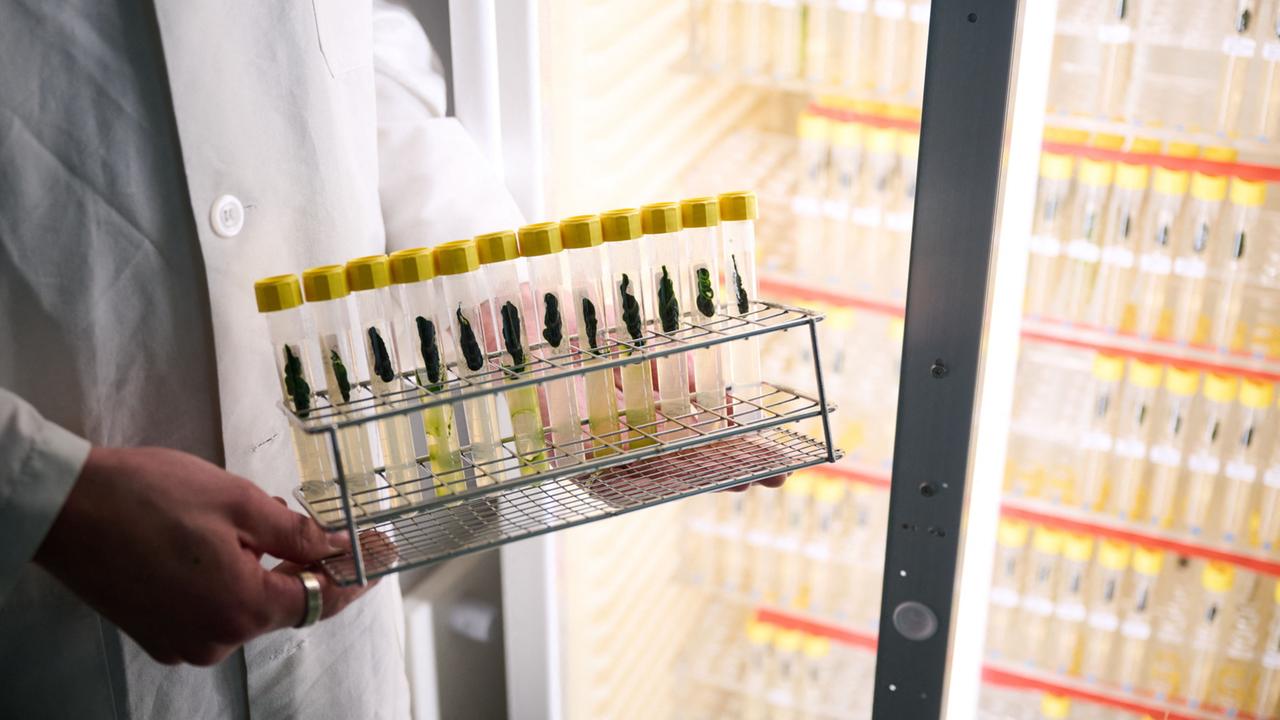
The story of this year’s Nobel Prize is a testament to the unpredictable nature of basic scientific research. It did not begin in a sophisticated neurobiology laboratory, but rather with an unassuming, single-celled green alga known as Chlamydomonas reinhardtii.
For decades, biologists were puzzled by the alga’s ability to navigate toward light with remarkable speed. As genomic sequencing became more accessible around the turn of the millennium, Peter Hegemann, a professor at Humboldt University in Berlin, and his team identified genes in the alga that bore a striking resemblance to known light-sensitive proteins. Recognizing the potential significance, Hegemann collaborated with Georg Nagel, then at the Max Planck Institute for Biophysics in Frankfurt, to characterize these proteins.
The duo’s breakthrough came when they successfully expressed these proteins in the oocytes of African clawed frogs. They discovered that one specific protein, Channelrhodopsin-2, acted as a light-gated ion channel. When exposed to blue light, the channel opened, allowing charged ions to flow through the cell membrane and generate an electrical signal.
This was the "Eureka" moment. Since the human brain functions through complex electrical signaling between neurons, the scientists hypothesized that if they could introduce these light-sensitive channels into nerve cells, they could essentially create a remote-controlled "light switch" for the brain.
Chronology of an Scientific Revolution
- Late 1970s: Nobel laureate Francis Crick theorizes that the ability to control specific types of neurons with high temporal precision is the "holy grail" of neuroscience, suggesting light as a potential mechanism.
- Early 2000s: Peter Hegemann and Georg Nagel isolate and characterize Channelrhodopsin-2 from Chlamydomonas reinhardtii.
- 2005: Karl Deisseroth of Stanford University, in collaboration with Nagel and Hegemann, successfully expresses the algal protein in mammalian neurons, proving that light can trigger specific electrical activity in brain cells.
- 2007: The team demonstrates that this light-controlled switch functions in the brains of living mice, marking the birth of optogenetics as a practical research tool.
- 2026: The Nobel Assembly awards the Medicine Prize to Hegemann, Nagel, and Deisseroth for their monumental contribution to the field.
A New Lens on Brain Function
Before the advent of optogenetics, neuroscientists were largely limited to observing brain activity using functional magnetic resonance imaging (fMRI) or stimulating neurons with electricity—methods that were often imprecise or invasive.
Optogenetics changed the paradigm entirely. By genetically modifying specific clusters of neurons to express light-sensitive proteins, researchers can now "turn on" or "turn off" precise neural circuits using fiber-optic light pulses. This allows scientists to map the causal relationships between specific neural activity and behavioral outcomes, such as memory formation, emotional regulation, motor control, and sensory processing.
"It is a classic example of curiosity-driven research," said Patrik Ernfors of the Karolinska Institute during the Nobel announcement. "One studies a green alga, discovers a simple ion channel, and suddenly, we have the power to modulate the most complex organ in the known universe with light."
The Philosophy of Risk in Research
The path to this discovery was not without significant hurdles. For years, the scientific community remained skeptical of the feasibility of using algal proteins in mammalian brains. Peter Hegemann, reflecting on his career in an interview with the Hessischer Rundfunk, emphasized the necessity of taking risks.
"You have to take risks, and then interesting new phenomena emerge that you cannot foresee, that you cannot plan," Hegemann remarked.
Dirk Becker, a colleague of Nagel’s at the University of Würzburg, echoed this sentiment. He noted that the brilliance of the team lay in their early recognition that the algal protein was not merely a botanical curiosity, but a tool that could bridge the gap between basic microbiology and high-level neuroscience. This persistence in the face of skepticism is now being lauded as a model for future scientific endeavors.
Clinical Implications and Future Therapies
While optogenetics began as a tool for basic neuroscience research, its implications for clinical medicine are profound. Researchers are currently using the technique to deconstruct the neural circuitry involved in complex disorders like Parkinson’s disease, epilepsy, and various psychiatric conditions.
Perhaps most promising is the application of optogenetics in ophthalmology. In September 2026, the US Food and Drug Administration (FDA) accepted a biologics license application for a gene therapy aimed at treating retinitis pigmentosa, a degenerative eye disease that leads to severe vision loss. The therapy utilizes optogenetic principles to restore light sensitivity to cells in the retina. If approved, it would represent the first gene-independent treatment for this patient group, signaling a new era of sight restoration.
Beyond the brain and eyes, researchers are now exploring how the nervous system coordinates with peripheral organs such as the heart and the gut. By applying optogenetic techniques, scientists are beginning to unravel the "brain-body axis," potentially offering new pathways to treat metabolic diseases and autonomic nervous system disorders.
Official Responses and Academic Legacy
The global scientific community has hailed the award as a fitting tribute to the founders of a field that now spans thousands of laboratories worldwide. At the University of Würzburg, where Georg Nagel serves as a professor, the mood is one of pride and validation.
"The work of Nagel and his collaborators was truly groundbreaking," stated Professor Becker. "It paved the way for a generation of researchers to look at the brain not as a black box, but as a system of circuits that can be decoded, mapped, and modulated."
As the world celebrates this year’s Nobel laureates, the legacy of their work serves as a reminder that the most transformative technological leaps often arrive from the most unexpected origins. By looking closely at the light-harvesting mechanisms of a simple alga, Hegemann, Nagel, and Deisseroth have cast a light into the deepest, most complex corners of the human mind. The future of neurology is no longer just about observing the brain; it is about interacting with it, one flash of light at a time.