

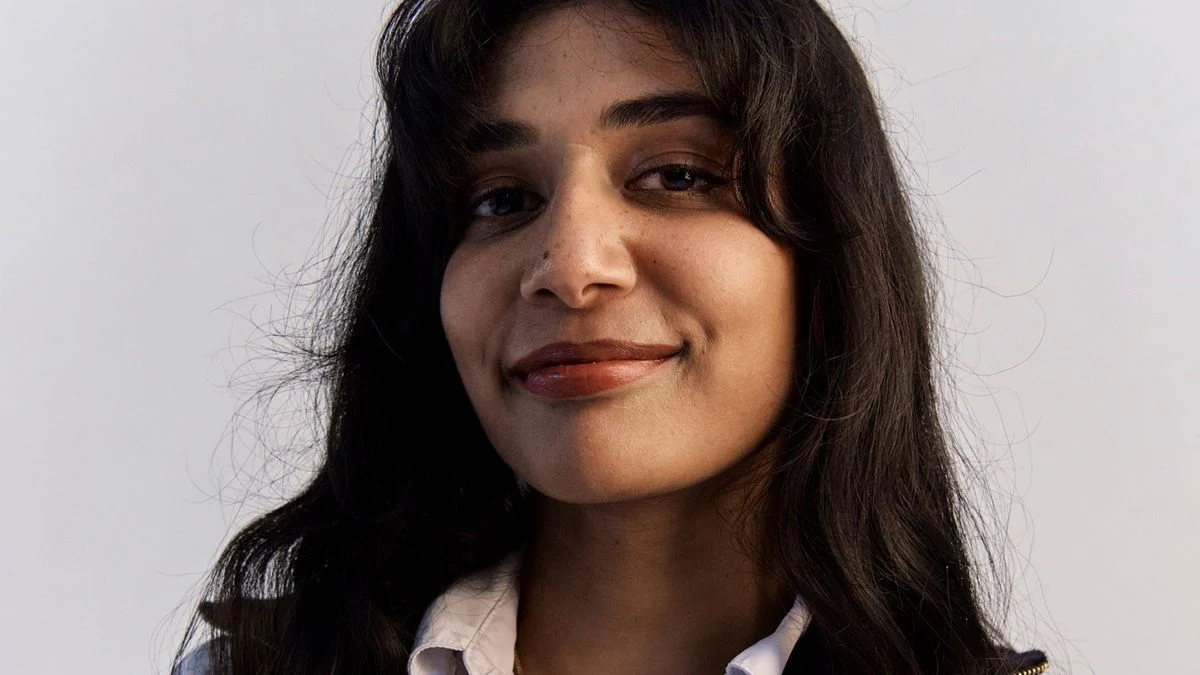
By Sharin Santhiraraja-Abresch
"Kurdish? Iranian? Indian?" The questions follow me like a persistent shadow. People I meet for the first time often play a mental game of categorization, attempting to slot me into a box that feels comfortable for them, yet restrictive for me. For years, I struggled to answer these inquiries, not because I didn’t know my heritage, but because the labels offered to me were never truly mine to claim. It was a long, painful, and deeply introspective process to find the answer that finally felt like home: I am German, and I am brown.
The Geography of Belonging: A Chronology of Exclusion
The search for identity is rarely a linear journey; for those of us who occupy the space between cultures, it is a series of encounters with the biases of others.
In the eighth grade, the fragility of my belonging was laid bare. I remember comparing arms with a classmate. We held our skin side-by-side, analyzing the shades. "You have brown skin like me," he remarked, "but yours is different." In that moment, he was asserting his identity as Black, while simultaneously signaling that I did not fit into that category. I felt a profound sense of exclusion—a realization that I was adrift in a society that didn’t quite know where to put me.
Looking back, I understand the nuance he was expressing. When a white person uses the N-word against me, the power dynamic and the historical weight are different than when they use it against him. This realization was the first crack in my understanding of race in Germany. It wasn’t just about the color of my skin; it was about how society constructed a hierarchy of Otherness.

Throughout my childhood in Bielefeld, this exclusion was a constant, albeit quiet, companion. It wasn’t always the overt, screaming racism of the street; often, it was the subtle, insidious exclusion practiced by adults. I recall the rumors that spread: derogatory comments about Indian people, the mimicking of accents, and the quiet, behind-the-back conversations where parents decided I wasn’t the right "kind" of friend for their children. Despite my academic success and my attempts to be the "model" child, I was consistently judged not by my actions, but by the pigment of my skin.
The Invisible Architecture of Racism
Systemic racism in Germany is frequently debated as if it were an anomaly, a series of isolated incidents rather than a structural reality. However, for those who live it, the experience is constant.
Supporting data from various sociological studies in Germany suggests that "everyday racism" is a pervasive experience for people of color. According to surveys conducted by the DeZIM Institute (German Center for Integration and Migration Research), a significant percentage of Germans with a migration background report experiencing discrimination in housing, the job market, and education.
My own experience mirrors these findings. Even when I excelled in school, the barriers remained. The most painful aspect was the discovery, years later, that my childhood friendships were subject to the prejudices of my friends’ parents. The realization that I was rejected by families who didn’t even know me—simply because I was "different"—left an indelible mark. It forced me to interrogate what it means to be German in a country that often conflates nationality with whiteness.
The Burden of the "Model Minority"
Growing up in the 1990s and 2000s, I learned the script: work harder, be quieter, achieve more. The "model minority" myth is a heavy cloak to wear. It suggests that if you just integrate "well enough," the racism will stop. But it doesn’t.

In my professional life, first as a student of biology in Cologne and Bonn, and later as a journalist for the WDR and "MAITHINK X," I have had to navigate professional spaces where my presence is still viewed as a novelty. The transition from the laboratory to the newsroom was, in many ways, a transition from one type of scrutiny to another. As a journalist, I am often tasked with reporting on society, yet I am constantly reminded that I am seen as a "representative" of a minority rather than just a journalist.
The "GEH DEINEN WEG" (Go Your Own Way) scholarship, which I was proud to be a part of, represents a systemic attempt to bridge these gaps. Yet, the existence of such programs highlights the persistent lack of diversity in the German media landscape. When we talk about "integration," we are often talking about the responsibility of the individual to change, rather than the responsibility of institutions to adapt.
Official Responses and the State of the Discourse
The German political establishment has made strides in acknowledging structural racism, particularly following the formation of the Federal Government’s Commissioner for Anti-Racism. However, there remains a disconnect between institutional policy and the lived reality of citizens.
Government reports often focus on "right-wing extremism" as the primary source of racism, which, while true and vital to address, often masks the more mundane, everyday racism that happens in supermarkets, schools, and workplaces. The discourse in Germany is currently shifting toward a more intersectional understanding of identity, yet the resistance remains fierce. Many argue that Germany is a "color-blind" society, a claim that effectively silences those of us who are told every day that our skin color matters.
The Implications: Toward a New Definition of "German"
What are the implications of this for the future of Germany? If we continue to treat "Germanness" as an ethnic category rather than a civic one, we risk alienating a generation of young people who are, by every metric, German.

- Reimagining Citizenship: We must move away from the idea that one’s ethnic background dictates their ability to be "truly" German.
- Institutional Accountability: Media, education, and political institutions must stop viewing diversity as a box-ticking exercise and start seeing it as a fundamental requirement for a functioning democracy.
- The Power of Self-Identification: For me, finding the term "brown" was a turning point. It was a reclaiming of my identity that didn’t require permission from those who wanted to categorize me. It allowed me to exist without the need for a hyphenated explanation of my existence.
The journey to saying "I am German, and I am brown" was not about seeking acceptance from those who would exclude me. It was about finding my own voice in a chorus that was trying to drown me out.
As we look toward the future, the goal should not be to "integrate" into a static version of Germany, but to contribute to the creation of a Germany that is as diverse as its people. The pain of the past—the eighth-grade classroom, the quiet rejections, the constant questions—has fueled a resolve to ensure that the next generation does not have to spend as long as I did finding their place.
We are here. We are brown. We are German. And it is time for the rest of the country to catch up to that reality. The labels that others tried to force upon me—Kurdish, Iranian, Indian—were never about me. They were about their own inability to handle complexity. My identity is not a puzzle for them to solve; it is a reality for me to live. And in that living, I find my truth.








Leave a Reply