Stuttgart/Munich/Berlin – October 23, 2026 – A controversial proposal from Bavarian Minister-President Markus Söder to introduce an "extremism clause" into Germany’s vital Länderfinanzausgleich (financial equalization system) has sent ripples through the nation’s political landscape, sparking a heated debate about federalism, democratic principles, and the funding of states potentially governed by parties deemed extremist. While Baden-Württemberg has shown qualified openness, other states and parties have voiced strong objections, highlighting the profound implications of such a measure.
Söder’s demand, unveiled this week, seeks to empower the federal government to reduce financial transfers to states where governments are formed or led by parties classified as extremist. This move, primarily aimed at emerging political constellations in states like Saxony-Anhalt and Berlin, where the far-right Alternative for Germany (AfD) and the left-wing Die Linke (The Left) are poised for potential leadership roles, challenges fundamental tenets of Germany’s federal structure and democratic process.
The Core of the Controversy: Main Facts Unveiled
The impetus for Söder’s proposal stems from a growing concern within established parties about the increasing electoral success of political forces on the fringes of the democratic spectrum. He argues that taxpayer money should not be used to bolster governments that, in his view, undermine the constitutional order. The proposed "extremism clause" would, in essence, link adherence to democratic principles – as interpreted by the federal government or potentially the domestic intelligence agency (Verfassungsschutz) – directly to a state’s eligibility for full financial equalization payments.
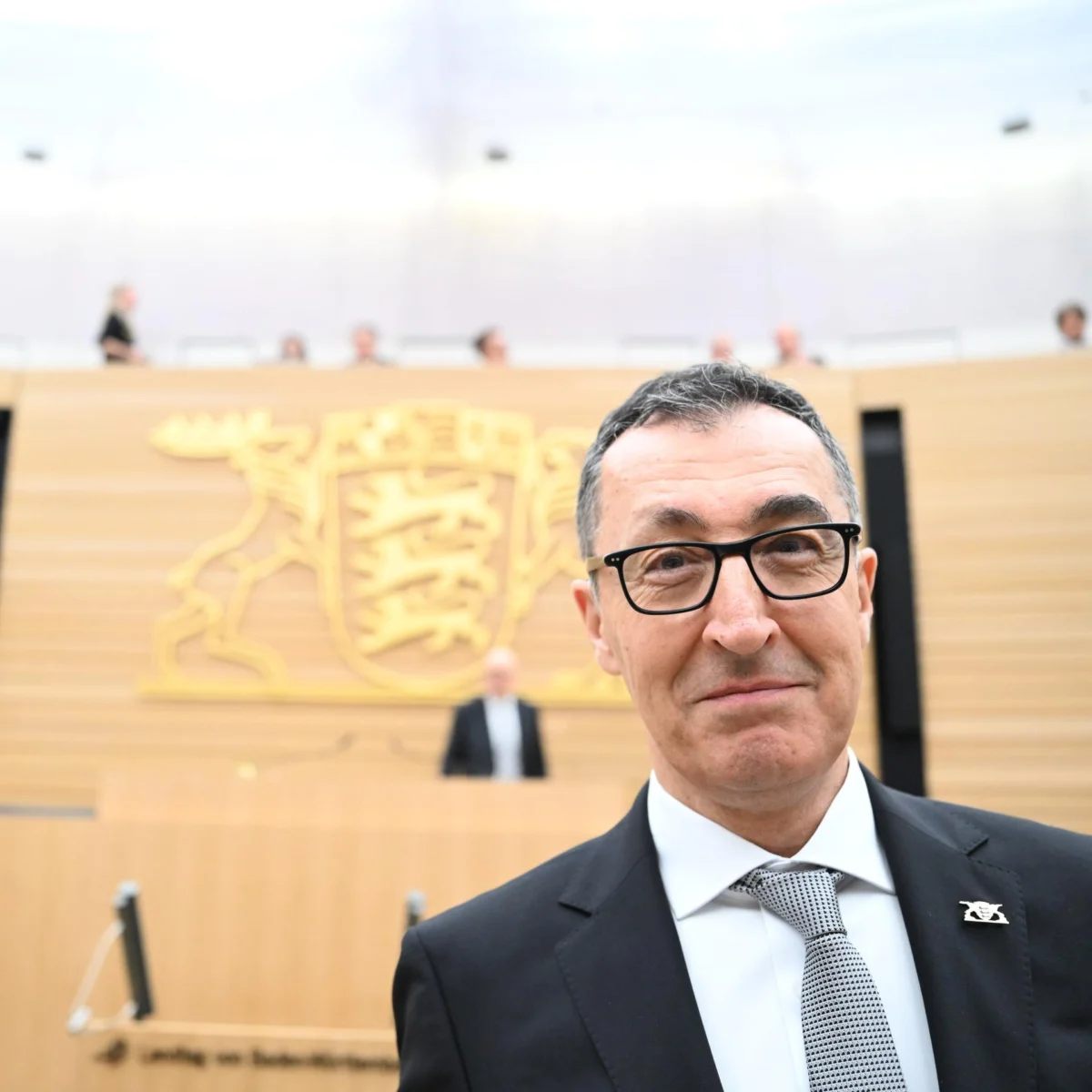
Baden-Württemberg’s Minister-President Cem Özdemir (Greens) responded with a cautiously optimistic but conditional statement, indicating his government was "fundamentally open" to the idea. However, Özdemir, a prominent figure known for his commitment to democratic values, swiftly added a critical caveat: "We do not want this to be dependent on the party affiliation of a Minister-President." His statement underscored a desire for an objective, constitutionally sound mechanism, rather than a partisan tool. Özdemir emphatically declared, "Our compass is the Basic Law," referring to Germany’s constitution, signaling that any such clause must be firmly rooted in constitutional principles and not wielded as a political weapon.
The reactions from other key political players were swift and largely critical. Susanne Schwerdtner, co-chair of Die Linke, vehemently condemned the proposal, asserting that "anyone who punishes election results with withdrawal of money conducts politics like autocrats." This sharp retort highlights the democratic dilemma inherent in Söder’s idea: how to combat extremism without undermining the very democratic processes that allow such parties to gain power through legitimate elections.
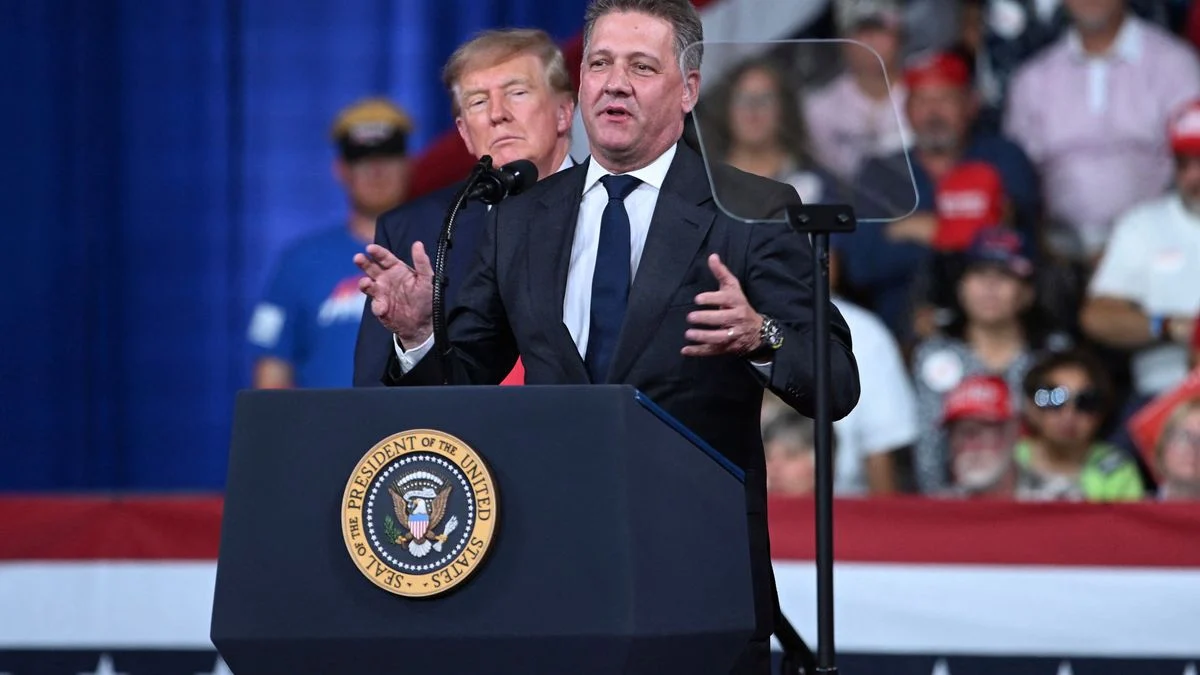
Further skepticism emerged from within the federalist system itself. Andreas Bovenschulte (SPD), Mayor of Bremen, expressed deep reservations, arguing that he considers "unequal treatment of states in financial equalization to be misguided." The SPD politician pointed to existing robust mechanisms already in place to counter extremism, suggesting that a new, potentially divisive clause might be redundant and counterproductive. Similarly, Gordon Schnieder (CDU), Minister-President of Rhineland-Palatinate and a Union colleague of Söder, voiced skepticism. Speaking on Deutschlandfunk, Schnieder argued that such a reordering "would affect all states and is therefore not expedient," hinting at the profound systemic disruption and potential for inter-state conflict the clause could provoke.
Chronology of a Budding Political Firestorm
The debate around the "extremism clause" has rapidly escalated since its initial suggestion, revealing deep fissures within Germany’s political landscape:
- Early October 2026: Bavarian Minister-President Markus Söder (CSU) begins floating the idea of an "extremism clause" in the Länderfinanzausgleich in internal party discussions and select media outlets, framing it as a necessary defense of democracy against perceived threats from the political fringes.
- Mid-October 2026: Söder publicly articulates his demand, specifically mentioning the potential for AfD-led governments in Saxony-Anhalt and Die Linke-led governments in Berlin as the primary targets. His argument is rooted in the belief that states governed by parties deemed hostile to the constitutional order should not benefit equally from the solidarity-based financial system.
- October 22, 2026: The first significant response comes from Baden-Württemberg. Minister-President Cem Özdemir (Greens) issues his nuanced statement, expressing principal openness but stressing the need for non-partisanship and adherence to the Basic Law. This careful positioning reflects the Greens’ own complex relationship with both democratic principles and coalition politics.
- October 22-23, 2026: Criticism mounts rapidly. Die Linke co-chair Susanne Schwerdtner delivers a scathing rebuke, likening the proposal to autocratic behavior. Bremen’s Mayor Andreas Bovenschulte (SPD) highlights existing anti-extremism measures and the principle of equal treatment among states. Crucially, Gordon Schnieder (CDU) from Rhineland-Palatinate, a member of Söder’s own political family, publicly expresses skepticism, underscoring that the opposition transcends party lines and touches on core federalist concerns.
- Ongoing: The proposal continues to dominate political discourse, with legal scholars, constitutional experts, and representatives from other federal states weighing in, signaling a protracted and complex debate ahead.
The Proposed "Extremism Clause": A Deep Dive into its Mechanism and Targets
Söder’s proposal aims to introduce a legal mechanism that would allow the federal government, possibly in conjunction with a supermajority of the Bundesrat (the chamber representing the states), to reduce financial transfers to states whose governments are deemed "extremist." While the precise definition and criteria for such a classification remain nebulous, Söder explicitly referenced two current political scenarios:
- Saxony-Anhalt and the AfD: Following recent state elections, the Alternative for Germany (AfD) has emerged as a dominant force in Saxony-Anhalt, with strong indications of potential government formation or significant influence. The AfD, a far-right party, is partially classified as a suspected extremist organization by the Verfassungsschutz (Federal Office for the Protection of the Constitution) in several states, and its youth wing is entirely under observation. Söder’s proposal directly targets the possibility of an AfD-led administration benefiting from federal funds.
- Berlin and Die Linke: In Berlin, a complex political landscape has also pointed towards Die Linke playing a central role in a potential future state government. Die Linke, a democratic socialist party with roots in East Germany’s communist party, also has certain factions and individuals that have been historically monitored by the Verfassungsschutz for perceived left-wing extremist tendencies. Söder’s broad definition of "extremist" would seemingly encompass such a scenario.
The Länderfinanzausgleich itself is a cornerstone of German federalism. It is a complex system designed to ensure that all 16 federal states have broadly comparable financial resources, regardless of their individual economic strength. This solidarity principle, enshrined in the Basic Law, aims to prevent vast disparities in public services and living conditions across the country. Any alteration to this system carries immense constitutional and political weight.
Supporting Data and Context: The Fabric of German Federalism
Germany’s federal system, meticulously crafted after World War II, is designed to decentralize power and prevent the concentration of authority that characterized previous autocratic regimes. The Länderfinanzausgleich is a key component, ensuring that financially weaker states can still fulfill their public duties. In 2025, the total volume of financial equalization payments amounted to approximately €25 billion, a significant sum illustrating the interconnectedness of state finances.
Existing legal frameworks already provide tools to counter extremism. The Verfassungsschutz monitors extremist groups and parties, and in extreme cases, a party can be banned by the Federal Constitutional Court if it actively seeks to undermine the democratic order. Furthermore, parties that are deemed anti-constitutional can be deprived of state funding. However, these are high hurdles, requiring substantial evidence and judicial review.
Söder’s proposal goes a step further, targeting governments formed by such parties, rather than just the parties themselves. This raises fundamental questions about the sovereignty of the states and the democratic legitimacy of their elected representatives. Critics argue that punishing states for the electoral choices of their citizens could be seen as an overreach of federal power and an erosion of state autonomy, potentially leading to a "two-tier" federal system where some states are financially penalized for their political composition.
The current political climate, marked by the rise of populist and extremist movements across Europe, adds urgency to this debate. Germany, like many other democracies, grapples with how to protect its liberal democratic order without resorting to measures that could themselves be seen as illiberal or undemocratic. The AfD’s consistent strong showings, particularly in the eastern states, and Die Linke’s enduring presence in certain urban centers, present a real challenge to the traditional political establishment, prompting proposals like Söder’s.
Official Responses and the Political Spectrum: A House Divided
The varied reactions to Söder’s proposal reveal a deep ideological and pragmatic divide among Germany’s political parties:
Baden-Württemberg’s Nuanced Stance: The Green Balancing Act
Minister-President Cem Özdemir’s "principally open" but conditional support reflects the complex position of the Green Party. As a party deeply committed to environmentalism and social justice, the Greens are also staunch defenders of liberal democratic values and have consistently opposed extremism from both the far-right and far-left. Özdemir’s emphasis on the Grundgesetz (Basic Law) and the need for a non-partisan mechanism suggests a willingness to explore measures against anti-democratic forces, but only if they are constitutionally sound and not open to political abuse. His statement effectively seeks to depoliticize the application of any such clause, ensuring it serves the state rather than specific party interests. This stance attempts to bridge the gap between acknowledging the problem of extremism and safeguarding democratic processes.
Left-Wing Opposition: Defending Democratic Outcomes
Susanne Schwerdtner’s strong condemnation on behalf of Die Linke underscores the party’s fundamental objection to penalizing electoral outcomes. Her comparison to "autocrats" is a potent accusation, implying that Söder’s proposal undermines the very democratic principles it purports to defend. For Die Linke, denying funds based on election results is an attack on voter sovereignty and risks creating a dangerous precedent where federal power is used to suppress legitimate political representation. This position aligns with the party’s broader critique of what it perceives as attempts by the establishment to marginalize dissenting political voices.
SPD’s Pragmatic Concerns: Upholding Federal Equality
Bremen’s Mayor Andreas Bovenschulte (SPD) raised pragmatic concerns, focusing on the principle of equal treatment among federal states and the existence of adequate current tools to combat extremism. The SPD, traditionally a party that champions social cohesion and federal solidarity, is wary of measures that could fragment the federal system or create a hierarchy among states. Bovenschulte’s argument that existing mechanisms, such as those involving the Verfassungsschutz and the Federal Constitutional Court, are sufficient, suggests a preference for strengthening these established safeguards rather than introducing a new, potentially destabilizing clause into the Länderfinanzausgleich.
Skepticism within the Union: Cracks in the Conservative Front
Perhaps most telling is the skepticism expressed by Gordon Schnieder (CDU) from Rhineland-Palatinate. As a fellow member of the conservative Union bloc (CDU/CSU), Schnieder’s opposition indicates that Söder’s proposal is far from universally accepted even within his own political family. His argument that such a reordering would "affect all states and is therefore not expedient" points to the practical difficulties and the potential for unintended consequences. It suggests a concern that Söder’s proposal, while perhaps well-intentioned, could destabilize inter-state relations, complicate financial planning for all states, and ultimately prove unworkable within the existing federal framework. This internal dissent highlights the profound challenges in finding a consensus on such a radical measure.
Implications and Future Outlook: A Test for German Democracy
The proposal for an "extremism clause" carries far-reaching implications for German democracy, federalism, and political stability.
Legal Challenges: The most immediate hurdle is its constitutionality. Legal scholars are already debating whether such a clause would violate principles of state autonomy, democratic representation, and the equal treatment of federal states enshrined in the Basic Law. The Länderfinanzausgleich is a constitutional instrument, and any significant alteration would likely face intense scrutiny by the Federal Constitutional Court. The question of who defines "extremist" and on what basis, without undermining judicial independence or becoming a political football, is paramount.
Political Fallout: Should the proposal gain traction, it would inevitably lead to increased polarization. Parties targeted by such a clause would likely frame it as an attack on democracy itself, fueling their narratives of being persecuted by the establishment. This could ironically strengthen their appeal among disaffected voters. Furthermore, it could trigger tit-for-tat political battles, with states potentially challenging federal decisions or withholding cooperation in other areas.
Impact on Federalism: The core principle of German federalism is the relative autonomy of the states. An "extremism clause" could be seen as a significant erosion of this autonomy, granting the federal government unprecedented power over state finances based on their political composition. This could fundamentally alter the balance of power between the federal and state levels, potentially leading to a more centralized system.
Effectiveness and Precedent: Critics argue that such a clause might be ineffective in curbing extremism. Instead of addressing the root causes of extremist sentiment, it could merely punish voters and create resentment. Moreover, setting such a precedent could open the door to future conditionalities on federal funds, potentially leading to a situation where federal transfers are tied to a wide array of political or ideological criteria, further undermining state sovereignty.
Broader Debate on Democracy: Söder’s proposal forces a crucial, albeit uncomfortable, debate: How should a robust democracy deal with political forces that operate within democratic frameworks but are perceived to undermine its foundational values? This is a question with no easy answers, and the "extremism clause" represents one radical approach that highlights the tension between protecting democratic institutions and respecting democratic outcomes.
As of late October 2026, the prognosis for the "extremism clause" remains uncertain. While Söder’s proposal has ignited a vital discussion, the widespread skepticism from across the political spectrum, including from within his own conservative ranks, suggests that its path to implementation will be fraught with constitutional challenges and political resistance. The debate underscores the deep commitment of German politicians to defending the democratic order, but also the profound disagreements on the most effective and democratic means to achieve that end. The coming months will likely see intense negotiations and potentially legal battles as Germany grapples with how to fortify its democracy in an era of growing political fragmentation.