Berlin, Germany – German security authorities are on high alert, meticulously monitoring calls for nationwide demonstrations on October 31st, Halloween night, amidst growing concerns that peaceful youth protests could be hijacked by violent extremist elements. The planned "GenZ regelt" or "GenZ steht auf" (GenZ Rules / GenZ Stands Up) initiative, mobilizing young people across Germany, has prompted intensive coordination between federal and state agencies, with particular attention paid to recent, often violent, protest dynamics observed in neighboring France.
The Federal Interior Ministry has confirmed close collaboration among various security bodies, including the Joint Extremism and Terrorism Abwehrzentrum (GETZ), to continuously assess potential threats. This vigilance extends beyond national borders, with German authorities actively exchanging intelligence and strategies with their counterparts in France and Italy, countries that have recently experienced significant social unrest and protest-related violence.
Main Facts: A Nation on Edge
The core concern revolves around the potential for widespread, youth-led demonstrations on Halloween night, a date already associated with increased public gatherings and, at times, unruly behavior. While the organizing initiative explicitly disavows violence, German police unions and interior ministries fear that the protests could be infiltrated by radical groups seeking to instigate chaos, attack law enforcement, and further a narrative of police hostility.
The "GenZ regelt" movement primarily advocates for enhanced climate protection measures, relief from surging living costs, and opposition to a potential reintroduction of compulsory military service (Wehrpflicht). These are legitimate concerns for many young people, providing a broad base for mobilization. However, the shadow of recent French protests, where initially peaceful demonstrations against educational policies and broader societal grievances devolved into severe clashes and property damage, looms large. This has led German authorities to prepare for a range of scenarios, from peaceful assemblies to potential outbreaks of serious disorder.
Chronology of Concern: From French Streets to German Online Forums
The current heightened state of alert in Germany is deeply rooted in the recent escalation of protests in France. What began as student-led demonstrations against educational shortcomings in recent weeks progressively broadened to encompass a wider array of socio-economic issues, including pension reforms and cost-of-living crises. The culmination of this unrest saw hundreds of thousands take to the streets across France last weekend, resulting in widespread and severe clashes with police, property destruction, and numerous arrests. The images of burning vehicles, vandalized public spaces, and confrontational stand-offs have resonated across Europe, serving as a stark warning to other nations facing similar social pressures.
In parallel, calls for a similar day of action began to circulate within Germany, predominantly through social media channels and online forums favored by younger generations. The "GenZ regelt" or "GenZ steht auf" initiative quickly gained traction, leveraging platforms like Instagram, TikTok, and Telegram to mobilize participants. The choice of October 31st, coinciding with Halloween, is seen by security officials as a potential force multiplier for disorder, given the traditional association of the night with large, often less supervised, public gatherings and the increased likelihood of pyrotechnic use.
This chronological progression – from observing the trajectory of French unrest to identifying domestic mobilization efforts for a high-risk date – has propelled German security agencies into proactive measures, aiming to prevent a similar escalation on their own soil.
Supporting Data: Gauging the Mobilization and Underlying Grievances
As of the latest reports, the "GenZ regelt" initiative has garnered significant online attention, with over 10,000 individuals reportedly registered across 21 German cities to participate in the planned demonstrations. While this number might seem modest compared to some larger historical protests, its significance lies in its spread across multiple urban centers and its target demographic: Generation Z. This demographic is often characterized by a strong online presence, a keen awareness of social and environmental issues, and a readiness to engage in activism.
The stated grievances of the "GenZ regelt" movement reflect broader societal anxieties:
- Climate Protection: A persistent demand from younger generations for more ambitious and immediate government action to combat climate change, often feeling that current policies are insufficient.
- Cost of Living: Soaring inflation, energy prices, and housing costs are placing significant economic pressure on households, particularly impacting students and young professionals.
- Opposition to Conscription (Wehrpflicht): Recent debates about the potential reintroduction of mandatory military service in Germany have sparked strong opposition among young people, who view it as an infringement on personal freedom and a relic of the past.
These issues, while distinct, collectively tap into a sense of disillusionment and urgency among young people, creating fertile ground for protest movements. The challenge for authorities is to facilitate legitimate expressions of these grievances while simultaneously safeguarding public order against the potential for exploitation by elements that do not share the peaceful intentions of the organizers. The explicit rejection of violence by the "GenZ" initiators is a crucial distinction, yet one that security forces fear could be easily overridden by external agitators.
Official Responses: A United Front for Security
The response from German security authorities has been swift and coordinated, underscoring the seriousness with which these calls for protest are being treated.
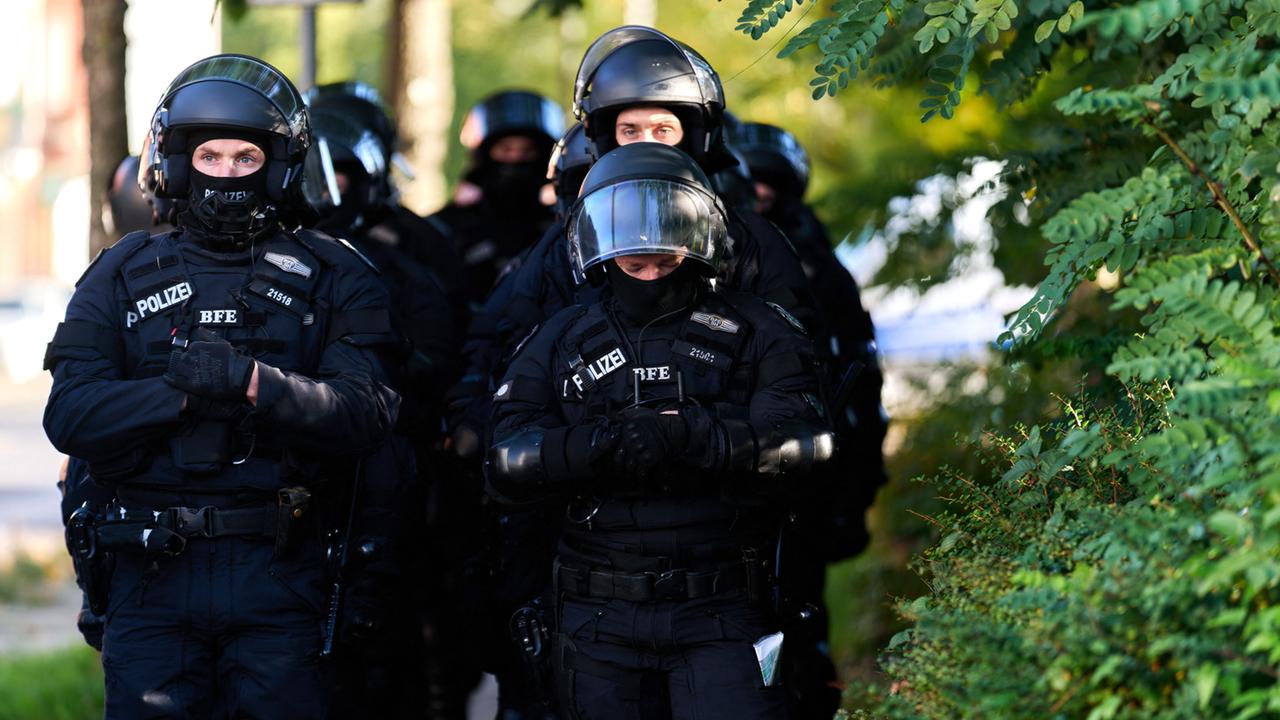
A spokesperson for the Federal Interior Ministry emphasized the robust communication channels between federal and state governments, particularly within the Joint Extremism and Terrorism Abwehrzentrum (GETZ). "Threat assessments are continuously being made, in close coordination with our partners, such as France and Italy," the spokesperson stated, highlighting the cross-border intelligence sharing aimed at anticipating and mitigating potential risks. The ministry also drew a clear line between peaceful and violent protest, acknowledging the legitimacy of the former while condemning the latter. "On the one hand, there are peaceful student protests, and on the other hand, there is a violent extremist scene that potentially uses such protests to spread violence," the spokesperson elaborated, outlining the dual challenge faced by authorities.
The Federal Office for the Protection of the Constitution (Verfassungsschutz), Germany’s domestic intelligence agency, has intensified its surveillance efforts. Its focus is on "relevant internet pages and social media channels where calls for violent protests might be disseminated," indicating a proactive approach to identify and track potential agitators before they can act. This digital monitoring aims to unmask individuals or groups attempting to co-opt the youth movement for their own destructive ends.
At the state level, Hessian Interior Minister Roman Poseck declared that security agencies had the date "firmly in their sights," signaling a readiness to respond. Similarly, the Lower Saxony Interior Ministry confirmed that police forces were "sensitized" and that developments were being "critically monitored." These statements reflect a unified resolve across the federal states to ensure public safety.
The German Police Union (GdP) has been particularly vocal in expressing its concerns. Stephan Weh, head of the Berlin GdP, issued a stark warning: "We must be extremely careful that radical forces do not hijack democratic protests, as in France, to live out fantasies of violence, abuse the freedom of assembly, and feed the narrative of citizen-hostile police." He further pointed to the unfortunate timing: "The protest falls on Halloween night, when pyrotechnics are already frequently used on our streets." This highlights the practical challenges posed by the chosen date, where distinguishing legitimate celebrations from deliberate acts of provocation becomes even more difficult.
Andreas Roßkopf, GdP chairman for the Federal Police, reiterated the commitment to decisive action should violence erupt. Speaking to the "Rheinische Post," he declared: "The state and federal police forces will proceed massively and consistently against this." Roßkopf echoed the fear of radical and extremist elements infiltrating the demonstrations "who want to attack police officers with violence and brutality and simply want to destroy." This firm stance from police representatives underscores the zero-tolerance policy towards any acts of violence or vandalism.
Furthermore, the Federal Police have indicated their readiness to provide assistance to state police forces as needed. Crucially, they also stated that they would "if necessary, turn back individuals who wish to enter Germany to participate in violent clashes at the border." This measure demonstrates a proactive approach to preventing external agitators from even reaching German soil, a direct lesson potentially drawn from international cooperation.
Implications: Balancing Rights, Maintaining Order, and Preventing Radicalization
The looming protests on October 31st carry significant implications for German society, law enforcement, and the future of youth activism.
For Law Enforcement: The primary challenge for police will be to strike a delicate balance between upholding the fundamental right to freedom of assembly and ensuring public safety. Distinguishing between genuine, peaceful protestors and violent provocateurs in large, dynamic crowds, especially under the cover of a festive night like Halloween, is inherently difficult. The GdP’s warnings about the "citizen-hostile police" narrative also highlight the broader societal context, where police actions are increasingly scrutinized, and trust can be eroded by perceived heavy-handedness or, conversely, by a failure to maintain order. The deployment of federal police for support and border controls signifies a multi-layered strategy, but the potential for widespread, simultaneous unrest across 21 cities will stretch resources.
For Protest Culture and Youth Activism: The outcome of these protests could significantly influence the public perception of youth activism in Germany. If the demonstrations remain largely peaceful, it could solidify the legitimacy of youth voices on critical issues like climate change and economic justice. However, if violence erupts, it risks delegitimizing the entire movement, alienating public support, and providing ammunition for critics who seek to dismiss youth concerns as mere troublemaking. The "GenZ regelt" initiative’s explicit rejection of violence is a positive step, but their ability to control the actions of all participants, particularly those from outside their core organizing group, remains to be seen.
For Society and Political Discourse: The incident underscores the fragility of social cohesion in an era of increasing polarization. Economic pressures, environmental anxieties, and geopolitical tensions (such as the debate around conscription in light of European security concerns) are creating fertile ground for discontent. The potential for radical groups to exploit these legitimate grievances for their own agendas poses a significant threat to democratic processes. These groups often thrive on chaos and division, seeking to undermine public trust in institutions and promote extremist ideologies. The response of authorities and the behavior of protestors will be closely watched, both domestically and internationally, as Germany navigates these complex challenges.
In conclusion, German security authorities are preparing for a challenging Halloween night. Their comprehensive strategy, involving enhanced intelligence gathering, inter-agency cooperation, international coordination, and a clear commitment to decisive action against violence, aims to ensure that the fundamental right to protest can be exercised without descending into the chaos witnessed elsewhere. The coming days will test the resilience of Germany’s democratic institutions and its ability to manage social unrest in a rapidly evolving geopolitical and socio-economic landscape.