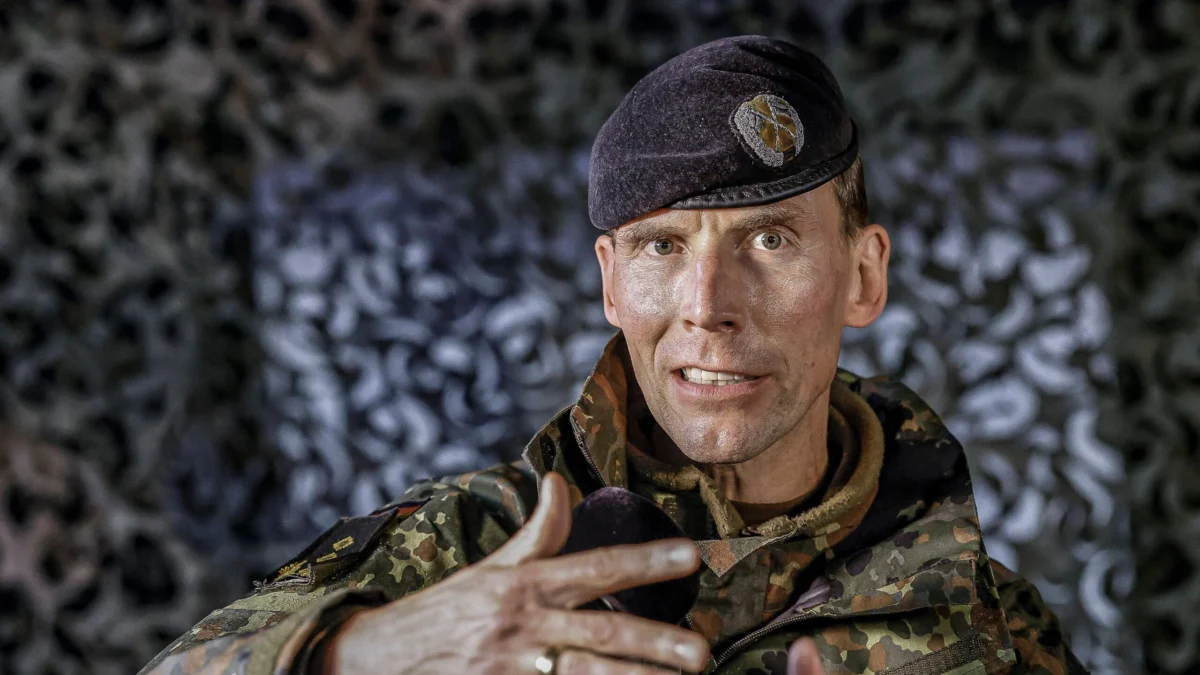
Dresden, Germany – The Inspector of the Army, Lieutenant General Christian Freuding, recently took a definitive stand against mounting criticism regarding the German Bundeswehr’s procurement strategies. Speaking at an innovation forum hosted at the prestigious Officer School in Dresden, Freuding robustly defended the armed forces against accusations that it is primarily acquiring "scrap metal" and lagging technologically. While rejecting the notion that Germany’s military is stuck in the past, the nation’s highest-ranking ground forces officer conceded a pervasive sense of impatience, reflecting the urgent need for accelerated modernization in an increasingly volatile global landscape.
The Bundeswehr, once a formidable bulwark during the Cold War, has faced decades of underinvestment and structural downsizing following the collapse of the Soviet Union. However, Russia’s full-scale invasion of Ukraine in February 2022 triggered a profound shift in German defense policy, famously termed the "Zeitenwende" (turning point) by Chancellor Olaf Scholz. This paradigm shift pledged a €100 billion special fund to revitalize the military and ensure Germany could meet its NATO commitments and assume a greater role in European security. Yet, two years into this ambitious overhaul, the pace of reform and the nature of procurements have become subjects of intense public and political scrutiny, leading to sharp criticisms that Freuding directly addressed. His remarks underscore a critical juncture for Germany’s military, balancing the imperative for rapid rearmament with the complexities of modern defense acquisition and technological advancement.
Main Facts: A Standoff Against Criticism
Lieutenant General Christian Freuding, a pivotal figure in the Bundeswehr’s strategic direction, used the platform of the Innovationsforum in Dresden not just to discuss future military technologies but to confront head-on the persistent narrative of a technologically stagnant and poorly equipped German military. The forum, designed to foster collaboration between the military, industry, and academia on cutting-edge defense solutions, provided an apt setting for such a candid exchange.
The central accusation leveled against the Bundeswehr is twofold: first, that its procurement prioritizes "Altmetall" – a colloquial German term implying outdated, second-hand, or less-than-optimal equipment – over state-of-the-art systems; and second, that it is failing to keep pace with contemporary technological developments in modern warfare. These criticisms often surface in media reports, parliamentary debates, and expert analyses, fueling public skepticism about the effectiveness of the "Zeitenwende" and the wisdom of defense spending. Critics argue that instead of leapfrogging into the future, the Bundeswehr is merely catching up to past standards, often at great expense and with considerable delay.
Freuding’s defense, though not detailed in the initial report, implicitly centers on a strategic rationale for current procurement decisions. It suggests a pragmatic approach focused on rapidly building operational capacity and readiness, which may necessitate acquiring proven, readily available systems, or upgrading existing platforms, rather than waiting for nascent, unproven technologies to mature. This strategy aims to bridge immediate capability gaps while simultaneously laying the groundwork for future innovation. He likely highlighted the importance of interoperability with NATO allies, the logistical realities of mass production, and the need for a robust, sustainable supply chain, all of which favor established technologies over experimental ones in the short to medium term.
Despite his strong defense, Freuding’s acknowledgment of being "far from satisfied" and "rather impatient" offers a crucial insight into the internal pressures within the Bundeswehr. This sentiment reflects the immense challenge of transforming a military organization after decades of neglect, navigating bureaucratic hurdles, and adapting to a rapidly evolving threat landscape. His impatience is not merely personal frustration but a reflection of the strategic urgency felt by military leadership to accelerate the "Zeitenwende" and deliver tangible results in terms of readiness and capability. It underscores an awareness that while progress is being made, it is not happening fast enough to meet the geopolitical demands placed upon Germany and its armed forces.
Chronology of Bundeswehr Modernization and Criticism
The journey of the Bundeswehr from a pillar of Cold War defense to its current state of ambitious reform is marked by distinct phases, each contributing to the challenges and criticisms Freuding now addresses.
Post-Cold War Drawdown (1990s-2010s)
Following the fall of the Berlin Wall and the dissolution of the Soviet Union, Germany, like many Western nations, significantly downsized its military. The threat of a large-scale land invasion in Central Europe receded, leading to a shift in focus from territorial defense to expeditionary missions, such as those in Afghanistan and the Balkans. The Bundeswehr’s budget was drastically cut, personnel numbers plummeted from over 500,000 during the Cold War to around 180,000, and procurement priorities shifted to lighter, more agile equipment suited for counter-insurgency operations. This era saw a steady decline in readiness, a neglect of heavy armor and air defense capabilities, and a significant backlog in maintenance and spare parts. Warehouses became repositories for equipment deemed obsolete, and industrial capacity for defense production diminished significantly. This prolonged period of austerity laid the foundation for many of the "Altmetall" accusations, as the existing inventory aged without sufficient replacement or modernization.
Crimean Annexation and Early Warnings (2014 Onwards)
Russia’s annexation of Crimea in 2014 and its subsequent involvement in eastern Ukraine served as a stark geopolitical wake-up call for NATO and, by extension, Germany. The renewed emphasis on collective defense and territorial integrity exposed the severe limitations of the Bundeswehr. Reports from parliamentary commissioners repeatedly highlighted critical deficiencies: tanks that couldn’t move, aircraft that couldn’t fly, and frigates that couldn’t sail due to a lack of spare parts, personnel, or maintenance. While calls for increased defense spending and a revitalization of the armed forces grew louder, concrete action remained slow and incremental. Bureaucratic inertia, competing domestic priorities, and a lingering reluctance to embrace a more robust military role meant that while the threat perception shifted, the actual transformation of the Bundeswehr lagged considerably. The slow pace of decision-making and implementation during this period further entrenched the perception of an inefficient and under-resourced military.
The Zeitenwende Announcement (February 2022)
The full-scale invasion of Ukraine by Russia in February 2022 proved to be the ultimate catalyst for change. Within days, Chancellor Olaf Scholz delivered his historic "Zeitenwende" speech, announcing a radical departure from Germany’s post-Cold War defense posture. The core of this initiative was the establishment of a €100 billion special fund to modernize the Bundeswehr, supplementing the regular defense budget. Scholz declared an end to Germany’s "era of military restraint" and pledged to significantly increase defense spending, aiming to consistently meet NATO’s target of 2% of GDP. This announcement was met with widespread international praise, signaling Germany’s commitment to collective security and its recognition of the urgent need to rebuild its armed forces. The special fund was earmarked for critical investments across all branches of the military, including air defense, heavy weaponry, digitalization, and personal equipment for soldiers.
Implementation Challenges and Growing Criticism (2022-Present)
Despite the monumental pledge, the actual implementation of the Zeitenwende has been fraught with challenges, leading to the renewed "scrap metal" and technological lag accusations Freuding now confronts. The initial euphoria gave way to the realities of a complex procurement landscape. Bureaucratic hurdles, rooted in stringent German public procurement laws designed for transparency and fiscal prudence, proved difficult to overcome quickly. The German defense industry, having downsized significantly over decades, struggled to ramp up production to meet the sudden surge in demand, exacerbated by global supply chain disruptions and inflation.
Critics argue that much of the initial spending focused on replenishing stocks provided to Ukraine or acquiring proven, but not necessarily cutting-edge, systems. For instance, while the procurement of F-35 fighter jets is a significant step, some other acquisitions or upgrades are perceived as merely bringing the Bundeswehr up to a baseline standard rather than propelling it into the future. The slow disbursement of the €100 billion fund, combined with reports of continued equipment shortages and maintenance backlogs, fueled the narrative that the Bundeswehr was struggling to effectively utilize the allocated resources, reinforcing the idea that it was either buying "Altmetall" or simply not getting enough modern equipment fast enough.
Dresden Forum and Freuding’s Intervention
Lieutenant General Freuding’s appearance at the Dresden Innovationsforum must be seen in this context. His direct rebuttal of the "Altmetall" accusations is not an isolated incident but a strategic communication effort to manage expectations, defend the ongoing transformation, and counter the negative public perception. By speaking out, he aimed to clarify the rationale behind current procurement decisions and reassure both the public and Germany’s allies that the Bundeswehr is indeed moving forward, albeit with significant challenges. His "impatience" is a telling sign that the military leadership is acutely aware of the urgency and the necessity to accelerate processes, cut red tape, and demonstrate tangible progress in building a modern, ready, and technologically advanced German Army.
Supporting Data and Context
Understanding the challenges Freuding addresses requires delving into the concrete data and contextual factors shaping Germany’s defense landscape.
Budgetary Figures
Germany’s defense spending trajectory provides a stark illustration of the challenges. For decades, the annual defense budget hovered well below the NATO 2% of GDP target, often around 1.3-1.4%. In 2021, for instance, Germany spent approximately €53 billion on defense. The €100 billion special fund announced in 2022 was a monumental addition, effectively doubling the available investment capital over several years. However, this fund is separate from the regular annual budget and is intended for specific, large-scale projects. While Germany’s overall defense spending has increased, reaching an estimated 2% of GDP in 2024 for the first time in decades, the effective utilization of these funds remains a point of contention. The special fund is not a bottomless pit; it’s a one-time injection, meaning that sustained investment beyond its lifespan will depend on regular budget increases. The allocation of the €100 billion has been complex, with significant portions earmarked for large platforms like the F-35 fighter jets (€10 billion), heavy transport helicopters (CH-47F Chinook, €6 billion), and naval vessels, leaving other critical areas, particularly for the army, to compete for resources within the regular budget.
Procurement Challenges
The difficulties in acquiring modern equipment are multifaceted:
- Bureaucracy: Germany’s public procurement laws are among the most stringent globally, designed to prevent corruption and ensure value for taxpayer money. However, this often translates into excruciatingly slow approval processes, multiple layers of oversight, and complex tender procedures. The "gold-plating" phenomenon, where requirements become overly specific and elaborate, further restricts the field of potential suppliers and drives up costs and development times. This bureaucratic inertia is a primary reason why even with money available, actual contracts and deliveries lag.
- Industrial Capacity: After decades of reduced demand, the European defense industry, including Germany’s, significantly downsized its production lines, R&D investments, and skilled workforce. Ramping up production of tanks, artillery, ammunition, and other complex systems takes years, not months. Supply chain bottlenecks, exacerbated by global events, further complicate matters. For example, producing sufficient artillery shells to both support Ukraine and rebuild Bundeswehr stocks has proven a major challenge for the entire European defense industrial base.
- Technological Gap: Critics argue that the Bundeswehr has fallen behind in critical areas. While Germany produces excellent main battle tanks like the Leopard 2 and advanced infantry fighting vehicles like the Puma, areas like cyber defense, drones (especially loitering munitions), modern air defense systems (beyond Patriot), satellite communication, and secure digital battlefield networks are often cited as lagging. The "Altmetall" accusation can stem from the perception that while Germany is acquiring proven, robust systems, it might be overlooking emerging disruptive technologies or not integrating them fast enough. This includes the challenge of digital transformation within the military, which requires not just hardware but also sophisticated software, data infrastructure, and trained personnel.
- Specific Examples: The Puma IFV has faced reliability issues, requiring significant upgrades. The NH90 helicopter program has been plagued by delays and technical problems. While the acquisition of new Leopard 2 A8 tanks or the modernization of older A6 models is crucial, it’s seen by some as incremental rather than revolutionary. These high-profile cases contribute to the narrative that even new or upgraded equipment comes with its own set of problems, adding to the "Altmetall" perception, even if the underlying systems are robust.
Personnel Shortages and Training
Beyond equipment, the Bundeswehr faces a significant demographic challenge. With an aging workforce and difficulties in recruiting younger generations, the military struggles to fill its ranks. This shortage impacts not only operational readiness but also the ability to effectively utilize and maintain complex modern equipment. Even with state-of-the-art systems, a lack of trained personnel to operate, maintain, and integrate them into existing structures renders the investment less effective. Furthermore, the rapid pace of technological change necessitates continuous training and upskilling, which adds another layer of complexity to the modernization effort. The overall readiness of the Bundeswehr is therefore not solely a question of hardware but equally one of human capital.
Official Responses and Strategic Vision
Lieutenant General Freuding’s defense at the Dresden Innovationsforum represents a key part of the Bundeswehr’s strategic communication and its broader vision for modernization. His arguments are rooted in a pragmatic understanding of military needs and the realities of procurement.
Freuding’s Specific Arguments (Elaborated)
Freuding’s likely counter-arguments against the "Altmetall" accusations would emphasize several crucial points:
- Necessity of Volume and Proven Systems: He would argue that in the face of an immediate and palpable threat, as demonstrated by the war in Ukraine, the priority must be to rapidly build operational capacity. This often means procuring large volumes of existing, proven, and reliable systems that can be integrated quickly into the force structure, rather than waiting years for unproven, next-generation prototypes. A "futuristic" tank that is a decade away from mass production is less valuable than an upgraded Leopard 2 that can be deployed within months. This approach aims to close critical capability gaps immediately.
- Interoperability with NATO: A core principle of Bundeswehr procurement is ensuring seamless interoperability with NATO allies. This often dictates opting for systems that are already in service with other member states, or that adhere to NATO standards. This might sometimes mean choosing a widely used, established platform over a niche, cutting-edge German-developed one, to enhance collective defense capabilities and simplify logistics in a coalition environment.
- Modernization vs. Replacement: Freuding would likely draw a clear distinction between outright replacement of old systems and the strategic modernization of existing platforms. Upgrading a Leopard 2 A6 to an A8 standard, for instance, is often faster, more cost-effective, and less disruptive than developing an entirely new main battle tank. These upgrades can significantly extend the lifespan of equipment, incorporate new technologies (e.g., better sensors, digital fire control, active protection systems), and enhance their combat effectiveness, making them far from "scrap metal."
- Digitalization and Future Technologies: A Phased Approach: While defending current procurement, Freuding would undoubtedly acknowledge the critical importance of future technologies. He would outline a phased approach where immediate needs are met with proven systems, while significant investments are simultaneously channeled into research and development for truly revolutionary capabilities. Initiatives focusing on AI, quantum computing, advanced robotics, cyber warfare, and next-generation communication systems are actively pursued, often through forums like the one in Dresden, designed to foster collaboration with industry and scientific institutions. This ensures that while the Bundeswehr builds its conventional strength, it also prepares for the battlefields of tomorrow.
Broader Government Stance
The German government, particularly under Defense Minister Boris Pistorius, has adopted an increasingly urgent tone regarding the Zeitenwende. Pistorius has repeatedly stressed the need to cut bureaucratic red tape, accelerate procurement processes, and foster a more agile military culture. He has pushed for reforms within the Bundeswehr’s procurement office (BAAINBw) to streamline decision-making. Chancellor Scholz continues to reaffirm Germany’s commitment to the €100 billion fund and to meeting the 2% NATO spending target, emphasizing that the Zeitenwende is a long-term strategic imperative for Germany’s security and its role in Europe. The government’s messaging now heavily focuses on building a "kriegstüchtig" (war-capable) Bundeswehr, a significant shift in rhetoric that underscores the gravity of the current geopolitical situation.
The Role of Innovation Forums
Events like the Innovationsforum at the Officer School in Dresden are crucial for several reasons. They serve as vital platforms for:
- Bridging the Gap: Bringing together military leaders, defense industry representatives, academic researchers, and startups to discuss and co-develop solutions. This direct interaction helps the military articulate its specific needs and challenges, while industry can present innovative solutions.
- Fostering Collaboration: Encouraging public-private partnerships and accelerating the transfer of technology from civilian sectors to military applications.
- Showcasing Progress: Demonstrating commitment to technological advancement and addressing concerns about the Bundeswehr’s future orientation.
- Talent Attraction: Inspiring young professionals and researchers to contribute to defense innovation, an essential aspect given personnel shortages.
These forums are not just about buying equipment; they are about cultivating an ecosystem of innovation that is vital for long-term technological superiority and adaptability.
Implications and Outlook
The debate surrounding the Bundeswehr’s modernization and Freuding’s impassioned defense carries significant implications, both domestically and internationally.
Geopolitical Ramifications
Germany’s military strength, or perceived lack thereof, directly impacts its standing within NATO and the European Union. A robust, well-equipped Bundeswehr is crucial for:
- Credibility in NATO: Meeting the 2% GDP spending target and fielding capable forces reinforces Germany’s commitment to collective defense and its reliability as an ally, particularly on NATO’s eastern flank. Failure to modernize effectively could undermine trust and leave capability gaps that other allies would have to fill.
- European Security Leadership: As Europe’s largest economy, Germany is increasingly expected to play a leading role in European security. A strong Bundeswehr is a prerequisite for projecting this leadership, contributing effectively to EU defense initiatives, and deterring potential aggressors.
- Deterrence: A truly "kriegstüchtig" German military contributes significantly to NATO’s overall deterrence posture against potential adversaries, particularly Russia. The perception of an agile, technologically advanced force is as important as the reality of its capabilities.
Domestic Political Landscape
The Zeitenwende and Bundeswehr modernization remain central to Germany’s domestic political discourse.
- Public Support: While initial public support for increased defense spending was high post-Ukraine invasion, sustaining this support requires visible progress and efficient use of taxpayer money. Accusations of "scrap metal" procurement erode public trust and can lead to political backlash.
- Inter-Party Consensus: While there is broad consensus on the need for modernization, specifics of procurement, budget allocation, and the pace of reform often become points of contention among political parties. The current coalition government faces the challenge of maintaining unity on defense policy while navigating internal disagreements.
- Economic Impact: Defense spending represents a significant economic stimulus, creating jobs and fostering innovation within the German and European defense industries. However, this also raises questions about industrial capacity, ethical considerations, and the balance between military and civilian investment.
The Path Ahead
Lieutenant General Freuding’s "impatience" is not just an emotional expression but a strategic imperative that defines the path ahead for the Bundeswehr.
- Accelerating Procurement: The most critical next step is to translate the €100 billion fund and increased regular budgets into tangible equipment deliveries faster. This requires sustained efforts to cut bureaucracy, streamline processes, and foster closer collaboration with the defense industry.
- Balancing Speed, Cost, and Technology: The Bundeswehr must master the delicate balance of acquiring systems quickly (speed), at a reasonable price (cost), while ensuring they are technologically relevant (superiority). This often means making pragmatic choices between off-the-shelf solutions and bespoke, cutting-edge developments.
- Focus on Digitalization and Innovation: Beyond traditional hardware, a sustained focus on digital transformation, cyber capabilities, and leveraging emerging technologies is paramount. This includes investing in training, data infrastructure, and integrating AI and automation into military operations.
- Recruitment and Retention: Addressing personnel shortages remains a long-term challenge. The Bundeswehr must enhance its attractiveness as an employer, offer competitive conditions, and invest in modern training facilities to ensure it has the human capital to operate advanced systems.
- Long-term Vision for the German Army: Freuding’s leadership is critical in shaping the future structure and doctrine of the German Army, preparing it for high-intensity conventional warfare, hybrid threats, and multinational operations. This involves continuous adaptation, learning from ongoing conflicts, and ensuring that the army is not just equipped but also conceptually ready for the challenges of the 21st century.
In conclusion, Lieutenant General Christian Freuding’s resolute defense of the Bundeswehr’s modernization efforts at the Dresden Innovationsforum highlights the intense pressure on Germany to rebuild its military might. While accusations of "scrap metal" procurement underscore valid concerns about speed and technological parity, they also often overlook the pragmatic necessity of building foundational capabilities rapidly. Freuding’s expressed impatience is a powerful signal of the urgency felt within military leadership to overcome these hurdles, accelerate the "Zeitenwende," and ensure that the German Army is not only equipped for today’s threats but also prepared for the complex battlefields of tomorrow. The success of this ambitious transformation will be pivotal for Germany’s security, its role in Europe, and the future of NATO.