

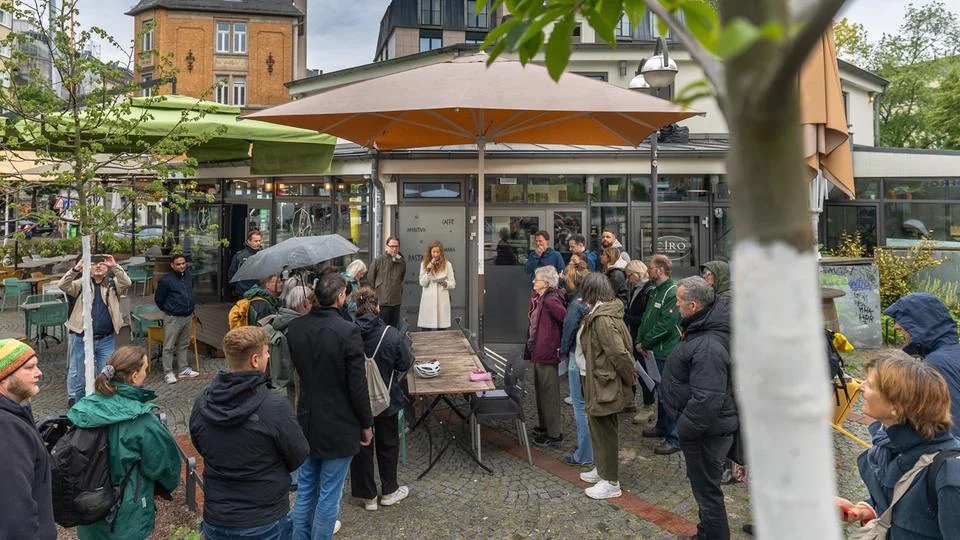
One year after a deliberate act of environmental vandalism shocked the heart of Frankfurt’s Nordend district, the community has reclaimed its green oasis. Following the destruction of two iconic plane trees, city officials have unveiled a revitalized Merianplatz, featuring a climate-resilient landscape that serves as both a botanical upgrade and a defiant symbol of civic resolve.
The Incident: A Crime Against Nature
In the spring of last year, the residents of Frankfurt’s vibrant Nordend district were met with an unsettling discovery. Two mature, majestic plane trees—long-standing fixtures of the neighborhood—began to show rapid, inexplicable signs of decay. Following an intensive investigation by municipal arborists, the grim reality was confirmed: the trees had been intentionally poisoned.
The act triggered widespread indignation across the city. Trees in urban environments are more than just aesthetic assets; they are the "lungs" of the city, providing essential shade, cooling the microclimate, and supporting biodiversity. The deliberate killing of these sentinels was viewed by many as an attack on the collective quality of life in Frankfurt. Despite the best efforts of the city’s green space department to save them, the structural integrity of the trees was so severely compromised by the toxins that they eventually had to be felled, leaving a gaping void in the center of the Merianplatz.
Chronology of a Restoration
The path from the discovery of the vandalism to the current unveiling was neither short nor simple. The process required a strategic approach to urban planning, balancing emotional recovery with technical necessity.
- Spring 2023: The poisoning is discovered. Public outcry reaches a fever pitch as the city launches an investigation into the perpetrators.
- Summer 2023: Despite efforts to salvage the trees, the decision is made to remove them for safety reasons. Planning for a "New Merianplatz" begins immediately.
- Autumn 2023 – Winter 2024: The planning phase. City landscape architects conduct soil tests and site analysis.
- Spring 2024: Commencement of site work. During excavation, crews encounter unexpected delays due to suspected unexploded ordnance—a common risk in German urban construction. After intensive investigations, the "threats" were identified as legacy water infrastructure, adding weeks to the timeline.
- Summer 2024: The completion of planting. The city unveils the new design, incorporating climate-hardy species and enhanced soil environments.
Technical Transformation: Building for a Hotter Future
The city did not merely replace the lost trees; it upgraded the entire square to meet the challenges of the 21st century. As climate change leads to hotter, drier summers in the Rhine-Main region, the municipality prioritized "climate-resilient" species.
The New Botanical Palette
The selection of the eight new trees was a deliberate exercise in ecological foresight. The new arrivals include:
- Linden (Tilia): Known for their tolerance to urban pollution and ability to provide dense, cooling shade.
- Oaks (Quercus): Robust, long-lived trees that contribute significantly to the local ecosystem.
- Sweet Chestnut (Castanea sativa): A species increasingly favored for its resilience to shifting precipitation patterns.
- Plane Tree (Platanus): A nod to the square’s history, ensuring that the visual character of the space remains intact.
Soil and Hydration: The "Sponge City" Approach
One of the most significant upgrades was the "de-sealing" of the square. The city removed approximately 120 square meters of concrete and asphalt. This serves a dual purpose: it allows rainwater to percolate into the ground, recharging the water table rather than running off into the sewer, and it provides the new trees with vastly more root space. This "sponge city" methodology is a cornerstone of modern German urban design, aimed at mitigating the "urban heat island" effect.
In addition to the trees, the square now features extensive perennial beds. Planted with drought-tolerant species like Salvia (sage), Echinacea (coneflower), and Calamintha (mountain mint), these zones are designed to serve as pollinator corridors, inviting bees, butterflies, and other essential insects back into the urban center.
Official Response: A Symbol of Resilience
The reopening of the square was a significant civic event. Environment Councilor Tina Zapf-Rodriguez (The Greens) stood before the residents, emphasizing that the project was about more than just landscaping.
"The fact that individuals would intentionally poison trees remains a source of deep shock for all of us," Zapf-Rodriguez stated during the ceremony. "However, it is even more important that we respond with a positive signal. We are not accepting the loss of these ecologically and climatically valuable trees. Instead, we are taking action."
The sentiment was echoed by local community leaders, who viewed the restoration as a successful pushback against the "tragedy of the commons." By investing in a more durable, greener space, the city has signaled that it prioritizes public environmental assets over the actions of vandals.
Challenges and Constraints
The project was not without its hurdles. The city noted that it was impossible to replant trees in the exact locations of the poisoned plane trees. Modern urban planning regulations require strict safety distances between tree trunks and building foundations—a constraint that was not as rigidly enforced when the original trees were planted decades ago.
Furthermore, the underground environment of a city as old as Frankfurt is a labyrinth of history. The discovery of old water pipes during the construction phase highlights the complexity of modernizing old city squares. Every meter of soil excavated is a potential encounter with the infrastructure of the past, requiring constant adjustments to the construction plan.
The Path Forward: A Memorial for the Lost
While the new trees are now the center of attention, the city has not forgotten the ones that were destroyed. The local advisory council (Ortsbeirat 3) has officially approved a proposal to commission a sculpture that will serve as a permanent memorial to the destroyed trees.
The goal is to ensure that the memory of the incident remains a catalyst for vigilance. The exact location and the artistic form of the memorial are currently under deliberation, with the city promising to involve the local community in the decision-making process. This memorial will serve as a constant reminder of the fragility of urban nature and the necessity of community protection of these green assets.
Broader Implications for Urban Forestry
The incident at Merianplatz has sparked a wider conversation in Frankfurt—and indeed across Germany—about the security of urban trees. As cities become increasingly aware of the health benefits of trees, they are also becoming more aware of their vulnerability.
Security vs. Accessibility
Should urban trees be monitored? The debate is ongoing. While installing surveillance cameras in every park is rejected as intrusive and impractical, there is a growing trend toward "community-based monitoring." Many neighborhoods have begun "tree-sponsorship" programs, where residents formally adopt a tree, watering it during dry spells and reporting suspicious activity.
The Economic Value of Greenery
The city’s decision to invest significantly in the restoration of Merianplatz reflects a growing understanding of the "ecosystem services" provided by mature trees. These include:
- Temperature Regulation: Mature trees can lower ambient air temperatures by several degrees through transpiration and shading.
- Air Quality: Trees act as filters, trapping particulate matter and pollutants common in dense urban environments.
- Mental Health: Studies consistently show that access to green space in urban centers reduces stress and improves the overall mental well-being of the population.
By prioritizing the restoration of Merianplatz, Frankfurt is acknowledging that trees are not merely decorative elements but critical pieces of public infrastructure that require the same level of protection and maintenance as roads or bridges.
Conclusion
The story of the Merianplatz is a testament to the resilience of a community. What began as a senseless act of destruction has been transformed into a forward-thinking urban project that prepares the Nordend district for the environmental challenges of the coming decades.
As the new saplings take root, they are protected not just by the new soil and the irrigation systems, but by a community that has become more aware of the value of its green surroundings. The new Merianplatz is more than just a place to sit; it is a declaration that in the face of destruction, a city’s best response is to grow—more sustainably, more intelligently, and with a stronger sense of shared purpose.











Leave a Reply