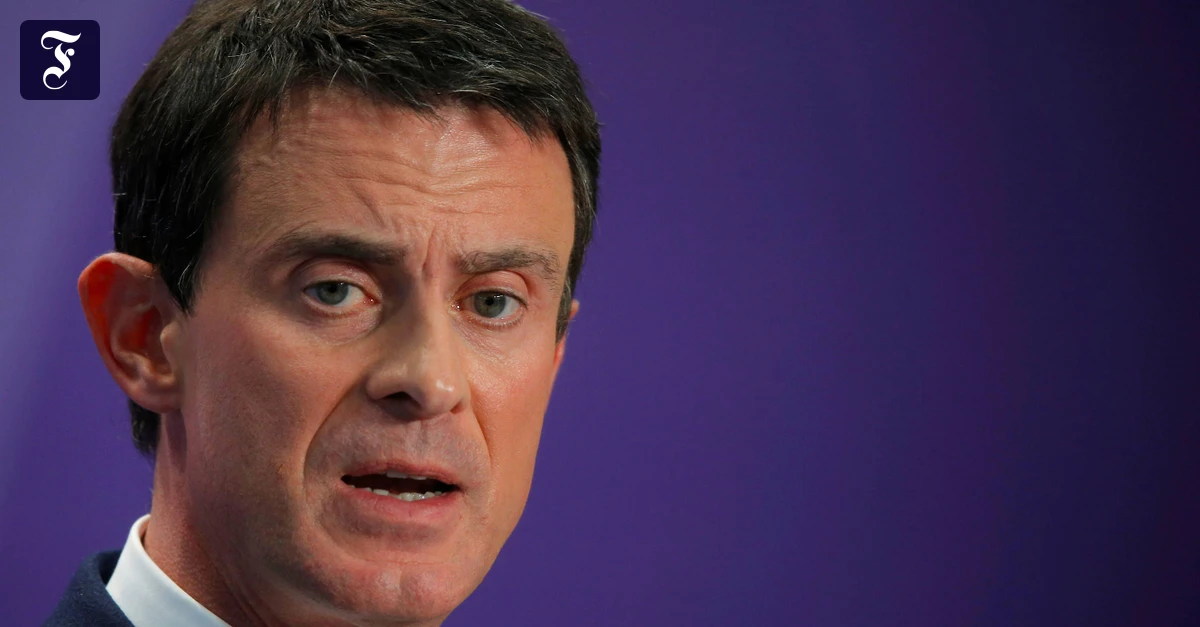
Paris, France – December 4, 2016 – The political future of France hangs in the balance as Prime Minister Manuel Valls is set to formally announce his candidacy for the upcoming presidential election on Monday evening. The announcement, scheduled for 6:30 PM local time at the town hall of Évry, a suburb south of Paris where Valls previously served as mayor until 2012, marks a pivotal moment in the French Socialist Party’s quest to select its nominee for the nation’s highest office. Sources close to the Socialist leader have confirmed to Agence France-Presse (AFP) that he will indeed declare his intention to run for the presidency during this highly anticipated address.
This momentous declaration comes on the heels of President François Hollande’s unprecedented decision on Thursday evening to forgo a second term, a move that sent shockwaves through the French political establishment and opened the door for potential contenders within his own party. The Socialist Party is slated to determine its presidential candidate through a primary election in January. This internal contest will feature Valls vying for the nomination against prominent figures such as former minister Arnaud Montebourg, a known critic of Valls’ policies and political direction. The ultimate choice of France’s next head of state will then be decided by the French electorate in two rounds of voting, scheduled for April 23 and May 7, 2017.
The Domino Effect: Hollande’s Withdrawal and Valls’ Ascent
The political vacuum created by President Hollande’s decision not to seek re-election has been the dominant narrative in French politics for days. Hollande, facing historically low approval ratings and grappling with internal party dissent, made the difficult choice to step aside, citing the need for national unity and the party’s ability to present a credible alternative to the rising tide of populism and the conservative opposition. His withdrawal, while perhaps not entirely unexpected given the political climate, has irrevocably altered the trajectory of the Socialist Party and the upcoming presidential race.
Manuel Valls, a figure often seen as representing a more centrist and pragmatic wing of the Socialist Party, has long been a speculated candidate. His decision to throw his hat into the ring is a direct consequence of Hollande’s departure. Valls has consistently positioned himself as a leader capable of uniting the fractured Socialist movement and presenting a strong challenge to the far-right National Front, led by Marine Le Pen, and the conservative Republican candidate, likely to be François Fillon.
A Look at the Primary Battlefield: Montebourg and the Socialist Divide
The Socialist primary, scheduled for January, is shaping up to be a fiercely contested affair. Arnaud Montebourg, a former minister of industrial renewal, represents a more left-leaning faction within the party. His campaign is expected to focus on themes of economic protectionism, social justice, and a critique of what he perceives as Hollande’s and Valls’ overly market-friendly policies. The ideological divide between Valls and Montebourg underscores the internal tensions that have plagued the Socialist Party in recent years. Their differing visions for France will be on full display during the primary debates, offering voters a stark choice regarding the party’s future direction.
Beyond Valls and Montebourg, other candidates are expected to participate in the primary, though their influence may be more limited. The outcome of this primary will not only determine the Socialist nominee but will also signal the party’s broader ideological stance and its ability to coalesce around a single candidate capable of mounting a credible national campaign. The success or failure of the Socialist candidate in the general election will depend heavily on the unity and enthusiasm generated during the primary process.
The Reshuffling of Power: Implications for the Government
Valls’ anticipated presidential bid carries significant implications for the current French government. It is widely considered probable that if Valls formally declares his candidacy, he will be compelled to resign his position as Prime Minister. This would necessitate a government reshuffling, a common occurrence in French politics during times of significant electoral campaigns. The departure of a Prime Minister often triggers a period of negotiation and appointment as a successor is chosen to lead the caretaker government.
Speculation is already rife regarding who might succeed Valls at the helm of the government. Interior Minister Bernard Cazeneuve is frequently mentioned as a potential candidate for the Prime Minister’s office. Cazeneuve, a seasoned politician with a reputation for competence and stability, could be tasked with navigating the country through the upcoming presidential election period, ensuring the continuity of state functions while the political landscape undergoes a dramatic transformation. The appointment of a new Prime Minister would also provide an opportunity for a broader reshuffle of ministerial portfolios, potentially bringing in new faces and signaling a shift in the government’s priorities.
The Broader Electoral Context: A Nation at a Crossroads
The French presidential election of 2017 is unfolding against a backdrop of significant national and international challenges. The country has grappled with economic stagnation, high unemployment, and a series of devastating terrorist attacks that have heightened security concerns and fueled public anxiety. These issues have profoundly impacted the political discourse and have contributed to a surge in support for populist and anti-establishment movements.
The looming election is therefore not merely a contest between political parties but a referendum on the future direction of France. The candidates will need to articulate compelling visions that address the concerns of a diverse electorate, ranging from those seeking economic security and social cohesion to those demanding greater national sovereignty and a reassertion of French identity. The choices made by voters in April and May will undoubtedly have far-reaching consequences for France’s role in Europe and on the global stage.
The Socialist Party, in particular, faces an uphill battle to regain the trust of a significant portion of the electorate. The party has been weakened by internal divisions, perceived policy failures, and the erosion of its traditional voter base. The success of its presidential candidate will depend on their ability to connect with voters on a visceral level, to offer credible solutions to the nation’s pressing problems, and to present a united front against formidable opposition.
Valls’ Political Trajectory: From Mayor to Prime Minister to Presidential Aspirant
Manuel Valls’ journey through French politics has been marked by a consistent rise through the ranks, characterized by a pragmatic and often robust approach to governance. His tenure as mayor of Évry, a town known for its diverse population and socio-economic challenges, provided him with firsthand experience in addressing the realities of urban life and community building. His subsequent appointment as Interior Minister under President Hollande saw him take a firm stance on issues of security and immigration, earning him a reputation as a decisive and sometimes controversial figure.
His elevation to the position of Prime Minister in 2014 was seen by many as an attempt by Hollande to inject new energy and direction into his presidency. During his time as Prime Minister, Valls has been instrumental in implementing a series of economic reforms, often facing criticism from both the left and the right of the political spectrum. His supporters view him as a strong leader capable of making tough decisions, while his detractors accuse him of being too centrist and not sufficiently aligned with core Socialist values.
Now, as he prepares to launch his presidential campaign, Valls faces the formidable task of bridging these divides within his own party and convincing a broader electorate that he possesses the vision and the leadership qualities to guide France through its current challenges. His past policy decisions and his political style will undoubtedly be scrutinized by opponents and voters alike. The coming weeks and months will be crucial in shaping public perception of his candidacy and determining his chances of success in the January primary and, ultimately, in the presidential election itself.
The Wider Field: Opposition and Potential Alliances
While the Socialist Party is engrossed in its internal struggle, the other major political forces in France are also gearing up for the presidential contest. The conservative Republican party is expected to select its nominee through an open primary, with former Prime Minister François Fillon emerging as a strong frontrunner. Fillon, known for his conservative economic policies and his focus on fiscal discipline, presents a stark contrast to the likely Socialist candidate.
On the far-right, Marine Le Pen of the National Front is a perennial contender, capitalizing on widespread discontent with immigration, globalization, and the perceived failures of mainstream political parties. Her campaign is expected to resonate with voters disillusioned with the status quo, and she will undoubtedly be a significant force in the first round of the election.
The outcome of the Socialist primary will have a direct impact on the dynamics of the wider presidential race. A strong, unified Socialist candidate could potentially consolidate the center-left vote and offer a viable alternative to the Republican and National Front contenders. Conversely, a fractured or uninspiring Socialist nominee could further embolden the opposition and make it easier for their candidates to advance to the second round.
Conclusion: A Pivotal Moment for French Democracy
The impending announcement of Manuel Valls’ presidential candidacy marks a crucial juncture in French political history. The nation stands at a crossroads, facing a complex array of domestic and international challenges. The choices made in the coming months, from the Socialist Party’s primary to the final presidential vote, will shape the future of France and its place in the world. Prime Minister Valls’ decision to enter the presidential race injects a significant new element into an already dynamic and unpredictable electoral landscape. His ability to unite his party, articulate a compelling vision for the nation, and connect with a diverse electorate will be the ultimate determinants of his success in this high-stakes endeavor. The coming weeks promise to be a period of intense political maneuvering, debate, and decision-making as France prepares to elect its next leader.