Olkiluoto, Finland – October 23, 2026 – In a landmark decision poised to reverberate across the global energy landscape, Finland has officially granted operational approval for Onkalo, the world’s first deep geological repository designed for the permanent disposal of highly radioactive spent nuclear fuel. This momentous step, announced by the Finnish government, positions the Nordic nation at the forefront of tackling one of the most intractable challenges of the nuclear age: the safe, long-term management of its most dangerous waste. While a final regulatory green light is still pending, this governmental decree marks a pivotal milestone in a project decades in the making.
The subterranean facility, located deep within the ancient bedrock of Olkiluoto island in Eurajoki, western Finland, represents an unprecedented engineering feat. Designed to safeguard thousands of tons of highly radioactive material for up to 100,000 years – a timescale almost unimaginable in human history – Onkalo aims to provide an ultimate solution to a waste problem that has plagued nuclear power-generating nations for generations.
The Unfolding Narrative: A Solution for "Deep Time"
Finland, a country that relies significantly on nuclear energy to power its homes and industries, has boldly confronted the imperative of responsible waste management. With two operational nuclear power plants, Olkiluoto and Loviisa, housing a total of five reactor units, the nation has accumulated a substantial volume of spent fuel. Unlike other countries that store such waste in temporary, surface-level facilities, Finland has committed to a final, permanent solution.
The government’s decision to approve the operation of Onkalo underscores a national consensus on nuclear waste management that few other nations have achieved. This approval, however, is not the absolute final step. The Radiation and Nuclear Safety Authority (STUK) must still conduct a comprehensive inspection and issue its final consent before the first cask of spent fuel can be lowered into the granite depths. This rigorous, multi-layered approval process reflects the profound long-term safety requirements inherent in such a project.
Main Facts: A Pioneering Achievement
The approval granted by the Finnish government on October 23, 2026, sanctions the operation of the Onkalo facility, translating to the world’s first license for a deep geological repository for high-level nuclear waste. This decision is not merely administrative; it signifies the culmination of decades of scientific research, engineering development, and political commitment.
The repository is situated approximately 400 meters below the surface, carved into the stable Precambrian crystalline bedrock of Olkiluoto. This location was chosen for its exceptional geological stability and low hydraulic conductivity, crucial factors for ensuring the long-term isolation of radioactive materials. The facility comprises an elaborate network of tunnels, deposition tunnels, and a central access shaft, meticulously designed to house spent nuclear fuel.
According to the government’s mandate, Onkalo is permitted to store a maximum of 6,500 tons of uranium, primarily in the form of spent nuclear fuel assemblies. These assemblies, after a period of cooling in water pools, will undergo a sophisticated packaging process in an above-ground facility before being transferred to their permanent resting place. Each fuel assembly will be encapsulated within a robust, multi-layered canister: a cast-iron insert providing structural strength, enveloped by a five-centimeter-thick corrosion-resistant copper shell. These canisters, once sealed, will be lowered into precisely bored holes within the deposition tunnels and surrounded by a protective layer of bentonite clay – a natural sealant that swells when wet, effectively preventing groundwater intrusion and cushioning the canister. The entire facility is planned to be permanently sealed and backfilled after approximately 100 years of operation, rendering it inaccessible to future generations.
The operator of this monumental undertaking is Posiva Oy, a company jointly owned by Teollisuuden Voima Oyj (TVO) and Fortum, Finland’s leading nuclear power producers. Posiva was specifically established to develop and implement Finland’s spent nuclear fuel disposal program, embodying a unique model of producer responsibility for nuclear waste.
Chronology of a Century-Spanning Project
The journey to Onkalo has been long and deliberate, reflecting the immense challenge of planning for geological timescales.
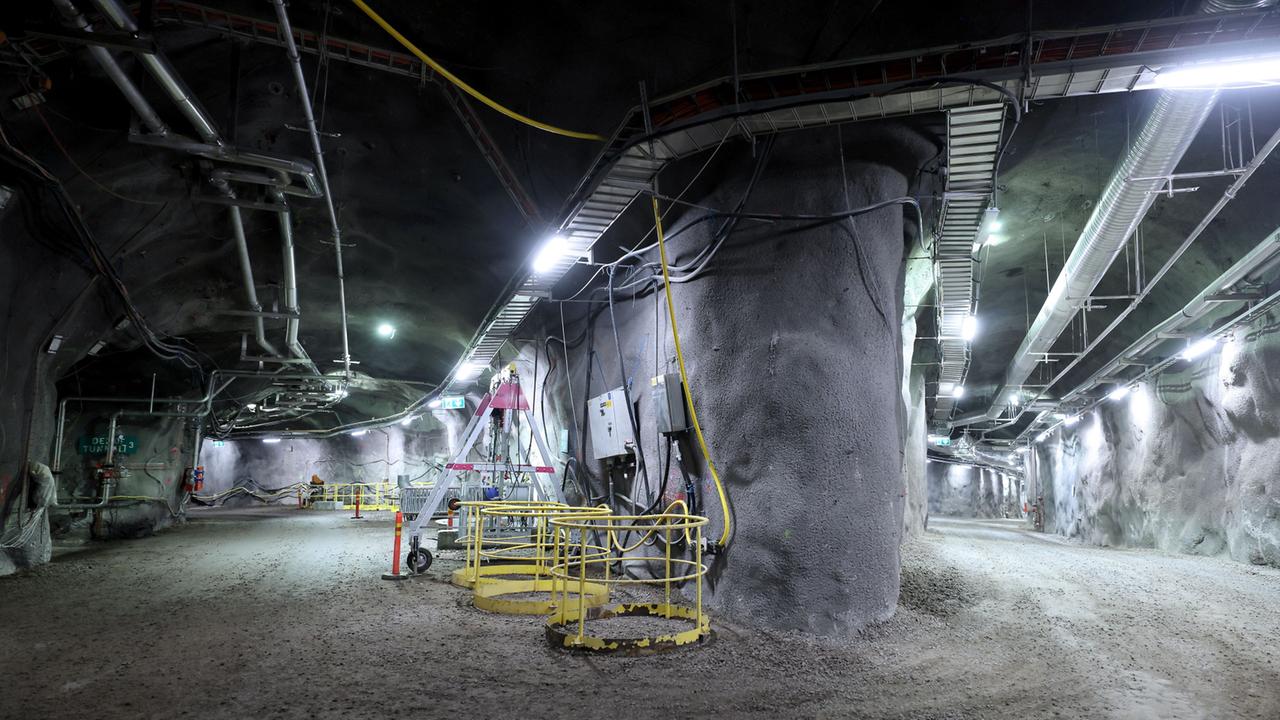
- 1970s-1980s: Early Investigations and Policy Formulation: As Finland’s nuclear power program expanded, the need for a permanent waste solution became evident. Initial research into deep geological disposal began, exploring various rock types and concepts. The principle of "producer responsibility" for nuclear waste was established in Finnish law.
- 1983: Nuclear Energy Act: Finland’s Nuclear Energy Act stipulated that the producer of nuclear waste is responsible for its safe disposal, a foundational principle for Posiva’s establishment.
- 1987: Site Selection Program Initiated: A systematic program for selecting a suitable site for a final repository commenced, involving extensive geological surveys across the country.
- 1993: Establishment of Posiva Oy: Posiva was founded by Finnish nuclear power companies to manage spent nuclear fuel disposal.
- 2000: Olkiluoto Chosen as Preferred Site: After years of comprehensive geological studies and environmental impact assessments, Olkiluoto was selected as the most suitable location for the deep geological repository. Its stable bedrock, low population density, and existing nuclear infrastructure made it an ideal candidate.
- 2001: Government’s "Decision-in-Principle": The Finnish government issued a Decision-in-Principle, confirming that Posiva’s plans and site selection were in the best interests of society. This was a crucial political endorsement.
- 2004: Construction of ONKALO Research Facility Begins: Work commenced on an underground rock characterization facility, essentially a full-scale research laboratory and pilot tunnel network, to further study the bedrock properties and test construction techniques. This facility eventually evolved into the final repository.
- 2012: Submission of Construction License Application: Posiva submitted its application for a construction license for the final repository to the government.
- 2015: Construction License Granted: The Finnish government granted the construction license for the Onkalo repository, a major milestone after thorough review by STUK and public consultation.
- 2016: Construction of Final Repository Commences: Building upon the existing research tunnels, construction of the full-scale repository, including the deposition tunnels and packaging plant, began in earnest.
- 2020s: Ongoing Construction and Testing: The years following saw intensive construction work, alongside rigorous testing of safety systems, operational procedures, and the waste encapsulation process.
- October 23, 2026: Operational Approval Granted: The Finnish government issues the crucial operational permit, allowing Posiva to proceed with the final preparations for waste emplacement.
- Future (Post-2026): STUK Final Inspection and Commissioning: Following the government’s approval, STUK will conduct its final, exhaustive inspection of the facility and its operational readiness. Once STUK grants its operating license, Onkalo can begin receiving and disposing of spent nuclear fuel. No exact date for this final step has been set by Posiva, but it is expected in the coming years.
- Future (Approx. 2126): Final Sealing: After approximately 100 years of operation, once the repository is filled to its capacity, it will be permanently sealed, designed to remain undisturbed for millennia.
Supporting Data: The Multi-Barrier Concept and Geological Resilience
The safety of Onkalo hinges on what is known as the "multi-barrier concept," a robust defense-in-depth approach that combines engineered barriers with the natural geological barrier.
- The Fuel Itself: The spent nuclear fuel is a solid ceramic matrix (uranium dioxide pellets), inherently stable and resistant to leaching.
- The Canister: The dual-layer copper-cast iron canister is designed to withstand corrosion and mechanical stresses for hundreds of thousands of years. Copper is highly resistant to corrosion in anaerobic conditions found deep underground.
- Bentonite Clay: This highly absorbent, swelling clay will surround each canister. It acts as a chemical buffer, preventing water flow, filtering out radionuclides, and providing mechanical stability.
- The Bedrock: The host rock at Olkiluoto is ancient, stable Precambrian granite, characterized by extremely low permeability and minimal seismic activity. Its immense depth provides physical isolation and protection from surface events.
- Tunnel Backfill: The tunnels themselves will be backfilled with a mixture of crushed rock and bentonite, further enhancing the isolation.
The "KBS-3" Method: Onkalo employs the "KBS-3" method, developed in Sweden, which forms the bedrock of this multi-barrier approach. This method has undergone decades of research and validation, particularly at facilities like Sweden’s Äspö Hard Rock Laboratory. The primary safety function of the repository is to prevent radionuclides from reaching the biosphere in harmful concentrations. Geological conditions at Olkiluoto, with its low groundwater flow and deep, stable rock, are considered ideal for this purpose.
Unprecedented Time Scales: The radioactive half-lives of some isotopes in spent fuel, such as Plutonium-239 (24,100 years) and Iodine-129 (15.7 million years), necessitate isolation for hundreds of thousands of years. This "deep time" problem requires a system that remains passive and secure without human intervention for durations that dwarf human civilization. The engineering and geological solutions at Onkalo are designed to meet this extraordinary challenge.
Costs and Economic Implications: The Onkalo project is a massive investment. While exact updated figures are proprietary, initial estimates for the entire Finnish disposal program, including research, construction, and operation, ran into several billions of Euros. These costs are primarily borne by the nuclear power producers through a fund, reflecting the producer responsibility principle. This long-term financial commitment ensures that the burden of waste management does not fall on future generations or the state budget.
Official Responses: Pride and Prudence
Finnish government officials have expressed a mixture of pride and cautious optimism regarding the approval.
- Minister for Economic Affairs (or relevant portfolio): "Today marks a historic day for Finland and for the global nuclear industry. We have taken a decisive step towards solving one of the most complex environmental challenges of our time. This decision reflects decades of unwavering commitment to scientific rigor, safety, and intergenerational responsibility. Onkalo is a testament to Finnish expertise and our pragmatic approach to energy policy."
- Posiva CEO (or spokesperson): "Receiving the operational permit from the government is an immense achievement for Posiva and all our partners. It validates the thoroughness of our research, the excellence of our engineering, and our dedication to safety. We are now focused on the final phase – securing STUK’s operating license – and preparing for the safe and secure emplacement of spent fuel. This is not just an engineering project; it is a promise kept to future generations."
- STUK (Radiation and Nuclear Safety Authority): A representative from STUK would likely emphasize their ongoing, rigorous oversight: "STUK’s role remains paramount in ensuring the highest standards of nuclear safety and radiation protection. While the government has issued its operational approval, our final inspection and licensing process will be thorough and uncompromising. We must be absolutely confident that all systems, procedures, and personnel meet our stringent requirements before operations commence."
- Local Community (Eurajoki): The community of Eurajoki has generally been supportive, benefiting from the jobs and investments brought by the Olkiluoto nuclear power plant and the Onkalo project. Their response would likely be one of continued trust in the regulatory process and the safety measures.
Implications: A Global Template for Nuclear Waste Management
Finland’s approval of Onkalo carries profound implications, setting a global precedent for other nations grappling with their own nuclear waste dilemmas.
- A Proven Model: Onkalo demonstrates that a permanent, deep geological repository is not just a theoretical concept but an achievable reality. This provides a tangible blueprint and a morale boost for countries like Sweden, France, Canada, and the United States, which are also pursuing deep geological disposal solutions. Sweden, in particular, is close to making a similar decision for its own spent fuel, also based on the KBS-3 method.
- Ethical Leadership: The decision positions Finland as an ethical leader in nuclear stewardship. By taking full responsibility for its waste, Finland offers a powerful counter-narrative to concerns about the long-term legacy of nuclear power. It underscores a commitment to intergenerational equity, ensuring that the burden of waste management is not deferred indefinitely.
- Public Acceptance: Finland’s journey to Onkalo has been characterized by a relatively high degree of public acceptance, fostered by transparency, robust scientific engagement, and a long-standing national dialogue. This stands in stark contrast to the public and political resistance encountered in many other countries (e.g., the U.S. Yucca Mountain project), offering lessons in stakeholder engagement.
- Technological Validation: The successful implementation of the multi-barrier KBS-3 concept at Onkalo provides critical validation for this specific engineering approach. Other nations may now look more favorably upon adopting similar methodologies, potentially accelerating their own disposal programs.
- Challenges for Other Nations: While a beacon of hope, Onkalo also highlights the immense political, social, and technical hurdles that still exist elsewhere. Germany, for instance, despite shutting down its last nuclear reactors in 2023, is still engaged in a protracted and politically charged search for a suitable site for its approximately 27,000 cubic meters of high-level radioactive waste. This waste is currently stored in sixteen interim surface facilities across various federal states, a temporary solution that cannot be sustained indefinitely. The German process, initiated with a blank map ("white map" approach), contrasts with Finland’s more focused approach from the outset.
- "Deep Time" Communication: The challenge of communicating the purpose and safety of Onkalo to societies tens of thousands of years into the future remains an ongoing ethical and philosophical debate. How do we design warnings that transcend language, culture, and even human evolution? While not fully resolved, Onkalo forces these questions to the forefront.
Looking Ahead: The Final Hurdles
Despite this monumental governmental approval, the path to full operation for Onkalo is not entirely clear. The final regulatory consent from STUK is a critical step. Their inspection will scrutinize every detail, from the integrity of the tunnels and the functionality of the packaging plant to the training of personnel and the robustness of emergency protocols. This final phase of scrutiny is a testament to Finland’s unwavering commitment to safety over expediency.
Once STUK gives its final blessing, the world will witness the unprecedented sight of spent nuclear fuel being permanently sequestered, an act that closes the loop on Finland’s nuclear energy cycle. Onkalo is more than just a storage facility; it is a symbol of humanity’s capacity for long-term planning, scientific ingenuity, and responsible stewardship of a powerful, yet challenging, technology. As Finland prepares to open the doors to this underground "cave," it simultaneously opens a new chapter in the global quest for sustainable energy solutions.