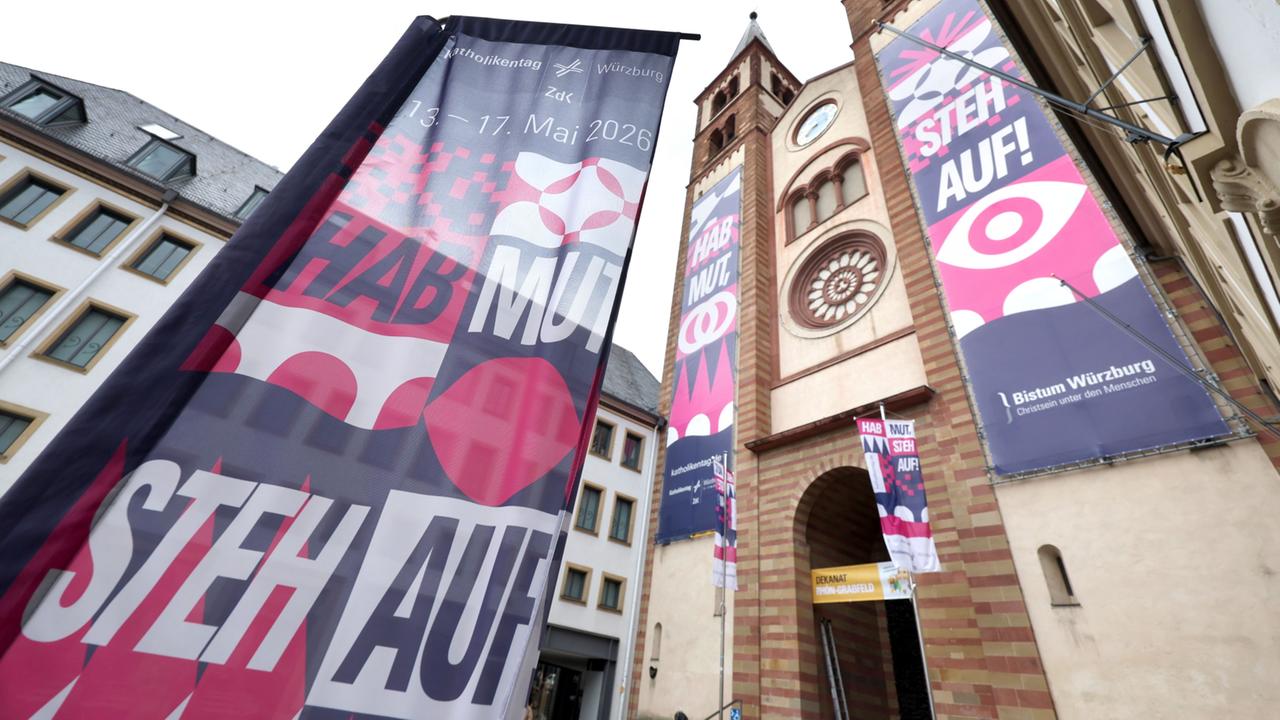
WÜRZBURG – Under the evocative motto "Hab Mut, steh auf" (Have Courage, Stand Up), the 104th German Katholikentag has convened in Würzburg. As thousands of lay Catholics gather in this historic cathedral city, the atmosphere is defined by a striking paradox: while the organization seeks to project a bold, outward-facing political voice, it is simultaneously grappling with a profound identity crisis, dwindling membership, and an increasingly strained relationship with the Vatican.
The State of the Church: A Crisis of Influence
The Catholic Church in Germany is currently navigating a period of significant demographic and institutional contraction. With membership numbers hitting historic lows and the cultural hegemony of the Church in German society steadily eroding, the leadership is forced to reconsider its role.
Host Bishop Franz Jung has been candid about these limitations. Speaking at the opening of the event, Jung acknowledged that the Church can no longer command the societal influence it once held. "We are a smaller, more focused entity," Jung noted. "The goal is no longer to dictate the moral agenda, but to remain a relevant partner in a society facing multiple crises."
This sense of limitation has prompted a strategic shift. The focus of the 104th Katholikentag is not merely internal maintenance, but a concerted effort to engage with the "social periphery." Bishop Jung’s emphasis on "social space orientation" (Sozialraumorientierung) underscores this: the Church is attempting to pivot away from self-referential liturgy toward active participation in the civic problems of the day, such as poverty, loneliness, and the erosion of democratic discourse.
Chronology of the Gathering: From Dialogue to Debate
The Katholikentag functions as the primary platform for the Zentralkomitee der deutschen Katholiken (ZdK) to assert its influence. The schedule for the 2026 iteration reflects a deliberate attempt to bridge the gap between religious life and the corridors of power.
- Opening Day: The event commenced with high-profile diplomatic presence, anchored by Federal President Frank-Walter Steinmeier. His participation in a forum on "Democracy and Volunteering" signaled the German state’s recognition of the Church as a stabilizing force in civil society.
- The Mid-Week Sessions: The program features a mix of workshops and high-level political debates. Notably, the presence of opposition leader Friedrich Merz, who is scheduled to engage with youth representatives, highlights the Church’s intent to remain a neutral but active platform for political discourse.
- The Institutional Impasse: The backdrop to these sessions is the stalled "Synodal Council." Originally scheduled to launch its inaugural meeting this November, the project has been forced into an indefinite postponement. The lack of Vatican approval for the council’s governing statutes serves as a persistent reminder of the friction between German reformists and the Roman Curia.
Supporting Data: The Demographic Reality
The urgency of the Katholikentag’s themes is backed by sobering statistics. The German Catholic Church has been losing hundreds of thousands of members annually for nearly a decade. These departures are not merely statistical; they represent a fundamental shift in how the German population perceives religious institutions.
The "Democratic Church" project, a collaborative initiative between the Diocese of Würzburg and the local youth education center, is an attempt to stem this tide. By integrating civic education with spiritual outreach, organizers hope to appeal to a younger generation that is increasingly skeptical of hierarchical structures.
Furthermore, data from recent social studies indicates that while formal membership is declining, interest in "values-based community engagement" remains high. The Katholikentag is effectively rebranding itself as a hub for such engagement, hoping to capture the "unchurched" or "spiritually unaffiliated" who still value the social services and moral framework the Church provides.
The Vatican Friction: A House Divided
Perhaps the most significant development at this year’s gathering is the palpable tension with the Holy See. The point of contention remains the "blessing issue"—the formalization of blessings for same-sex couples and divorced-and-remarried individuals.
While Pope Francis has signaled a greater degree of pastoral flexibility, his administration has remained strictly opposed to the creation of formal liturgical rites that deviate from traditional doctrine. The German approach—which seeks to codify these blessings into formal, recognizable church ceremonies—is viewed in Rome as a step toward doctrinal schism.
Kurienkardinal Mario Grech, a key figure in the Vatican’s reform efforts, arrived in Würzburg to a tense reception. His presence is intended to maintain a channel of communication, but the gap between the German reformist agenda and the Roman conservative caution has rarely been wider. The Vatican’s refusal to recognize the statutes for the new "Synodal Council" is the most concrete manifestation of this conflict, effectively freezing the German Church’s efforts to democratize its decision-making processes.
Official Responses and Strategic Pivot
Irme Stetter-Karp, President of the ZdK, has taken a firm stance, urging the German faithful to maintain their resolve. "We are not asking for permission to be a voice in society," she stated during the opening ceremonies. "We are acting on the mandate of our faith to engage with the world as it is."
This rhetoric of "courageous resistance" is a marked change from the traditionally diplomatic language of the Church. It suggests that the ZdK is prepared to proceed with its reform agenda even in the face of Roman disapproval, provided it has the backing of the German laity and the local episcopacy.
However, the response from more traditionalist factions within the Church and the Vatican remains one of "wait and see." There is a clear fear that if the German Church proceeds unilaterally, it may trigger a formal rebuke that could paralyze the German institution for years to come.
Implications for the Future
The implications of the 104th Katholikentag extend far beyond Würzburg. If the German Church succeeds in carving out a "third way"—one that balances traditional faith with modern, progressive social values—it could serve as a template for other Western European churches facing similar crises.
However, the risks are equally high. The failure of the Synodal Council represents a major political defeat for the German reform movement. If they cannot secure a formal governing structure that includes the laity in decision-making, the entire reform project risks being relegated to "advisory only" status, potentially leading to further mass resignations of disillusioned Catholics.
As the event concludes, the message from Würzburg is one of defiance mixed with vulnerability. The Church is no longer the center of gravity in German public life, but it is fighting to remain a relevant, vibrant, and necessary part of the democratic conversation. Whether this "courageous standing up" will lead to a renewal of the institution or a deeper estrangement from the global Church remains the central question of the decade for German Catholicism.
The coming months will be decisive. With the November deadline for the Synodal Council passing without progress, the ball is firmly back in the court of the Vatican. For the faithful in Würzburg, the path forward is clear: they intend to keep walking, even if the road ahead is uncertain and the destination remains contested by the authorities in Rome.