High above the clouds, where the biting frost of winter gives way to the golden warmth of the Arctic sun, lies a sanctuary that defies the calendar. The Stryn Summer Ski Center, perched 1,080 meters above the mundane rhythm of everyday life on the Strynefjellet mountain, is more than just a seasonal destination—it is a temporal anomaly. For those who make the pilgrimage, it is a place where the concept of age dissolves, replaced by the simple, enduring joy of carving turns through slushy, sun-kissed snow while the rest of the world debates the arrival of autumn.
The Essence of Stryn: A Sensory Time Capsule
For the uninitiated, the experience of arriving at Stryn is visceral. It begins with the ascent. Leaving the coastal town of Ålesund, travelers wind their way through the dramatic Norwegian landscape, crossing ferries between Linge and Eidsdal, and skirting the world-famous Geirangerfjord. As the road climbs beneath formidable, snow-dusted ridges, the atmosphere shifts.
For many, this journey is a rite of passage. One veteran skier recalls his first trip in 1993, a sixteen-year-old on Telemark skis, armed with a pair of fluorescent-pink base skis, Asolo-Morgedal leather boots, and a pair of vibrant purple Gore-Tex overalls—the spoils of three months of delivering newspapers. The memory remains vivid: the peculiar, intoxicating cocktail of scents—burned gasoline from the mountain ascent, warm asphalt, the charcoal tang of grill smoke, sunscreen, and the damp, earthy aroma of well-worn ski boots. It was the scent of freedom.
Even thirty years later, the sensory profile remains largely unchanged. Stryn acts as a form of "eternal youth." Whether you arrive on a Saturday in May or a Sunday in June, the mountainside has a way of stripping away the years. The graying temples, the fine lines of adulthood, and the existential weight of mid-life are suddenly rendered invisible by the sheer, blinding brightness of the Tystigbreen glacier. When the sun hits your face while dangling in the chairlift, the past—or at least the burdensome parts of it—simply fades into the background. It is a phenomenon not found in any marketing brochure or psychological study, yet it is a truth universally acknowledged by every regular who ascends these slopes.

Chronology of a Summer Phenomenon
Stryn is defined by its defiance of conventional ski seasons. While the rest of the world packs away their equipment in April, the Strynefjellet mountain is just beginning to breathe.
- May: The "Gamle Strynefjellsvegen" road opens to traffic, signaling the official start of the season. As the snow clears from the mountain pass, the lift lines at the ski center hum to life.
- June/July: The peak of the summer season. The days are impossibly long, with the sun rising at 4:00 AM and lingering until nearly midnight. This is the era of the "shorts and flannel" aesthetic—a surreal blend of winter sport and summer leisure.
- August/September: As the snowpack gradually retreats, the focus shifts. The skiing becomes more technical and intimate, often leading into the vibrant cultural events that punctuate the late season.
- October: The official close. The road closes, the snow finally succumbs to the changing climate, and the equipment is returned to storage, waiting for the cycle to begin anew.
Official Data and The "Winter in Summer" Philosophy
The official brochures describe Stryn with clinical precision: a small, summer-only ski resort located on the Strynefjellet mountain, 45 kilometers east of the village of Stryn. It is situated along the historic Gamle Strynefjellsvegen, a tourist attraction in its own right. However, the true spirit of the place is captured in a single, legendary slogan: "Winter is best in summer."
It is a marketing phrase so poetic and accurate that the author arguably deserves a medal from the municipality, a commendation from a local literary society, and a trophy from the Norwegian travel industry. It encapsulates the paradox of the resort: a place where the cold is stripped of its bite and the wind of its cruelty.
Operating daily from 10:30 AM to 4:00 PM, the resort provides a consistent experience that balances professional-grade snow conditions with the relaxed, low-stakes atmosphere of a summer holiday. The accessibility of the resort, coupled with its proximity to the village of Stryn, makes it a unique logistical feat in the world of alpine sports.
The Cultural Pulse: The Stryn Festival
Beyond the slopes, the heartbeat of the region is the annual Stryn Festival, organized by the Norwegian ski magazine Fri Flyt. Held at the Folven Camping site, nestled in the valley floor directly beneath the ski center, the festival acts as the social anchor for the community.
"The Stryn Festival is like a necessary break from the reality of the daily grind," explains Fien van Zwieten, a renowned professional skier celebrated for her gravity-defying backflips. For Van Zwieten and hundreds of others, the festival is a pilgrimage. "You pass through the gates of the Folven campsite and are immediately hit by a wave of laughter, skiers, mountain bikers, and climbers. It’s a melting pot. People walk around barefoot, lounging in the grass, sharing meals, swapping stories over a beer, and rinsing off in the icy mountain water."
The festival is characterized by a high-energy contrast: days spent in sweat-inducing, sun-drenched skiing to the soundtrack of blaring classic rock, and nights spent under the eternal light of the Arctic sun. "The people you see there are sun-burned and genuinely, profoundly happy," says Van Zwieten. It is this community element—the shared experience of extreme athleticism coupled with total relaxation—that elevates Stryn from a mere resort to a cultural landmark.
Implications: A Sustainable Lifestyle Choice
The existence of Stryn challenges the traditional narrative of the ski industry, which is often associated with high-stress travel, extreme cold, and expensive, high-pressure environments. Stryn offers a different paradigm.
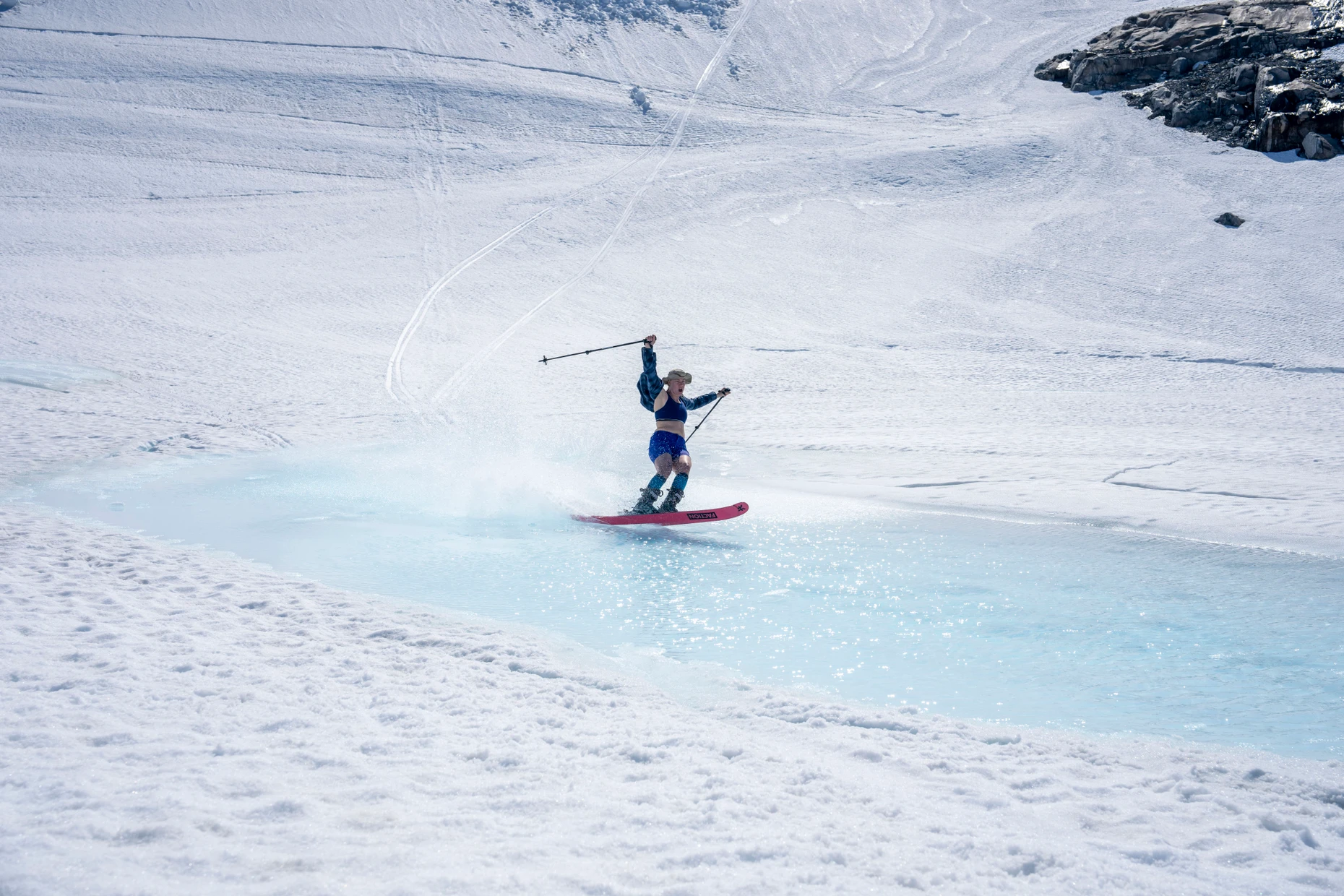
The implication for the modern traveler is clear: you don’t need a week of frigid, dark winter to satisfy the urge to carve snow. By moving the sport into the summer months, the barrier to entry—both physical and psychological—is lowered. A visitor can spend three hours on the slopes in a t-shirt, retreat to a sunny terrace for lunch, transition to mountain biking, spend the afternoon bouldering on a massive rock face, and finish the day debating philosophy in a lawn chair while a communal dinner sizzles on a grill.
This lifestyle is not just about the sport; it is about the pace. In a world defined by the relentless forward motion of digital life, Stryn forces a pause. The days are so long that they seem to hold an entire lifetime of experience within a single twenty-four-hour period.
Practical Logistics for the Modern Pilgrim
For those looking to experience this "fountain of youth," the logistics are straightforward but require a bit of planning:
- Arrival: The most efficient route is to fly into Ålesund. From there, a two-hour scenic drive by rental car brings you into the heart of the Strynefjellet region.
- The Skiing: The ski area is open daily from May through October, typically between 10:30 AM and 4:00 PM.
- The Events: For those seeking the community aspect, the Stryn Festival is the gold standard. Keep an eye on the schedule, as the season often concludes with special events, such as the popular Oktoberfest edition held in mid-September.
As the world continues to move faster, the value of places like Stryn increases. It is a reminder that the most profound experiences are often the simplest: a pair of skis, a mountain of snow, the warmth of the sun, and the company of people who, for a few days at least, have decided to stop counting their age and start counting their turns. Stryn remains, as it always has been, a place where the winter never truly dies, and the summer never truly ends.